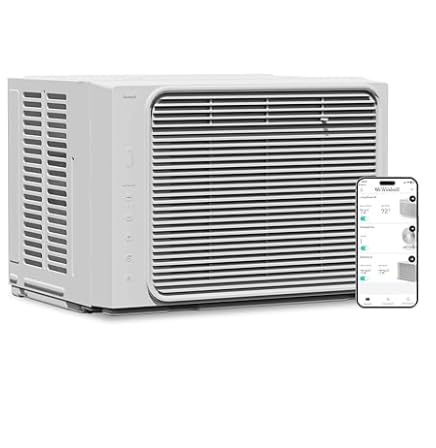
Energy Efficient Window AC Unit: The Complete Guide
If you have already decided that a window unit is the right fit for your room, the next step is picking one that cools well without driving your electricity use up. This guide explains what efficiency ratings really mean, how to size a unit correctly, and which features separate a top-tier energy efficient window AC from an entry-level model.
SEE OUR PICKSQuick context: Window air conditioners are rated with CEER, not SEER. CEER is a seasonal efficiency number specific to room units, and it is the most useful figure when comparing one energy efficient window AC against another. A higher CEER means more cooling delivered per unit of electricity across a typical cooling season.
Why Window AC Efficiency Matters More Than You Think
A window unit is a small appliance, but it runs for long stretches during the hottest weeks. Because it cools a single room rather than a whole house, the efficiency of that one unit becomes the dominant factor in how much electricity your cooling actually draws. Two units with the same cooling capacity can consume meaningfully different amounts of power over a summer, and the gap widens with daily runtime.
The practical takeaway is that a window AC is not a place to treat efficiency as an afterthought. Choosing a well-rated unit, sizing it correctly, and sealing the window opening properly all compound into real reductions in energy use. For a broader view of how window units compare with other formats, our guide on ductless versus ducted AC explains when a window unit is the smarter choice and when it is not.
How Energy Efficiency Is Measured in Window AC Units
Window units use two related but distinct efficiency metrics, and understanding both prevents confusion when you compare models across retailers.
| Metric | What It Measures | How to Use It |
|---|---|---|
| CEER | Combined Energy Efficiency Ratio — seasonal efficiency across a typical cooling season, including standby power draw. | The primary comparison figure for window units. Higher is better. Look for 11 or higher for most rooms. |
| EER | Energy Efficiency Ratio — cooling output divided by power input at a single test condition. | Useful as a secondary check, especially in hot climates where peak-condition performance matters. |
| BTU capacity | Cooling output, not efficiency. The amount of heat the unit removes per hour. | Choose this first based on room size, then use CEER to pick the most efficient model in that capacity. |
| ENERGY STAR | Third-party certification that the unit meets efficiency thresholds above the minimum standard. | A quick filter for shortlisting. Certified units are almost always a sound long-term investment. |
A common mistake is to compare BTU numbers as if they were efficiency. They are not. A 12,000 BTU unit and an 8,000 BTU unit cannot be compared by capacity alone. First match the capacity to your room, then compare CEER within that capacity band. Our breakdown of ENERGY STAR certified window air conditioners goes deeper into what the certification actually guarantees.
What CEER Rating Should You Aim For?
CEER values for window units typically cluster in a fairly narrow band, so small differences matter. As a general rule, treat 11 as the floor for a genuinely efficient unit and 12 or above as the target for larger capacities or heavy daily use.
- Entry-level units often sit at or slightly below the minimum standard. They cool adequately but are not designed around efficiency.
- Mid-range units commonly reach CEER around 11 to 11.5, which is a solid choice for rooms used a few hours a day.
- Top-tier and flagship models push CEER to 12 or higher, often combining inverter compressors with smarter control electronics.
Higher CEER is most worthwhile when the unit runs many hours per day. If you only cool a bedroom at night during the hottest month, the difference between a mid-range and top-tier unit is smaller in practice. If a unit runs through the afternoon in a home office or living room, the higher tier pays back its efficiency advantage far more clearly.
Inverter vs Single-Speed: Which Compressor Belongs in an Efficient Unit?
Compressor design is the single biggest hardware factor behind real-world efficiency. A single-speed compressor is either fully on or fully off. An inverter compressor varies its speed to match the cooling load.
Single-Speed Compressor
Cycles on and off to hold temperature. This creates temperature swings and repeated startup surges. It is common in entry-level units and is simpler to service.
Inverter Compressor
Runs continuously at reduced speed once the room reaches the setpoint. It holds temperature more steadily, avoids repeated startup surges, and is typically more efficient during long sessions.
Variable-Speed Control
The umbrella term for systems that modulate compressor output. In practice, an inverter window AC is the most common form of this in the room-unit category.
If you want the technical detail on how this modulation works, our explainer on energy efficient split air conditioners covers the same compressor logic in a different format. For window units specifically, the practical rule is simple: if you plan to run the unit for long periods, prioritize an inverter model.
Sizing Your Window AC Correctly
Oversizing is one of the most common efficiency mistakes. A unit that is too large cools the room quickly, shuts off, and then restarts — which means it never runs long enough to dehumidify properly, and it wastes energy on repeated cycling.
The baseline rule is roughly 20 BTU per square foot of living space. From there, adjust for the room's real conditions:
- Add capacity for rooms with large south- or west-facing windows, or with little shade.
- Add capacity for kitchens, rooms with many occupants, or rooms above a garage.
- Reduce capacity for shaded rooms, basement rooms, or well-insulated spaces.
- Do not round up "just in case." Choose the closest match to your calculated load.
For a step-by-step walkthrough, our guide on energy efficient air conditioners for small rooms shows how the calculation plays out in compact spaces where window units are most often used.
Features That Actually Improve Efficiency
Not every feature listed on a product page affects energy use. These are the ones that genuinely matter when you evaluate an energy efficient window AC.
| Feature | Efficiency Benefit | Best For |
|---|---|---|
| Inverter compressor | Modulates speed instead of cycling; reduces startup surges and holds temperature steadily. | Long daily runtime, bedrooms used overnight |
| Eco / energy-saver mode | Cycles the fan or raises the setpoint slightly once the room is cooled, cutting standby draw. | Users who want hands-off efficiency |
| Programmable timer | Prevents cooling an empty room by scheduling start and stop times. | Home offices, scheduled occupancy |
| 24-hour timer with sleep mode | Gradually raises the setpoint overnight, reducing compressor workload. | Bedrooms |
| Follow-me remote sensing | Adjusts cooling based on temperature at the remote rather than the unit itself. | Rooms where the unit is mounted away from seating |
| Washable filter with filter alert | A clogged filter forces the unit to work harder; an alert keeps airflow and efficiency intact. | Every user |
Installation and Placement: The Efficiency You Do Not See
A high-CEER unit installed poorly will underperform a mid-range unit installed well. The window opening, the unit's tilt, and the surrounding seal all affect how hard the compressor has to work.
- Seal the window gap. Foam insulation strips and side panels must close every gap. Air leaks force the unit to cool air that immediately escapes.
- Tilt the unit slightly outward. A small rearward tilt lets condensate drain properly and prevents water from pooling inside the unit.
- Shade the unit if possible. A unit in direct sun works harder. An awning or shaded window reduces the load on the condenser.
- Match the unit to the window type. If your window is awkward, our guide on the easiest to install window air conditioner covers frame types and mounting options.
If you are weighing a window unit against a wall-mounted alternative, our comparison of energy efficient wall unit air conditioners helps clarify when a through-the-wall install is the better efficiency choice.
How to Compare Window AC Tiers Without Prices
Because window units span from basic to premium, the clearest way to compare options is by tier descriptor rather than by sticker figure. These descriptors describe market position and build quality, and they stay meaningful over time.
| Tier | Typical Build and Features | Best For |
|---|---|---|
| Entry-level | Single-speed compressor, mechanical or basic digital controls, simple filter. Meets standards but is not built around efficiency. | Occasional use in a small room |
| Mid-range | Digital controls, eco mode, timer, higher CEER, better fan design and quieter operation. | Daily use in a bedroom or office |
| High-end | Inverter compressor, smart controls, follow-me sensing, top CEER in its capacity band, durable construction. | Long daily runtime, efficiency-focused buyers |
| Flagship / professional-grade | Highest CEER available in the format, premium materials, advanced airflow, Wi-Fi and scheduling, robust warranty support. | Heavy use, larger rooms, buyers who want the top specification |
Within any tier, the descriptor good value for its tier is more useful than a raw number, because it tells you how the unit compares with peers at the same market position. A mid-range model that is feature-rich for its class is often a smarter pick than a flagship unit you will only run a few weeks a year.
Maintenance Habits That Preserve Efficiency
Efficiency ratings assume a clean, well-maintained unit. In practice, a neglected filter and dusty coils can erode a meaningful share of that rated performance within a single season.
- Clean or replace the filter every two to four weeks during heavy use. This is the single highest-impact habit for keeping airflow and efficiency intact.
- Inspect the condenser coils at the start of each cooling season and clear debris from the exterior side.
- Check the window seal each spring. Weatherstripping degrades, and small gaps add up.
- Listen for changes in sound. A compressor that sounds strained or cycles unusually often is a signal to investigate before efficiency drops further.
- Remove and store the unit properly in the off-season so the coils and fan stay clean.
Our broader collection of energy saving tips for AC covers habits that apply across window units and other formats.
Common Mistakes That Undermine Window AC Efficiency
- Buying by BTU alone. Capacity is not efficiency. Match capacity to the room first, then compare CEER.
- Oversizing the unit. A larger unit cools fast, shuts off, and cycles repeatedly, which wastes energy and leaves the room humid.
- Ignoring the window seal. A leaky install can erase much of a high CEER advantage.
- Leaving the unit on in an empty room. Timers and scheduling exist for exactly this reason.
- Running the unit with a clogged filter. Restricted airflow forces the compressor to work longer for the same cooling.
- Ignoring the exterior side. Debris and dust on the condenser coils reduce heat rejection and raise power draw.
Frequently Asked Questions
What makes a window AC unit energy efficient?
A window AC unit is energy efficient when it combines a high CEER or EER rating, inverter compressor technology, an ENERGY STAR certification, and features like eco mode and programmable timers. Proper BTU sizing for the room and a tight window seal also directly affect real-world efficiency.
What SEER or CEER rating should I look for in a window AC?
Window units are rated with CEER rather than SEER. For most rooms, aim for a CEER of at least 11, and for larger units or heavy daily use, look for 12 or higher. The higher the rating, the more cooling you get per unit of electricity over a typical season.
Does an inverter window AC use less electricity?
Yes. An inverter window AC varies compressor speed instead of switching fully on and off. This reduces startup surges, holds temperature more steadily, and typically lowers energy use compared with a single-speed unit of similar capacity, especially during long cooling sessions.
Will a more efficient window AC lower my electricity bill?
In most cases, yes, particularly if you run the unit for many hours per day or replace an older single-speed model. The savings depend on your local electricity rate, usage hours, room insulation, and how well the unit is sized and installed.
What size energy efficient window AC do I need?
Use a baseline of about 20 BTU per square foot of living space, then adjust upward for sunny, hot, or poorly insulated rooms and downward for shaded or well-insulated rooms. Oversizing wastes energy, so choose the closest capacity that matches your calculated load.
Are ENERGY STAR window ACs worth it?
ENERGY STAR window ACs meet efficiency thresholds set above the minimum standard, so they generally use less electricity for the same cooling output. For anyone running a unit through hot months, the certified model is usually a worthwhile long-term investment compared with an entry-level unrated unit.
Choosing an energy efficient window AC comes down to a short checklist: size the unit to the room, compare CEER within that capacity, favor an inverter compressor if you run the unit for long hours, and install it with a tight seal. Features like eco mode and timers help, but they work best on top of a correctly sized, well-rated unit. If you are still deciding between formats, our overview of energy efficient air conditioning systems puts window units in the context of the wider options available.