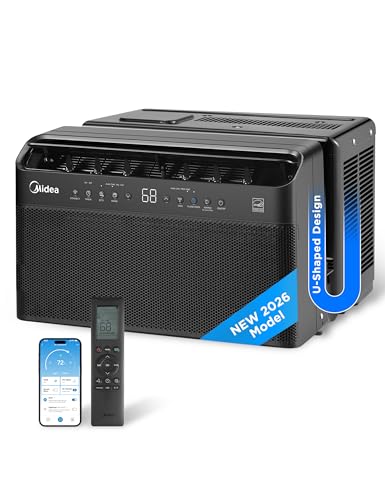
Energy Star Certified Window Air Conditioners
Your complete research guide to understanding certification, comparing efficiency, and choosing the right window unit for efficient, reliable cooling
START THE GUIDEWhy this guide matters: If you have already decided to buy a window air conditioner and want a model that runs efficiently, this page gives you the full picture. You will learn what Energy Star certification really means for window units, how to compare models in the same class, which features matter most during research, and how to match a unit to your room and climate. Read first, understand your needs, then choose with confidence.
What Does Energy Star Certification Mean for Window ACs?
Energy Star is a voluntary certification backed by the U.S. Environmental Protection Agency and the U.S. Department of Energy. For window air conditioners, the label indicates that a model meets or exceeds energy-efficiency requirements set for its product category. In practice, a certified window unit uses less electricity to deliver the same amount of cooling compared with a non-certified unit of similar capacity.
The key metric for window AC efficiency is the Combined Energy Efficiency Ratio, or CEER. Certified window units are required to meet a higher CEER threshold than standard models. This means the unit converts more of the electricity it draws into cooling output and wastes less as heat. Over a cooling season, that difference can reduce the electricity a unit consumes — especially important if you run it for many hours per day during summer.
Certification does not mean every Energy Star window unit is identical. Efficiency still varies between models, capacities, and brands. The label is a baseline, not a guarantee of the best-in-class performance. That is why comparing CEER ratings, capacity, and features side by side remains essential. You can explore broader efficiency concepts in our guide to energy efficiency in HVAC and see how certification fits into the wider landscape of Energy Star air conditioners.
Quick facts about certified window units
- Certification is based on measured efficiency, not on a single feature or marketing claim.
- Higher CEER generally means more cooling per unit of electricity consumed.
- Certified models exist across sizes, from compact units for small rooms to larger units for living areas.
- Efficiency gains matter most when the unit runs frequently over the cooling season.
- The label is a helpful filter during research, but the final choice should also match room size, installation, and noise needs.
How to Compare Certified Window AC Models
When you research certified window air conditioners, compare them on a consistent set of criteria. This keeps your decision grounded in performance rather than surface-level features.
1. Match Capacity to Room Size
A unit that is too small will struggle to cool the room, while an oversized unit can cool too quickly and cycle on and off frequently, which hurts efficiency and comfort. Check the manufacturer's recommended square footage for each capacity class and compare it with your room's dimensions, sun exposure, ceiling height, and insulation. If you want a deeper walkthrough, our guide on how to size an air conditioner explains the process step by step.
For context, common window AC capacity classes include units suited to small rooms, medium rooms, and larger living areas. Our capacity-specific pages can help you narrow the field, such as energy-efficient small window air conditioners, Energy Star 6,000 BTU air conditioners, Energy Star 10,000 BTU air conditioners, and Energy Star 15,000 BTU air conditioners.
2. Compare CEER Ratings
Within the same capacity class, a higher CEER indicates better efficiency. Compare CEER values directly between models, but keep capacity constant — a larger unit with a high CEER is not automatically more efficient for a small room than a correctly sized unit with a slightly lower CEER. The right comparison is always like for like.
3. Look at Noise Levels
Window units vary in operating noise. Models designed with quieter operation often use improved fan designs and vibration dampening. If the unit will be installed in a bedroom or home office, noise ratings deserve a place on your comparison list. Our guide to energy-efficient quiet window air conditioners covers this trade-off in detail.
4. Check Installation Requirements
Window size, window type, and available electrical outlet matter. Most window ACs use a standard household outlet, but larger units may require a dedicated circuit. Confirm the unit's plug type, amperage, and required window opening before purchasing. Installation-friendly designs can save time and frustration, as covered in our article on the easiest to install window air conditioner and easy-to-install window air conditioner options.
5. Review Smart and Comfort Features
Many certified window units now include programmable timers, remote controls, sleep modes, and Wi-Fi control. These features can support efficient operation by aligning cooling with your schedule. Decide which features genuinely improve your daily use rather than adding complexity you will not use.
| Comparison Factor | Why It Matters | What to Look For |
|---|---|---|
| Capacity | Prevents under- or over-cooling | Manufacturer square-footage guidance for your room |
| CEER rating | Indicates efficiency within the capacity class | Higher value among units of the same capacity |
| Noise level | Affects comfort in bedrooms and workspaces | Lower decibel rating where quiet operation matters |
| Installation profile | Determines fit and setup effort | Window compatibility, plug type, mounting kit |
| Features | Supports convenient, efficient use | Timer, sleep mode, remote, smart controls |
Energy Star Window ACs vs Standard Window ACs
The core difference between a certified window unit and a standard model is measured efficiency. Certified models meet a higher efficiency threshold, so they typically consume less electricity for the same cooling output. This difference is most meaningful for households that run the unit for long stretches during hot months.
Beyond efficiency, certified models are often designed with additional refinements: better fan and compressor control, improved insulation around the chassis, and features that support scheduled operation. However, the category is not uniform. Within certified models, you will find entry-level units that focus on the essentials and premium units with quieter operation, more advanced controls, and sturdier construction. The same tiering applies to the broader category of energy-efficient window AC units and energy-efficient window air conditioners.
If you are also considering other cooling approaches, it helps to understand how window units compare with alternatives. Our article on ductless vs ducted AC explains the differences in installation, efficiency, and whole-home coverage, while Energy Star air conditioner guidance covers certification across product types.
How to Choose the Right Certified Window Unit for Your Room
Start with the room, not the product. Measure the space, note how much direct sunlight it receives, and consider how many hours per day the unit will run. These factors determine the capacity and efficiency profile that make sense for you.
- Measure the room. Length times width gives square footage. Note ceiling height and any open doorways to adjacent spaces.
- Choose a capacity class. Use manufacturer guidance and sizing resources to avoid under- or over-sizing.
- Filter for certification. Use Energy Star as a starting filter to focus on efficient models.
- Compare CEER within the class. Higher is better when capacity is held constant.
- Confirm installation fit. Check window type, opening size, and electrical requirements.
- Weigh noise and features. Match the unit to the room's use — bedroom, office, or living area.
For rooms where appearance and space matter, some homeowners prefer wall-mounted or ductless options. Our guides to energy-efficient wall unit air conditioners and energy-efficient ductless air conditioners explain those paths. If whole-home cooling is the goal, energy-efficient central air units may be a better fit.
Maintenance Tips to Keep Efficiency High
Even an efficient certified unit loses performance when neglected. A few simple habits protect both cooling output and efficiency:
- Clean or replace the filter regularly. A clogged filter restricts airflow and forces the unit to work harder. Our guide on how to clean an AC filter walks through the process.
- Keep the outdoor side clear. Window units reject heat to the outside; blocked airflow reduces efficiency.
- Seal gaps around the installation. Prevent outside air from leaking in around the unit.
- Schedule seasonal checks. A start-of-season inspection catches issues before peak heat. Our seasonal AC checklist covers the key steps.
- Use timers and sleep modes. Align operation with occupancy to avoid cooling empty rooms. More ideas are in our energy-saving tips for AC.
If you are deciding whether to keep or replace an older window unit, our comparison of replace vs repair can help frame the decision.
Common Questions About Energy Star Window ACs
Are Energy Star certified window air conditioners always more efficient than standard models?
They meet a higher efficiency threshold for their category, so they are generally more efficient than non-certified models of similar capacity. However, efficiency still varies between certified models, so compare CEER ratings within the same capacity class.
Does certification apply to every window AC size?
Certification exists across many capacity classes, but not every individual model is certified. Use the label as a filter during research, then confirm the specific model's rating and features.
Will a certified unit noticeably reduce electricity use?
The difference depends on how much the unit runs, the unit's capacity, and the efficiency gap between models. Households that run a window unit for many hours per day during summer see the most benefit from higher efficiency.
Can I install a certified window unit myself?
Many window units are designed for straightforward installation in a compatible window. Larger units may require a dedicated circuit or more careful mounting. Check the manufacturer's requirements and your window type before starting.
How does window AC efficiency compare with ductless systems?
Window units cool a single room and are simple to install, while ductless mini-splits can serve one or more zones with higher efficiency and quieter operation. The right choice depends on your space, budget considerations aside, and long-term plans. Our ductless vs ducted AC guide explains the trade-offs.
Ready to Explore Certified Window AC Options?
You now understand how certification works, what to compare, and how to match a unit to your room. The next step is browsing specific models and checking availability.
VIEW RECOMMENDED MODELS