Extension Cord for 8000 BTU Air Conditioner: Safe & Smart Selection Guide
Everything you need to know about picking the right cord gauge, length, and rating before you power up your 8000 BTU unit — plus the safety mistakes to avoid.
Why this page exists: If you already know you want an 8000 BTU air conditioner but are unsure whether your extension cord is safe, this guide clears it up. You will learn the exact cord specifications required, how length affects performance, and which product tier makes sense for your setup — so you can buy with confidence.
What Amperage Does an 8000 BTU AC Draw?
Most 8000 BTU air conditioners are designed for a standard 115-volt household outlet and draw roughly 7 to 9 amps during normal operation. Some units spike slightly higher at startup, which is why the cord and circuit must have headroom. This is the foundation for every recommendation that follows — the cord must safely carry the continuous load, not just the startup draw.
If you are still deciding on the unit itself, our guide on how to size an air conditioner helps confirm whether 8000 BTU matches your room dimensions.
Wire Gauge: The Single Most Important Spec
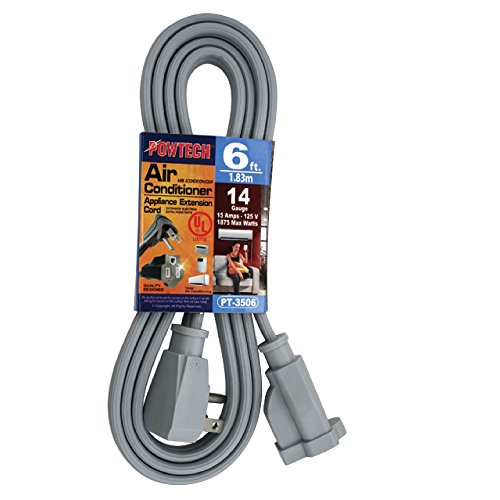
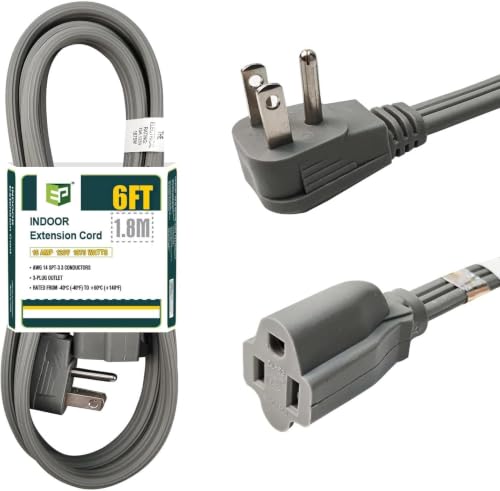
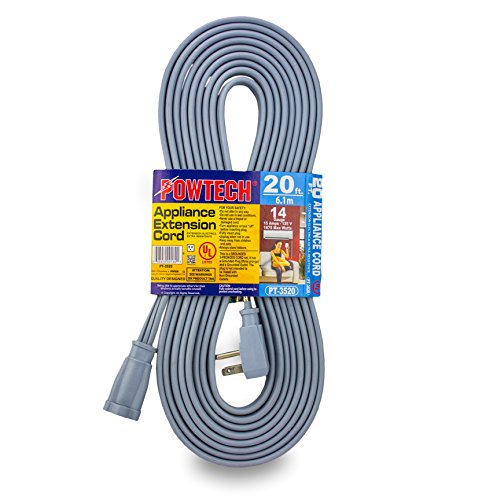
Wire gauge (AWG) determines how much current a cord can carry without overheating. Lower gauge numbers mean thicker wire and higher capacity. For an 8000 BTU air conditioner, the safe ranges are:
| Cord Length | Minimum Wire Gauge | Typical Amperage Rating | Best For |
|---|---|---|---|
| Up to 25 ft | 14 AWG | 15 amps | Short, direct runs to a nearby outlet |
| 25–50 ft | 12 AWG | 15–20 amps | Mid-distance runs across a room |
| 50–100 ft | 10 AWG | 20–30 amps | Long runs; reduces voltage drop |
Always check the cord's printed rating. A cord labeled "15A / 125V" and 14 AWG is the minimum for most 8000 BTU units on short runs. If your unit's nameplate lists a higher amperage, size up one gauge.
Safety note: Never use a light-duty indoor extension cord for an air conditioner. These cords are rated for intermittent loads like lamps or chargers, not the continuous draw of a compressor. Overheating, melted insulation, and fire risk are real consequences.
How Length Affects Performance
Longer cords increase resistance, which causes voltage drop. When voltage drops, the AC compressor draws more current to compensate — generating extra heat in the cord and stressing the unit's motor. Practical guidelines:
- Keep the run as short as possible. Under 25 feet is ideal.
- Increase gauge as length increases. A 12-gauge cord at 50 feet performs better than a 14-gauge cord at the same length.
- Avoid daisy-chaining cords. Each connection adds resistance and a potential failure point.
- Do not run cords under rugs or through doorways where they can be pinched or damaged.
Cord Tier Guide: Choosing by Build Quality
Rather than shopping by numbers alone, it helps to understand the three broad tiers of extension cords on the market. Use this framework to match the cord to your usage pattern.
Essential Tier
Basic 14-gauge cords with standard vinyl jackets. Suitable for short, occasional runs in climate-controlled spaces. Solid choice for a secondary unit used a few hours per day.
Balanced Tier
12-gauge cords with reinforced jackets, molded plugs, and clearer amperage labeling. Well-specified for daily use and mid-length runs. The most common pick for primary cooling setups.
Top-Tier
10-gauge heavy-duty cords with weather-resistant coating and industrial-grade connectors. Built for long runs, garage or workshop installations, and continuous operation.
If your AC is part of a larger efficiency plan, our page on energy efficiency of an air conditioner explains how cord choice interacts with overall power draw. For window-mounted units specifically, the energy-efficient window unit guide is a useful companion read.
Circuit and Outlet Considerations
The extension cord is only one part of the electrical picture. Before plugging in, verify:
- Dedicated circuit preferred. An 8000 BTU AC on its own 15-amp or 20-amp circuit is safest. Sharing a circuit with a microwave, space heater, or hair dryer invites tripped breakers.
- GFCI protection. If the outlet is near water (kitchen, bathroom, garage), use a GFCI-protected receptacle.
- Plug fit. The cord's plug must fit snugly. A loose connection generates heat.
- No adapters. Avoid 3-to-2 prong adapters that defeat the ground connection.
If you are installing a new unit and need professional help, our guide on how to choose an HVAC contractor covers what to verify before hiring.
Common Mistakes to Avoid
- Using a cord rated below the unit's amperage. Always match or exceed the nameplate rating.
- Ignoring the cord's temperature rating. Cords run warm; choose one rated for at least 60°C in enclosed spaces.
- Coiling the cord tightly during use. Heat cannot dissipate from a coiled conductor.
- Using an outdoor-rated cord indoors (or vice versa) without checking the jacket type. Indoor/outdoor rated cords are acceptable; strictly indoor cords are not for damp areas.
- Running the cord through walls or ceilings. This violates electrical codes in most jurisdictions.
Quick Selection Checklist
Before you buy, confirm each item:
- ☑ Unit nameplate amperage is known (typically 7–9A for 8000 BTU)
- ☑ Cord gauge matches length (14 AWG ≤25 ft, 12 AWG 25–50 ft, 10 AWG >50 ft)
- ☑ Cord is labeled heavy-duty or appliance-rated
- ☑ Plug has a ground prong (3-prong)
- ☑ Cord length is the shortest practical run
- ☑ Outlet circuit is not shared with other high-draw appliances
For related reading on powering your unit safely, see our notes on electric air conditioner setups and whether you need a permit for AC installation.
Frequently Asked Questions
Can I use a regular extension cord for an 8000 BTU air conditioner?
No. A standard household cord is rated for intermittent loads, not the continuous draw of an AC compressor. Use a heavy-duty cord rated for the unit's amperage — typically 14-gauge for short runs and 12-gauge for longer runs.
What gauge extension cord do I need for an 8000 BTU AC?
For runs under 25 feet, 14 AWG is the minimum. For 25–50 feet, use 12 AWG. Beyond 50 feet, 10 AWG is the safe choice to limit voltage drop.
How long can an extension cord be for an 8000 BTU AC?
Shorter is safer. Keep the run under 25 feet when possible. If a longer run is unavoidable, increase the wire gauge to compensate for voltage drop.
Should an 8000 BTU AC be on a dedicated circuit?
Ideally, yes. A dedicated 15-amp or 20-amp circuit prevents overloads. If you must share a circuit, avoid other high-draw appliances on the same line.
Is it safe to run an AC extension cord under a rug?
No. Cords under rugs cannot dissipate heat and may be damaged by foot traffic. Route cords along walls and keep them visible.
Can I plug an 8000 BTU AC into a power strip?
Avoid power strips unless they are explicitly rated for the AC's amperage and are heavy-duty. Most household power strips are not designed for continuous compressor loads. A direct wall connection is always preferable.