
Flexible Ductwork for HVAC: The Complete Guide
Understand how flex duct works, where it performs well, where it fails, and how to install it correctly so your HVAC system delivers balanced airflow and lasting efficiency.
Start LearningWhat Is Flexible Ductwork for HVAC?
Flexible ductwork — commonly called flex duct — is a type of air distribution conduit used in heating, ventilation, and air conditioning systems. Unlike rigid sheet metal or fiberglass board ducts, flex duct is manufactured as a continuous, bendable tube that can be routed around framing, joists, and mechanical obstacles with far less cutting and fitting.
Inside a typical residential or light commercial HVAC system, flexible duct connects the main trunk line or plenum to individual supply registers and return grilles. It is also widely used in ducted mini-split systems and in retrofits where installing rigid ductwork would require major demolition. Its popularity comes from three practical advantages: fast installation, low material complexity, and the ability to follow curved paths through cramped attics, crawlspaces, and wall cavities.
That said, flex duct is not a universal replacement for rigid duct. Its corrugated inner liner creates more airflow resistance than smooth metal, and poor installation can crush or sag the duct, sharply reducing performance. Understanding how flex duct is built and how it should be installed is essential before specifying it for a project.
Anatomy of a Flexible Duct
A standard insulated flex duct is built from several layers, each serving a distinct purpose:
- Inner core: A flexible wire helix wrapped in a thin plastic or aluminum foil liner. The helix gives the duct its shape and crush resistance, while the liner carries the air.
- Insulation blanket: Fiberglass insulation wrapped around the inner core to reduce heat gain or loss and to prevent condensation on cold surfaces. This layer defines the duct's R-value.
- Outer jacket: A reinforced vapor barrier — usually metallized polyester or foil-scrim-kraft — that protects the insulation from moisture, tears, and UV exposure.
Non-insulated flex duct omits the insulation blanket and is used only in conditioned spaces or short connector runs. For most HVAC applications in unconditioned spaces such as attics and crawlspaces, insulated flex duct is the standard choice because it limits thermal loss and controls condensation.
Types of Flexible Ductwork
Flex duct is available in several constructions, each suited to different applications and code requirements:
| Type | Construction | Best For |
|---|---|---|
| Standard insulated flex duct | Fiberglass insulation with foil-scrim-kraft jacket | General residential supply and return runs in attics and crawlspaces |
| High-R flex duct | Thicker insulation blanket (R-8 or higher) | Cold climates and long runs through unconditioned spaces |
| Non-insulated flex duct | Single-layer core without insulation | Short connector runs inside conditioned space |
| Acoustic flex duct | Perforated inner core with sound-absorbing liner | Home theaters, bedrooms, and noise-sensitive rooms |
| PVC-coated flex duct | Moisture-resistant jacket and core | Kitchen exhaust, bathroom ventilation, and damp environments |
For most residential HVAC projects, standard insulated flex duct in R-6 or R-8 is the practical default. Acoustic variants are worth considering when the duct passes near sleeping areas or when the system uses a variable-speed air handler that operates at low airflow and makes duct noise more noticeable.
Flex Duct vs Rigid Duct: How to Decide
The choice between flexible and rigid ductwork is a trade-off between installation convenience and airflow performance. Rigid metal duct offers a smooth interior with low friction loss, which makes it the better choice for long trunk runs and high-airflow systems. Flex duct wins on installation speed and route flexibility, but its corrugated liner adds friction and its insulation can compress if handled carelessly.
In practice, many well-designed systems use a hybrid approach: rigid trunk lines in the mechanical room and main corridors, with short flex duct branches to individual registers. This keeps pressure drop low on the high-volume sections while still allowing flexible routing at the final connections. If you are planning a ductless system instead, the ductless vs ducted comparison explains when air distribution hardware is not needed at all.
Sizing and R-Value: Getting the Numbers Right
Flex duct sizing follows the same principles as rigid duct sizing. The duct diameter must match the airflow required by the room and the static pressure the blower can deliver. Undersized flex duct increases velocity and noise, while oversized duct reduces velocity too much and can cause poor air mixing. A proper Manual J load calculation establishes room-by-room airflow needs, and a duct sizing table or Manual D calculation translates those needs into duct diameters.
The R-value of the insulation matters just as much as the diameter. In unconditioned attics and crawlspaces, R-6 is a common minimum, while R-8 is preferable in colder climates or where runs are long. Local energy codes may require specific R-values, so always confirm the requirement for your jurisdiction before ordering materials.
| Duct Diameter | Typical Airflow Range | Common Application |
|---|---|---|
| 6 inch | Up to about 110 CFM | Small bedrooms and bathrooms |
| 8 inch | About 160–230 CFM | Standard bedrooms and small living areas |
| 10 inch | About 270–350 CFM | Living rooms and open-plan zones |
| 12 inch | About 400–500 CFM | Main trunk branches and large zones |
| 14–16 inch | About 550–800 CFM | Return trunks and main supply mains |
These figures are general planning references, not a substitute for a full Manual D duct design. Airflow also depends on the number of fittings, the length of the run, and the total external static pressure of the system.
Installation Best Practices for Flexible Ductwork
Flex duct performs well only when it is installed with care. The following practices are widely recommended by HVAC technicians and energy efficiency programs:
- Fully extend the duct. Pull the inner core taut before securing it. A compressed flex duct can lose a large share of its rated airflow capacity.
- Make gentle bends. Use a sweeping radius rather than a sharp 90-degree elbow. If a sharp turn is unavoidable, use a metal adjustable elbow instead of kinking the flex duct.
- Support the duct properly. Use wide hanger straps or saddles at intervals recommended by the manufacturer — typically every 4 to 5 feet — and never let the duct sag between supports.
- Seal every connection. Use mastic or UL 181-listed tape at the collar, not standard duct tape, which dries out and fails over time.
- Avoid compression and crushing. Do not staple through the inner liner, step on the duct, or squeeze it through narrow openings.
- Keep insulation intact. The vapor barrier jacket must be continuous; any tear should be repaired with approved jacket tape.
Installation Checklist
- Verify duct diameter matches the design airflow for each room
- Confirm the R-value meets local code for the space it passes through
- Check that the inner core is fully extended with no sags
- Ensure all collars and boots are sealed with mastic or listed tape
- Inspect the outer jacket for tears and repair them
- Test system static pressure after installation to confirm performance
If the flex duct connects to a new air handler or coil, follow the manufacturer's instructions and the relevant refrigerant and electrical codes. The EPA refrigerant handling rules apply to the refrigerant side of the system, while duct sealing and insulation requirements are usually set by local building codes.
Common Mistakes That Hurt Flex Duct Performance
Most flex duct problems trace back to a small set of installation errors. Recognizing them early can save significant comfort and efficiency losses:
- Sharp 90-degree bends: A hard elbow in flex duct can cut airflow dramatically. Use metal elbows at tight turns.
- Sagging runs: Duct that dips between supports traps air and increases resistance. Support it at regular intervals.
- Compressed insulation: Squeezing the duct through a narrow gap flattens the insulation and reduces its effective R-value.
- Leaky connections: Unsealed collars are a major source of energy loss. Mastic sealing is quick and highly effective.
- Excessively long runs: Routing flex duct across an entire attic to reach a distant room creates high pressure drop. Re-plan the layout or use rigid trunk duct.
- Missing vapor barrier repairs: A torn outer jacket invites condensation and eventually mold inside the insulation.
Many of these issues are also covered in broader common AC installation mistakes guides and should be part of any post-installation inspection.
Maintenance and Longevity
Flexible ductwork requires relatively little routine maintenance, but a few habits extend its life and protect indoor air quality:
- Inspect annually. Check for sagging, disconnected joints, torn jackets, and pest damage during seasonal HVAC service.
- Keep the air filter clean. A clogged filter increases pressure in the system and stresses flex duct connections.
- Control humidity. Excess indoor moisture can condense on cold duct surfaces and soak the insulation. Maintain indoor relative humidity in a reasonable range.
- Seal and repair promptly. A small tear in the outer jacket is easy to fix and prevents a much larger moisture problem later.
- Avoid mechanical damage. Do not stack storage against duct runs in attics or crawlspaces.
When a duct system is being cleaned or serviced, technicians should inspect the interior liner for mold or debris. Professional fresh air duct cleaning is appropriate when visible contamination or persistent odors are present, not as a routine annual expense.
When Flexible Ductwork Is the Right Choice
Flex duct is a strong fit in several scenarios:
- Retrofit installations where rigid duct cannot be routed without major construction.
- Short branch runs from a rigid trunk to individual registers.
- Ducted mini-split systems that need compact, flexible air distribution in ceilings or soffits.
- Attics and crawlspaces with irregular framing and limited access.
- Acoustic-sensitive rooms where an acoustic flex duct variant can reduce noise transmission.
Conversely, flex duct is a weaker choice for long main trunk runs, high-airflow commercial systems, and any location where the duct cannot be fully extended and properly supported. In those cases, rigid duct or a hybrid design delivers better long-term performance. If you are evaluating the whole system, the ductwork design guide explains how trunk-and-branch layouts are planned.
Frequently Asked Questions
What is flexible ductwork used for in HVAC?
Flexible ductwork distributes conditioned air from the HVAC unit to registers and vents throughout a building. Its flexibility allows it to route around obstacles, making it ideal for retrofit installations and tight spaces where rigid ductwork would be difficult to install.
How long should flexible duct runs be?
Flexible duct runs should be kept as short and straight as possible. Many HVAC professionals recommend limiting flex duct runs to a maximum of 10 to 15 feet and avoiding more than one 90-degree bend to minimize airflow resistance and pressure drop.
What R-value should flexible ductwork have?
The R-value depends on your climate. In most US climates, R-6 or R-8 insulated flex duct is recommended for unconditioned spaces such as attics and crawlspaces. Check your local energy code for specific requirements in your area.
Can flexible ductwork cause mold?
Flexible ductwork can develop mold if moisture enters the system and the interior liner stays damp. Proper installation with sealed connections, adequate insulation, and maintaining indoor humidity levels help prevent condensation and mold growth inside flex duct.
Is flex duct as efficient as rigid duct?
Rigid duct has a smoother interior and lower friction loss, so it is more efficient for long runs and high-airflow systems. Flex duct is efficient when runs are short, fully extended, properly supported, and sealed. A hybrid design often delivers the best overall result.
Can I install flexible ductwork myself?
Some homeowners install short flex duct branches as part of a DIY project, but duct design, sizing, and sealing require care. Incorrect sizing or installation can reduce comfort and efficiency. For whole-system work, a licensed HVAC contractor is strongly recommended.
Recommended Flexible Ductwork and HVAC Air Distribution Products
⚠️ AFFILIATE DISCLOSURE: This website contains affiliate links. As an Amazon Associate, we earn from qualifying purchases. If you make a purchase through these links, we may receive a small commission at no additional cost to you. Read our full affiliate policy.

6 in. x 25 ft. Insulated Flexible Duct R4.2 Silver Jacket, 6 - Flexible Ductwork - Ducting & Venting
Check price on Amazon
Cuchiilo 8 Inch Insulated Duct,HVAC Insulation Duct,Insulated Flex Duct, AC Fleixble Duct,HVAC Ducting, Insulation Duct,8''25 'Insulated Flexible Ducting,R-4.2 for Heavy Duty HVAC & Exhaust Ductwork
Check price on Amazon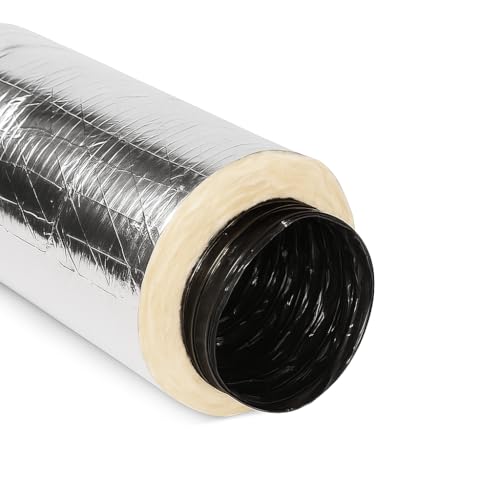
HVAC Insulated Flex Ductwork – 16" x 25 Ft R6 | Flexible Air Duct for Residential Heating & Cooling Systems | Aluminum Inner Core with Thermal Insulation | Easy Install Vent Hose
Check price on Amazon
HVAC Insulated Flex Ductwork – 6" x 25 Ft R6 | Flexible Air Duct for Residential Heating & Cooling Systems | Aluminum Inner Core with Thermal Insulation | Easy Install Vent Hose
Check price on Amazon
HVAC Insulated Flex Ductwork – 8" x 25 Ft R6 | Flexible Air Duct for Residential Heating & Cooling Systems | Aluminum Inner Core with Thermal Insulation | Easy Install Vent Hose
Check price on Amazon
CUCHIILO 6 Inch R6 Insulated Flexible Duct, 25 FT HVAC Air Duct Hose | R6 insulation helps reduce heat loss; 25 FT flexible HVAC duct with silver jacket and 2 clamps for heating and cooling.
Check price on Amazon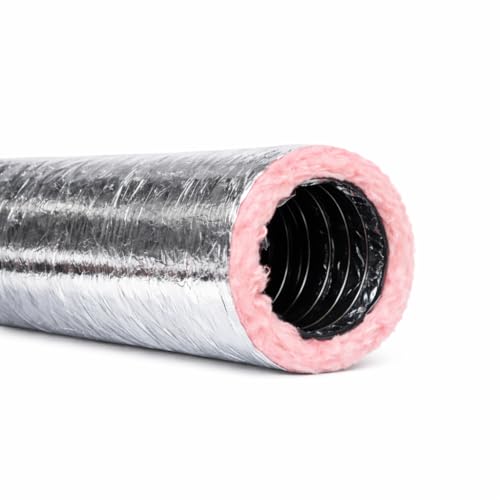
8 Inch R8 Insulated Flex Ductwork 25 FT – HVAC Flexible Air Duct, Aluminum Core, Home AC & Heating Vent Hose, Silver
Check price on Amazon
HVAC Insulated Flex Ductwork – 5" x 25 Ft R6 | Flexible Air Duct for Residential Heating & Cooling Systems | Aluminum Inner Core with Thermal Insulation | Easy Install Vent Hose
Check price on AmazonDisclaimer
Some of the content on this site uses AI assistance. Information is provided for educational purposes only. We are not responsible for any losses resulting from the use of this information. By using this site, you waive any right to bring legal claims against us arising from your use of the information provided. If you do not agree, please do not use this site. Read the full disclaimer.