
HVAC Manufacturers: The Complete Guide to Top Brands
Understand who makes the world's leading air conditioners, furnaces, and heat pumps — and how to match the right manufacturer to your home, climate, and long-term goals.
Explore Manufacturer TiersWhy manufacturer research matters: The HVAC manufacturer behind your equipment determines warranty depth, parts availability, service-network strength, and how long the system will realistically serve your home. Buyers who research manufacturers before installation consistently report fewer surprises and better long-term satisfaction. This guide maps the HVAC manufacturing landscape so you can enter the buying process informed.
The HVAC Manufacturing Landscape at a Glance
The global HVAC industry is concentrated among a small number of parent conglomerates that own multiple consumer-facing brands. Understanding this structure is essential, because two badges on two different outdoor units frequently trace back to the same factory floor, the same compressor supplier, and sometimes the same warranty administrator. In North America, the market is largely shaped by a handful of major manufacturers, each with a flagship brand, a mid-tier brand, and an entry-level brand positioned for different installation channels.
For homeowners, this consolidation produces real practical consequences. A brand that sits under a large parent company typically enjoys broader parts distribution, faster warranty processing, and a deeper dealer network than an independent manufacturer. On the other hand, smaller and specialty manufacturers often lead on innovation — inverter modulation, variable-speed compressors, low-GWP refrigerants, and smart-home integration — and are frequently first to market with new efficiency technology.
When you evaluate an HVAC manufacturer, weigh four factors: the parent company's financial stability, the brand's dealer and service footprint in your region, the clarity of the warranty terms, and the track record of the specific product line rather than the brand as a whole. A respected manufacturer can still produce an entry-level model with thinner construction than its flagship line. This page organizes the industry into recognizable tiers so you can compare like with like.
HVAC Manufacturers by Market Tier
Rather than ranking manufacturers by arbitrary scores, we group them by the market position their product lines occupy. This classification is neutral, stable over time, and independent of any currency or regional pricing structure. Use it to frame your shortlist: a flagship-tier manufacturer is not automatically the right choice for a starter home, and an essential-tier brand can be a perfectly sound selection for a rental property or a secondary cooling zone.
Premium & Flagship Manufacturers
These manufacturers build their reputation on top-tier efficiency, variable-speed inverter technology, premium materials, and long warranty coverage. Their flagship lines typically include communicating systems, advanced humidity control, and the highest seasonal efficiency ratings in the category. They are a worthwhile long-term investment for homeowners planning to stay in place for a decade or more, and they tend to have the strongest dealer certification programs.
Mid-Range Manufacturers
The mid-range tier is where most American households land, and for good reason. These manufacturers offer solid build quality, reliable single-stage and two-stage equipment, and a broad service network without the premium of flagship technology. Feature-rich for their class, mid-range lines frequently share compressors and control boards with their parent company's flagship equipment, delivering dependable performance with fewer advanced electronics to maintain.
Entry-Level & Value Manufacturers
Entry-level manufacturers focus on essential, proven designs: single-stage compressors, straightforward controls, and durable construction. They are a solid choice for rental properties, garages, seasonal cabins, and budget-conscious replacements where the system is not expected to run continuously. Many of these brands are owned by the same conglomerates as flagship brands, which means shared parts channels and respectable warranty support despite the simpler hardware.
Profiles of Leading HVAC Manufacturers
Below is a representative survey of the manufacturers most frequently encountered in residential and light-commercial HVAC. The profiles describe each company's market position, product strengths, and typical buyer profile. For a deeper comparison of badge-level branding, see our overview of air conditioner brands, and for corporate-level analysis, read our guide to air conditioner companies.
Carrier
Flagship TierThe company credited with inventing modern air conditioning remains a benchmark for engineering depth. Carrier's residential lineup spans entry-level through flagship inverter systems, with strong emphasis on humidity control and communicating thermostats. Its dealer certification network is among the most structured in the industry, making service access reliable in most metropolitan markets.
Trane
Flagship TierTrane is widely regarded for durable construction and premium materials, particularly in its variable-speed and two-stage equipment. The manufacturer invests heavily in compressor reliability testing and publishes detailed performance data, which appeals to buyers who value engineering transparency. Its flagship lines are a common reference point in highest-rated central air conditioning unit discussions.
Lennox
Flagship TierLennox positions itself at the high-efficiency end of the market, with some of the highest seasonal efficiency figures available in residential split systems. The manufacturer is known for quiet operation and advanced zoning integration. Buyers exploring most reliable central air conditioning systems frequently shortlist Lennox flagship models alongside Trane and Carrier.
Goodman
Balanced TierGoodman built its reputation on broad availability and straightforward, serviceable equipment. It is one of the largest volume manufacturers in North America, with strong parts distribution through wholesale channels. The brand is a common recommendation for replacement projects where dependable mid-range performance and accessible service matter more than cutting-edge electronics.
Rheem
Balanced TierRheem manufactures both air conditioning and water heating equipment, giving it a cross-category footprint in many homes. Its HVAC lines emphasize balanced efficiency, robust warranty terms, and compatibility with smart thermostats. The manufacturer's contractor network is extensive, and its mid-range inverter offerings have expanded considerably in recent product cycles.
American Standard
Balanced TierA sister brand to Trane under the same parent company, American Standard shares much of the underlying engineering while targeting a slightly broader dealer base. Buyers who want Trane-adjacent build quality with a different service network often find American Standard a practical alternative. Its two-stage and variable-speed lines are well regarded for comfort consistency.
Bryant
Balanced TierBryant is the sibling brand to Carrier, sharing core technology and parts channels while maintaining its own dealer identity. This makes Bryant one of the most accessible routes into Carrier-engineered equipment. The manufacturer's lineup covers entry-level through premium inverter systems, and its thermostat ecosystem is shared with the parent brand.
Mitsubishi Electric
Flagship Tier (Ductless)Mitsubishi Electric is the reference manufacturer for ductless mini-split systems in North America. Its inverter technology, zone control, and cold-climate heat pump performance are widely cited in professional reviews. For homes without ductwork or for room-by-room zoning, the manufacturer is frequently the first name recommended by installers.
Daikin
Flagship Tier (Ductless & Commercial)Daikin is one of the largest HVAC manufacturers in the world and a major player in ductless and commercial-grade equipment. The company manufactures its own compressors and refrigerants, giving it unusual vertical integration. Its residential inverter systems and commercial-grade lines are respected for efficiency and long service life.
LG
Balanced Tier (Ductless & Window)LG has become a major force in ductless mini-splits and window units, leveraging its consumer-electronics expertise in smart controls and inverter compressors. The manufacturer's dual-inverter window units are a frequent reference point in top-rated 6000 BTU window air conditioners comparisons. Its residential split systems are expanding in North America.
Frigidaire
Essential Tier (Room AC)Frigidaire is one of the most recognizable names in window and portable air conditioning. The manufacturer focuses on essential-tier room units with dependable cooling, straightforward controls, and broad retail availability. Its products are a common choice for apartments, dormitories, and single-room cooling where a full split system is impractical.
Bosch
Flagship Tier (Heat Pumps)Bosch has invested heavily in inverter-driven heat pump technology, particularly in cold-climate applications. The manufacturer's residential heat pump lines emphasize efficiency in the long run, with variable-speed compressors and advanced defrost management. It is a frequent shortlist entry for electrification retrofits.
Furnace Manufacturers and Heating Brands
Many of the same conglomerates that dominate air conditioning also dominate residential heating. If you are replacing a complete system, aligning the furnace manufacturer with the air conditioner manufacturer can simplify warranty administration and control compatibility. For a focused survey, see our guide to furnace companies, and for combined research on both categories, read heating and cooling brands.
The furnace market places heavy emphasis on heat exchanger durability, combustion safety, and blower motor efficiency. Flagship-tier manufacturers typically offer modulating furnaces with variable-speed blowers that pair cleanly with inverter air conditioners and heat pumps. Mid-range manufacturers focus on two-stage and single-stage furnaces with proven heat exchanger designs. Entry-level manufacturers prioritize simple, reliable single-stage equipment. When comparing furnace manufacturers, verify the heat exchanger warranty length and whether the warranty is prorated, as this is often the clearest signal of a manufacturer's confidence in its own metallurgy.
For homeowners pursuing full-home electrification, the manufacturer's heat pump lineup matters as much as its furnace catalog. A manufacturer with a strong cold-climate heat pump portfolio can offer a cleaner long-term path than one whose expertise is concentrated in gas furnaces. Our overview of heating, ventilation, and air conditioning systems explains how the components integrate.
Manufacturer Comparison by Category
The table below summarizes how the leading manufacturer tiers typically differ across the criteria that matter most to buyers. Values are expressed as relative positions, not absolute figures.
| Manufacturer Tier | Typical Product Focus | Efficiency Range | Warranty Depth | Best For |
|---|---|---|---|---|
| Flagship Tier | Variable-speed inverters, communicating systems, cold-climate heat pumps | Top of category | Deepest coverage, often 10+ years on parts | Long-term primary residence, whole-home comfort, electrification |
| Balanced Tier | Two-stage and single-stage systems, expanding inverter lines | Mid to high | Solid coverage, 5–10 years typical | Most replacement projects, rental portfolios, mixed-climate homes |
| Essential Tier | Single-stage room AC, basic split systems, entry window units | Entry to mid | Standard coverage, often 1–5 years | Secondary rooms, seasonal use, starter properties |
| Specialty Ductless | Mini-splits, multi-zone systems, cold-climate ductless | High to top of category | Deep coverage on flagship lines | Homes without ducts, room-by-room zoning, additions |
How to Evaluate an HVAC Manufacturer Before You Commit
Manufacturer reputation is a starting point, not a final answer. Use the following checklist to convert brand awareness into a defensible decision.
- Verify the parent company. A brand's warranty processing, parts logistics, and future product support depend on the financial health of its parent conglomerate. Confirm ownership before assuming a badge indicates independence.
- Check the local dealer footprint. The best manufacturer in the country is a poor choice if certified technicians are scarce in your area. Ask two or three local contractors which manufacturers they are factory-certified to service.
- Read the warranty terms line by line. Distinguish between parts, labor, compressor, and heat exchanger coverage. Note whether coverage is prorated and whether registration deadlines apply. Warranty depth is one of the clearest signals of a manufacturer's confidence in its build quality.
- Compare the specific model, not the brand. Every major manufacturer sells both flagship and entry-level lines. Compare the model number you have been quoted against the manufacturer's published specifications rather than judging by the logo alone.
- Assess parts availability. Common control boards, blower motors, and compressors should be readily obtainable for the expected service life of the equipment. Manufacturers with broad wholesale distribution have a practical advantage here.
- Look at refrigerant transition readiness. Manufacturers that have already transitioned product lines to lower-GWP refrigerants are better positioned for future service and regulatory changes. Our guide to energy efficiency ratings (SEER, EER, HSPF) explains the metrics that accompany these transitions.
- Consider control ecosystem compatibility. If you plan to add smart thermostats or zoning, confirm that the manufacturer supports the controls you want. Proprietary communicating systems can be excellent, but they lock you into the manufacturer's accessories.
Manufacturer Reliability and Third-Party Ratings
Reliability data for HVAC equipment is fragmented. Manufacturers publish their own performance figures, while third-party organizations, trade publications, and consumer review platforms add independent perspectives. The most useful approach is triangulation: compare manufacturer-published specifications with independent reliability surveys and with the anecdotal field experience of local contractors.
Contractors are an underused source of manufacturer intelligence. A technician who services hundreds of units per year can speak to which manufacturers produce the fewest callbacks in your climate, which models have recurring control-board failures, and which brands process warranty claims smoothly. When you request quotes, ask each contractor which manufacturer they would install in their own home and why. The consistency of their answers across multiple contractors is a meaningful signal.
For badge-level reliability comparisons, see our overviews of most reliable central air conditioning systems and ratings of central air conditioning systems. For efficiency-focused shortlists, see top-rated central air conditioning systems and top-rated home central air conditioning systems.
Manufacturer Quality vs. Installer Quality
Industry professionals consistently emphasize that installation quality matters as much as manufacturer quality. A flagship-tier system installed with an undersized line set, incorrect refrigerant charge, or poorly sealed ductwork will underperform a balanced-tier system installed to specification. When you compare manufacturers, compare them through the lens of installer competence: ask whether the contractor follows the manufacturer's published installation manual, whether they perform a load calculation, and whether they will provide commissioning documentation.
This is also why manufacturer dealer certification programs matter. Factory-certified dealers receive manufacturer-specific training, have access to technical support channels, and are often required to meet installation standards to maintain their certification. A strong manufacturer paired with an uncertified installer is a weaker combination than a balanced-tier manufacturer paired with a certified, experienced contractor.
Regional Considerations for Manufacturer Selection
Climate shapes which manufacturer strengths are most relevant. In hot-humid climates, manufacturers with strong latent-capacity control and humidity management features have a practical edge. In cold climates, manufacturers with proven cold-climate heat pump portfolios are increasingly the default choice for electrification projects. In mixed climates, two-stage and variable-speed equipment from mid-range and flagship manufacturers delivers the best balance of comfort and efficiency.
Regional service networks also vary. Some manufacturers have dense dealer coverage in metropolitan areas but thinner coverage in rural regions. Before committing to a manufacturer, confirm that at least two certified service providers operate within a reasonable distance of your home. This single check prevents the most common post-installation frustration.
Frequently Asked Questions About HVAC Manufacturers
Ready to Compare Real Products?
You now understand the manufacturer landscape. The next step is evaluating specific equipment against your room size, climate, and efficiency goals. Explore our product recommendations below to see available options from leading manufacturers.
View Recommended ProductsRecommended HVAC Equipment from Leading Manufacturers
⚠️ AFFILIATE DISCLOSURE: This website contains affiliate links. As an Amazon Associate, we earn from qualifying purchases. If you make a purchase through these links, we may receive a small commission at no additional cost to you. Read our full affiliate policy.

HVAC Troubleshooting and Diagnostics: A Practical Field Workbook for Diagnosing Common Residential HVAC Problems
Check price on Amazon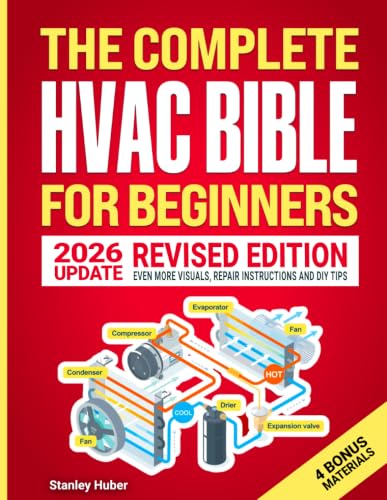
The Complete HVAC BIBLE for Beginners: The Most Practical & Updated Guide to Heating, Ventilation, and Air Conditioning Systems | Installation, Troubleshooting and Repair | Residential & Commercial
Check price on Amazon
CoreCo2 AC Drain Line Cleaner CO2 Gun Kit with Hose & 5 Cartridges | Clear AC condensate drain line clogs with a CO2 gun, hose and 5 cartridges for air conditioner cleaning and HVAC maintenance.
Check price on Amazon
HVAC TROUBLESHOOTING PREP: A Study Guide and Field Reference for Students, Apprentices, and Entry-Level Technicians
Check price on Amazon
0131F00042SP Blower Motor, Replaces Goodman 0131F00042SP | 1/2HP 115V 1130RPM 7.0A, Fit for Several goodman amana janitrol units, Manufacturer Part #: Y7L623E203T
Check price on Amazon
CoreCo2 AC Drain Line Cleaner Tool HVAC CO2 Drain Gun and Flexible Hose Kit | AC drain line cleaner with flexible hose, CO2 drain gun for condensate clog removal and maintenance. Cartridges not included.
Check price on Amazon
CHILLER COMPLETE GUIDE — The Ultimate Practical Handbook for HVAC Technicians, Operators & Engineers (HVAC BOOK)
Check price on Amazon