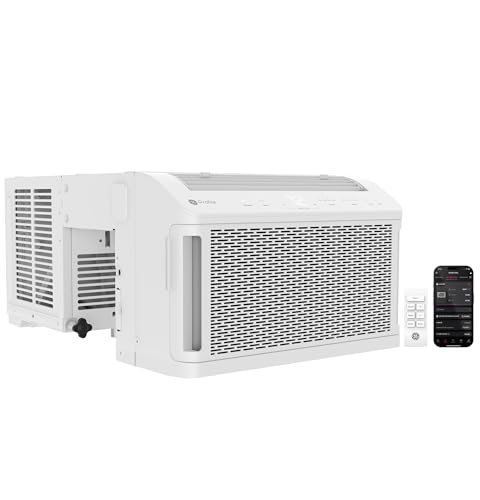
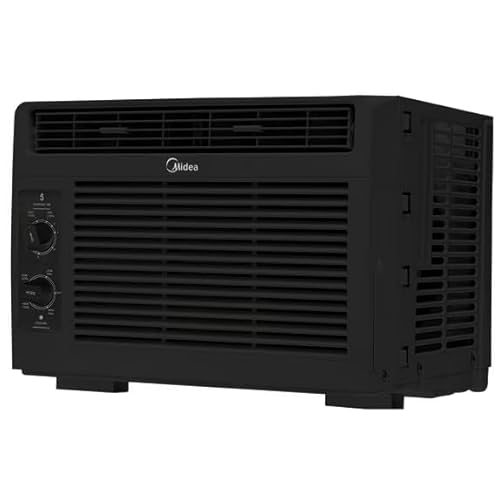
Low Profile Window AC 5000 BTU: Slim Cooling Guide
A low profile 5000 BTU window air conditioner solves a specific problem: cooling a small room through a window that a standard unit cannot fit. This guide explains what "low profile" really means, how to match the unit to your window and room, and which features matter before you buy.
Check Sizing & FitQuick answer: A low profile 5000 BTU window AC is a compact unit designed for windows with limited vertical clearance—typically under 12 to 13 inches high, compared to the 14 to 18 inches standard units require [citation:1][citation:6]. At 5000 BTU, it is sized for rooms up to about 150 square feet [citation:1][citation:5]. Measure your window height, width, and depth before shortlisting any model.
What "Low Profile" Means for a 5000 BTU Window AC
The term "low profile" is used loosely in the market, so it helps to pin down what it actually describes. A low profile window air conditioner is engineered to be shorter in height and often sleeker in depth than a traditional window unit, allowing it to fit into window openings that would otherwise be unusable [citation:6]. Most low profile models are under 12 to 14 inches tall, while standard window units typically need 14 to 18 inches of vertical clearance [citation:1][citation:6].
For a 5000 BTU unit specifically, the low profile form factor serves a practical purpose: it lets you cool a small room through a tight window without modifying the frame or losing the entire lower half of your view. These units are common in basements, older homes with non-standard window dimensions, RVs, and apartments where the window opening is restricted [citation:1].
Low Profile vs. Standard vs. U-Shaped Units
Not every compact window AC uses the same approach. The table below summarizes the main form factors you will encounter when shopping for a 5000 BTU unit.
| Form Factor | Typical Height | Best For | Trade-Off |
|---|---|---|---|
| Standard low profile | Under 12–13 inches | Tight window openings, basement windows, older homes | Fewer premium features; limited BTU range |
| U-shaped / saddle | Varies; wraps around sash | Keeping full window view, quieter operation | Higher market tier; less common in 5000 BTU |
| Standard window unit | 14–18 inches | Wide window openings, maximum feature choice | Will not fit short windows |
If your window height is the limiting factor, a standard low profile unit is the direct solution. If you want to preserve your view and are willing to move to a slightly higher market tier, U-shaped models are worth exploring—though they are less common at exactly 5000 BTU [citation:6].
Is 5000 BTU the Right Capacity for Your Room?
Capacity and form factor are separate decisions. A low profile 5000 BTU unit will fit a tight window, but it still needs to be the right size for the room. The general guideline is straightforward: 5000 BTU cools a room up to about 150 square feet with a standard 8-foot ceiling [citation:1][citation:5]. Typical applications include a bedroom, a home office, a small studio, or a dorm room [citation:5].
Several factors can push the required capacity above 5000 BTU even in a small room. Direct afternoon sun, a kitchenette, multiple electronics, or poor insulation all add heat load. If any of these apply, a 6000 BTU unit may be the safer choice—provided a low profile form factor exists at that capacity, which is not guaranteed [citation:5].
If you are unsure whether 5000 BTU is sufficient, our guide on the 5000 BTU 115V window mounted mini compact air conditioner walks through the calculation in more detail.
Features That Matter on a Low Profile Unit
Because low profile units are often built to a specific form factor, feature sets can be more limited than standard window ACs. Prioritize the features that affect daily use and long-term efficiency.
- Energy Efficiency Ratio (EER) or CEER. Look for an EER of at least 11.0 for a 5000 BTU unit. ENERGY STAR certified models exceed this threshold, which translates to lower electricity use over the cooling season [citation:5].
- Electronic controls vs. mechanical dials. Mechanical dials are simple and durable; electronic controls with a digital display and remote allow precise temperature setting, timers, and sleep mode [citation:5].
- Noise level. Most 5000 BTU units produce between 50 and 55 decibels on low fan—roughly conversation level. Check decibel ratings if the unit will run overnight in a bedroom [citation:5].
- Washable filter. A removable, washable mesh filter is standard. Regular cleaning maintains airflow and efficiency; a clogged filter forces the unit to work harder [citation:5].
- Installation hardware. Confirm the unit includes side panels, foam seals, and a support bracket or the provisions for one. Even a 5000 BTU unit weighs enough to require proper support [citation:1].
How to Measure Your Window Before Buying
Low profile units exist because window dimensions vary, and the only way to know whether a specific model will fit is to measure. Use this sequence before you shortlist any 5000 BTU low profile unit.
- Measure the window opening height. This is the critical dimension for a low profile unit. Confirm the model's minimum and maximum height requirements, not just the nominal height.
- Measure the window width. The unit's side panels or window kit must span the opening. Check the minimum and maximum width the kit supports.
- Measure the sill depth. Some low profile units sit deeper in the sill or extend further outside. Confirm the unit's depth and whether your sill can support it.
- Check the window type. Double-hung windows are the most straightforward. Sliding or casement windows may require a specific installation kit or a different form factor entirely.
- Plan for support. Even compact units benefit from a support bracket. Confirm whether the model includes one or whether you need to source it separately [citation:1].
Installation and Maintenance Basics
Installing a 5000 BTU low profile window AC is generally a DIY-friendly project, but a few details separate a good installation from a problematic one. Use the provided foam seals to close gaps between the unit and the window frame. Tilt the unit slightly toward the outside so condensation drains correctly rather than pooling indoors [citation:1]. If the unit weighs more than you can lift safely alone, ask for help—most 5000 BTU units weigh between 40 and 60 pounds [citation:1].
Maintenance is simple but consequential. Wash the air filter every two to four weeks during heavy use. Inspect the coils periodically and wipe them down if they become visibly clogged. Check the window seal at the start of each cooling season. With consistent care, a window AC can last eight to ten years [citation:1]. If your unit is already struggling, the troubleshooting steps in our guide on fixing an air conditioner can help you isolate the issue before calling a technician.
For homes where a window unit is not viable—for example, windows that cannot accommodate any window AC—a mini air conditioner for room or a ductless mini-split may be the more practical path. If you need cooling but have no suitable window at all, the options in our guide on what to do when you need an air conditioner but have no window cover the alternatives.
Low Profile 5000 BTU vs. Other Small Cooling Options
A low profile window unit is not the only way to cool a small room. The comparison below frames the trade-offs against the most common alternatives.
| Option | Best For | Window Requirement | Notes |
|---|---|---|---|
| Low profile 5000 BTU window AC | Small rooms with tight windows | 11–13 inches height | Direct cooling, DIY install, limited premium features |
| Standard 5000 BTU window AC | Small rooms with standard windows | 14–18 inches height | Wider model selection, more feature options |
| Portable AC | Renters, rooms without suitable windows | Window or vent for exhaust hose | Movable but bulkier; needs hose venting |
| Mini-split | Long-term whole-room cooling | Small wall penetration | Higher upfront investment; professional install |
If you are comparing window AC types more broadly, our guide on the different types of air conditioning for homes provides a wider decision framework. For a narrow window that still accommodates a standard-height unit, a most efficient small room air conditioner may offer better efficiency than a low profile model at the same capacity.
Frequently Asked Questions
What is a low profile 5000 BTU window air conditioner?
A low profile 5000 BTU window AC is a compact cooling unit designed to fit windows with limited vertical clearance, typically under 12 to 13 inches high. It delivers 5000 BTU of cooling, which is suitable for rooms up to about 150 square feet.
What size room does a 5000 BTU low profile AC cool?
A 5000 BTU unit is generally sized for rooms between 100 and 150 square feet with standard ceiling height. Rooms with direct sun, kitchens, or multiple electronics may need a slightly higher capacity.
Will a low profile 5000 BTU AC fit my window?
Measure your window opening height, width, and depth before buying. Low profile models typically require 11 to 13 inches of vertical clearance, compared to 14 to 18 inches for standard window units. Width and depth requirements vary by model.
Is a low profile window AC quieter than a standard unit?
Not automatically. Noise depends on the specific model and compressor design. Some slim units use inverter compressors and achieve lower noise levels, but entry-level low profile models may produce similar noise to standard window units.
Can I install a low profile 5000 BTU window AC myself?
Yes, most 5000 BTU window units are designed for DIY installation and weigh under 40 pounds. Use a support bracket, seal gaps with foam, and tilt the unit slightly toward the outside for drainage. Two people make installation safer.