
New HVAC System Prices: Understanding Market Tiers
Discover how new HVAC systems are classified across entry-level, mid-range, and premium tiers — and learn which category best matches your home, climate, and long-term comfort goals.
EXPLORE TIERSWhy this guide matters: When researching a new HVAC system, the market is organized into distinct tiers that reflect build quality, efficiency, and feature depth. Understanding these tiers helps you evaluate systems on their merits rather than surface-level labels. This guide walks you through each tier, what it typically includes, and how to match it to your home's requirements.
Why Tier Classification Matters More Than Ever
The HVAC market has evolved significantly. With refrigerant transitions (such as the shift toward new refrigerant standards) and updated efficiency benchmarks, buyers now face more choices than ever. Tier classification cuts through the noise by grouping systems according to their relative position in the market.
Rather than fixating on a single figure, smart buyers look at the total picture: build quality, compressor technology, warranty depth, and installation requirements. A well-chosen mid-range system from a reputable brand often outperforms a hastily selected premium unit that is incorrectly sized for the space.
The Three Market Tiers of New HVAC Systems
HVAC systems generally fall into three broad categories. The descriptions below use universal tier descriptors that remain valid regardless of market fluctuations or regional differences.
Essential Tier
Designed for straightforward cooling and heating needs. These systems prioritize reliable performance and straightforward installation.
- Single-stage compressor
- Standard efficiency ratings
- Basic thermostat compatibility
- Solid build for everyday use
- Good value for its tier
Balanced Tier
The sweet spot for most homeowners. These systems combine improved efficiency with enhanced comfort features and durable construction.
- Two-stage or variable-speed compressor
- Higher SEER2 ratings
- Smart thermostat ready
- Improved humidity control
- Quieter operation
Top-Tier
Engineered for maximum comfort, efficiency, and longevity. These systems incorporate advanced technology and premium materials.
- Fully variable-speed operation
- Top-tier efficiency ratings
- Advanced zoning support
- Premium materials and coatings
- Extended warranty coverage
Tier Comparison at a Glance
Use the table below to compare the three tiers across key decision factors. Remember that the right choice depends on your home's size, insulation, climate, and how long you plan to stay.
| Tier | Best For | Compressor Type | Comfort Level | Longevity Outlook |
|---|---|---|---|---|
| Essential | Rentals, starter homes, mild climates | Single-stage | Basic, on/off cycling | Standard service life |
| Balanced | Family homes, mixed climates, long-term owners | Two-stage or variable-speed | Even temperatures, better humidity control | Extended service life |
| Top-Tier | Custom homes, extreme climates, premium comfort seekers | Fully variable-speed | Precision comfort, near-silent operation | Maximum service life |
What Determines a System's Position in the Market
Several factors influence where a system lands within the tier structure. Understanding these helps you evaluate whether a given model's positioning aligns with your priorities.
- Compressor technology: Single-stage compressors are entry-level; two-stage and variable-speed compressors push systems into mid-range and premium categories respectively.
- Efficiency ratings: SEER2 and HSPF2 ratings are key differentiators. Higher ratings generally correlate with higher tiers, though the relationship is not perfectly linear.
- Build materials: Premium systems often feature outdoor condensing units with weather-resistant coatings and rust-proof finishes for enhanced durability.
- Smart features: Integrated Wi-Fi, zoning compatibility, and advanced diagnostics are more common in higher tiers.
- Warranty depth: Entry-level systems typically carry standard warranties; premium systems often include extended coverage on compressors and parts.
- Refrigerant type: Systems using newer refrigerants may occupy different tiers depending on regional regulations and availability. Learn more about new HVAC systems and their refrigerant considerations.
Matching the Right Tier to Your Home
Choosing a tier is not about chasing the highest label. It is about finding the system that delivers the best balance of comfort, efficiency, and durability for your specific situation.
- Small apartments or condos: An entry-level or mid-range system is often sufficient. For spaces without ductwork, consider ductless mini-split systems.
- Older homes: Homes without existing ducts may benefit from high-velocity or ductless solutions. Explore options for older homes without ducts.
- Large family homes: A balanced-tier system with zoning capability often provides the best overall experience.
- Extreme climates: Premium systems with variable-speed compressors handle temperature swings more gracefully and maintain efficiency in harsh conditions.
- Long-term ownership: If you plan to stay in your home for many years, investing in a higher tier can be a worthwhile long-term investment through improved efficiency and durability.
Installation Quality: The Great Equalizer
Even the most advanced system underperforms if installed incorrectly. Proper sizing, ductwork design, and refrigerant charging are critical regardless of tier. A mid-range system installed by a meticulous professional will often deliver better results than a premium system installed hastily.
When evaluating contractors, ask about load calculations, duct inspection, and post-installation testing. For homes with existing ductwork, consider whether ducted air conditioning upgrades or duct sealing are needed to maximize performance.
Efficiency Ratings and Long-Term Value
Efficiency ratings are among the most reliable indicators of a system's tier positioning. Higher SEER2 ratings generally mean lower energy consumption over the system's life. However, the relationship between efficiency and real-world savings depends on climate, usage patterns, and local energy rates.
- Essential tier: Meets minimum efficiency standards. Suitable for mild climates and infrequent use.
- Balanced tier: Above-average efficiency. A solid choice for most homes in mixed climates.
- Top-tier: Highest efficiency ratings. Best for extreme climates and homeowners who prioritize minimal energy consumption.
For a deeper dive into efficiency metrics, see our guides on SEER ratings and HSPF ratings.
Common Mistakes When Selecting a New HVAC System
- Oversizing: A system that is too large cycles on and off frequently, reducing efficiency and comfort. Always insist on a proper load calculation. Learn about what happens if an AC is too big or too small.
- Ignoring ductwork: Even a premium system cannot compensate for leaky or poorly designed ducts.
- Choosing by label alone: A premium label does not guarantee satisfaction if the system is mismatched to your home.
- Skipping permits: Proper permitting ensures code compliance and protects your warranty. See how to get an AC permit.
- Neglecting maintenance: Regular filter changes and annual service extend the life of any system, regardless of tier.
Frequently Asked Questions
How do HVAC market tiers differ in build quality?
Entry-level systems use standard components and single-stage compressors. Mid-range systems feature enhanced compressors, better insulation, and quieter operation. Premium systems include variable-speed technology, premium materials, and heavy-duty construction with weather-resistant coatings.
What should I look for in a new HVAC system beyond the tier?
Focus on SEER2 ratings, refrigerant type, warranty coverage, and installation quality. A properly sized and professionally installed mid-range system often delivers better real-world performance than a premium system that is incorrectly matched to the home.
Is a higher-tier HVAC system always better?
Not always. The best system is the one that fits your home's size, your climate, and your comfort priorities. A balanced-tier system with proper installation and regular maintenance can provide excellent service for many years.
How long does a new HVAC system typically last?
Service life depends on the tier, usage, and maintenance. Entry-level systems generally last 10–15 years, mid-range systems 15–20 years, and premium systems 20+ years with proper care. Regular filter changes and annual professional service are key to maximizing longevity.
Can I upgrade my HVAC system in stages?
Yes. Many homeowners start with an entry-level or mid-range system and later add smart thermostats, zoning controls, or air purification components. However, some upgrades (such as switching from single-stage to variable-speed) require replacing the outdoor unit.
Recommended HVAC Systems for Your Home
⚠️ AFFILIATE DISCLOSURE: This website contains affiliate links. As an Amazon Associate, we earn from qualifying purchases. If you make a purchase through these links, we may receive a small commission at no additional cost to you. Read our full affiliate policy.

BACOENG 3.6CFM AC Vacuum Pump and Gauge Set - HVAC Vacuum Pump Kit for Mini Split System for R410A R22 Refrigerants - w/ R410a Mini Split Adapters & 3x5FT Hoses
Check price on Amazon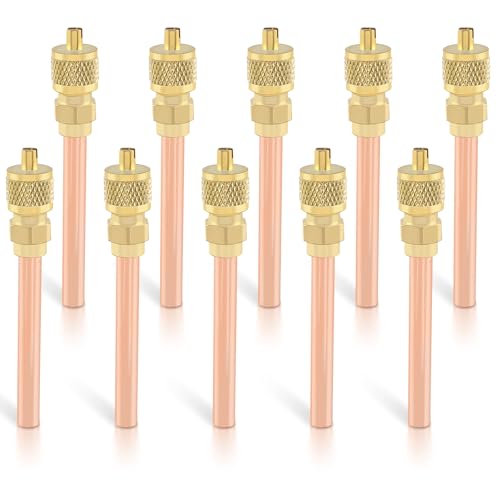
AUTOKAY 10PCS Stem HVAC AC Schrader System Vacuum | 1/4" SAE *1/4" OD *2.75" AC Refrigeration Kit
Check price on Amazon
AprilAire 213 Replacement Filter, MERV 13, 20x25x4 Whole-House Air Filter | AC & HVAC System Media, Self-Seal Technology, Allergen Reduction, 12-Month Life, Made in USA
Check price on Amazon
R410A Adapter 5/16" SAE Female Quick Couplers to 1/4" SAE Male Flare | 2 PCS 45 Degree Angled Charging Vacuum Adapter, Used for R410a with Thimble Mini Split System, HVAC and Refrigeration Service
Check price on Amazon
New HVAC A/C System Valve Core and Cap Kit VC 2901C
Check price on Amazon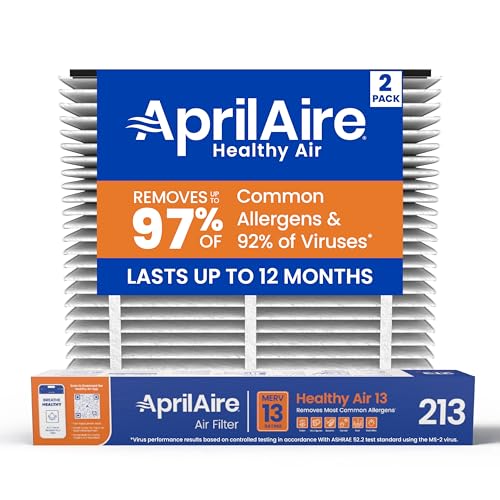
AprilAire 213 Replacement Filter, MERV 13, 20x25x4 Whole-House Air Filter | AC & HVAC System Media, Self-Seal Technology, Allergen Reduction, 12-Month Life, Made in USA
Check price on Amazon
BACOENG R32 AC Vacuum Pump and Gauge Set, 3.6 CFM HVAC Vacuum Pump Kit for Mini Split System, Sparkless Motor for R32 R410a R22 Refrigerants - w/ R410a Mini Split Adapter & 3x5FT Hoses
Check price on AmazonDisclaimer
Some of the content on this site uses AI assistance. Information is provided for educational purposes only. We are not responsible for any losses resulting from the use of this information. By using this site, you waive any right to bring legal claims against us arising from your use of the information provided. If you do not agree, please do not use this site. Read the full disclaimer.