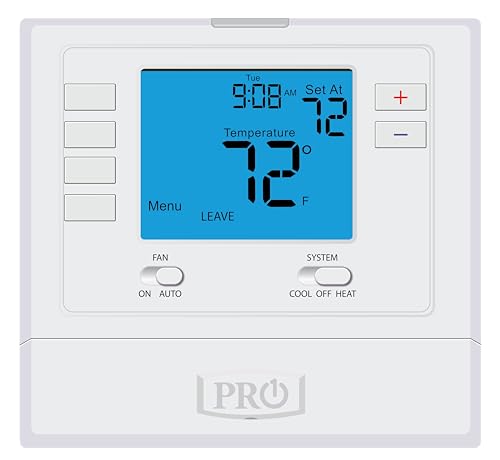
Pro HVAC Thermostat Guide: Features, Tiers, and Fit
A professional-grade thermostat is the control center of your HVAC system. This guide explains what separates pro models from consumer units, the features that matter, and how to choose the right tier for your home or building.
Start UnderstandingWhat Makes a Thermostat "Pro-Grade"?
The phrase "pro HVAC thermostat" is used loosely in the market. In practice, it refers to a thermostat designed for professional installation and configuration — typically by an HVAC technician — and built around the needs of a full HVAC system rather than a single appliance. Several traits distinguish a professional-grade model from a consumer unit:
- Wider system compatibility. Pro thermostats are built to work with a broad range of HVAC equipment, including multi-stage compressors, heat pumps, dual-fuel systems, and zoned systems. Consumer models are often limited to simpler single-stage equipment.
- Advanced configuration. Professional models expose installer-level settings: compressor lockouts, fan delays, staging thresholds, and auxiliary heat control. These settings are what let a technician tune the system rather than just set a schedule.
- Sturdier build. Commercial and professional-grade thermostats are often built with more durable construction, better terminal blocks, and more robust relays than consumer units.
- Wiring support. Pro models commonly support multi-wire configurations, including dedicated terminals for auxiliary heat, reversing valve control, and multiple stages. If your system has more than a basic set of wires, a pro-grade thermostat is often the safer choice.
- Diagnostics and service features. Some pro models include fault codes, runtime diagnostics, and service reminders that technicians can use during maintenance visits.
If your system is a simple single-stage setup, a consumer thermostat can work perfectly well. But for anything beyond that — a heat pump, a two-stage system, or a zoned home — the features a pro thermostat provides are more than a convenience; they are part of the system working correctly. Our guide to programmable thermostats for heating and cooling covers the scheduling side in more detail.
The Three Common Tiers at a Glance
Professional-grade thermostats fall broadly into three tiers. The tiers below describe the position of the thermostat in the market, not a specific set of numeric figures.
Essential Tier
- Single-stage or basic two-stage support
- Fixed daily schedule (5-2 or 7-day)
- Basic LCD or simple touchscreen
- Standard wiring terminals
- Good value for its tier
- Best for: straightforward single-zone systems
Balanced Tier
- Multi-stage and heat pump support
- Advanced scheduling and override control
- Wi-Fi and app control
- Installer-level configuration menus
- Well-specified for the category
- Best for: most modern homes and small commercial spaces
Top-Tier
- Dual-fuel and zoned system support
- Advanced diagnostics and fault reporting
- Smart home integration and remote monitoring
- Premium materials and reinforced build
- Feature-rich for its class
- Best for: complex systems, whole-home performance, and commercial use
Features That Actually Matter
Not every feature on a pro thermostat is relevant to every home. The features below are the ones that most often make a practical difference in how the system performs and how easy it is to live with.
Multi-Stage and Heat Pump Support
If your HVAC system has multiple compressor stages or is a heat pump, the thermostat must be able to control them correctly. A thermostat that only supports single-stage operation will either not work with the system or will run it inefficiently. This is one of the clearest reasons to choose a pro-grade model for modern equipment.
Installer-Level Configuration
Professional thermostats include installer menus that let a technician set fan delays, staging thresholds, compressor lockouts, and auxiliary heat behavior. These settings are not something most homeowners will change, but they are what makes the system run as designed.
Scheduling and Overrides
Even a basic pro thermostat supports a schedule, but the balanced and top tiers offer more flexible scheduling with individual day control and temporary overrides. Scheduling is the single largest lever for everyday efficiency, so it is worth prioritizing.
Wi-Fi and Remote Control
Remote access is a convenience, but it also has practical value: you can adjust the schedule when plans change or turn the system off remotely if you forget. The trade-off is that Wi-Fi features add complexity and, on some models, a dependency on a cloud service.
Zoned System Control
In a home with multiple zones, the thermostat must work with the zone controller to manage dampers and call for heat or cooling independently. Zoned systems are usually paired with top-tier thermostats because the coordination requirements are more demanding.
Tier Comparison Table
The table below summarizes the three tiers across the factors that matter most. Tier labels are used instead of numeric figures so the comparison stays useful over time.
| Tier | System Support | Best For | Key Consideration |
|---|---|---|---|
| Essential Tier | Single-stage or basic two-stage | Simple single-zone homes | A solid choice for the tier when the system is straightforward |
| Balanced Tier | Multi-stage, heat pump, Wi-Fi | Most modern homes and small commercial spaces | The most common choice; balances features and simplicity |
| Top-Tier | Dual-fuel, zoned, advanced diagnostics | Complex systems and commercial installations | Feature-rich for its class; best when the system demands it |
For a comparison of the thermostat itself with the broader thermostat landscape, our guide to the thermostat for air conditioner provides useful context on how these controls fit into a cooling system.
Wiring and Compatibility
Before choosing a thermostat, it is worth checking what wires your existing unit uses. A standard single-stage setup typically has terminals labeled R, W, Y, G, and C. Multi-stage or heat pump systems add terminals for additional stages, auxiliary heat, and the reversing valve.
Professional-grade thermostats are built to handle these wider configurations, but the wiring still needs to be correct. If you are not confident about what your existing thermostat uses, the safest approach is to have a technician look at it during installation or during a maintenance visit. Our guide to preventive maintenance and seasonal AC checklist cover the routine touchpoints where wiring is inspected.
A missing C-wire is a common practical hurdle with smart and pro thermostats, since many need constant power. If the existing wiring does not include a C-wire, a technician may need to run one or use an adapter kit. That is one of the reasons pro-grade models are typically installed by a professional rather than swapped in by the homeowner.
When a Pro Thermostat Is Worth It
A professional-grade thermostat is a worthwhile investment when the system it controls is more complex than a basic single-stage setup, or when the user wants more precise control over how the system runs. The clearest cases:
- Heat pump systems. Heat pumps require specific thermostat behavior — auxiliary heat control, defrost handling, and compressor lockouts. A thermostat that does not support these correctly can degrade performance.
- Multi-stage equipment. Two-stage and variable-speed systems need a thermostat that can call for the right stage at the right time.
- Zoned homes. A zone controller depends on coordinated thermostat signals; the thermostat tier needs to match.
- Dual-fuel systems. A system that switches between a heat pump and a furnace needs a thermostat that can manage the switchover correctly.
- Commercial or light-commercial spaces. The build quality and diagnostic features of top-tier thermostats are often justified by the demand of continuous operation.
For a simple home with a single-stage furnace and AC, an essential-tier pro thermostat or even a well-chosen consumer model can be a solid choice. The decision is not about prestige — it is about whether the system will work as designed.
When a Simpler Unit Is Enough
It is worth being honest about when the extra features are not needed. If your system is single-stage and the home is a straightforward single-zone layout, a basic pro thermostat in the essential tier covers the needs without extra complexity. The added features in the balanced and top tiers matter most when the system itself has more variables to manage.
The same logic applies to scheduling. If your schedule is steady and the home is occupied predictably, a simple programmable schedule may be enough. If your schedule varies, remote access and app-based control are more useful. Our guide on how to use a programmable thermostat covers the scheduling side in more detail.
Installation and Setup
Professional-grade thermostats are typically installed by a technician, and for good reason. The physical installation is straightforward, but the configuration is where the value is created. A technician will confirm wiring compatibility, set the system type, configure staging and fan behavior, and test the thermostat in each mode before leaving.
If your project includes installation of a new HVAC system, our guide on how to choose an HVAC contractor and how to get an installation quote are useful references. For a broader view of the system the thermostat controls, see residential air conditioning.
Frequently Asked Questions
What is the difference between a pro thermostat and a consumer thermostat?
A pro thermostat is designed for professional installation and for the demands of a full HVAC system, including multi-stage equipment, heat pumps, and zoned setups. A consumer thermostat is often limited to simpler configurations and lighter build quality. Both can work, but they serve different purposes.
Do I need a pro thermostat for a heat pump?
It is strongly recommended. Heat pumps require specific thermostat behavior — auxiliary heat control, defrost handling, and compressor lockouts — that a basic thermostat may not support correctly. The tier you choose should match the system's requirements.
Can I install a pro thermostat myself?
Physically, yes, if you are comfortable with low-voltage wiring. The real value of a pro thermostat is in the configuration, which requires understanding the system. For most homes, having a technician perform the installation and setup is the safer and more effective path.
What if my home does not have a C-wire?
Many smart and pro thermostats need a C-wire for constant power. If your existing wiring does not include one, a technician may be able to run one or use an adapter. It is worth checking before choosing a model.
Is a Wi-Fi thermostat always better?
Not necessarily. Wi-Fi adds convenience and remote control, but it also adds a dependency on the manufacturer's app and, in some cases, a cloud service. For some buyers, a reliable non-Wi-Fi pro thermostat in the balanced tier is the more sensible choice for its tier.
Does a higher-tier thermostat improve efficiency?
Indirectly, yes — by allowing the system to run as designed, especially in multi-stage and heat pump equipment. A thermostat that cannot call for the right stage or manage auxiliary heat correctly can reduce efficiency. The thermostat itself is not the primary efficiency driver, but it is part of the picture.
How often should a thermostat be replaced?
Thermostats do not have a fixed replacement interval. They are replaced when they fail, when the system is upgraded to equipment they cannot support, or when a homeowner wants new features. During a system replacement, it is common to replace the thermostat at the same time.
Can I use a pro thermostat with a zoned system?
Yes, but the thermostat tier needs to match the zone controller and the system. Zoned systems are typically paired with top-tier thermostats because the coordination requirements are more demanding. Our guide to HVAC zoning systems covers the broader picture.