
Replacing an Air Conditioner: A Complete Guide for Homeowners
Understand when replacement makes more sense than repair, how to choose the right system, and what to expect throughout the entire process — from sizing calculations to the final performance check.
Why this guide matters: Replacing an air conditioner is a significant long-term investment for your home. This guide walks you through every decision point so you can approach the project with confidence, ask the right questions, and select equipment that fits your household for years to come.
Signs It Is Time to Replace Your Air Conditioner
Deciding to replace an air conditioner rarely comes down to a single factor. Most homeowners reach that decision after noticing a combination of symptoms that point toward declining performance and rising maintenance burden. Recognizing these signals early helps you plan the project on your own timeline instead of being forced into an emergency replacement during peak summer heat.
Age Approaching Ten to Fifteen Years
Most residential air conditioners have an expected service life of roughly ten to fifteen years when well maintained. Units beyond that range often experience compressor wear, refrigerant loss, and failing capacitors that gradually reduce reliability.
Frequent Repair Visits
When you find yourself calling a technician more than twice per season, the accumulated repair effort usually outweighs the benefit. Repeated failures are a strong indicator that components are reaching the end of their service life.
Rising Energy Consumption
An aging compressor draws more electricity to deliver the same cooling output. If your summer utility statements have crept upward while usage habits stayed consistent, the system efficiency has likely degraded.
Uneven Cooling and Weak Airflow
Rooms that once stayed comfortable now feel warm, or the system runs continuously without reaching the thermostat set point. These symptoms often reflect internal wear rather than a simple filter issue.
Outdated Refrigerant
Systems using legacy refrigerants face tightening supply and rising servicing complexity. A unit that needs frequent refrigerant top-ups is often better replaced with a modern system using current refrigerant blends.
Noise and Vibration
Grinding, rattling, or persistent humming from the outdoor unit can signal bearing wear, loose components, or an aging compressor. Increased noise levels typically escalate as the equipment approaches failure.
Repair or replace? A practical rule of thumb compares the age of the unit to the scope of the repair. When a major component fails on a system that is already past two-thirds of its expected lifespan, replacement usually offers better long-term reliability. For younger units with isolated issues, a targeted repair remains the sensible path.
Types of Air Conditioner Replacement Projects
The scope of a replacement varies considerably depending on what stays and what goes. Understanding these categories helps you anticipate the work involved and prepare questions for contractors.
Like-for-Like Swap
The simplest scenario: a new outdoor condenser and matching indoor coil replace existing equipment of similar capacity. Existing ductwork, line sets, and electrical infrastructure generally remain in place. This path suits homeowners whose current setup was correctly sized and well installed.
Full System Replacement
Both indoor and outdoor components are replaced together, along with any worn line sets or accessories. Matching components preserves efficiency ratings and warranty coverage. This approach is standard whenever the existing indoor coil is aging or mismatched.
Type Conversion
Sometimes replacement becomes an opportunity to shift technology. A homeowner might move from a window unit to a ductless system, or from an older central system to a modern high-efficiency configuration. These transitions involve more planning but can substantially improve comfort and efficiency.
Partial Component Replacement
In select cases only the condenser or only the indoor coil is replaced. This path is generally discouraged unless the remaining component is relatively new and precisely matched, because mismatched equipment undermines efficiency and durability.
How to Size a Replacement Air Conditioner Correctly
Correct sizing is the single most consequential decision in any replacement project. An oversized unit cools the space too quickly and cycles on and off frequently, which prevents proper humidity removal and accelerates wear. An undersized unit runs continuously during hot weather and struggles to maintain the set temperature. Both outcomes shorten equipment life and reduce comfort.
A proper load calculation accounts for square footage, ceiling height, window area and orientation, insulation quality, air infiltration, occupant count, and local climate. Professionals perform this assessment using recognized load calculation methodology rather than rough square-foot rules. If your current unit never felt quite right, the replacement is the ideal moment to correct the original sizing error.
| Tier | Typical Characteristics | Best For |
|---|---|---|
| Entry-Level Tier | Single-stage compressor, basic controls, standard efficiency ratings | Homeowners replacing an aging unit in a mild climate with straightforward comfort needs |
| Mid-Range Tier | Two-stage or variable-speed compressor, improved humidity control, quieter operation | Households seeking balanced performance and consistent comfort across seasons |
| High-End Tier | Fully variable-speed operation, advanced controls, top efficiency ratings, quiet outdoor operation | Homeowners prioritizing long-term efficiency, precise temperature control, and minimal noise |
| Premium Tier | Flagship inverter technology, smart integration, premium build materials, extended warranties | Large homes or owners who want the highest level of comfort and efficiency available |
Efficiency Ratings Explained for Replacement Decisions
Modern efficiency ratings follow the updated SEER2 framework, which measures seasonal cooling efficiency under revised testing conditions. The federal minimum varies by region, and selecting a unit a few points above the baseline usually delivers meaningful long-term savings without unnecessary complexity. Understanding the difference between SEER and SEER2 helps you interpret contractor proposals accurately, and our guide on SEER vs SEER2 DOE standards explains the transition in detail.
Beyond seasonal efficiency, consider the compressor configuration. Variable-speed and inverter-driven systems modulate output continuously rather than cycling on and off. This behavior improves humidity control, reduces temperature swings, and often produces quieter operation. For homeowners weighing technology options, our discussion of inverter AC systems covers how modulation works in practice and where it delivers the most benefit.
Planning the Replacement Project
A well-organized replacement follows a predictable sequence. Knowing the stages in advance helps you coordinate schedules, protect your home, and verify that each step is completed properly.
Step 1: Assess and Document the Existing System
Record the model numbers, capacity, age, and condition of the current outdoor and indoor units. Note any existing issues such as duct leakage, insufficient returns, or electrical limitations. This documentation informs the replacement specification and helps contractors prepare accurate proposals.
Step 2: Perform a Load Calculation and Select Equipment
The contractor measures the home and calculates the required capacity. Equipment selection follows, balancing capacity, efficiency tier, compressor type, and features against the household's comfort priorities.
Step 3: Verify Electrical and Structural Requirements
Confirm that the electrical panel, disconnect, and circuit protection meet the new unit's requirements. Check the outdoor pad, clearance dimensions, and line set routing. Any deficiencies should be addressed before installation day.
Step 4: Remove and Recover the Old System
Refrigerant is recovered according to environmental regulations, and the old equipment is disconnected and removed. Existing line sets are inspected to determine whether they can be reused safely.
Step 5: Install the New Equipment
The new condenser is set on its pad, the indoor coil or air handler is positioned, and refrigerant lines are connected and brazed. The system is then evacuated to remove moisture and non-condensable gases before charging.
Step 6: Charge, Test, and Commission
Refrigerant charge is adjusted to the manufacturer's specification, airflow is verified, and the system is tested through a full operating cycle. Thermostat configuration, safety controls, and condensate drainage are all confirmed before the crew departs.
Matching Indoor and Outdoor Components
Air conditioning systems are engineered as matched pairs. The outdoor condenser, indoor coil, and metering device are calibrated to work together. Installing a new condenser with an aging indoor coil can produce several problems: reduced capacity, poor humidity control, premature compressor wear, and in many cases voided warranty coverage.
Whenever the existing indoor coil is more than a few years old, replacing both components together is the prudent choice. If only the outdoor unit has failed, ask the contractor to inspect the indoor coil for corrosion, refrigerant residue, and physical damage before deciding. Our overview of replacing a coil in an AC unit explains what that component replacement involves when only the indoor side needs attention.
Ductwork and Airflow Considerations
A new air conditioner can only perform to its rated capacity if the duct system delivers the correct airflow. Many older homes have ductwork with undersized returns, disconnected joints, or significant leakage. Replacing the equipment without addressing duct deficiencies often produces disappointing results.
Ask the contractor to perform a static pressure test and inspect accessible duct runs. Sealing leaks and correcting restricted returns frequently improves comfort measurably. If ductwork is inaccessible or in poor condition, a ductless alternative may be worth evaluating. Our comparison of pros and cons of ductless air conditioning covers the trade-offs for homes with challenging duct situations.
Warranty, Registration, and Paperwork
Replacement equipment typically carries separate warranties for the compressor, other functional parts, and labor. Manufacturer warranties often depend on prompt product registration, so complete the registration within the required window after installation. Keep the installation invoice, commissioning report, and warranty documents together in a dedicated folder.
Also confirm whether the contractor's workmanship warranty covers installation labor and for how long. A well-documented project protects you if an issue surfaces during the coverage period.
After Replacement: Protecting Your Investment
The first season after replacement sets the tone for long-term reliability. Replace filters on schedule, keep the outdoor unit clear of debris and vegetation, and arrange professional servicing annually. Our guide on preventive maintenance of an air conditioning unit outlines a practical routine that preserves efficiency and extends equipment life.
Pay attention to how the new system behaves during the first weeks. Slight differences in noise and cycling patterns are normal, but persistent issues such as short cycling, water accumulation, or unusual sounds should be reported to the installer promptly while workmanship coverage is active.
Recommended Air Conditioners for Replacement Projects
⚠️ AFFILIATE DISCLOSURE: This website contains affiliate links. As an Amazon Associate, we earn from qualifying purchases. If you make a purchase through these links, we may receive a small commission at no additional cost to you. Read our full affiliate policy.

RV Air Conditioner Motor Replaces Fasco D1092 Coleman Mach 1468-306 Motor | 1/3 HP 115V 1675/1080RPM 2-Speed RV AC Fan Motor for Coleman Mach 1468-3069, 7184-0156, 7184-0432, 7855MVA-A11U, Y6L457D01L
Check price on Amazon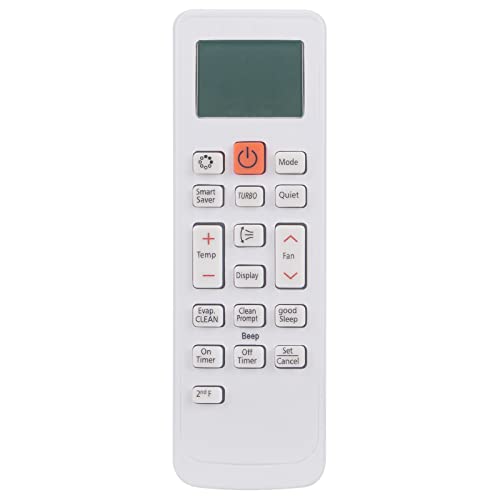
DB93-14195G New Replace Air Conditioner A/C Remote Control fit for Samsung | AC Air Conditioner DB93-14195A DB93-14195B DB9311115U DB9314195G DB9314195A DB9314195B
Check price on Amazon
WJ85X21746 for GE Window Air Conditioner Filter Replacement Replaces AP6280063,4588851, A0010209471,for GE Window Ac Filter Fit for GE AHQ06LYQ1,AHR05LWQ2,AHQ06LYW1 More, for Ge Air Conditioner Parts
Check price on Amazon
ACA 9330C755 AC Control Box for Mach 15 RV Air Conditioner | Replaces 9330C755, RV Air Conditioner Control Box Assembly Compatible with Coleman Mach 15 RV
Check price on Amazon
SPP6 Relay/Capacitor Hard Start Kit with 500% Increase Starting Torque for Air Conditioner - Compatible with HVAC Compressor – Replaces SPP6, TJ90HS6,AP4502872,35702, DST-6, ERPP6, HS6, HS650
Check price on Amazon
Supplying Demand 12120600A12675 Portable Air Conditioner Exhaust Hose - Replaces AP7138481, PS18157450
Check price on Amazon
Replacement Samsung Air Conditioner Remote Control DB93-15169G DB93-14643R for AJ007JNADCH AJ007JNADCH/AA AJ009JNADCH AJ009JNADCH/AA AJ012JNADCH AJ012JNADCH/AA AJ018JNADCH AJ018JNADCH/AA AJ024JNADCH
Check price on Amazon
New Replace Remote Control Compatible with LG AC Air Conditioner AKB74955602 AKB73995805 AKB74955605 AKB74955617 AKB74955604 AKB75215401 LS090HEV2 LS090HXV2 LS240HEV2 LS120HXV2 LS120HEV2 LS180HEV2
Check price on AmazonFrequently Asked Questions
How long does an air conditioner replacement take?
A straightforward replacement of a similar unit typically takes four to eight hours for a professional crew. Projects involving ductwork modifications, electrical upgrades, or line set changes can extend across two to three days.
Should I replace the indoor and outdoor unit at the same time?
Yes, matching both components is strongly recommended. A new outdoor condenser paired with an aging indoor coil can reduce efficiency, void the warranty, and shorten the lifespan of the entire system.
What SEER2 rating should I look for when replacing an air conditioner?
The minimum federal standard varies by region. In the northern states the baseline is 13.4 SEER2, while southern and southwestern states require 14.3 SEER2 for split systems. Selecting a unit rated several points above the minimum usually delivers better long-term efficiency.
Can I replace an air conditioner myself?
Only licensed technicians should handle refrigerant circuits, brazing, vacuuming, and electrical connections. Homeowners can prepare the site, choose equipment, and manage the project, but the actual replacement requires professional skills and certifications.
Will a new air conditioner reduce my energy consumption?
A modern high-efficiency unit generally consumes less electricity than an aging system of comparable capacity, particularly when the old unit has degraded over years of service. Actual savings depend on the efficiency difference, local climate, usage patterns, and duct condition.
Do I need a permit for air conditioner replacement?
Permit requirements vary by jurisdiction. Many municipalities require a mechanical permit for replacement work, and inspections may be scheduled. Confirm local rules with your contractor or building department before work begins.
Ready to move forward? Use the product section above to explore air conditioners suited to replacement projects across different tiers and configurations. Compare features, review specifications, and check availability to find equipment that matches your home's requirements.