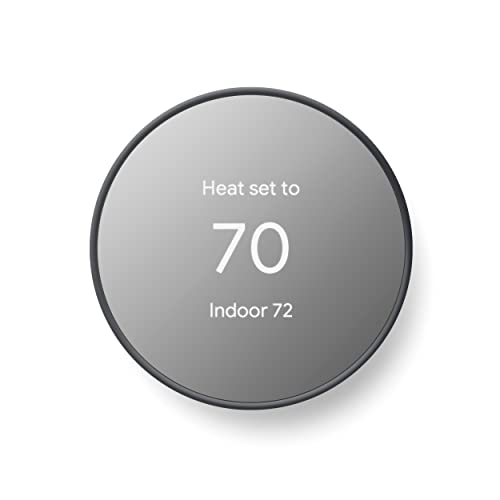
Smart AC Thermostat: Complete Guide to Smarter Cooling Control
Discover how smart thermostats transform your air conditioning experience with automated scheduling, remote access, and intelligent energy management for a more comfortable home.
START LEARNINGWhy smart thermostats matter: A smart AC thermostat is more than a gadget — it is the control center of your home cooling. It learns your habits, responds to occupancy, and gives you precise control from anywhere. Before upgrading, understanding how these devices work helps you choose the right model and get the most from your air conditioner.
What Is a Smart AC Thermostat?
A smart AC thermostat is a Wi-Fi-enabled device that controls your air conditioner and replaces a traditional or programmable thermostat. Unlike basic thermostats that only follow fixed schedules, smart thermostats use sensors, algorithms, and connectivity to optimize cooling automatically. They connect to your home network and can be managed through a smartphone app, tablet, or voice assistant such as Alexa or Google Assistant.
These devices are a natural companion to modern high-efficiency systems. If you are exploring energy-efficient HVAC systems, a smart thermostat is often one of the simplest upgrades that delivers measurable comfort and efficiency improvements. It also pairs well with the various AC types available today, from central units to ductless mini-splits.
At its core, a smart thermostat does three things exceptionally well: it senses conditions inside and outside your home, it learns your patterns, and it adjusts cooling to match real demand rather than a fixed timer.
How Smart AC Thermostats Work
Understanding the mechanism helps you appreciate why these devices outperform conventional thermostats. Here is the typical workflow:
- Sensor input: The thermostat reads indoor temperature, humidity (in some models), occupancy, and sometimes outdoor weather data.
- Learning and prediction: Built-in algorithms analyze your adjustments over time to build a schedule that matches your lifestyle.
- Automatic adjustment: The device sends signals to your AC system to start, stop, or modulate cooling based on real-time conditions.
- Remote control: Through the companion app, you can override settings, create schedules, and monitor energy usage from anywhere.
- Reporting: Most smart thermostats provide usage reports that show how long your system ran and where efficiency can improve.
Some premium models add geofencing, which uses your phone's location to switch to an away mode when you leave and resume comfort settings when you return. Others integrate with utility demand-response programs, allowing slight temperature adjustments during peak grid events.
Key Features to Look For
Not all smart thermostats are equal. The feature set you choose should match your home, your AC system, and your daily routine. Below are the most important capabilities to evaluate.
Learning Schedules
The thermostat observes your adjustments and builds an automatic schedule. This is the hallmark of top-tier models and reduces manual programming.
Geofencing
Uses your smartphone location to detect when you are away or approaching home, adjusting cooling accordingly. Ideal for irregular schedules.
Remote Access
Control temperature and modes from anywhere via a mobile app. Useful for second homes, rentals, or when you forget to adjust before leaving.
Occupancy Sensors
Some models include motion or presence sensors to detect if rooms are in use, preventing unnecessary cooling in empty spaces.
Energy Reports
Detailed usage insights help you understand consumption patterns and make informed adjustments to reduce waste.
Voice Assistant Support
Integration with Alexa, Google Assistant, or Apple HomeKit enables hands-free control and routine automation.
Humidity Control
Advanced models monitor and manage humidity, improving comfort and reducing strain on your AC during humid seasons.
HVAC System Monitoring
Some thermostats alert you to filter changes, abnormal run times, or potential system issues before they become costly repairs.
Compatibility: Will It Work With Your AC?
Before choosing a smart thermostat, verify compatibility with your existing system. Most models support conventional central air conditioners and heat pumps, but some systems require specific wiring or adapters.
| System Type | Typical Compatibility | Notes |
|---|---|---|
| Central AC (single-stage) | Widely supported | Most smart thermostats work with standard 24V wiring |
| Central AC (multi-stage) | Supported by mid-range and premium models | Verify multi-stage terminals (Y2, W2) |
| Heat Pump | Supported with heat pump mode | Requires O/B terminal support |
| Ductless Mini-Split | Often uses proprietary controllers | Check manufacturer-specific smart adapters |
| Line-voltage / Window AC | Generally not supported | Requires specialized smart plugs or controllers |
| Boiler / Radiant | Some models support | Verify compatibility with low-voltage heating systems |
If you have a ductless system, look for brand-specific smart controllers rather than universal thermostats. For central systems, checking the wiring labels is the fastest compatibility check. If your current thermostat has a C-wire (common wire), installation is usually straightforward.
Benefits of Upgrading to a Smart Thermostat
Upgrading from a basic thermostat to a smart model brings several practical advantages that go beyond convenience.
- Better comfort: Precise temperature control and automatic adjustments keep your home comfortable without constant manual input.
- Reduced energy waste: Scheduling, geofencing, and occupancy detection prevent cooling empty rooms or running the system unnecessarily.
- Remote management: You can adjust settings before arriving home or while traveling, so you never return to an uncomfortable house.
- System health insights: Alerts and usage reports help you maintain your AC and catch issues early.
- Integration with smart home: Combine with voice assistants and other devices for a cohesive home automation experience.
If your AC is not cooling properly despite a good thermostat, the issue may be elsewhere. Troubleshooting guides such as my AC is not cooling my house and home AC fan blowing but no cold air can help you diagnose common problems before assuming the thermostat is at fault.
Installation Considerations
Many smart thermostats are designed for DIY installation, but it is important to understand what is involved before you start.
Before You Install
- Turn off power to your HVAC system at the breaker.
- Take a photo of your existing thermostat wiring before disconnecting anything.
- Label each wire according to its terminal letter.
- Check whether you have a C-wire; if not, most kits include a power adapter or jumper.
When to Call a Professional
If your system uses unusual wiring, has a line-voltage configuration, or you are unsure about electrical safety, professional installation is the safer choice. The same applies if you are adding a thermostat as part of a larger upgrade alongside central air repair or when you need a contractor for heating and cooling services in my area.
Tip: After installation, run your AC through a full cooling cycle and verify that the thermostat reads temperature accurately. Compare readings with a separate thermometer and check that the system responds to mode changes.
Getting the Most From Your Smart Thermostat
Once installed, a few habits help you unlock the full value of your device.
- Set realistic schedules: Give the thermostat a week to learn your routine before making frequent manual changes.
- Use geofencing carefully: Ensure all household members are included in the geofence, or use a home/away schedule instead.
- Review energy reports monthly: Look for unusual run times that may indicate filter clogs or duct issues.
- Coordinate with maintenance: Keep filters clean and schedule regular tune-ups. A smart thermostat works best with a well-maintained AC.
- Integrate with routines: Use voice commands or automation scenes to align cooling with your daily activities.
If your thermostat seems to be working but the house stays warm, see thermostat not cooling house for a focused troubleshooting guide. Likewise, persistent airflow issues may relate to duct problems covered in air duct sealing.
Smart Thermostat Tiers Compared
Smart thermostats are available across several market tiers. The table below summarizes typical capabilities by tier so you can align features with your needs.
| Tier | Typical Capabilities | Best For |
|---|---|---|
| Entry-level | Basic scheduling, app control, simple energy reports | First-time smart thermostat users |
| Mid-range | Learning schedules, geofencing, voice assistant support, multi-stage compatibility | Most homes with central AC |
| Premium | Occupancy sensing, humidity control, detailed diagnostics, advanced integrations | Users seeking maximum automation |
| Professional-grade | Zoning support, remote sensor networks, commercial scheduling | Large homes and light commercial spaces |
Higher tiers generally offer smoother learning algorithms and more reliable sensors, while entry-level models still deliver solid scheduling and remote access. Choose based on the complexity of your HVAC system and how much automation you want.
Frequently Asked Questions
What is a smart AC thermostat?
Do smart thermostats work with any AC system?
Can a smart thermostat reduce energy consumption?
Do I need a C-wire for a smart thermostat?
Can I install a smart thermostat myself?
Final Thoughts
A smart AC thermostat is one of the most practical upgrades for any home with central cooling or a heat pump. It bridges the gap between your comfort preferences and your AC system's operation, delivering convenience, better control, and more efficient cooling. By understanding compatibility, features, and installation requirements, you can select a model that fits your home and your routine.
If you are also considering broader efficiency improvements, explore ENERGY STAR AC options and pair them with a smart thermostat for a cohesive, efficient cooling setup. For homes with existing system issues, resolving problems through proper AC annual service ensures your new thermostat can perform at its best.