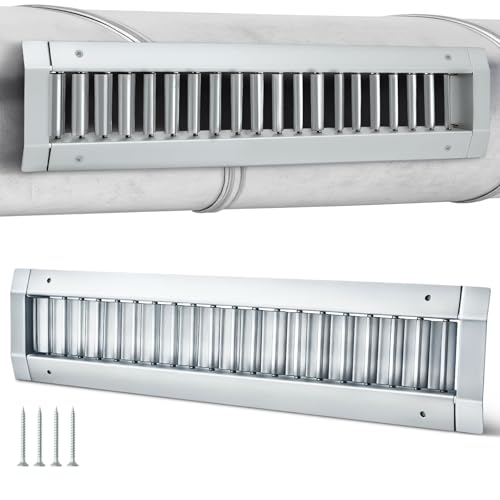
Spiral Air Duct: Complete Guide to Uses and Sizing
Understand how spiral air ducts work, where they fit in HVAC systems, how sizing and installation are handled, and what to check before you buy or specify ductwork.
EXPLORE OPTIONSQuick context: A spiral air duct is a round, sheet metal duct formed with a continuous spiral seam. The seam adds stiffness and gives the duct its characteristic ribbed look. Spiral duct is common in commercial work and increasingly used in residential retrofits because it moves air efficiently and installs quickly. The right sizing and sealing matter more than the shape alone.
What Is a Spiral Air Duct?
Spiral duct is made by feeding a strip of galvanized or stainless steel through a machine that locks the edges into a spiral seam. The result is a rigid round duct that resists crushing and holds its shape over long runs. Diameters range from small branch ducts up to large trunk lines. The spiral seam is both structural and visual, which is why exposed spiral duct is often left unpainted in commercial spaces.
Spiral duct is part of the broader family of sheet metal air ducts. Compared with rectangular duct, round spiral duct has less surface area per unit of airflow, which reduces friction loss and heat gain. That efficiency is the main reason it is favored in longer runs and in systems where static pressure is tight.
Where Spiral Air Ducts Are Used
Spiral duct appears in supply, return, and exhaust runs across many building types. The table below summarizes common applications.
| Application | Typical Role | Best For | Tier |
|---|---|---|---|
| Residential supply trunk | Carries conditioned air from the air handler | New builds and retrofits with accessible runs | Mid-range |
| Commercial exposed ductwork | Visible duct run in retail and office spaces | Design-forward spaces where duct is left exposed | Mid-range to premium |
| Exhaust and make-up air | Moves air out of kitchens, labs, and restrooms | Commercial ventilation systems | Commercial-grade |
| Return air trunk | Returns air from rooms to the air handler | Systems with long return runs | Mid-range |
| High-velocity small-diameter runs | Fits ductwork into tight structural spaces | Retrofits in older homes | High-end tier |
Spiral Air Duct vs Rectangular Duct
The choice between spiral and rectangular duct usually comes down to space, airflow, and installation constraints. Round spiral duct has a smaller surface area for the same airflow, which means lower friction and less heat gain. It is also stronger per unit of metal, so it needs fewer supports over long spans.
Rectangular duct can fit into shallower ceiling cavities and can be routed around structural obstructions more easily. In tight mechanical rooms, rectangular duct often wins on layout. In open runs where airflow and efficiency matter more than ceiling height, spiral duct is usually the better choice. For a broader comparison, see the guide to ductwork design.
Sizing Spiral Air Duct
Spiral duct is sized using airflow, friction rate, and velocity. A Manual D or equivalent duct design method determines the diameter that keeps pressure drop within the blower's capability. Undersized duct increases static pressure, reduces airflow, and creates noise. Oversized duct costs more and can cause balancing problems.
Most residential branch runs fall in the 6-inch to 10-inch range, while trunks can be larger. Commercial systems scale up considerably. The exact diameter depends on the CFM the run must carry and the friction rate the design allows. A duct calculator or design software converts those inputs into a diameter.
Installation Considerations
Spiral duct installs in sections joined by slip joints, gasketed couplings, or clamped fittings. The spiral seam gives the duct rigidity, but the joints are still the most likely leak points. Sealing joints with mastic or foil tape and using gasketed couplings reduces leakage significantly.
Support spacing depends on diameter and gauge. Larger ducts need more support to avoid sagging. Hangers should not crush the duct, and long horizontal runs need attention to expansion and contraction. For exposed spiral duct, the visual alignment of seams and fittings matters as much as the mechanical connection.
Insulation is a separate decision. Supply ducts in unconditioned spaces usually need insulation to prevent heat gain and condensation. Spiral duct is often wrapped or supplied with a factory-applied jacket. Return ducts may also need insulation depending on where they run.
Sealing and Airflow Performance
Duct leakage undermines even a well-designed system. Spiral duct leaks less than rectangular duct when joints are sealed properly, but the fittings and connections still need attention. Sealing the seams, joints, and connections to the air handler is part of a complete installation. For the broader approach, see how to seal air ducts.
Airflow performance also depends on the fittings. Elbows, tees, and transitions add resistance. Long-radius elbows and gradual transitions reduce pressure drop. In tight spaces, the choice of fitting can matter more than the duct diameter itself.
When Spiral Duct Is the Right Choice
Spiral duct is a strong fit when you need efficient airflow over long runs, when the duct will be exposed, or when the system has limited static pressure to spare. It is a weaker fit when ceiling height is tight or when the layout requires many turns in confined spaces. In those cases, rectangular duct or a hybrid layout may be more practical.
For systems with a single air handler and straightforward runs, spiral duct is often the simplest efficient option. For multi-zone systems, the trunk-and-branch layout should be designed as a whole, not piece by piece. The HVAC zoning systems guide covers how zoning interacts with duct design.
Common Mistakes to Avoid
The most common errors are undersizing the duct to save space, skipping joint sealing, and mismatching fitting dimensions. Undersized duct raises static pressure and reduces airflow, which shows up as weak cooling and noisy registers. Unsealed joints leak conditioned air into attics and crawlspaces. Mismatched dimensions cause leaks and rework.
A second set of errors involves support and insulation. Poorly supported duct sags and collects condensation. Uninsulated supply duct in a hot attic loses capacity before the air reaches the room. Both problems are avoidable with a proper design and a careful installation.
Frequently Asked Questions
What is a spiral air duct?
A spiral air duct is a round sheet metal duct formed by interlocking a strip of metal into a spiral seam. The seam stiffens the duct and gives it a ribbed appearance. It is used for supply, return, and exhaust air in residential and commercial HVAC systems.
Is spiral duct better than rectangular duct?
Round spiral duct has lower friction and can move the same airflow with a smaller cross-section than rectangular duct. It also leaks less when sealed properly. Rectangular duct fits into tighter structural spaces, so the better choice depends on layout and airflow requirements.
How is spiral air duct sized?
Spiral duct is sized using airflow, acceptable friction rate, and velocity. A Manual D or equivalent duct design method determines the diameter that keeps pressure drop within the blower's capability. Undersized spiral duct increases noise and static pressure.
Does spiral duct need insulation?
Supply ducts in unconditioned spaces usually need insulation to prevent heat gain and condensation. Spiral duct is often wrapped or supplied with a factory-applied jacket. Return ducts may also need insulation depending on where they run.
Final Thoughts
Spiral air duct is an efficient, durable choice for many HVAC systems, especially where airflow performance and exposed aesthetics matter. The key is to size it correctly, seal the joints, and support it properly. If you are planning a system, start with the sheet metal air ducts overview and then work through sizing and layout before ordering materials. A well-designed spiral duct system is a long-term investment in comfort and efficiency.