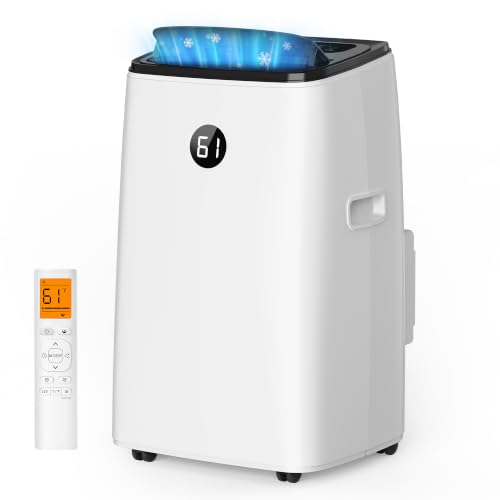
Ventless Portable Air Conditioner Without Hose
Understand how these compact, hose-free AC units work, their cooling limitations, and whether they are the right solution for your room, apartment, or office.
What Is a Ventless Portable Air Conditioner?
A ventless portable air conditioner without hose is a compact cooling unit that does not require an exhaust hose or window venting. Unlike traditional portable ACs that expel hot air through a hose, these models use evaporative cooling (swamp cooler) technology or thermoelectric (Peltier) systems to lower the temperature in a small area. They are often advertised as “no-vent” or “hose-free” ACs, making them attractive for apartments, windowless rooms, or spaces where installation is restricted.
How Does a Hose‑Free AC Work?
Most ventless portable ACs fall into two categories:
- Evaporative air coolers – use water evaporation to cool the air. They add moisture to the room, which can be beneficial in dry climates but less effective in humid conditions.
- Thermoelectric (Peltier) coolers – use semiconductor technology to create a cooling effect on one side and heat on the other. They are quiet and lightweight but have limited cooling capacity.
These units do not need to vent hot air outside because they either release it back into the room (thermoelectric) or use water to absorb heat (evaporative). As a result, they are not true air conditioners in the traditional sense—they are more suitable for personal cooling or small spaces.
Pros and Cons of Ventless Portable ACs
✅ Advantages
- ✔ No window installation required
- ✔ Easy to move from room to room
- ✔ Generally more affordable than ducted systems
- ✔ Low power consumption (thermoelectric models)
- ✔ Some models also work as humidifiers (evaporative)
❌ Disadvantages
- ✖ Limited cooling power (usually 100–300 sq ft)
- ✖ Evaporative coolers increase humidity (not ideal for humid climates)
- ✖ Thermoelectric units can only drop temperature by 5–10°F
- ✖ Not a replacement for central or window AC
- ✖ May require frequent water refills (evaporative types)
Who Should Consider a Hose‑Free AC?
A ventless portable air conditioner without hose is ideal for:
- Renters – who cannot modify windows or walls.
- Small office/cubicle – providing spot cooling for one person.
- Dry climates – evaporative coolers work best in low-humidity areas.
- Camping or outdoor use – battery-powered thermoelectric units are portable.
- Supplementary cooling – alongside your existing AC for extra comfort.
💡 Remember: If you need to cool a whole room or live in a humid area, a standard portable AC with a hose or a window unit will deliver far better performance. Use ventless models as a targeted, secondary solution.
What to Look for in a Ventless Portable AC
When shopping for a no-hose portable air conditioner, consider these factors:
- Cooling area (sq ft): Most cover 100–250 sq ft. Match the room size.
- Water tank capacity (evaporative): Larger tanks mean longer runtime between refills.
- Airflow (CFM): Higher CFM provides better circulation.
- Noise level: Thermoelectric units are very quiet (~45 dB); evaporative coolers may be slightly louder.
- Additional functions: Fan modes, timer, remote control, built-in air purifier, or ionizer.
- Energy efficiency: Check power consumption – many use less than 100W, making them energy-efficient portable options.
Ventless vs. Traditional Portable AC
The main difference lies in the cooling mechanism and ventilation requirement. Traditional portable ACs have a compressor and refrigerant that produce true cold air, but they must expel heat through a hose. Ventless units rely on evaporation or thermoelectric cooling, which are less powerful but do not need a window.
If you need to cool a bedroom or living room, a portable AC with inverter technology or a dual‑hose model will be far more effective. However, if you just need a little extra comfort at your desk or in a small home office, a ventless unit can be a convenient, space‑saving choice.
Installation & Maintenance Tips
- Zero installation: Place the unit on a flat surface near a power outlet. No window kit or drilling required.
- Water refill (evaporative): Use distilled water to reduce mineral buildup and clean the tank weekly.
- Air filter cleaning: Most models have a washable filter – clean it every 2 weeks for optimal airflow.
- Storage: Empty the water tank before storing to prevent mold and odors.
Final Verdict: Is a Ventless Portable AC Right for You?
A ventless portable air conditioner without hose is a niche product. It works best as a personal cooler in dry, small spaces. For whole‑room cooling, traditional portable units or window ACs remain the superior choice. That said, if you are restricted by rental rules, lack window access, or simply want a low‑power, easy‑to‑move solution, this type of AC can be a valuable addition to your comfort arsenal.
Always check the cooling capacity and climate suitability before buying. And remember, for reliable, long‑term cooling, explore our AC shopping guide to compare all available options.
Frequently Asked Questions
Do ventless portable ACs really cool a room?
They provide spot cooling, not whole‑room cooling. Evaporative coolers work best in dry climates; thermoelectric units only lower the temperature by a few degrees.
Can I use a ventless AC without water?
Thermoelectric models do not use water. Evaporative coolers must have water to cool – without it, they only act as fans.
Are these units energy‑efficient?
Yes, most consume between 50–150W, making them very energy efficient compared to traditional ACs. However, their cooling output is also much lower.
Do I need to drain a ventless AC?
Evaporative models need periodic water refills, but they do not collect condensation, so there is no drain hose required. Thermoelectric units have no water at all.