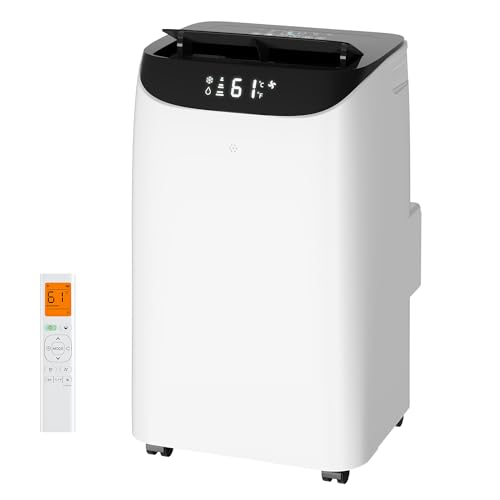
Portable Air Conditioner With Inverter Technology: Complete Guide
Understand how variable-speed compressors change portable cooling — quieter operation, steadier temperatures, and smarter energy use. Learn what to check before you choose.
EXPLORE OPTIONS Educational guide — learn first, then chooseQuick summary: Inverter technology replaces the on-off compressor cycle with continuous speed modulation. In a portable air conditioner, this translates to less temperature swing, fewer loud startup surges, and more consistent energy draw. The trade-off is a higher tier positioning compared with conventional fixed-speed units.
If you are new to portable cooling, start with the portable air conditioner overview and then return here to understand how inverter models differ from standard units.
What Is Inverter Technology in a Portable AC?
A conventional portable air conditioner uses a fixed-speed compressor that switches fully on when cooling is needed and fully off when the set temperature is reached. The room temperature therefore rises and falls in a small cycle, and each restart draws a brief surge of power and produces a noticeable sound.
An inverter portable air conditioner uses a variable-speed compressor driven by an inverter board. Instead of switching on and off, the compressor runs continuously at a speed that matches the current cooling demand. When the room is far from the set point, it runs faster; as the room approaches the target, it slows down and holds a steady output.
The practical result is threefold:
- Steadier temperature — the room stays closer to the set point instead of drifting between cycles.
- Quieter operation — no repeated compressor startups, which are the loudest part of a fixed-speed cycle.
- More consistent energy draw — the unit avoids the repeated peak loads of on-off cycling.
This same principle is used in wall-mounted and central systems. If you want a deeper technical explanation of the compressor behavior, see our guide on portable air conditioner fundamentals and the broader most energy efficient room air conditioner comparison.
How Inverter Technology Fits Into a Portable Chassis
A portable AC already has a compact footprint, a single or dual hose exhaust path, and a condensate management system. Adding an inverter board and a variable-speed compressor changes the internal layout and the control logic, but the external workflow stays familiar: place the unit, connect the exhaust hose to a window kit, and set the target temperature.
Because the compressor modulates rather than cycling, the unit relies more heavily on continuous airflow and a stable exhaust path. That makes window sealing and hose routing more important, not less. A leaky window kit undermines the efficiency advantage of an inverter model. For sliding windows, see our guide on the portable AC sliding window kit; for casement windows, see the casement window kit guide.
Hose length and routing also matter. A long, kinked, or uninsulated hose adds heat back into the exhaust stream and forces the compressor to work harder. Our overview of portable AC intake and exhaust explains the airflow path, and the guide on a portable AC exhaust hose insulation sleeve covers how to reduce heat gain along the hose.
Inverter vs Fixed-Speed: What Actually Changes
The table below summarizes the practical differences a buyer will notice. It uses tier descriptors rather than numeric comparisons, since real-world results depend on room size, insulation, and usage patterns.
| Factor | Fixed-Speed Portable AC | Inverter Portable AC |
|---|---|---|
| Temperature stability | Small swings between on and off cycles | Steadier hold near the set point |
| Startup noise | Noticeable surge each cycle | No repeated startup surges |
| Energy behavior | Repeated peak draw during cycling | More continuous, modulated draw |
| Market tier | Entry-level to mid-range | Mid-range to premium |
| Best for | Occasional short cooling sessions | Frequent, long sessions in a sealed room |
| Repair complexity | Simpler control board | Inverter board adds a service component |
The right choice depends on how you will use the unit. For a bedroom that runs all night during a heat wave, the steadier temperature and quieter operation of an inverter model are meaningful. For a workshop used for an hour at a time, a fixed-speed unit is a solid choice for the tier.
Noise, Comfort, and Sleep Quality
Compressor cycling is the dominant source of intermittent noise in a fixed-speed portable AC. The fan runs continuously, but the compressor startup and shutdown create the thumps and surges that interrupt sleep. An inverter model removes that specific pattern by running the compressor at a modulated speed.
Fan noise still exists, and duct noise from the exhaust hose still exists. On a quieter unit, those steady sounds become more noticeable because they are not masked by compressor surges. If quiet operation is a priority, look at units described as premium-tier for their class and check whether the fan has multiple speeds. Our related guide on a portable AC for a very small room covers compact units where noise is often the deciding factor.
Vibration is the other variable. Placing the unit on a solid, level surface and keeping the hose as straight as possible reduces both noise and heat gain. A slightly tilted unit can also rattle the condensate tray, so leveling is part of the installation, not an afterthought.
Energy Efficiency: What Inverter Technology Can and Cannot Do
Inverter compressors are more efficient than fixed-speed compressors in long, steady-state operation because they avoid the energy waste of repeated cycling and peak startup draw. That is a real advantage, but it is not a guarantee of low energy use in every situation.
A portable AC, inverter or not, is limited by its single-hose or dual-hose design. A single-hose unit pulls conditioned room air out through the exhaust, which creates negative pressure and draws warm outdoor air back in through gaps. A dual-hose unit separates intake and exhaust, which reduces that penalty. If you are comparing inverter models, check the hose configuration first. Our guide on a single-hose portable AC explains the trade-off, and the self-evaporating system overview covers condensate handling.
The other efficiency lever is window sealing. A tight kit and an insulated hose can matter as much as the compressor type. For rooms with high moisture, the portable AC for humid climates guide explains how dehumidification load affects compressor behavior.
Where Inverter Portable ACs Make the Most Sense
Bedrooms and Night Use
Steadier temperature and no compressor startup surges make sleep more comfortable. Pair with a tight window kit and a straight hose run.
Home Offices and Long Sessions
Continuous modulated operation suits rooms that need cooling for several hours a day. A sealed window kit is essential to preserve the efficiency benefit.
Occasional Short Use
If the unit runs for an hour at a time, the inverter advantage is smaller. A well-specified fixed-speed unit can be a solid choice for the tier.
Rooms With No Window
Inverter technology does not remove the need to vent exhaust air. For windowless rooms, see the portable AC for room with no window guide.
Whole-Room Efficiency Priority
If efficiency is the top priority and the room allows it, a portable ductless mini-split or a permanent mini-split may be a stronger long-term investment.
Off-Grid or Backup Cooling
For power-limited setups, see the off-grid cooling and off-grid solar AC guides for how compressor behavior interacts with power supply.
Buying Checklist for an Inverter Portable AC
Use this checklist to compare options without relying on numeric comparisons that change between listings:
- Confirm the compressor type. The product description should explicitly state inverter or variable-speed. If it only says "efficient," verify the compressor type before assuming.
- Check the hose configuration. Dual-hose designs reduce negative pressure and make better use of the inverter compressor's steady output. Single-hose units are common but have a structural penalty.
- Match capacity to room size. Use a BTU sizing guide rather than guessing. An oversized unit cycles less, which partly erodes the inverter advantage; an undersized unit runs at maximum speed continuously.
- Verify the window kit compatibility. A sliding window kit, casement kit, or crank-out kit may be needed depending on the frame. Confirm the kit is included or available.
- Check fan speed options. Multiple fan speeds let you balance noise and airflow independently of compressor speed.
- Review condensate handling. Self-evaporating systems reduce manual draining. If the unit will run for long sessions, this matters more than it does for short use.
- Confirm the electrical rating. Check that the unit's draw is compatible with the circuit you plan to use, especially in older homes or shared rooms.
- Look at service access. Inverter boards are a service component. A brand with a documented service network is a safer long-term investment than an unknown label.
Sizing and Placement for Inverter Models
Inverter compressors reward correct sizing. A unit sized for the room can hold a steady low speed once the set point is reached, which is where the efficiency and comfort gains appear. A unit that is too large for the room will still reach the set point, but it may spend more time at minimum speed and less time in the efficient mid-range.
Placement matters for the same reason. Keep the unit away from direct sun, allow clearance around the intake and exhaust, and keep the hose run short and straight. For larger spaces, the portable AC for a 500 sq ft room and portable AC for 1,000 square feet guides cover capacity expectations and placement considerations.
If the room has a basement window or a small window, the kit choice affects how well the unit can exhaust. See the basement window guide and the small window guide for compatible kit options.
Troubleshooting Inverter Portable AC Performance
The unit runs continuously and does not reach the set point
This is often a sizing or sealing issue rather than a compressor fault. Check the window kit seal, the hose length and routing, and whether the room is larger than the unit's rated coverage. Our guide on portable AC not cooling enough walks through the diagnostic order.
The unit is quieter but the room still feels warm
A quieter unit can mask the fact that it is working harder than expected. Check for negative pressure caused by a single-hose setup, and confirm that the exhaust hose is not leaking at the collar. The AC not blowing cold air guide covers the common causes.
The compressor seems to run at a fixed speed
Some inverter units run at a fixed speed until the room approaches the set point, then modulate. That is normal behavior. If the unit never modulates, check whether the room is poorly sealed or the unit is undersized, which forces maximum output continuously.
Water accumulation in the tank
Inverter models with self-evaporating systems still produce condensate in very humid conditions. If the tank fills faster than expected, see the portable AC for high humidity guide and the no drain required overview.
Maintenance for Inverter Portable Units
The maintenance routine is similar to a fixed-speed unit, with a few additions that matter for the inverter board and compressor:
- Clean or replace the filter regularly. A clogged filter forces the compressor to run at higher speed, which erodes the efficiency advantage.
- Keep the exhaust hose straight and insulated. Heat gain along the hose increases compressor load. The insulated exhaust hose overview explains the options.
- Check the window kit seal each season. A loose seal undermines steady-state operation more than it does on a cycling unit.
- Keep the unit level. Vibration can stress the compressor mounts and the inverter board over time.
- Do not block the intake or exhaust grilles. Restricted airflow is the most common cause of premature compressor wear.
For a broader maintenance routine, see the seasonal checklist and filter replacement guidance in our maintenance section. If the unit will be stored for the off-season, drain the condensate tank and store the panels flat to prevent warping.
Ready to Compare Inverter Portable AC Options?
Review the recommended products below to compare compressor type, hose configuration, fan speeds, and window kit compatibility. Every listing is selected for the inverter portable AC category.
View Recommended UnitsFrequently Asked Questions
What is a portable air conditioner with inverter technology?
A portable air conditioner with inverter technology uses a variable-speed compressor that adjusts its output continuously rather than switching fully on and off. This allows the unit to maintain a stable temperature with less cycling, quieter operation, and more consistent energy use.
Is inverter technology worth it in a portable AC?
For long, frequent cooling sessions in a well-sealed room, an inverter portable AC can be a worthwhile investment. It runs more steadily, cycles less, and tends to be quieter. For occasional short use, the benefit is smaller and a conventional unit may be adequate.
Are inverter portable air conditioners quieter?
Generally, yes. Because the compressor modulates speed instead of switching abruptly on and off, inverter models avoid the loud startup surges typical of fixed-speed units. Fan noise, duct noise, and vibration still contribute to overall sound, so installation quality matters too.
Does inverter technology reduce energy use in a portable AC?
Inverter compressors reduce energy waste from repeated on-off cycling and can hold a set temperature more precisely. Real-world savings depend on room insulation, window sealing, hose length, and how long the unit runs per session.
Can an inverter portable AC run on a standard household outlet?
Most single-hose portable units, including inverter models, are designed for standard household outlets. Always check the unit's electrical rating and the circuit's capacity, and avoid sharing the circuit with other high-draw appliances.
Related Guides
Choosing by Tier, Not by Guesswork
Inverter portable ACs sit across several tiers. Use these descriptors to orient yourself before comparing listings:
Basic Inverter Portable AC
Variable-speed compressor with a simple control panel. Best for standard bedrooms and small offices where quiet operation is the main goal.
Dual-Hose Inverter Portable AC
Separates intake and exhaust to reduce negative pressure. A solid choice for rooms where the inverter efficiency advantage should not be undermined by a single-hose design.
Feature-Rich Inverter Portable AC
Adds multi-speed fans, self-evaporating condensate handling, and broader kit compatibility. A worthwhile investment for long-term, frequent use in a sealed room.
If your setup involves a non-standard window, the kit matters as much as the compressor type. The side-opening window guide and the crank-out window guide cover the options, and the casement window overview explains the sealing principles that apply to all of them.