
115 Volt Through the Wall Air Conditioners
Everything you need to know about choosing, installing, and maintaining a 115V through-the-wall air conditioner for your home
Explore Top PicksThrough-the-wall air conditioners offer a permanent cooling solution that frees up window space and provides a clean, built-in appearance. Among the various electrical configurations available, 115 volt models are particularly popular for residential use because they can often plug into a standard household outlet without requiring major electrical upgrades. This makes them an excellent choice for homeowners who want the efficiency and security of a wall-mounted unit without the complexity of dedicated 230V circuits.
This comprehensive guide will walk you through everything you need to know about 115V through-the-wall air conditioners — from understanding your room's BTU requirements to selecting the right model and ensuring proper installation. Whether you're replacing an existing unit or installing one for the first time, the information below will help you make a confident, well-informed decision.
What Is a 115 Volt Through-the-Wall Air Conditioner?
A through-the-wall air conditioner is a self-contained cooling unit designed to be installed directly into an exterior wall. Unlike window units, which occupy window space and can be removed easily, through-the-wall models are a permanent fixture. They provide better insulation, improved security, and a cleaner aesthetic.
The 115 volt designation refers to the electrical requirement of the unit. Most 115V models are designed for rooms up to approximately 400 square feet and typically draw between 10 and 15 amps during operation. This means they can often be connected to a standard dedicated 15- or 20-amp household circuit — though always consult a licensed electrician to confirm your home's wiring is suitable.
For comparison, 230V models are generally reserved for larger rooms and higher-capacity units. If you're unsure which voltage is right for your situation, our guide on 110V vs 240V air conditioner provides a detailed breakdown.
Key Benefits of a 115V Wall-Mounted AC
- Standard electrical compatibility: 115V units can often operate on existing household wiring, reducing installation complexity.
- Space-saving design: Frees up window space for natural light and ventilation while maintaining a permanent cooling solution.
- Improved security: Unlike window units, through-the-wall models are fixed in place and cannot be easily removed from outside.
- Better insulation: A properly installed wall sleeve provides a tighter seal than most window installations, improving energy efficiency.
- Clean appearance: The flush-mounted design looks integrated with the room rather than an afterthought.
- Quieter operation: Many modern 115V wall units are engineered with sound-dampening technology for quieter performance.
For homeowners who prefer a more permanent and polished look, a through-the-wall unit is often a better long-term choice than a standard window unit. If you're also considering heating capabilities, you may want to explore window and wall AC units with heat for year-round comfort.
Sizing Your 115V Through-the-Wall Air Conditioner
Choosing the right cooling capacity is critical. An undersized unit will struggle to cool the room, while an oversized unit will cycle on and off too frequently, leading to poor humidity control and unnecessary wear. For 115V models, the most common capacities range from 8,000 to 12,000 BTU.
Use the following general guidelines as a starting point:
| Room Size (sq ft) | Recommended BTU | Typical 115V Availability |
|---|---|---|
| Up to 150 | 5,000 – 6,000 | Common |
| 150 – 250 | 8,000 – 10,000 | Very Common |
| 250 – 400 | 12,000 – 14,000 | Common |
| 400+ | 15,000+ | Less Common (consider 230V) |
These figures assume standard ceiling height and average insulation. If your room has high ceilings, large windows, or direct sunlight, you may need to size up slightly. For a more detailed calculation, refer to our how to size an air conditioner guide, or use our BTU calculator by room size for a more precise estimate.
Pro Tip: Always verify the electrical requirements of your chosen unit. Most 115V through-the-wall ACs require a dedicated circuit. Consulting a licensed electrician before purchase is strongly recommended to avoid unexpected installation challenges.
Understanding Efficiency Ratings
Efficiency is measured by the SEER (Seasonal Energy Efficiency Ratio) rating. Higher SEER values indicate greater energy efficiency. For through-the-wall units, look for models with SEER ratings of 10 or higher — many modern 115V units now achieve SEER ratings in the 12–15 range, which can significantly reduce long-term energy consumption.
If you want to understand how efficiency ratings translate into real-world savings, our article on what is SEER rating breaks down the details. You can also explore ENERGY STAR certified AC units for models that meet strict efficiency guidelines.
When comparing units, keep in mind that higher-efficiency models often come with advanced features such as inverter compressors, programmable thermostats, and eco-friendly refrigerants — all of which contribute to lower energy use and a smaller environmental footprint over the life of the unit.
Installation Considerations for Through-the-Wall Units
Installing a through-the-wall air conditioner is more involved than setting up a window unit. The process typically requires cutting an opening in an exterior wall, installing a wall sleeve, and ensuring proper drainage and electrical connections. Here are the key factors to consider:
- Wall sleeve compatibility: Not all units fit all sleeves. Always check that the unit is compatible with your existing sleeve or purchase a matching sleeve.
- Electrical circuit: Confirm that your home has a dedicated circuit for the unit. A 115V unit typically requires a 15-amp circuit, but check the manufacturer's specifications.
- Structural support: The wall opening must be properly framed to support the weight of the unit and sleeve.
- Drainage: Ensure the installation allows for proper condensate drainage, either through a slight outward slope or a drain kit.
- Professional installation: For safety and warranty compliance, hiring a licensed HVAC contractor is strongly recommended. Our guide on how to choose an HVAC contractor can help you find a qualified professional.
If you're replacing an existing unit, you may be able to reuse the existing sleeve and electrical connection, which can simplify the process considerably. For more information on installation costs and considerations, see our AC installation cost estimate guide.
Maintenance Tips for Long-Term Performance
Regular maintenance is essential for keeping your through-the-wall air conditioner running efficiently and extending its lifespan. Here are some key maintenance tasks:
- Clean or replace the air filter monthly during peak cooling season. A clogged filter reduces airflow and strains the system. Learn more in our how to clean AC filter guide.
- Inspect and clean the coils annually. Dust and debris buildup on the evaporator and condenser coils reduces efficiency. See our guides on cleaning evaporator coils and cleaning condenser coils.
- Check the drainage system. Ensure the drain pan and drainage path are clear to prevent water damage. If you notice leaks, refer to our AC leaking water solution guide.
- Schedule professional servicing annually. A qualified technician can inspect electrical connections, refrigerant levels, and overall system performance. See our AC annual service cost guide for what to expect.
By following a consistent maintenance routine, you can avoid common issues such as AC not cooling or frozen coils, and keep your unit operating at peak efficiency for years to come.
Recommended 115 Volt Through-the-Wall Air Conditioners
⚠️ AFFILIATE DISCLOSURE: This website contains affiliate links. As an Amazon Associate, we earn from qualifying purchases. If you make a purchase through these links, we may receive a small commission at no additional cost to you. Read our full affiliate policy.

Durastar 8,000 BTU Through the Wall 115V Air Conditioner and Remote | Coverage area 700 square feet
Check price on Amazon
LG 10,000 BTU Through the Wall Air Conditioner, 115V, Cools up to 440 Sq. Ft. for Bedroom, Living Room, Apartment, with Remote, 3 Cool & Fan Speeds, Wall AC Unit, White
Check price on Amazon
OLMO 8,000 BTU 115V Through-the-Wall AC, Cooling Only, Built-In Smart Kit | Air Conditioner, R-32 Eco-Friendly Refrigerant, Remote Included, 0.67 Ton
Check price on Amazon
OLMO 8,000 BTU 115V Through-the-Wall AC & Heater, with Wall Sleeve | Cooling & Heating, Built-In Smart Kit, R-32 Eco-Friendly Refrigerant, Remote Included, 0.67 Ton
Check price on Amazon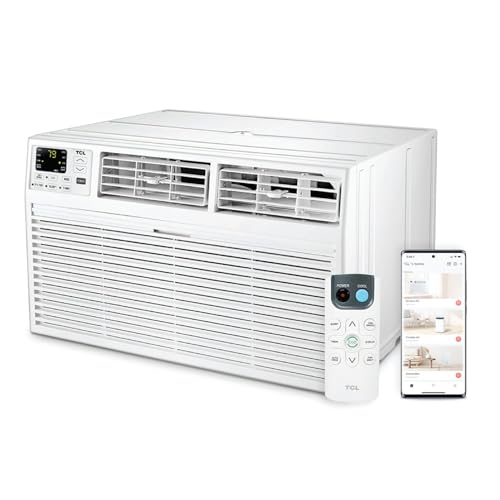
TCL 8,000 BTU Smart Through-the-Wall Air Conditioner with Heater,115V WiFi | 115V, Wall Mounted, Heater, Dehumidifier, Remote Control, Works with Alexa and Google Assistant, Rooms up to 450 Sq.Ft.
Check price on Amazon
OLMO 12,000 BTU 115V Through-the-Wall AC, Cooling Only, Built-In Smart Kit | Air Conditioner, R-32 Eco-Friendly Refrigerant, Remote Included, 1 Ton
Check price on Amazon
Durastar 8,000 BTU Through the Wall 115V Air Conditioner and Sleeve | 4200 BTU Supplemental Heating, Coverage area 350 square feet, Remote Included
Check price on Amazon
Durastar 12,000 BTU Through the Wall 115V Air Conditioner and Remote | Coverage area 550 square feet
Check price on AmazonFrequently Asked Questions
Can a 115V through-the-wall AC be plugged into a standard outlet?
Most 115V through-the-wall air conditioners are designed to operate on a dedicated 15- or 20-amp circuit. While they use a standard NEMA 5-15P or 5-20P plug, the circuit should be dedicated to the unit to prevent overloading. Always consult a licensed electrician to verify your home's wiring.
What size room can a 115V through-the-wall AC cool?
Most 115V models are available in capacities ranging from 8,000 to 12,000 BTU, which can effectively cool rooms up to approximately 400 square feet. For larger spaces, a 230V unit is generally recommended.
Can I replace a window unit with a through-the-wall unit?
Yes, but it requires modifying the wall to accommodate a sleeve. If you already have a wall sleeve from a previous unit, you may be able to find a compatible replacement. Otherwise, professional installation is recommended.
How often should I clean the filter?
During peak cooling season, clean or replace the filter every two to four weeks. This ensures optimal airflow and efficiency. In off-peak months, monthly cleaning is usually sufficient.
Are 115V through-the-wall units energy efficient?
Yes, many modern 115V models feature SEER ratings of 12 or higher, making them quite efficient for their class. Look for ENERGY STAR certified models for the best efficiency. For more details, see our guide on what is SEER rating.
Ready to Choose Your 115V Through-the-Wall AC?
With the information in this guide, you're well-equipped to select the right 115 volt through-the-wall air conditioner for your home. Remember to consider room size, electrical requirements, efficiency ratings, and installation logistics before making your final decision.
For more in-depth guides on related topics, explore our resources on 110 volt through-the-wall air conditioners and 115 volt window air conditioners with heat.
Compare Top Models