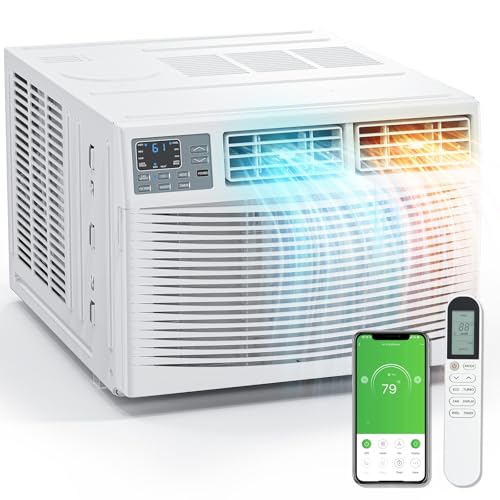
115 Volt Window Air Conditioner with Heat: The Complete Guide
A 115 volt window air conditioner with heat gives you year-round comfort from a single, plug-in unit. This guide explains how these dual-purpose units work, how to size one for your room, what to check before installation, and how to choose the right model for your climate and electrical setup.
Explore Recommended UnitsWhat Is a 115 Volt Window Air Conditioner with Heat?
A 115 volt window air conditioner with heat is a window-mounted unit that runs on standard North American household voltage and provides both cooling and heating from the same chassis. Unlike cooling-only window units, these models include either a heat pump or an electric resistance heater, so the same appliance can keep a room comfortable in summer and take the chill off in cooler months.
The 115 volt designation matters because it determines how the unit connects to your home's electrical system. Most 115V window units are designed for a standard outlet, which makes them practical for renters, apartments, older homes, and rooms where running new wiring would be disruptive. For a deeper comparison of voltage options, see our guide on 110V vs 240V air conditioners.
These units are typically used in bedrooms, home offices, guest rooms, studios, and small living areas. They are a practical middle ground between a cooling-only window unit and a full central system: they add heating capability without the ductwork and installation complexity of a whole-home solution. If you are comparing form factors, our overview of window and wall AC units with heat explains how through-the-wall and window-mounted designs differ.
Key point: The "115 volt" label describes the electrical supply, not the cooling or heating capacity. Two units can both be 115V while offering very different BTU ratings. Always check both the voltage and the BTU specifications before buying.
How the Heating Mode Works
Heat-and-cool window units use one of two heating technologies, and the difference affects both comfort and energy use. Understanding which type you are considering helps you match the unit to your climate.
Heat Pump Heating
A heat pump reverses the refrigerant cycle used for cooling. Instead of moving heat from inside the room to the outdoors, it absorbs heat from outdoor air and releases it indoors. Because it moves heat rather than generating it, heat pump heating is generally more efficient in mild and moderate climates. However, as outdoor temperatures drop, a heat pump's heating output declines, and many window heat pumps include a supplemental electric element for colder days. Our article on how air conditioners work explains the underlying refrigerant cycle in more detail.
Electric Resistance Heating
Electric heater models use a resistance element, similar to a space heater, to warm air as it passes through the unit. These units can produce heat regardless of outdoor temperature, which makes them useful in colder regions. The trade-off is that resistance heating draws more electrical power for the same heat output compared with a heat pump. If you live in a climate with long, cold winters, confirm that the unit's heating capacity and amperage are appropriate for your room and circuit.
Heating Capacity Is Rated Separately
A common mistake is assuming that a unit's cooling BTU equals its heating BTU. In practice, heating capacity is often lower than cooling capacity, especially on heat pump models. Check the product specification for a separate heating BTU or wattage figure, and size the heating side based on your room's winter heat loss rather than its summer cooling load.
Sizing and BTU Requirements
Correct sizing is the single most important factor in comfort and efficiency. An undersized unit runs continuously and struggles to reach the set temperature, while an oversized unit cools too quickly, cycles on and off, and leaves the room feeling damp. The same logic applies to heating: an undersized heater cannot keep up on cold nights.
As a starting point, cooling capacity is often estimated at roughly 20 BTU per square foot for an average room with standard ceiling height and insulation. That baseline needs adjustment for sun exposure, window count, occupancy, and kitchen heat. For a detailed walkthrough, see our guide on how to size an air conditioner.
| Room Size | Typical Cooling BTU | Notes |
|---|---|---|
| Up to 150 sq ft | 5,000 to 6,000 BTU | Small bedroom or studio; verify heating capacity separately |
| 150 to 250 sq ft | 8,000 to 10,000 BTU | Standard bedroom or home office |
| 250 to 400 sq ft | 10,000 to 12,000 BTU | Large bedroom or small living area; check circuit amperage |
| 400 to 550 sq ft | 12,000 to 14,000 BTU | Open-plan spaces; confirm 115V availability at this capacity |
For heating, use the unit's rated heating output as a guide rather than the cooling BTU. Rooms with poor insulation, single-pane windows, or exterior walls lose heat faster and may need a larger heating capacity. If your room is at the upper end of a size bracket, moving up one tier is often the safer choice for a dual-purpose unit. You can also cross-check capacity needs with a BTU calculator by room size.
Sizing tip: Measure the room in square feet, note how many windows it has, and consider whether the space is open to other rooms. These factors matter more than the nominal BTU number on the box.
Electrical Requirements and Safety
Because a 115 volt heat-and-cool unit combines a compressor and a heating element, its electrical draw can be higher than a cooling-only unit of similar size. Before installation, check the nameplate for rated amps and confirm that the circuit can handle the load.
- Dedicated circuit: Window AC units should ideally run on a dedicated circuit, meaning no other major appliances share the same breaker.
- Breaker size: Many 115V window units run on a 15-amp circuit, but larger or heat-equipped models may require a 20-amp circuit. Match the breaker to the unit's rated amperage and the manufacturer's instructions.
- Outlet type: Most 115V units use a standard NEMA 5-15 or 5-20 plug. Do not use extension cords, power strips, or adapters, as these can overheat.
- Older wiring: Homes with old wiring, ungrounded outlets, or frequent breaker trips should be evaluated by a licensed electrician before a heat-and-cool unit is installed.
- GFCI protection: Units near water sources or in damp locations may benefit from GFCI protection, depending on local code.
If your home's electrical panel is already near capacity, a 240V unit may be a better fit for larger rooms. Our article on 110V vs 240V air conditioners breaks down the trade-offs in circuit capacity and unit size. For a broader look at through-the-wall options, the guide to 115 volt through-the-wall air conditioners is also useful.
Efficiency and Operating Considerations
Efficiency for a heat-and-cool window unit has two dimensions: cooling efficiency and heating efficiency. Cooling efficiency is commonly expressed as EER or CEER, while heating efficiency for heat pump models may be described by a heating seasonal performance factor. Electric resistance heating is straightforward but draws more power per unit of heat delivered.
Beyond the rating label, several practical factors influence how much energy a unit uses in real life:
- Sealing the window opening: Gaps around the unit let hot air in during summer and cold air in during winter, forcing the unit to work harder. Use the included foam seals and side panels correctly.
- Thermostat settings: Keeping the cooling setpoint moderate and the heating setpoint conservative reduces runtime. A programmable or smart thermostat can help if the unit supports one; see our guide on wireless air conditioner thermostats for options.
- Filter maintenance: A clogged filter restricts airflow and reduces both cooling and heating performance. Clean or replace the filter regularly, especially during heavy-use seasons.
- Unit placement: Shade the outdoor side of the unit when possible, and avoid placing heat-generating appliances near the indoor intake.
- Supplemental heating: In very cold weather, a heat pump unit may rely on its electric backup, which increases power draw. Plan for this if you use the unit as a primary heat source.
If you are comparing efficiency labels across models, our explainer on what a SEER rating means helps you interpret the numbers. For rooms where humidity control matters, a unit that cools gradually rather than blasting cold air is often more comfortable.
Installation and Placement Tips
Most 115V window heat-and-cool units are designed for straightforward installation, but a few details make the difference between a solid fit and a drafty, rattling setup.
- Window type and size: Check the unit's minimum and maximum window opening dimensions. Double-hung windows are the most common fit; casement and slider windows may need a special bracket or a different unit type.
- Support and safety: Follow the manufacturer's instructions for outdoor support brackets. Larger units can be heavy, and proper support prevents sagging and window damage.
- Level installation: A slight outward tilt helps condensate drain properly. Too much tilt can cause leaks or vibration.
- Sealing: Use the provided insulation panels and foam to close gaps. This improves efficiency and reduces noise infiltration.
- Clearance: Keep the outdoor side clear of obstructions so the condenser can reject heat properly. Avoid enclosing the unit in a tight sleeve without ventilation.
- Indoor airflow: Do not block the indoor intake or supply louvers with curtains or furniture. Good air circulation helps both cooling and heating.
If your window setup is unusual, such as a small vertical window or a room without a suitable window, alternatives exist. Our guides on air conditioners for small vertical windows and windowless air conditioners cover other configurations.
Before you install: Confirm the circuit's amperage, test the outlet, and dry-fit the unit in the window before final sealing. A few minutes of preparation prevents most installation problems.
Pros and Cons of 115V Window Units with Heat
A dual-purpose 115 volt window unit is not the right fit for every home. Weighing its strengths and limitations against your needs will help you decide whether it is the best approach for your space.
Advantages
- Provides both cooling and heating from a single appliance
- Runs on standard household voltage, simplifying installation
- No ductwork required, suitable for older homes and rentals
- Room-by-room comfort control reduces waste in unused rooms
- Straightforward DIY installation for most standard windows
- Useful as a supplemental heat source in transitional seasons
Limitations
- Cooling and heating capacity are limited to a single room
- Heating output may be lower than cooling output, especially on heat pump models
- Resistance heating draws more power than a heat pump
- Window mounting can affect security, aesthetics, and light
- Larger capacities may push the limits of a 115V circuit
- Not a substitute for a whole-home heating system in severe climates
For many rooms, the balance tips in favor of a 115V heat-and-cool unit because it solves two comfort problems with one installation. If you need to condition a larger area, a zoned air conditioning system or a ductless setup may be more appropriate.
How to Choose the Right 115V Unit
Once you have sized the room and confirmed your electrical capacity, the remaining decisions come down to features and fit. Use the checklist below to narrow your options.
Match the Unit to Your Climate
In mild climates, a heat pump model is often the more efficient choice for heating. In colder climates, an electric heater model or a heat pump with a strong supplemental element may be necessary. Consider how often you will actually use the heating mode and how cold your winters get.
Check the Heating Rating
Compare the heating BTU or wattage of each candidate, not just the cooling BTU. A unit that cools well but heats weakly may disappoint in winter. Read the specifications carefully and, where available, look for independent performance data.
Consider Noise and Airflow
Window units vary in sound level, and the heating mode may introduce additional fan or element noise. If the unit will be in a bedroom, look for models with multiple fan speeds and a quiet mode. Our guide on quiet air conditioners covers features that reduce noise.
Think About Smart Controls
Some heat-and-cool window units support Wi-Fi control, scheduling, or remote thermostats. These features can improve convenience and energy management. For related options, see our article on wireless air conditioners.
Verify the Fit and Warranty
Confirm the unit's dimensions against your window opening, and review the warranty terms for both cooling and heating components. A longer warranty on the sealed system is generally a sign of a more durable build. Our AC warranty guide explains what typical coverage includes.
If your room has no suitable window or you need more flexibility, our comparison of windowless portable air conditioner reviews and the overview of window and wall units with heat may help you explore alternatives.
Frequently Asked Questions
Can a 115 volt window air conditioner with heat run on a standard outlet?
Most 115V window units are designed for a standard household outlet, but the heating element increases the electrical load. Check the unit's rated amperage and confirm that the circuit is dedicated. Some larger heat-and-cool models require a 20-amp circuit rather than the more common 15-amp circuit.
How does the heating mode work on a window AC with heat?
Heat pump models reverse the refrigerant cycle to move heat from outdoor air into the room, which is efficient in mild climates. Electric heater models use a resistance element to warm the air. Heat pump heating output declines as outdoor temperatures fall, while resistance heating works in colder conditions but draws more power.
What size 115 volt window AC with heat do I need?
Start with the room's square footage and adjust for windows, sun exposure, and insulation. A 10,000 to 12,000 BTU unit typically suits a 250 to 400 square foot room. Then check the unit's separate heating rating, since heating capacity is often lower than cooling capacity.
Is a 115 volt heat-and-cool window unit efficient?
Efficiency depends on the design. Heat pump models are generally more efficient for heating than electric resistance models. For cooling, look for a strong EER or CEER rating. A 115V unit is efficient for single-room use but is not intended as a whole-home solution.
Can I install a 115 volt window AC with heat myself?
Yes, most window units are designed for DIY installation. You will need a sturdy window frame, proper support bracketing, and a compatible electrical circuit. If the unit requires a dedicated 20-amp circuit or your home has old wiring, have a licensed electrician evaluate the setup first.
Does the heating mode work during a power outage?
No. A 115V window unit requires mains power for both cooling and heating. It does not provide backup heat during an outage. If backup heating is a priority, consider a separate battery or generator-supported heating plan.
Continue Your Research
If you are still comparing options, these related guides can help you refine your choice:
- 110 volt window air conditioner with heat — a close alternative for homes with 110V wiring.
- 15,000 BTU 115 volt window air conditioner — for larger rooms where capacity is the priority.
- Window and wall AC units with heat — compare mounting styles and heating options.
- 115 volt through-the-wall air conditioners — a permanent-install alternative to window units.