220 Electrical Outlet: The Complete Guide for Air Conditioner Owners
Understand outlet types, amperage ratings, breaker sizing, and safe installation practices before you connect a 220V air conditioner to your home's electrical system.
EXPLORE OUTLET TYPESWhy this guide matters: A 220 electrical outlet is not a one-size-fits-all component. The outlet, plug, wire gauge, and circuit breaker must all match the air conditioner's electrical requirements. Getting this wrong can cause tripped breakers, damaged equipment, or a serious safety hazard. This guide walks you through every decision so you can buy and install with confidence.
What Is a 220 Electrical Outlet?
A 220 electrical outlet, often written as a 220V or 240V outlet, is a receptacle designed to deliver higher voltage than a standard 120V household outlet. In North American residential wiring, "220V" and "240V" are used interchangeably in everyday conversation, even though the actual measured voltage typically falls between 220 and 240 volts. This higher voltage allows appliances to draw the same amount of power at roughly half the amperage, which is why larger air conditioners, electric dryers, and electric ranges use 220V circuits.
For air conditioning, a 220 electrical outlet is commonly required for larger window units, through-the-wall units, and ductless mini-split systems. Smaller window units often run on 115V, but once cooling capacity climbs into the higher BTU ranges, manufacturers typically switch to 220V to keep the current draw manageable. If you are still deciding on capacity, our guide to 220 air conditioner window units explains how voltage and cooling capacity relate.
Common 220 Electrical Outlet Types for Air Conditioners
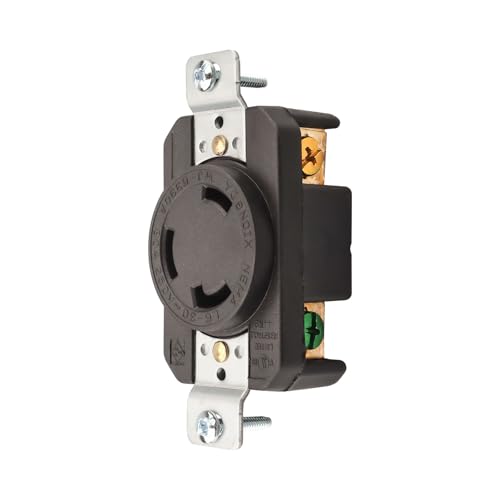
Not every 220V outlet is the same. The shape of the receptacle and the arrangement of the prongs are deliberately different so that a plug only fits the circuit it was designed for. Below are the outlet types you are most likely to encounter when shopping for an air conditioner.
NEMA 6-15R
A 15-amp, 250-volt receptacle with two horizontal blades and a ground. It is used by some smaller 220V air conditioners and is often confused with a standard 120V outlet because the shape looks similar at a glance. Always check the blade orientation before assuming compatibility.
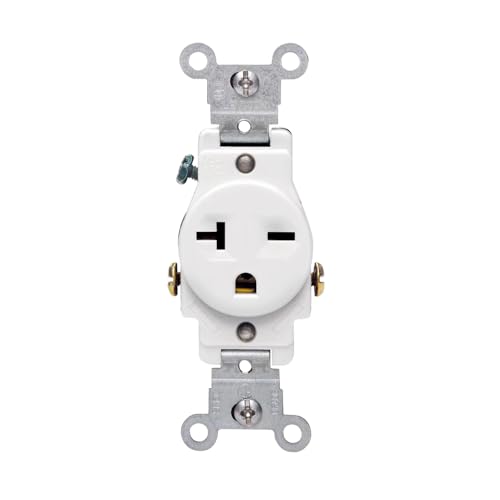
NEMA 6-20R
A 20-amp, 250-volt receptacle with one horizontal and one vertical blade plus a ground. This is a common choice for mid-range 220V window and through-the-wall air conditioners that draw more current than a 15-amp circuit can safely handle.
NEMA 6-30R
A 30-amp, 250-volt receptacle with two horizontal blades and a ground. Larger 220V air conditioners and some heat-pump-equipped units use this configuration. If your unit specifies a 30-amp circuit, this is the matching outlet family.
NEMA 10-30R and 14-30R
These are the familiar dryer-style outlets. The 10-30R is an older three-prong configuration, while the 14-30R is the modern four-prong version with a separate neutral. Some larger air conditioners and heat pump systems can use these, but you should never assume compatibility without checking the unit's plug type.
If your air conditioner ships with a specific plug, the outlet must match it exactly. Adapters exist, but they are not a substitute for a properly matched circuit. For a deeper look at plug shapes and matching receptacles, see our guide to 240 volt AC plugs and the related discussion on 30 amp AC plugs.
Matching Outlet Amperage to Your Air Conditioner
The amperage rating of a 220 electrical outlet is one of the most important specifications to get right. Air conditioner manufacturers list a minimum circuit ampacity and a maximum breaker size on the unit's nameplate. The outlet, wiring, and breaker must all be rated to handle that current safely.
| Outlet Tier | Typical Amperage | Best For |
|---|---|---|
| Essential tier | 15A | Compact 220V window units with lower current draw |
| Balanced tier | 20A | Mid-range 220V window and through-the-wall air conditioners |
| High-end tier | 30A | Larger 220V units, heat pump systems, and higher-capacity installations |
| Professional-grade | 30A+ dedicated circuits | Ductless mini-splits and central-style equipment requiring dedicated service |
Never install a 30-amp outlet on a circuit protected by a 20-amp breaker, and never install a 20-amp outlet on a 15-amp circuit. The outlet must be the weakest or equal link relative to the breaker, and the wire gauge must support the breaker size. A mismatch here is one of the most common causes of overheated wiring and nuisance tripping.
Breaker and Wire Sizing Basics
Behind every 220 electrical outlet is a circuit breaker and a run of wire. The breaker protects the wire, and the wire must be sized for the breaker. For a 15-amp 220V circuit, 14-gauge copper wire is typical. For 20-amp circuits, 12-gauge copper is standard. For 30-amp circuits, 10-gauge copper is the usual minimum. Longer wire runs may require a larger gauge to limit voltage drop.
Air conditioners are considered continuous loads in many installations, which means the circuit is often sized at 125 percent of the unit's rated current. This is why a unit that draws 16 amps might call for a 20-amp circuit, and a unit that draws 24 amps might call for a 30-amp circuit. Always follow the manufacturer's nameplate instructions rather than guessing. Our article on amps and breaker size for AC units breaks down this calculation step by step.
Safety Note
Working inside an electrical panel or running new 220V circuits is not a typical do-it-yourself task. If you are not experienced with electrical work, hire a licensed electrician. A qualified electrician can verify the panel capacity, confirm the wire gauge, install the correct breaker, and ensure the outlet is properly grounded. For guidance on when to bring in a professional, see our article on whether you need an electrician for AC installation.
Indoor vs Outdoor 220 Electrical Outlets
Where the outlet is installed matters as much as its rating. An indoor 220 electrical outlet is typically a standard flush-mounted receptacle in a wall box. An outdoor outlet must be housed in a weather-resistant enclosure with a cover that protects the receptacle when not in use. For ductless mini-split systems, the outdoor disconnect and receptacle must be rated for wet locations and installed according to local code.
If your air conditioner is a through-the-wall unit, the outlet is usually indoors near the sleeve, but the installation still needs to account for moisture and condensation. For window units, the outlet should be on a dedicated circuit and positioned so the cord reaches without strain. Extension cords should never be used as a permanent solution for a 220V air conditioner.
GFCI, AFCI, and Code Considerations
Modern electrical codes increasingly require ground-fault circuit interrupter (GFCI) protection and arc-fault circuit interrupter (AFCI) protection in various locations. Whether a 220V air conditioner circuit requires GFCI protection depends on the unit type, the location, and the adopted code cycle in your area. Outdoor receptacles and receptacles near water are commonly required to have GFCI protection. AFCI protection is often required for branch circuits in living areas.
Because code requirements vary by jurisdiction and change over time, the safest approach is to confirm local requirements with your electrical inspector or a licensed electrician before installation. Our guide to getting an AC permit explains how permitting and inspection fit into the process.
Common Mistakes to Avoid
- Using the wrong outlet shape: A 6-20R outlet will not accept a 6-30P plug, and forcing an adapter defeats the safety design of the system.
- Ignoring the nameplate: The unit's label tells you the minimum circuit ampacity and maximum breaker size. Follow it exactly.
- Sharing a circuit: A 220V air conditioner should be on a dedicated circuit. Sharing with other appliances causes voltage fluctuations and nuisance tripping.
- Undersized wire: Using 14-gauge wire on a 20-amp circuit is a fire hazard. Match the wire to the breaker.
- Skipping the permit: Unpermitted electrical work can complicate insurance claims and resale inspections.
How to Verify Your Existing Outlet
If your home already has a 220 electrical outlet, you can verify its suitability before buying an air conditioner. First, look at the outlet face and compare the blade arrangement to the plug on the unit you are considering. Second, check the breaker panel for the circuit rating. Third, use a multimeter or a voltage tester rated for 240V to confirm the outlet is live and delivering the expected voltage. If any of these steps is unfamiliar, stop and call an electrician.
For homes without an existing 220V circuit, the installation will involve running new wire from the panel, installing a breaker, and mounting the receptacle. This is a project that should be planned before the air conditioner arrives, not after. Our guide to checking your home electrical panel helps you assess whether your panel has the capacity for an additional 220V circuit.
Frequently Asked Questions
Can I use a 220 electrical outlet for a 240V air conditioner?
In North American residential wiring, 220V and 240V are commonly used to describe the same nominal circuit. The actual voltage may measure anywhere from roughly 220 to 240 volts. What matters is that the outlet, plug, breaker, and wire all match the air conditioner's nameplate requirements.
Do all air conditioners need a 220V outlet?
No. Many smaller window units run on standard 115V circuits. Larger window units, through-the-wall units, and mini-splits often require 220V. Always check the unit's plug type and nameplate before assuming.
Can I install a 220 electrical outlet myself?
Electrical work carries serious safety risks and is regulated in most jurisdictions. If you are not a licensed electrician, hire a professional. A qualified installer will also handle permitting and inspection where required.
What is the difference between a 6-20R and a 6-30R outlet?
The 6-20R is rated for 20 amps, while the 6-30R is rated for 30 amps. Their blade arrangements differ, so a plug designed for one will not fit the other. The correct choice depends on the air conditioner's current draw and the manufacturer's requirements.
Can I use an extension cord with a 220V air conditioner?
Extension cords are not a safe permanent solution for a 220V air conditioner. They can overheat and cause voltage drop. The unit should be plugged directly into a properly rated outlet on a dedicated circuit.
Final Checklist Before You Buy
- Confirm the air conditioner's required voltage and plug type from the nameplate.
- Verify the outlet type and amperage match the plug.
- Check the breaker size and wire gauge for the circuit.
- Confirm the circuit is dedicated to the air conditioner.
- Check local code requirements for GFCI and AFCI protection.
- Obtain any required permits before installation.
- Hire a licensed electrician for new circuit installation or panel work.
Once your electrical setup is verified, you can shop for the right unit with confidence. Explore our recommendations below to find a 220V air conditioner that matches your outlet and your room's cooling needs.