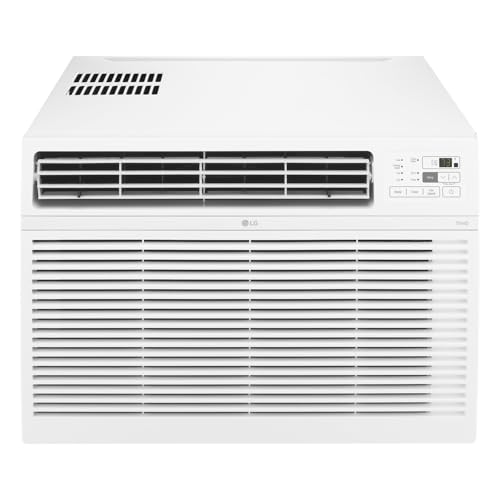
220 Air Conditioner Window Unit: The Complete Guide
Everything you need to know about high-voltage window air conditioners — wiring requirements, BTU sizing, efficiency ratings, safety considerations, and how to choose the right model for a larger room or whole-home zone.
Explore the GuideWhy a 220 volt window unit? Standard 115 volt window air conditioners top out around 12,000 BTU. When you need more cooling power — for a large living room, an open-plan space, or a room in a hot climate — a 220 air conditioner window unit delivers higher capacity, better compressor efficiency, and more consistent comfort. The trade-off is that these units require a dedicated 220–240 volt circuit, which is a more involved installation. This guide walks you through every decision point so you can buy with confidence.
What Is a 220 Air Conditioner Window Unit?
A 220 air conditioner window unit is a window-mounted air conditioner engineered to operate on a 220–240 volt electrical circuit. Unlike the familiar 115 volt window units that plug into any standard household outlet, a 220 volt window air conditioner draws roughly half the amperage for the same cooling output, which allows manufacturers to build larger, more powerful systems without overloading standard wiring.
These units are sometimes labeled as 220V window air conditioners, 230 volt window air conditioners, or 240 volt window AC units — the terms are largely interchangeable in the U.S. market, since the nominal voltage range for residential split-phase power is 220–240 volts. What matters is matching the unit's nameplate voltage and amperage to a correctly sized dedicated circuit.
Typical 220 volt window units range from about 12,000 to 25,000 BTU, making them suitable for rooms up to roughly 1,500 square feet depending on climate, insulation, ceiling height, and sun exposure. For very large cooling loads, you may also compare these with a 15,000 BTU window air conditioner or step up to a 18,000 BTU window unit depending on your circuit availability.
115V vs 220V Window AC: Key Differences
Choosing between a standard 115 volt unit and a 220 volt unit is one of the first decisions you'll face. The table below summarizes the practical differences so you can quickly see which category fits your situation.
| Factor | 115V Window AC | 220V Window AC |
|---|---|---|
| Typical Capacity | 5,000 – 12,000 BTU | 12,000 – 25,000 BTU |
| Electrical Requirement | Standard 115V outlet, 15A circuit | Dedicated 220–240V circuit, 15–30A |
| Installation Complexity | Plug and play | Requires electrician for new circuit |
| Best For | Bedrooms, small offices, studios | Large rooms, open-plan spaces, hot climates |
| Amperage Draw | Higher amps per BTU | Lower amps per BTU |
| Efficiency Potential | Good for small loads | Often higher CEER at larger capacities |
| Market Position | Entry-level to mid-range | Mid-range to top-tier |
If your room is under roughly 400 square feet and you don't already have a 220 volt circuit near the window, a 115 volt unit is usually the simpler path. But if you're cooling a larger space, or you already have a 220 volt outlet (for example, from an old air conditioner or a dedicated appliance circuit), a 220 air conditioner window unit becomes a compelling option. You can also explore 12,000–14,000 BTU AC options to compare capacity tiers across both voltage classes.
Electrical Requirements and Circuit Planning
This is the part that separates 220 volt window units from their plug-and-play cousins. Before you buy, you need to confirm three things: the circuit amperage, the receptacle type, and whether the unit is cord-and-plug or hardwired.
Circuit Amperage and Breaker Size
Most 220 volt window air conditioners require a dedicated circuit rated between 15 and 30 amps, depending on BTU capacity. A general rule of thumb:
- 12,000–15,000 BTU: typically a 15A or 20A dedicated 220V circuit
- 18,000–24,000 BTU: typically a 20A or 30A dedicated 220V circuit
- 25,000 BTU and above: often a 30A circuit, sometimes hardwired
Always verify the nameplate rating on the specific model. The circuit breaker must be sized to the unit's maximum overcurrent protection, and the wire gauge must match the breaker. For a deeper dive into breaker and amperage planning, see our guide on amps and breaker size for AC units.
Receptacle Types: NEMA 6-15, 6-20, and Hardwired
220 volt window AC units typically use one of three connection methods:
- NEMA 6-15 receptacle: 250V, 15A, two horizontal blades plus ground — common on smaller 220V units.
- NEMA 6-20 receptacle: 250V, 20A, with a T-shaped neutral blade — found on mid-capacity units.
- Hardwired: the unit connects directly to a junction box via flexible conduit or armored cable — common on very large units and commercial-grade models.
If your home already has a 220 volt outlet, check its NEMA configuration against the unit's plug. If they don't match, you'll need either an adapter (only if amperage and voltage are compatible) or a new receptacle installed by an electrician. For related outlet planning, see our notes on the 220 electrical outlet and the 240 volt AC plug.
⚠️ Safety note: Never plug a 220 volt window air conditioner into a 115 volt outlet, and never use an undersized extension cord. High-voltage window units draw continuous current for hours at a time, and improper wiring is a fire and shock hazard. A licensed electrician should install or verify the dedicated circuit before the unit is connected. If you're unsure whether your panel can support another circuit, read our guide on checking your home electrical panel.
BTU Sizing for 220 Volt Window Units
Because 220 volt window units cover a wide capacity range, sizing is the single most important decision after circuit compatibility. An undersized unit runs continuously and never fully dehumidifies; an oversized unit short-cycles, leaving the room clammy and wearing out the compressor prematurely.
The basic rule of thumb is 20 BTU per square foot for an average room with 8-foot ceilings, normal insulation, and moderate sun exposure. Adjust upward for:
- Kitchens (+4,000 BTU)
- Rooms with large south- or west-facing windows (+10%)
- High ceilings or vaulted spaces
- Hot climates or poor insulation
- More than two occupants (+600 BTU per person)
For a more precise number, use a BTU calculator by room size or run a Manual J load calculation. If you're comparing capacity tiers, our guides on 18,000 BTU cooling area and 24,000 BTU cooling area break down the square footage each class realistically handles.
Efficiency Ratings: What to Look For
Window air conditioners are rated using CEER (Combined Energy Efficiency Ratio) or, under newer DOE rules, CEER2. The higher the number, the more cooling you get per unit of electricity. For 220 volt units, efficiency varies widely across price tiers, and a well-chosen mid-range or top-tier model can be significantly more efficient in the long run than an entry-level unit of the same capacity.
Key efficiency considerations for 220 volt window units:
- Inverter compressors are increasingly common on premium 220V window units and deliver smoother temperature control and lower standby losses. See our explainer on inverter AC technology and inverter vs non-inverter comparison.
- ENERGY STAR certification indicates the unit meets or exceeds federal efficiency thresholds. Learn more about ENERGY STAR certified AC.
- EER vs SEER2 vs CEER2 — window units use CEER2, while central systems use SEER2. Our guides on EER rating and SEER vs SEER2 clarify the differences.
A higher-efficiency unit usually pays back over several cooling seasons, especially in climates with long summers. If efficiency is your top priority, browse our roundup of the most energy efficient AC units and the highest SEER air conditioners.
How to Choose a 220 Air Conditioner Window Unit
With the electrical and sizing groundwork done, here are the practical factors that separate a good buying decision from a regrettable one.
1. Confirm Circuit Compatibility First
Before you fall in love with a model, confirm the circuit. Check the breaker panel for an existing 220–240 volt circuit near the window, verify the receptacle type, and confirm the amperage. If no circuit exists, budget for an electrician — this is non-negotiable for safety and code compliance. Our guide on whether you need an electrician for AC installation walks through the decision.
2. Match BTU to Room Size — Not to Voltage
Don't assume a 220 volt unit is automatically right just because it's more powerful. Match the BTU to the room, then choose the voltage class that supports that capacity. A 12,000 BTU 220V unit and a 12,000 BTU 115V unit deliver the same cooling — the difference is electrical infrastructure and, often, compressor efficiency at higher capacities. For rooms around 400–600 square feet, a 14,000 BTU window air conditioner with heat is a versatile choice if you also need shoulder-season warmth.
3. Decide on Heat and Smart Features
Many 220 volt window units offer optional heat strips or heat pump operation, turning the unit into a year-round solution. If you need heating, look for a 220 volt window air conditioner with heat or a 230 volt window air conditioner with heater. Smart features — Wi-Fi control, programmable thermostats, and remote scheduling — are increasingly available in mid-range and top-tier models; see our roundup of AC with Wi-Fi and smart control.
4. Noise, Build Quality, and Installation Fit
Larger 220V window units can be heavy and noisy. Check the decibel rating if the unit will be in a bedroom or living area, and look for models with reinforced mounting hardware and weather-resistant coatings if the window is exposed to rain or salt air. For quiet operation specifically, see our guide to quiet air conditioners. Also confirm the window opening dimensions and whether the unit requires a support bracket — large units often do.
Market Tiers at a Glance
Entry-Level 220V Window Units
Basic mechanical controls, standard compressor, 12,000–15,000 BTU. Solid choice for a secondary room or a space where smart features aren't needed. Well-specified for the category and straightforward to service.
Mid-Range 220V Window Units
Electronic controls, programmable timers, improved insulation and airflow design, competitive CEER2 ratings, 15,000–20,000 BTU. The sweet spot for most households that want efficiency and comfort without jumping to flagship pricing.
Premium 220V Window Units
Inverter compressors, heat pump operation, Wi-Fi control, enhanced filtration, heavy-duty construction, 18,000–25,000 BTU. A long-term investment for primary living spaces or whole-home zone cooling in demanding climates.
Installation Overview: What to Expect
Installing a 220 air conditioner window unit is a two-part job: the electrical work and the physical installation. Here's the sequence most homeowners follow.
- Electrical assessment. An electrician verifies your panel capacity, runs a dedicated 220–240V circuit, installs the correct breaker and receptacle (or hardwires the unit), and confirms grounding. This is the step that should never be skipped. Read more in our electrical panel guide.
- Window and bracket preparation. Measure the window opening, confirm the unit fits with the required clearances, and install a support bracket if the unit is heavy or the window sill isn't load-bearing. Large 220V units almost always need external support.
- Physical installation. Set the unit in the window with a slight backward tilt for drainage, seal the perimeter with insulation and weatherstripping, and secure the sash. Follow the manufacturer's window kit instructions precisely.
- Electrical connection and test. Plug into the dedicated receptacle or complete the hardwired connection, restore power, and test cooling, fan speeds, and drainage. Check for vibration and seal gaps.
- Permit and inspection. Many jurisdictions require a permit for new electrical circuits. Our guide on how to get an AC permit explains when this applies and what to expect.
If you're comparing installation paths, our articles on whether you need an electrician for AC and when to call an HVAC technician help clarify the division of labor between electricians and HVAC pros.
Efficiency, Maintenance, and Long-Term Care
A 220 volt window unit is a long-term investment. Protect it with a simple maintenance routine:
- Clean or replace the air filter every 2–4 weeks during heavy use. A clogged filter reduces airflow and forces the compressor to work harder. See how to clean an AC filter and when to replace an AC filter.
- Clean the condenser and evaporator coils at least once per season. Guides: clean condenser coils and clean evaporator coils.
- Check the drainage path and keep the rear of the unit clear of debris.
- Seal gaps around the window kit to prevent cool-air loss and pest intrusion. Our guide on sealing air leaks for efficiency covers related strategies.
- Use a programmable schedule if the unit supports it — see how to use a programmable thermostat and ideal AC temperature settings.
For a full seasonal checklist, see our seasonal AC checklist and AC maintenance guide.
Common Issues and When to Call a Pro
Even well-maintained units develop issues. Here's a quick reference:
- AC not cooling: check the filter, thermostat, and breaker first. Guide: AC not cooling solutions.
- Water leaking: often a clogged drain or improper tilt. Guide: AC leaking water solutions.
- Blowing warm air: could be a compressor, capacitor, or refrigerant issue. Guide: AC blowing warm air solutions.
- Noise or vibration: check mounting and fan obstruction. Guide: AC making noise solutions.
- Frozen coils: airflow or refrigerant problem. Guide: AC frozen coils solutions.
Refrigerant work and compressor replacement require licensed professionals. See our guides on refrigerant leak repair, compressor replacement, and when to call an HVAC technician.
Frequently Asked Questions
A 220 air conditioner window unit is a window-mounted cooling appliance designed to run on a 220–240 volt circuit rather than the standard 115 volt household circuit. These units are typically larger, more powerful, and used for cooling bigger rooms or whole-home zones where a dedicated high-voltage circuit is available.
No. A 220 volt window air conditioner requires a dedicated 220–240 volt circuit with the correct amperage rating, typically wired with a NEMA 6-15 or 6-20 receptacle or hardwired directly to a junction box. A standard 115 volt household outlet cannot safely power these units.
In most cases, yes. Installing a dedicated 220 volt circuit involves running new wiring from the electrical panel, installing a correctly rated breaker, and either mounting a specialized receptacle or hardwiring the unit. This work should be performed by a licensed electrician to meet local codes and ensure safety.
Most 220 volt window air conditioners fall in the 12,000 to 25,000 BTU range, suitable for rooms between roughly 400 and 1,500 square feet depending on ceiling height, insulation, sun exposure, and climate. Use a BTU sizing guide and consider a manual J load calculation for accurate sizing.
Larger 220 volt units often achieve competitive EER and CEER ratings because higher voltage allows more efficient compressor operation and larger coils. Efficiency still depends on the specific model, SEER2/CEER rating, and proper sizing rather than voltage alone.
The main difference is capacity and electrical infrastructure. 115 volt units are smaller, plug into standard outlets, and cool smaller rooms. 220 volt units are larger, require a dedicated high-voltage circuit, and are designed for bigger spaces or higher cooling loads. Both can be efficient when properly sized.
Ready to Compare 220V Window Units?
Explore our recommended models below, then verify your circuit requirements with a licensed electrician before purchase.
View Recommended Models