24,000 BTU AC Cooling Area: What Size Room Does It Cool?
A 24,000 BTU air conditioner—also known as a 2-ton system—is one of the most popular capacities for large living spaces and open floor plans. This guide explains exactly how much area it covers, what changes that coverage, and how to decide whether it is the right match for your home.
Key takeaway: A 24,000 BTU unit is the right choice for a large, open area in the 1,400–1,500 square foot range under standard conditions. If your space has high ceilings, intense sun exposure, or poor insulation, plan for the lower end of the coverage range—or step up to a 25,000 BTU unit for extra headroom.
How Many Square Feet Does 24,000 BTU Cool?
The standard rule of thumb in residential cooling is roughly 20 BTU per square foot of living space. Under that guideline, a 24,000 BTU air conditioner is sized for approximately 1,400 to 1,500 square feet. That makes it a strong fit for a large living room, an open-plan kitchen and dining area, a finished basement, or a whole-floor setup in a moderately sized home.
However, the 20 BTU per square foot rule assumes average conditions: standard 8-foot ceilings, decent insulation, moderate sun exposure, and a typical number of occupants. In practice, the real coverage of a 24,000 BTU unit spans roughly 1,200 to 1,600 square feet. The table below summarizes how capacity translates into coverage.
| Capacity | Tons | Typical Coverage | Best For |
|---|---|---|---|
| 18,000 BTU | 1.5 tons | ~1,000–1,200 sq ft | Large bedroom, medium open area |
| 24,000 BTU | 2 tons | ~1,400–1,500 sq ft | Large living room, open floor plan |
| 30,000 BTU | 2.5 tons | ~1,700–1,900 sq ft | Whole floor, large open layout |
| 36,000 BTU | 3 tons | ~2,000–2,200 sq ft | Whole home, multi-zone setups |
If you are still mapping out your room dimensions, the BTU calculator by room size can give you a more precise starting point before you compare specific units.
What Factors Change the Real Cooling Area?
Square footage alone is never the full story. Two rooms with identical floor plans can have very different cooling loads. The factors below are the ones that most often move a 24,000 BTU unit from “comfortable” to “working too hard”—or the reverse.
Ceiling Height
Standard calculations assume 8-foot ceilings. A room with 10- or 12-foot ceilings holds significantly more air volume, which can push a 24,000 BTU unit toward its limit. In vaulted or lofted spaces, size up or consider a unit with stronger airflow.
Sun Exposure & Windows
Large south- or west-facing windows let in substantial solar heat. A room with extensive glazing can need 10–20% more capacity than a shaded room of the same size. Window treatments and exterior shading help close that gap.
Insulation & Air Sealing
Older homes with limited insulation and drafty openings lose cooling faster. If your space is poorly sealed, a 24,000 BTU unit may only effectively cover the lower end of its range—or you may need to address the envelope first.
Occupants & Appliances
Each person adds roughly 400–600 BTU of heat load, and kitchens or home offices with heat-generating equipment add more. A busy family room or a space above a garage will run warmer than a quiet bedroom of the same size.
Climate Zone
Homes in hot, humid regions need more capacity to handle both temperature and moisture. In milder climates, a 24,000 BTU unit may comfortably cover the upper end of its range or slightly beyond.
Room Layout & Airflow
An open floor plan lets one unit serve a larger connected area. Closed doors, narrow hallways, and furniture blocking airflow reduce effective coverage, even when the square footage is within range.
Which AC Type Fits a 24,000 BTU Cooling Area?
Once you have confirmed that roughly 1,400–1,500 square feet is your target, the next question is which system type makes sense. A 24,000 BTU capacity is available across several formats, and each has a distinct best-fit scenario.
Ductless Mini-Split (Most Flexible)
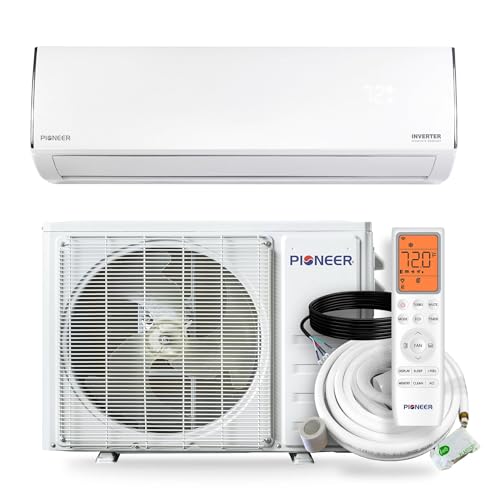
A 24,000 BTU mini-split is the most common choice for a single large zone. It delivers strong cooling without ductwork, installs with a small wall penetration, and lets you set temperature independently from the rest of the home. It is an excellent fit for open-plan living areas, additions, and homes without existing ducts.
Through-the-Wall Unit (For Dedicated Rooms)
A 24,000 BTU through-the-wall air conditioner suits a large room where a wall sleeve already exists or can be installed. It frees up window space and is a practical option for converted garages, sunrooms, and basement rooms that need a permanent, self-contained solution.
Central or Ducted System (Whole-Floor Coverage)
If the 24,000 BTU area is part of a larger home with ductwork, a 2-ton central system can serve that zone as part of a whole-house design. This approach makes the most sense when you are already planning ductwork or replacing an existing system, and when multiple rooms need conditioning at once.
Portable Unit (Temporary or Renter-Friendly)
Portable units at this capacity exist, but they are less efficient than mini-splits and through-the-wall models. They are best treated as a short-term or rental-friendly option rather than a long-term solution for a 1,400+ square foot space. For a more permanent large-room setup, compare the mini-split option before committing.
Is 24,000 BTU Right for Your Space?
Use the checklist below to sanity-check your sizing decision before you compare models. The goal is not to buy the biggest unit—it is to match capacity to your actual cooling load.
- Measure the actual cooled area. Include only rooms that are open to the airflow, not separate rooms behind closed doors.
- Account for ceiling height. If your ceilings are above 8 feet, add capacity or expect coverage to shrink toward 1,200 square feet.
- Note window size and orientation. Large west-facing glass can push a borderline space into the next capacity tier.
- Check insulation and drafts. A leaky envelope reduces effective coverage and makes humidity control harder.
- Consider occupancy patterns. A room that regularly holds a crowd needs more capacity than its square footage suggests.
- Verify the electrical requirements. A 24,000 BTU system typically needs a dedicated circuit; confirm your panel can support it before installation.
If your space lands in the 1,000–1,200 square foot range, a smaller 18,000 BTU unit may be the better match. If it exceeds 1,600 square feet, plan for a 25,000 BTU system or a multi-zone layout. Oversizing a 24,000 BTU unit into a smaller room leads to short cycling and uneven humidity control, so avoid adding capacity “just in case.”
Ready to Compare 24,000 BTU Models?
Explore the recommended air conditioners below to see which 2-ton options match your cooling area, layout, and installation setup.
View Recommended UnitsFrequently Asked Questions
How many square feet does a 24,000 BTU air conditioner cool?
A 24,000 BTU air conditioner is generally sized for a space of roughly 1,400 to 1,500 square feet under standard conditions. Real-world coverage can range from about 1,200 to 1,600 square feet depending on ceiling height, insulation, sun exposure, window area, and the number of occupants.
Is 24,000 BTU the same as a 2-ton air conditioner?
Yes. Since 12,000 BTU equals one ton of cooling capacity, 24,000 BTU equals exactly 2 tons. A 2-ton system is a common size for large living areas, open-plan spaces, and whole-floor cooling in moderately sized homes.
Can a 24,000 BTU AC cool more than one room?
It can, but only if the rooms are connected through wide openings and air can circulate freely. A single 24,000 BTU unit works best in open-plan layouts. For separate rooms with closed doors, a multi-zone mini-split or a ducted system is a more effective approach.
What happens if I install a 24,000 BTU AC in a room that is too small?
An oversized unit short-cycles: it cools the air quickly, shuts off before removing enough humidity, and turns back on soon after. The result is a room that feels cold and clammy, higher wear on the compressor, and less consistent comfort. Matching capacity to the actual load is more important than buying extra capacity.
Does a 24,000 BTU unit need a special electrical circuit?
Most 24,000 BTU systems require a dedicated circuit, and larger mini-splits and central systems often use 240V power. Before installation, confirm your electrical panel capacity and breaker requirements with a qualified technician. The electrical panel checklist is a useful starting point.