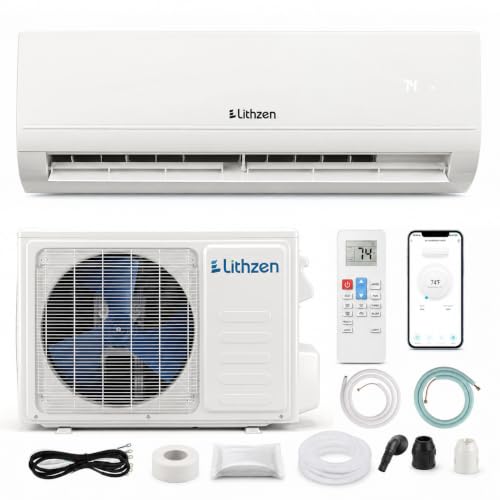
24000 BTU Mini Split: Complete Buying and Sizing Guide
A 24000 BTU ductless mini split — the equivalent of a 2 ton system — is one of the most versatile capacities for large rooms, open-plan living areas, and light commercial spaces. This guide explains sizing, efficiency, installation, and how to choose the right system for your space.
Why this guide exists: Ductless mini splits are increasingly popular in the United States because they deliver efficient, room-by-room comfort without the cost of adding ductwork. A 24000 BTU unit sits in the sweet spot for many large residential and small commercial spaces, but choosing the right model requires understanding capacity, zoning, and installation requirements. This guide walks you through each decision so you can compare options with confidence.
What a 24000 BTU Mini Split Is
A mini split is a ductless air conditioning system with two main components: an indoor air handler mounted on a wall, ceiling, or floor, and an outdoor condenser connected by a refrigerant line set. Unlike central air, it does not require ductwork, which makes it suitable for homes without existing ducts, additions, converted garages, and rooms that are hard to cool with the main system.
The 24000 BTU capacity corresponds to 2 tons of cooling — enough to cool a large room or an open-plan area. Most modern 24000 BTU mini splits are heat pumps, meaning they can also provide heating in cooler months by reversing the refrigerant cycle. This dual-purpose capability makes them a year-round comfort solution in many climates.
For a broader explanation of how these systems work, our resource on the AC refrigerant cycle covers the underlying process that drives both cooling and heat pump operation.
Sizing: Which Spaces Fit This Capacity
Sizing is the most important decision when selecting a mini split. An undersized unit will struggle on hot days, while an oversized unit will short-cycle, leaving humidity high and comfort uneven. A 24000 BTU mini split is typically matched to the following spaces:
| Space Type | Typical Square Footage | Notes |
|---|---|---|
| Open-plan living and kitchen | 400 – 550 sq ft | Adjust upward for high ceilings or many windows |
| Large master bedroom | 400 – 500 sq ft | Good for vaulted ceilings and sun exposure |
| Finished basement or bonus room | 450 – 550 sq ft | Basements need less capacity due to cooler surroundings |
| Small office or studio | 400 – 500 sq ft | Consider heat load from equipment |
| Light commercial space | 350 – 500 sq ft | Check occupancy and equipment heat gains |
Real-world sizing depends on more than square footage. Insulation quality, window area, ceiling height, local climate, and occupancy all influence the load. A room with large west-facing windows and poor insulation may need more capacity than a similarly sized room with better construction. A professional load calculation is the most reliable way to confirm that 24000 BTU is the right match.
For comparison, our guide to the 6000 BTU window unit shows how smaller capacities are matched to individual rooms, and the overview of 3 ton heat pump systems explains what the next size up covers for whole-home comfort.
Practical tip: Ask your installer for a room-by-room load calculation. This documents why 24000 BTU is appropriate and helps you compare proposals fairly. Contractors who skip this step may be guessing at capacity based on the existing unit size.
Single-Zone vs Multi-Zone Systems
A 24000 BTU condenser can be configured as a single-zone system or as the outdoor unit for a multi-zone configuration with smaller indoor heads.
| Configuration | Best For | Considerations |
|---|---|---|
| single-zone | One large room or open-plan space | Simplest installation; one thermostat controls the whole area |
| multi-zone | Two or more separate rooms | Independent temperature control per room; requires larger outdoor unit capacity |
For homeowners who want to cool several individual rooms, a multi-zone ductless AC system is often a better fit than a single large indoor head. Multi-zone systems allow each room to be controlled independently, which improves comfort and energy efficiency because unoccupied rooms can be turned off.
If you already have an existing ductless system and want to expand it, the guides on ductless mini split systems and ductless mini split air conditioning systems explain the configurations and considerations for adding zones.
Efficiency Tiers and Heat Pump Capability
Mini splits are available across a range of efficiency and feature tiers. Higher tiers generally deliver lower energy use, quieter operation, and better performance in extreme temperatures.
| Tier | Characteristics | Best For |
|---|---|---|
| entry-level | Standard efficiency, basic features, single-zone focus | Moderate climates, secondary rooms, shorter ownership |
| mid-range | Higher efficiency, quieter operation, improved heating range | Primary living areas, year-round use in mixed climates |
| premium | Very high efficiency, enhanced cold-weather heating, smart controls | Cold climates, energy-conscious households, long-term use |
| top-tier | Flagship efficiency, advanced filtration, premium build quality | High-performance homes, allergy-sensitive occupants |
Efficiency is especially relevant for heat pump operation in winter. A model rated for lower outdoor temperatures will continue to heat effectively when temperatures drop, while a model without that capability may rely on backup heat. Buyers in cold climates should compare the rated operating range of each model before deciding.
For broader context, our overview of most efficient whole-house air conditioners explains how efficiency tiers compare across system types, and the guide on ductless mini split air conditioning systems covers how the technology differs from traditional central air.
Features Worth Comparing
Beyond efficiency, several features affect day-to-day comfort and convenience. When comparing models, look for:
- Inverter compressor: Varies speed to match demand, improving efficiency and temperature stability.
- Wi-Fi and smart controls: Allows scheduling and remote control through a phone app or smart home system.
- Quiet operation: Indoor sound levels vary significantly; premium models are noticeably quieter.
- Air filtration: Washable filters are standard; some models add multi-stage filtration.
- Self-cleaning or dry mode: Reduces moisture inside the indoor unit and helps prevent odors.
- Remote thermostat compatibility: Useful for systems installed in rooms with difficult temperature distribution.
If you plan to integrate the mini split with a smart home system, our overview of a mini split remote thermostat explains how external thermostat control works with these systems.
Installation Considerations
Professional installation is strongly recommended for a 24000 BTU mini split. The system involves refrigerant line connections, vacuuming, pressure testing, electrical wiring, and mounting that must be done correctly to ensure performance and warranty coverage.
Installation Checklist
- Indoor unit placement: High on a wall with clear airflow, away from direct sunlight and heat sources.
- Outdoor unit placement: Level surface with clearance for airflow and access for service.
- Line set routing: Shortest practical path between indoor and outdoor units, properly insulated.
- Electrical supply: Dedicated circuit sized to the unit's requirements.
- Condensate drainage: Proper slope and route for water removal.
- Vacuum and charge: Line set evacuated and refrigerant charge verified according to the manufacturer's specification.
- Permit and inspection: Confirm local requirements before installation.
Installation complexity varies with the home's construction. A wall-mounted indoor unit on an exterior wall with easy access to the outdoor location is the simplest scenario. Longer line runs, interior wall penetrations, or difficult outdoor placements increase labor and planning requirements.
For broader information on what installation involves, our resource on ductless mini split air conditioner installation explains the factors that shape the project scope.
Maintenance and Long-Term Reliability
Mini splits are relatively low-maintenance, but regular care is essential for efficiency and longevity. Key tasks include:
- Filter cleaning: Wash or replace the indoor filter every few weeks during heavy use.
- Coil cleaning: Indoor and outdoor coils should be cleaned periodically to maintain heat exchange efficiency.
- Drain line check: Ensure the condensate line is clear to prevent water backups.
- Professional tune-up: An annual service visit checks refrigerant charge, electrical connections, and overall performance.
If you notice reduced cooling or unusual behavior, the troubleshooting steps in things to check when AC is not cooling cover the most common causes. For water-related issues, the guide on AC leaking water solutions explains how to diagnose drainage problems.
A maintenance plan can simplify the schedule. Our overview of AC maintenance plans explains what service agreements typically cover and how they support long-term reliability.
Frequently Asked Questions
What size room does a 24000 BTU mini split cool?
A 24000 BTU mini split is typically sized for open areas of roughly 400 to 550 square feet, depending on insulation, ceiling height, window area, sun exposure, and climate. A professional load calculation is the most reliable way to confirm the right capacity for your specific room.
Is a 24000 BTU mini split the same as a 2 ton system?
Yes. One ton of cooling equals 12,000 BTU per hour, so 24000 BTU corresponds to a 2 ton system. This capacity is common for large living rooms, open-plan spaces, and light commercial areas.
Can a 24000 BTU mini split heat as well as cool?
Most 24000 BTU mini splits are heat pumps, meaning they can cool in summer and provide efficient heating in cooler seasons. Heat pump performance in cold weather depends on the model's low-ambient rating, so buyers in cold climates should check the operating range.
Do I need a professional to install a 24000 BTU mini split?
Yes, professional installation is strongly recommended. The system requires refrigerant line connections, vacuuming, pressure testing, electrical work, and proper mounting. Many manufacturers also require licensed installation to validate the warranty.
How many rooms can a 24000 BTU mini split cool?
A single-zone 24000 BTU mini split is designed for one large space or an open-plan area. To cool multiple separate rooms, a multi-zone system with two or more indoor air handlers is usually the better approach, because it allows each room to be controlled independently.
What is the expected lifespan of a 24000 BTU mini split?
With proper installation and regular maintenance, mini splits commonly last 12 to 20 years. Lifespan is influenced by usage intensity, climate, maintenance quality, and whether the unit operates year-round as a heat pump.
Ready to Compare 24000 BTU Mini Splits?
Explore recommended ductless systems below to find a model that matches your room size, climate, and efficiency goals.