
3 in 1 Portable Air Conditioner: The Complete Buying Guide
One compact unit for cooling, dehumidifying, and air circulation. Learn how 3 in 1 portable air conditioners work, how to size one correctly, what features matter, and how to choose the right model for your room.
Research-based guide for renters, apartment dwellers, and anyone who needs flexible cooling without ductwork.
Explore Recommended ModelsWhat Is a 3 in 1 Portable Air Conditioner?
A 3 in 1 portable air conditioner is a freestanding appliance that combines three functions in a single cabinet: mechanical cooling, dehumidification, and fan-only ventilation. The "3 in 1" label describes those three operating modes, not three separate machines. You select the mode with the control panel or remote, and the unit adjusts its internal components accordingly.
This category has become popular because it removes the main barrier to air conditioning for people who cannot install a window unit or a ducted system. There is no bracket to mount, no wall sleeve to cut, and no contractor required. A portable unit rolls on casters, needs only a power outlet and a window or door for exhaust, and can be moved between rooms as needs change.
Cooling Mode
In cooling mode, the compressor drives refrigerant through an evaporator and condenser coil. The evaporator absorbs heat and humidity from room air, and the condenser rejects that heat outdoors through the exhaust hose. The result is cooled, dried air blown back into the room. This is the mode most buyers use during summer and the one that determines the unit's practical cooling capacity.
Dehumidification Mode
In dehumidification mode, the compressor and evaporator continue to remove moisture from the air, but the fan speed and airflow pattern are adjusted to maximize water extraction. The collected condensate drains to an internal tank or through a continuous drain hose. This mode is useful in humid climates, basements, and laundry areas where sticky air is the main comfort problem rather than high temperature.
Fan-Only Mode
Fan mode circulates room air without running the compressor. It provides gentle air movement on mild days and can be combined with open windows for ventilation. On many models, fan mode consumes a fraction of the electricity used in cooling mode, making it a practical choice for spring and autumn evenings.
How the Three Modes Work Together
The three modes share the same refrigeration circuit and fan system, but they distribute air differently. Understanding this helps you use the unit efficiently and set realistic expectations.
- Shared components: compressor, evaporator coil, condenser coil, fan motor, and control board are used in all modes. The mode selection changes fan speed, damper position, and whether the compressor engages.
- Moisture handling: in cooling and dehumidifying modes, condensed water collects in a tank or drains continuously. Most units shut off automatically when the tank is full, which is why a continuous drain hose is useful for long unattended runs.
- Exhaust requirement: cooling and dehumidifying modes must exhaust hot air outdoors. Fan-only mode can usually run without the hose connected, although leaving it attached and vented is the cleaner setup.
- Airflow direction: adjustable louvers direct cooled air toward occupants. For best results, aim the airflow across the room rather than directly at one person, so the whole space mixes evenly.
Because the same compressor serves both cooling and dehumidifying, a 3 in 1 unit can replace a standalone dehumidifier in many homes. That consolidation saves floor space and simplifies maintenance, which is one of the strongest arguments for this product category.
Who Benefits Most from a 3 in 1 Unit
A portable 3 in 1 air conditioner is not the right choice for every home. It shines in specific situations and is a poor fit in others. Here is an honest breakdown.
Strong Fit
Renters who cannot modify windows or walls, apartments with sash or casement windows that accept a hose kit, home offices and bedrooms that need spot cooling, older homes without ductwork, and rooms where humidity is as uncomfortable as heat.
Weaker Fit
Whole-home cooling across multiple rooms, very large open-plan spaces, rooms with no window or door access to the outdoors, and households that want the quietest possible operation at night.
For a single bedroom or studio, a portable unit is often the most practical path to comfort. If your space is a studio or one-bedroom apartment, the guidance in our AC guide for small apartments can help you match capacity to layout. If you are cooling a bedroom specifically, the sizing notes in the bedroom AC guide are directly applicable to portable models as well.
Where a portable unit falls short is whole-home coverage. For that scope, a ductless or central system is the appropriate tool. Our comparison of ductless vs ducted AC explains the trade-offs clearly.
How to Size a Portable AC for Your Room
Correct sizing is the single most important decision you will make. An undersized unit runs continuously and never reaches the set temperature. An oversized unit cools the air quickly, shuts off, and leaves the room feeling clammy because it has not run long enough to remove humidity. Both outcomes waste energy and reduce comfort.
The Baseline Rule
Start with roughly 20 BTU of cooling capacity per square foot of floor area. Then adjust for conditions that increase heat load.
| Room Area | Baseline Capacity | Typical Use Case |
|---|---|---|
| Up to 150 sq ft | 5,000 – 6,000 BTU | Small bedroom, home office, den |
| 150 – 250 sq ft | 8,000 – 10,000 BTU | Standard bedroom, small living room |
| 250 – 400 sq ft | 12,000 – 14,000 BTU | Large bedroom, studio apartment |
| 400 – 550 sq ft | 14,000 – 15,000 BTU | Open living area, loft |
Adjustments That Change the Calculation
- Sun exposure: a west- or south-facing room with large windows gains significant heat. Add 10 to 20 percent capacity.
- Occupancy: each additional person adds roughly 400 to 600 BTU of sensible heat. A home office with two people needs more than an empty bedroom of the same size.
- Kitchen adjacency: rooms next to a kitchen or with appliances inside carry extra load.
- Insulation and ceiling height: vaulted ceilings, poor insulation, and top-floor placement all increase demand.
- Climate: in hot, humid regions, prioritize dehumidification performance alongside raw capacity.
If you prefer to work through the math step by step, our guide to how to size an air conditioner walks through the full load estimation process. For a broader look at capacity classes, the 12,000–14,000 BTU range covers the most common portable sizes sold today.
Single-Hose vs Dual-Hose Designs
The hose configuration has a larger effect on real-world performance than most buyers realize. It determines how the unit manages air pressure inside the room.
Single-Hose Units
A single-hose portable AC uses one duct to expel hot condenser air outdoors. To replace the air that leaves, room air is drawn back into the unit, which creates a slight negative pressure in the room. In practice, this means some outside air is pulled in through gaps around doors and windows, and the unit works a little harder to maintain temperature. Single-hose models are simpler, lighter, and typically occupy the entry-level and mid-range tiers.
Dual-Hose Units
A dual-hose design uses one hose to draw outside air in for the condenser and a second hose to expel it. The room's air balance stays neutral, so there is no penalty from infiltration. Dual-hose units cool more effectively in hot weather and are generally more efficient per BTU. They are larger, heavier, and usually positioned in the premium tier of the portable market.
| Aspect | Single-Hose | Dual-Hose |
|---|---|---|
| Room pressure effect | Slight negative pressure | Neutral |
| Cooling efficiency | Good in moderate climates | Better in hot climates |
| Setup complexity | Simple | Moderate |
| Footprint and weight | Compact | Larger |
| Market tier | Entry-level to mid-range | Mid-range to premium |
If you live in a region with long, intense summers, a dual-hose unit is worth prioritizing. In mild coastal climates or for occasional use, a well-built single-hose model performs adequately and is easier to store.
Key Features Worth Prioritizing
Feature lists on portable ACs can be long, and not every bullet point matters equally. These are the specifications that affect day-to-day satisfaction.
Noise Level
Portable units are inherently louder than window or mini-split systems because the compressor sits inside the room. Look for published sound levels in decibels and favor models with a dedicated low-speed night mode. For bedrooms, quiet operation should be a top-three criterion.
Continuous Drain Option
A gravity drain or hose connection lets condensate flow away continuously instead of filling an internal tank. This matters in humid climates and for overnight operation, when a full-tank shutdown would otherwise wake you.
Programmable Timer and Thermostat
A 24-hour timer and adjustable thermostat let you pre-cool a room before you arrive and shut the unit down after you fall asleep. These are standard on mid-range and premium models and genuinely useful in daily life.
Remote Control and Smart Connectivity
Most units include a remote. Some add Wi-Fi and app control, which allows scheduling and monitoring from a phone. Smart features are convenient but secondary to cooling performance and noise.
Window Kit Compatibility
Check that the included window kit fits your window type. Sliding windows, casement windows, and tall sash windows each need different adapter panels. If your window is unusual, confirm compatibility before purchasing. The 5-inch exhaust hose format is the most common standard.
Filtration
Washable pre-filters are standard. Some models add removable, replaceable filters that capture finer particles. If allergy relief is part of your motivation, look at units with multi-stage filtration, and compare them with dedicated air purifiers rather than expecting one device to do both jobs at a high level.
Mobility and Storage
Casters, side handles, and a cord wrap make a difference in small apartments where the unit moves between rooms or gets stored seasonally. Weight matters if you need to carry it up stairs.
Market Tiers: Entry-Level to Premium
Portable air conditioners cluster into recognizable tiers. Each tier reflects a different balance of build quality, efficiency, noise control, and feature depth. Understanding the tiers helps you match a model to your priorities without overbuying or underbuying.
| Tier | Typical Characteristics | Best For |
|---|---|---|
| Essential tier | Single-hose design, mechanical or basic digital controls, smaller capacity, audible compressor, tank-based drainage | Occasional use, small rooms, buyers who want the simplest possible setup |
| Balanced tier | Digital thermostat, timer, remote, continuous drain option, moderate noise, mid-capacity range | Daily bedroom and home office cooling, renters who want reliable comfort |
| High-end tier | Dual-hose or inverter-driven compressor, quieter operation, smart connectivity, better filtration, sturdier cabinet | Hot climates, larger rooms, households that run the unit for many hours a day |
| Flagship tier | Top efficiency, advanced humidity control, premium materials, refined airflow design, full app integration | Buyers treating the unit as a long-term investment in comfort |
The jump from essential to balanced tier is the most meaningful upgrade for most people. That step adds the controls, drainage, and noise refinement that make daily use pleasant. Moving from balanced to high-end tier mainly buys efficiency, quieter operation, and dual-hose performance in extreme heat.
Installation and Exhaust Setup Basics
Portable AC installation is straightforward, but a few details determine whether the unit performs as rated. Poor exhaust routing is the most common reason buyers report disappointing cooling.
Step-by-Step Setup
- Choose the location. Place the unit near the window that will receive the exhaust hose, on a level surface, with at least 12 to 18 inches of clearance around the air intake.
- Assemble the window panel. Fit the adjustable panel into the window opening and close the window against it. Seal gaps with the included foam or weatherstripping.
- Connect the hose. Attach the hose to the unit's exhaust outlet and to the window panel adapter. Keep the hose as short and straight as possible.
- Manage condensate. For short runs, use the internal tank. For long runs, connect a drain hose and route it to a floor drain or outside.
- Power up and test. Plug into a dedicated outlet, select cooling mode, and set the thermostat. Confirm that warm air is leaving through the hose and cool air is coming from the front louvers.
Common Setup Mistakes
- Long, looping hose runs: heat builds up in a coiled hose and radiates back into the room. Keep the run short.
- Unsealed window gaps: hot outdoor air enters around the panel and cancels part of the cooling effect. Seal thoroughly.
- Blocked intake: pushing the unit into a corner or against curtains starves the evaporator and reduces capacity.
- Extension cords: portable ACs draw high current. Use a grounded wall outlet rated for the unit's amperage rather than a light-duty extension cord.
If your electrical panel is older or you are unsure about circuit capacity, review our notes on checking your home electrical panel before running a high-draw appliance. Also confirm whether your window panel is compatible with the hose size you plan to use.
Maintenance Routine for Longevity
A portable AC is a sealed refrigeration appliance, but the air-handling side needs regular attention. A simple routine keeps capacity stable and prevents the musty odor that develops when filters and coils stay damp and dirty.
Weekly During Cooling Season
- Remove and rinse the pre-filter with lukewarm water. Let it dry completely before reinstalling.
- Empty the condensate tank, or confirm the continuous drain is flowing freely.
- Wipe the front grille and louvers with a dry cloth.
Monthly
- Inspect the exhaust hose for kinks, cracks, or loose connections.
- Clean the window panel gasket and re-seal any gaps.
- Check the evaporator coil through the intake grille for dust buildup. Use a soft brush or vacuum with a brush attachment if accessible.
Seasonal
- Before storage, run the unit in fan mode for a short period to dry internal components.
- Drain all water, clean the filter, and coil the hose neatly.
- Store upright in a dry space. Laying the unit on its side can allow oil to migrate into the refrigerant circuit.
If the unit stops cooling, leaks, or makes unusual noises, work through the diagnostic steps in our guides to AC not cooling and AC leaking water before assuming the unit has failed. Many issues trace back to airflow restrictions or drainage problems.
Frequently Asked Questions
What does 3 in 1 mean on a portable air conditioner?
It means the unit performs three functions: cooling, dehumidifying, and fan-only ventilation. The three modes share one refrigeration circuit and cabinet. Units that add heating are marketed as 4 in 1.
Do 3 in 1 portable air conditioners need to be vented out a window?
Yes, in cooling and dehumidifying modes. The exhaust hose must carry hot air and moisture outdoors through a window, sliding door, or wall vent. Fan mode can typically run without venting, but cooling requires a proper exhaust path.
How many BTU do I need for a portable air conditioner?
Begin with about 20 BTU per square foot of floor area and adjust upward for sun exposure, occupancy, and poor insulation. Compare SACC ratings rather than the older DOE figures, since SACC better reflects real portable performance.
Are 3 in 1 portable air conditioners energy efficient?
Efficiency varies by model and is captured in CEER and SACC ratings. Dual-hose and inverter-driven designs generally use energy more effectively. Using fan mode on mild days and dehumidifier mode in humid but cool weather reduces compressor run time.
Can a portable air conditioner cool more than one room?
No. Portable units are single-room appliances. They exhaust air outdoors and cannot distribute cooled air through ducts. For multiple rooms, a ductless mini-split or central system is the correct solution.
Why does my portable AC feel less cold than expected?
The most common causes are an undersized unit, an unsealed window panel, a long or kinked exhaust hose, a dirty filter, or a full condensate tank. Address those before concluding the appliance is faulty.
Best 3 in 1 Portable Air Conditioners for Cooling, Dehumidifying, and Ventilating
⚠️ AFFILIATE DISCLOSURE: This website contains affiliate links. As an Amazon Associate, we earn from qualifying purchases. If you make a purchase through these links, we may receive a small commission at no additional cost to you. Read our full affiliate policy.
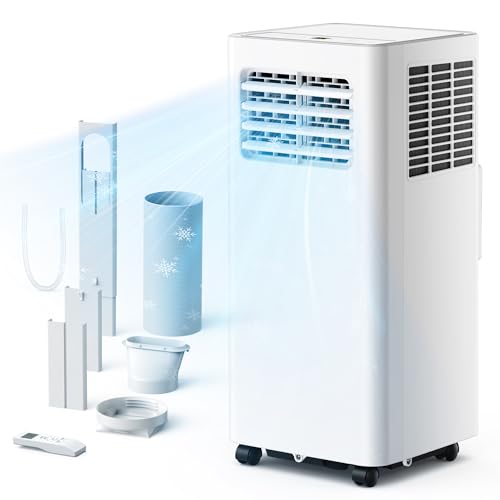
EUHOMY 8000 Btu Portable Air Conditioners, 3 in 1 Portable AC Up to 350 Sq.Ft with Cool, Dry, Fan Modes, Quiet Air Conditioners with 24H Timer & Sleep Modes, with Remote (Renewed)
Check price on Amazon
Shinco 8,000 BTU Portable Air Conditioner - 3-in-1 Cool/Dehumidifier/Fan for Rooms Up to 350 sq.ft, Remote Control & 24H Timer, Compact AC Unit for Bedroom/Office
Check price on Amazon
BLACK+DECKER Portable Air Conditioner, 10,000 BTU, BPACT10WT, White | 5,500 BTU SACC for Rooms up to 450 Sq. Ft., 3-in-1 Portable AC, Fan and Dehum with Follow Me Remote Control
Check price on Amazon
SereneLife Portable Air Conditioner, Dehumidifier & Fan | Dual Motor 3-in-1 8,000 BTU AC with 64°F–90°F Temperature Range, Cools Up to 350 Sq Ft, 3 Fan Speeds, Remote Control & Window Kit, White
Check price on Amazon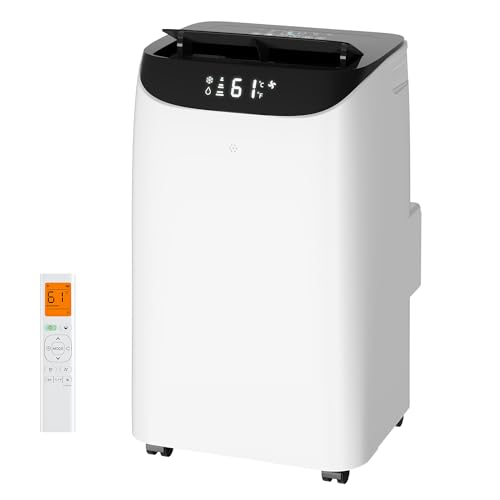
Inverter 16000 BTU Portable Air Conditioner, 3 in 1 Portable Ac Unit Cools Up for Rooms 850 Sq. Ft, Dual Hose Standing AC for Bedrooms with Dehumidifier, Fan, Quiet Sleep Mode, Remote Control
Check price on Amazon
Garvee 14,000 BTU AC Unit, 3-in-1 Portable Air Conditioner | with Cooling, Dehumidifier & Fan for Rooms up to 750 sq.ft, Remote Control, Sleep Mode, 24 H Timer & Window Kit
Check price on Amazon