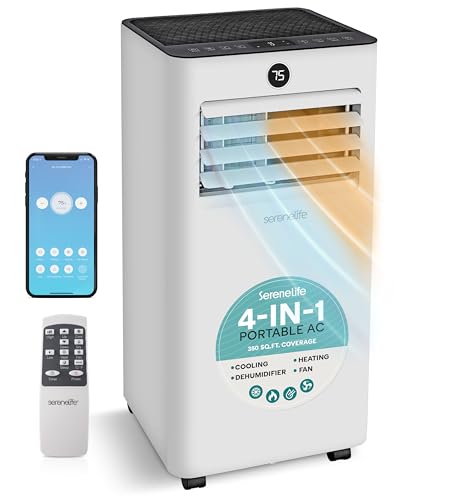
4 in 1 Portable Air Conditioner with Heat: The Complete Buyer's Guide
One unit for cooling, heating, dehumidifying, and air circulation. Learn how a 4 in 1 portable air conditioner with heat works, who it suits best, and what to check before you choose one for your room.
START LEARNINGWhy this guide matters: A 4 in 1 portable air conditioner with heat is a flexible year-round comfort appliance, but it is not a universal solution. The right choice depends on room size, window setup, insulation, and how you plan to use heating versus cooling. This guide walks you through each decision so you can choose with confidence instead of guesswork.
What Is a 4 in 1 Portable Air Conditioner with Heat?
A 4 in 1 portable air conditioner with heat is a freestanding appliance that combines four comfort functions in one cabinet: air conditioning, heating, dehumidification, and fan-only circulation. Unlike a traditional window unit that only cools, this category is designed to be useful across seasons, which is why it appeals to renters, apartment dwellers, and homeowners who want targeted comfort without installing a full ducted system.
The "4 in 1" label is a packaging convention rather than a formal industry standard. Different brands may count the functions slightly differently, but the core four are consistent: cool, heat, dry, and fan. Some models add smart controls, Wi-Fi, or multi-speed fans, but those are enhancements rather than separate functions. If you want to compare this category with simpler cooling-only designs, our guide to the 3 in 1 portable air conditioner explains what you give up when heating is removed from the feature set.
Portable heat is usually delivered through a reverse-cycle refrigerant system or an electric heating element, depending on the model. Reverse-cycle designs are more energy-efficient in moderate cold, while electric-element designs tend to deliver stronger immediate warmth but draw more power. The distinction matters if you plan to use heat mode regularly rather than occasionally.
The Four Functions Explained
Understanding each mode helps you judge whether a specific unit matches your routine. The four functions are not equally powerful, and the balance between them varies by model tier.
- Cooling: The compressor removes heat and humidity from the room and exhausts warm air through the window hose. Cooling capacity is measured in BTU and is the primary performance figure to compare.
- Heating: Heat mode either reverses the refrigerant cycle or uses an electric element to produce warm air. Portable heating is best treated as spot heating for a single room, not as a replacement for whole-home heating.
- Dehumidification: Dry mode removes moisture without aggressively cooling the room. It is useful in humid shoulder seasons when the air feels sticky but the temperature is mild.
- Fan-only: The compressor and heater are off, and the unit simply circulates air. This is the quietest mode and is handy for moving air without changing the temperature.
A practical way to think about the balance: cooling is the headline function, heating is the seasonal differentiator, dehumidification is the comfort refinement, and fan mode is the everyday utility. If heating is your top priority, pay close attention to the heating capacity specification rather than assuming it matches the cooling BTU rating.
Editorial note: Many listings emphasize the cooling BTU number and treat heating as a secondary figure. For a 4 in 1 unit, always check the heating capacity separately. A unit that cools well may still deliver modest warmth in a large room.
Advantages and Limitations
Portable 4 in 1 units solve real problems, but they also carry trade-offs that are easier to accept when you know them in advance.
Advantages
- Year-round usefulness: One appliance covers summer cooling and cool-season heating, which reduces the number of devices you need to store.
- No permanent installation: Window kits and hoses can be removed, making the unit suitable for renters and temporary setups.
- Room-level control: You can cool or heat the room you are using instead of conditioning the entire home.
- Mobility: Casters allow the unit to move between rooms, though larger capacities are heavier and less convenient to relocate frequently.
Limitations
- Single-room scope: Portable units are designed for one enclosed space. Open floor plans and long hallways dilute performance.
- Noise: Compressor operation is audible, and heat mode can add fan noise. Bedroom use may require a model with a low-noise fan setting.
- Venting requirement: Cooling and dehumidifying need a window or door path for the exhaust hose. Without proper venting, performance drops sharply.
- Heating is supplemental: In very cold climates, portable heat is a supplement rather than a substitute for a primary heating system.
How to Size the Unit for Your Room
Sizing is the single most consequential decision. An undersized unit runs continuously and never quite reaches the set point, while an oversized unit short-cycles, which wastes energy and leaves humidity uneven. A simple starting rule is roughly 20 BTU per square foot of floor area, then adjust for real-world conditions.
Adjustments to keep in mind:
- Sun exposure: A room with large south- or west-facing windows needs more capacity than a shaded room of the same size.
- Ceiling height: Tall ceilings increase the air volume that must be conditioned.
- Occupancy: Rooms with several people or heat-generating electronics need a margin above the baseline.
- Kitchen areas: Appliances add heat load, so a kitchen or open kitchen-living space should be sized generously.
| Room Size (sq ft) | Suggested Cooling Capacity | Typical Room Type | Best For |
|---|---|---|---|
| Up to 150 | 5,000 – 6,000 BTU | Small bedroom, home office | Essential tier single-room comfort |
| 150 – 250 | 8,000 – 10,000 BTU | Medium bedroom, studio | Balanced tier everyday use |
| 250 – 400 | 12,000 – 14,000 BTU | Large bedroom, living room | Mid-range to high-end tier |
| 400 – 600 | 14,000 – 18,000 BTU | Open living area, loft | Top-tier high-capacity models |
If you want a deeper walkthrough of the calculation method, our article on how to size an air conditioner covers the full formula and the adjustments that matter most. For a broader view of portable capacity options, the 14,000 BTU portable air conditioner category is a useful reference point for mid-to-large rooms.
Key Features That Matter
Two units with similar capacity can differ dramatically in daily usability. These are the features worth checking before you decide.
- Heating type: Reverse-cycle heat is generally more efficient across a season, while electric-element heat delivers faster warmth. Match the type to how often you expect to use heat mode.
- Noise level: Look for a published decibel figure and a low-speed fan setting if the unit will run at night.
- Remote control and timer: A remote with a programmable timer makes scheduled comfort much easier, especially for bedrooms.
- Drainage options: Continuous gravity drain or a condensate pump reduces the need to empty a tank manually during humid periods.
- Window kit quality: A well-fitted window kit with adjustable panels seals better and preserves cooling efficiency.
- Filter accessibility: Washable filters that slide out without tools make routine maintenance far more likely to happen.
Smart features such as Wi-Fi control are genuinely convenient, but they are secondary to capacity, venting quality, and noise. Prioritize the fundamentals first, then treat connectivity as a bonus.
Installation and Venting Basics
Portable 4 in 1 units are easier to install than ducted systems, but they are not plug-and-play. The exhaust hose must route hot air outside through a window or door, and the window kit should seal the gap around the hose as tightly as possible.
A practical setup checklist:
- Choose a window that can accept the kit panel and remain closed against it.
- Keep the exhaust hose as short and straight as the installation allows; long loops reduce efficiency.
- Leave clearance around the intake and exhaust vents so the unit can breathe.
- Place the unit on a level surface and engage the casters' locks if available.
- Seal gaps around the window panel with the supplied foam or weatherstripping.
If your window configuration is unusual, the window kit may need an adapter. Our guide to the 5 inch exhaust hose for portable air conditioner explains hose sizing and common compatibility issues. For rooms where a window is not practical, compare alternative installation paths in our overview of portable air conditioners.
Entry-Level vs Mid-Range vs Premium
Because this category spans a wide range of build quality, it helps to think in tiers rather than in isolated specifications. The descriptors below describe relative market position and are deliberately independent of any specific figure.
| Tier | Typical Characteristics | Best For | Trade-Offs |
|---|---|---|---|
| Entry-level | Basic mechanical or simple digital controls, single fan speed, straightforward window kit | Occasional use in small rooms, seasonal supplement | Louder operation, fewer convenience features, simpler build |
| Mid-range | Multi-speed fan, remote control, timer, improved window kit, washable filter | Daily use in bedrooms and living rooms | Moderate noise, standard drainage setup |
| Premium | Quieter fan design, better seals, smart controls, condensate pump, refined heat mode | Primary room comfort, overnight use, frequent mode switching | Heavier cabinet, more complex controls to learn |
In practice, mid-range models often offer the most balanced experience for households that will use the unit most days of the week. Entry-level units are a sensible fit when the appliance is a secondary comfort device, while premium models make more sense when the unit is the main comfort source for a frequently used room.
Best Rooms and Use Cases
A 4 in 1 portable air conditioner with heat performs best when its scope matches the room. These are the scenarios where the format shines:
- Bedrooms: Cooling for summer nights and supplemental warmth in transitional seasons, provided the noise level is acceptable.
- Home offices: Single-room control during work hours without conditioning the whole house.
- Rentals and temporary housing: No permanent modification required, and the unit moves with you.
- Finished basements and converted garages: Rooms that are poorly served by central ductwork often benefit most from targeted portable comfort.
- Guest rooms: Occasional use where a full HVAC zone would be overkill.
Scenarios where the format is a weaker fit include large open-plan spaces, rooms with no viable venting path, and climates with severe winters where portable heat cannot carry the full load. In those cases, a ducted or mini-split solution is usually the better long-term direction. Our comparison of ductless vs ducted AC is a useful next step if you are weighing permanent options.
Maintenance and Longevity Tips
Portable units reward basic upkeep. Most premature failures trace back to blocked airflow or neglected drainage rather than manufacturing defects.
- Clean or rinse the filter every two to four weeks during heavy use. A clogged filter strains the compressor and reduces cooling.
- Empty or drain condensate regularly. Standing water can cause odors and, in some designs, trigger shutdowns.
- Inspect the exhaust hose and window seal for cracks or gaps at the start of each season.
- Store the unit upright during the off-season and cover it to keep dust out of the vents.
- Check the coils annually and gently clean visible dust from the intake side.
If you notice reduced cooling, unusual noises, or water pooling, address the issue early. Our troubleshooting guide for AC not cooling covers the most common causes and the fixes that do not require a technician.
For related capacity comparisons, you may also find our overviews of the 15,000 BTU air conditioner portable category and the 14,000 BTU portable air conditioner with heat and remote control useful when narrowing your shortlist.
Frequently Asked Questions
What does 4 in 1 mean on a portable air conditioner?
It refers to four operating modes in one cabinet: cooling, heating, dehumidification, and fan-only circulation. The label is a marketing convention, so always confirm the specific modes and the heating capacity on the product specification sheet.
Can a 4 in 1 portable air conditioner with heat replace a heater?
It can supplement heating in a single room, but it is not a full replacement for central heating in very cold climates. Most portable heat modes are best treated as spot heating for mild to moderate cold or for rooms that need extra warmth in transitional seasons.
How many BTU do I need for a portable AC with heat?
Start with roughly 20 BTU per square foot, then adjust upward for sun exposure, tall ceilings, occupancy, and kitchen heat load. A 10,000 BTU unit typically suits a medium room, while larger open spaces may call for 14,000 BTU or more.
Does a 4 in 1 portable AC need to be vented?
Yes. Cooling and dehumidifying modes must exhaust hot air through a window kit and hose. Fan-only mode usually does not require venting, and heat mode setup varies by model, so check the manual for the specific venting requirements.
Is a 4 in 1 portable unit noisy at night?
Noise varies considerably by tier. Entry-level units tend to be louder, while mid-range and premium models often include a low-speed fan setting suitable for bedrooms. Check the published decibel rating and prioritize models with a dedicated sleep or low-noise mode if nighttime use matters.
Ready to Compare Your Options?
Now that you understand the four functions, sizing rules, and tier differences, you can evaluate specific models with a clear checklist. Browse our curated selection of 4 in 1 portable air conditioners with heat and compare features side by side.
EXPLORE RECOMMENDED MODELS