4 Ton AC Unit for 2000 sq ft House: The Complete Sizing & Buying Guide
Is a 48,000 BTU air conditioner right for your home? Learn about proper sizing, efficiency ratings, installation tiers, and avoid the most common installation mistakes.
VIEW RECOMMENDED 4 TON UNITSWhen cooling a home of around 2,000 square feet, a 4 ton air conditioner (which provides 48,000 BTUs of cooling power) is often the unit size recommended by HVAC contractors. However, the "rule of thumb" of 500 sq ft per ton isn't always accurate. Installing an incorrectly sized unit is one of the most costly mistakes a homeowner can make. This comprehensive guide will walk you through the precise calculations, the impact of climate and home construction, and help you understand if a 4 ton AC is the perfect fit for your specific 2,000 sq ft house.

Is a 4 Ton AC Unit Right for 2,000 Square Feet?
The short answer is: usually, yes, but not always. A 4 ton unit is the baseline recommendation for a 2,000 sq ft home in a moderate climate. However, the true size you need depends on a detailed load calculation, not just square footage. To understand the fundamentals of this calculation, you should review our guide on how to size an air conditioner properly.
Key Insight: A 4 ton AC is designed to remove 48,000 BTUs of heat per hour. In an average home with 8-foot ceilings, standard insulation, and a moderate climate, this is generally sufficient for 1,800 to 2,200 square feet. However, a Manual J load calculation performed by a qualified technician is the only way to be certain.
Several factors can push a 2,000 sq ft house from needing a 3.5 ton unit to a 4 ton unit, or even a 5 ton system. Overlooking these factors leads to an AC that is too big or too small, causing high humidity, short cycling, and premature system failure.
| Factor | Impact on Sizing |
|---|---|
| Climate Zone | Hot, humid climates (e.g., Florida, Texas) may require a 4 ton unit where a milder climate (e.g., Pacific Northwest) might only need 3 tons. |
| Ceiling Height | Homes with vaulted or 10+ foot ceilings have significantly more air volume to cool, often pushing the requirement to 4 or 5 tons. |
| Insulation Quality | A poorly insulated 2,000 sq ft house may need a 5 ton unit, while a tightly sealed, well-insulated one could be perfectly served by a 3.5 ton unit. |
| Window Quantity & Type | Large, south-facing, single-pane windows dramatically increase heat gain, requiring more cooling capacity. |
| Number of Occupants | Each person adds approximately 400-600 BTUs of heat load. A large family generates more heat than a couple. |
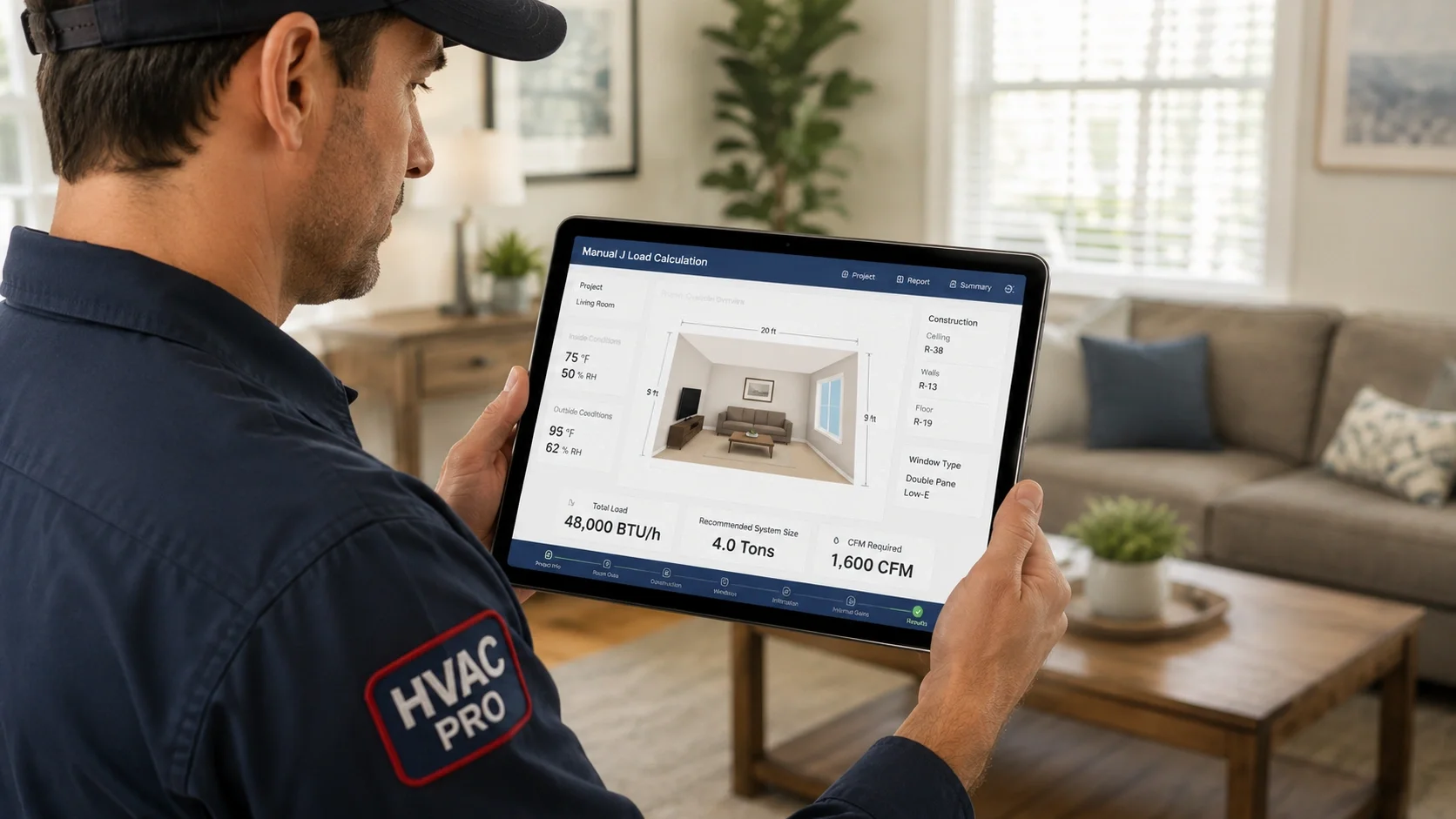
A professional Manual J calculation accounts for all variables in your specific home, unlike a generic online calculator.
Types of 4 Ton Air Conditioners
If a 4 ton unit is right for your home, you'll typically be choosing between a few different system configurations. The best choice depends on your existing ductwork and your efficiency goals. This decision is central to your buying guide journey.
- 4 Ton Central Air Conditioner (Split System): The most common type for a 2,000 sq ft house with existing ductwork. It pairs an outdoor condenser with an indoor evaporator coil connected to your furnace or air handler. Learn more about central air conditioning systems.
- 4 Ton Heat Pump: An excellent, energy-efficient alternative that provides both cooling and heating. In moderate climates, a 4-ton heat pump can handle year-round comfort. Understand the differences in our heat pump vs air conditioner comparison.
- 4 Ton Ductless Mini-Split (Multi-Zone): If your 2,000 sq ft home lacks ductwork, a single 4-ton outdoor unit can connect to multiple indoor air handlers, creating zones. This is often the best solution for AC for older homes with no ducts. You can explore ductless mini-split AC systems in detail.
- 4 Ton Packaged Unit: A single cabinet containing the compressor, coils, and fan, installed on the roof or a concrete slab. Common in some regions and often seen in AC for new construction or commercial applications, but also suitable for residential use. See our guide on the packaged AC unit.
Understanding 4 Ton AC Efficiency: SEER2 Ratings
For a large 48,000 BTU unit, efficiency is critical to manage your electricity bills. As of 2023, the Department of Energy uses the new SEER2 (Seasonal Energy Efficiency Ratio 2) testing standard, which more accurately reflects real-world conditions. Understanding what a SEER rating is and the newer SEER vs SEER2 DOE standards is essential before making a purchase.
2026 SEER2 Minimums: In the Southern U.S., the minimum efficiency for a new 4-ton residential split system is 15.0 SEER2. In the Northern U.S., the minimum is 14.3 SEER2 for a standard AC, though heat pumps have different requirements. An ENERGY STAR certified AC will exceed these minimums, typically starting at 16.0 SEER2.
While an entry-level 15.0 SEER2 4-ton unit has a lower upfront tier position, upgrading to a premium 17+ SEER2 unit with inverter AC or two-stage AC technology can cut your cooling costs by 30% or more. This is particularly noticeable in large spaces like a home over 3,000 sq ft, but the savings on a 2,000 sq ft home are still substantial over the unit's 15-20 year lifespan. An inverter-driven variable speed AC provides the highest efficiency and best humidity control by running at lower speeds for longer periods, precisely matching the cooling load.
Single-Stage 4 Ton AC
Best for: Budget-conscious buyers, rental properties, or short-term ownership.
Pros: Entry-level upfront cost, simpler technology, easier to repair.
Cons: Runs at 100% capacity or off, leading to temperature swings, higher humidity, and higher operating costs.
Inverter/Variable-Speed 4 Ton AC
Best for: Homeowners prioritizing comfort, humidity control, and long-term energy savings.
Pros: Precise temperature control, superior dehumidification, quiet operation, and up to 40% energy savings.
Cons: Premium-tier initial investment, more complex repairs, and requires a compatible communicating thermostat.
Understanding 4 Ton AC Price Tiers in 2026
A 4 ton air conditioner is available across a wide spectrum of quality tiers, from entry-level single-stage systems to premium inverter-driven models. It's crucial to understand both the equipment tier and the full installation scope. For a detailed breakdown, visit our guide on AC installation cost breakdown.
| System Type & Efficiency Tier | Market Position | Typical Owner Profile |
|---|---|---|
| 14.3 SEER2 Single-Stage AC | Entry-level | Budget-conscious buyers, rentals, short-term ownership |
| 16 SEER2 Single-Stage AC | Mid-range | Homeowners seeking balance of value and efficiency |
| 17 SEER2 Two-Stage AC | Premium | Comfort-focused homeowners in humid climates |
| 19+ SEER2 Inverter/Variable-Speed AC | Luxury | Homeowners prioritizing maximum efficiency and quiet operation |
| 4 Ton Heat Pump (16 SEER2) | Mid-range | Year-round climate control in moderate regions |
*Tier positions reflect relative market positioning, not absolute figures. Complex installations involving new ductwork, electrical upgrades, or HVAC zoning systems will shift the total project into a higher investment tier. See our guide on budget-friendly AC options for more value-focused choices.

It is vital to get at least three quotes from licensed and insured contractors. Before you sign a contract, know exactly what's included. Use our checklist of questions to ask an installer to avoid surprises. You should also verify their HVAC license and insurance and be clear on the AC warranty terms. Remember, a proper installation is just as important as the equipment itself; common errors detailed in our common installation mistakes guide can rob a high-efficiency 4 ton unit of its performance.
Electrical and Placement Requirements for a 4 Ton Unit
A 48,000 BTU AC unit requires significant electrical power and proper placement to function correctly. This is not a simple DIY swap for an older, smaller unit. The electrical requirements and physical space are a major step up from a smaller unit like a 12,000-14,000 BTU AC.
- Circuit & Breaker: Most 4 ton residential AC units operate on a 240V circuit. They typically require a double-pole breaker, often 40 to 45 amps, though this varies by specific model. You must consult the manufacturer's data plate. Our guide on amps and breaker size for an AC explains this in detail.
- Wiring: The wire gauge must be correctly sized for the amperage and the distance from the electrical panel. Undersized wiring is a fire hazard. It is almost always necessary to hire a qualified electrician to inspect and upgrade the circuit.
- Disconnect Box: A service disconnect box must be installed within sight of the outdoor condenser unit for safety.
- Outdoor Placement: The 4-ton condenser needs ample clearance for airflow—usually at least 2 feet on all sides and 5 feet above. It should be on a stable, level pad away from bedroom windows to minimize noise. Review the best practices for AC indoor and outdoor placement.
Maintaining Your 4 Ton AC for Peak Performance
A 4 ton unit represents a major investment, and with proper maintenance, it can last 15 to 20 years. Neglect, however, will lead to declining efficiency, costly repairs, and early failure. Knowing how long an AC lasts helps you plan for the future.
Simple DIY tasks can keep your system running smoothly between professional tune-ups:
- Change the Air Filter Regularly: For a 4-ton system moving 1,600 CFM of air, a clogged filter is the #1 cause of frozen coils and compressor damage. Check it monthly, especially during peak summer. See our guide on when to replace an AC filter.
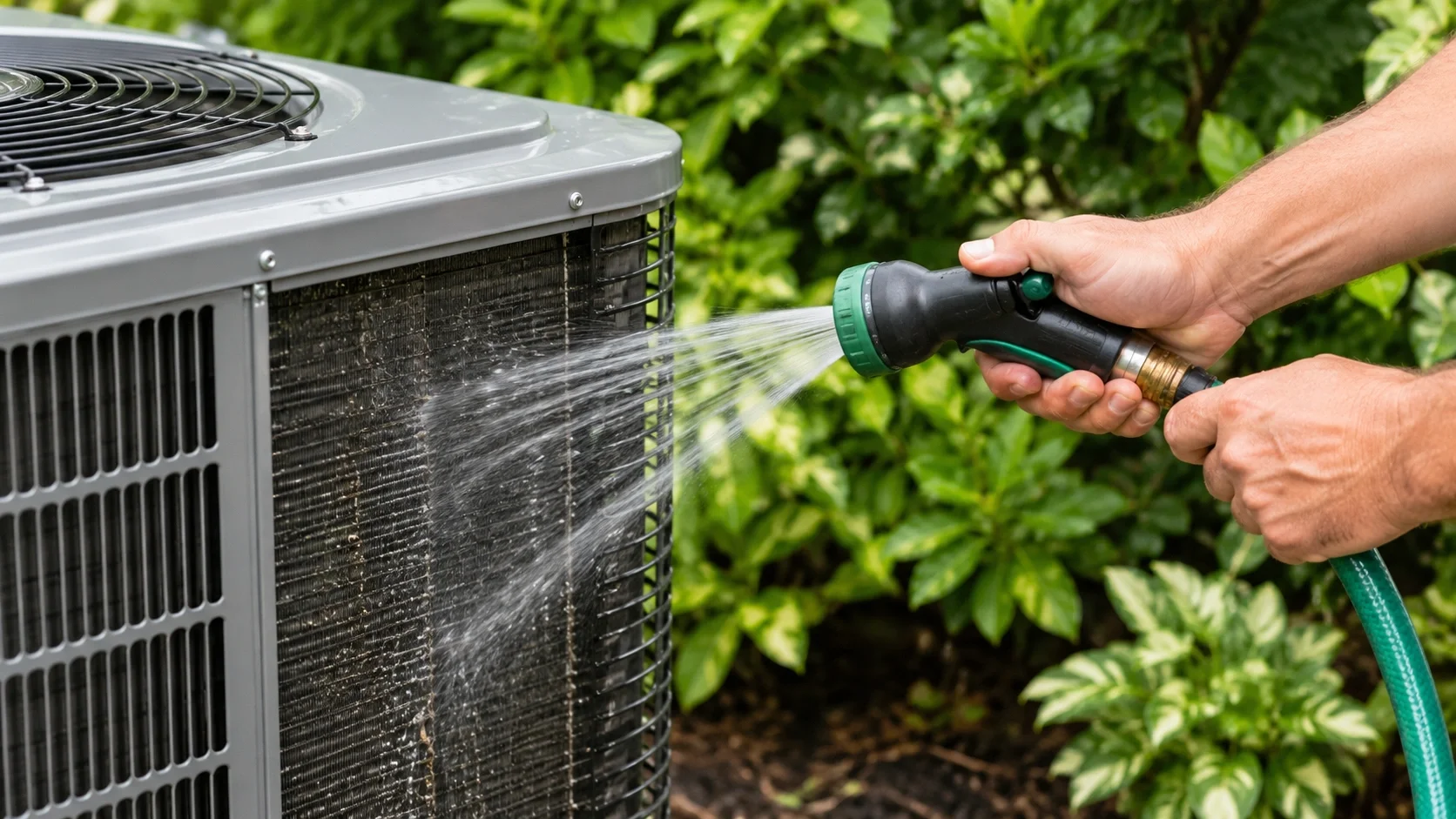
- Keep the Outdoor Condenser Clean: Gently hose down the coils to remove cottonwood, grass clippings, and dirt. Learn the correct way to clean AC condenser coils without damaging the fins.
- Ensure Unobstructed Airflow: Trim back bushes and plants to the required clearances. Inside, ensure supply and return vents are not blocked by furniture or rugs.
- Schedule Professional Maintenance Annually: A technician will check refrigerant charge, clean the evaporator coil, inspect electrical components, and ensure the system is operating at its rated capacity. The annual service scope is far less burdensome than a major repair.
An AC maintenance plan is often a wise investment for a complex 4-ton system, providing priority service and discounts on repairs. Following a seasonal AC checklist will ensure you're ready for the first heatwave.
If you notice your system isn't performing as it should, don't ignore the warning signs. A common issue is an AC not cooling but the fan is running, or even blowing cold air outside and warm air inside. These often point to a refrigerant leak or a compressor issue, which require you to call an HVAC technician immediately.