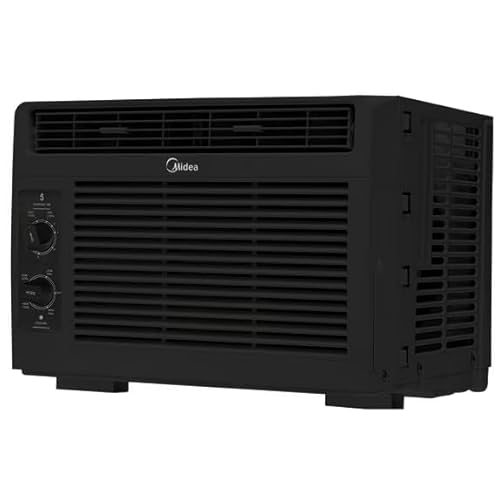
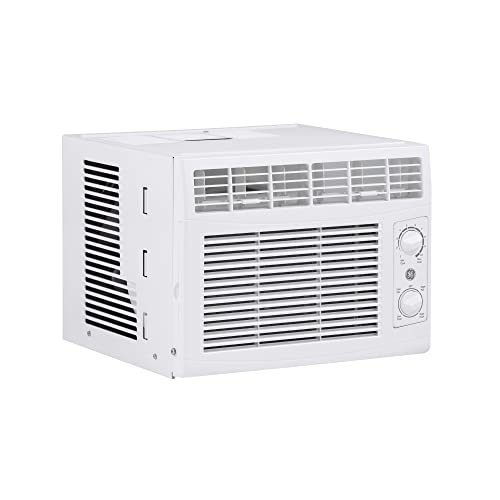
5000 BTU Window Air Conditioner Room Size: The Complete Guide
Find out exactly how much space a 5000 BTU window unit can cool, which room factors change the answer, and how to choose the right capacity for a bedroom, office, or studio.
SEE THE ROOM SIZE CHARTThe short answer: A 5000 BTU window air conditioner is built for rooms up to roughly 150 square feet under standard conditions — an 8-foot ceiling, average insulation, and moderate sun exposure. That covers most small bedrooms, home offices, dorm rooms, and studio apartments. The rest of this guide explains when that number holds, when it shifts, and how to confirm the right fit before you commit.
What 5000 BTU Actually Means for a Room
BTU stands for British Thermal Unit, and it measures how much heat an air conditioner can remove from a space in one hour. A 5000 BTU unit removes 5000 BTUs of heat per hour. That sounds technical, but the practical takeaway is simple: this is one of the smallest window AC capacities sold for residential use, and it is purpose-built for compact spaces.
Because the capacity is modest, the unit reaches its target temperature quickly in a small room and runs efficiently in short cycles. In a room that is too large, it never quite gets there — it runs continuously, the compressor works harder, and the space still feels warm. Getting the room size right is the single most important decision when shopping in this capacity range.
If you are still comparing capacities across the small-unit category, the 5000 BTU AC overview covers how this size class sits next to neighboring options.
Room Size Chart for 5000 BTU Window AC
The table below maps typical room dimensions to expected comfort levels for a 5000 BTU window unit. Treat it as a starting point, then adjust for the room-specific factors covered in the next section.
| Room Size | Typical Space | Expected Comfort | Fit Tier |
|---|---|---|---|
| Up to 100 sq ft | Small bedroom, dorm room, walk-in office | Strong cooling, short cycles | Ideal |
| 100 – 150 sq ft | Standard bedroom, studio nook, home office | Good cooling under normal conditions | Recommended |
| 150 – 200 sq ft | Larger bedroom, small living area | Acceptable only with favorable conditions | Borderline |
| 200 – 250 sq ft | Open studio, combined living and sleeping area | Likely underwhelming, spot cooling only | Not Ideal |
| 250+ sq ft | Living room, multi-purpose space | Underpowered for whole-room comfort | Step Up |
Rooms at the upper edge of the recommended range — around 140 to 150 square feet — are the ones most sensitive to the factors below. If your space sits there, read the next section carefully before deciding.
Factors That Change the Real-World Room Size
The 150-square-foot figure assumes a fairly neutral room. Real rooms rarely are. Each of the following factors can push the effective cooling area up or down, and they compound when several apply at once.
- Ceiling height Estimates assume 8-foot ceilings. At 9 or 10 feet, the air volume grows by 12 to 25 percent, and the usable cooling area shrinks accordingly.
- Sun exposure A room with large south- or west-facing windows absorbs far more heat. Shade, blinds, or exterior awnings can recover much of the lost capacity.
- Insulation quality Older homes with thin walls and single-pane glass lose cool air faster. Well-insulated modern construction gets more from the same BTU rating.
- Occupancy Each person adds roughly 400 BTUs of body heat. A room regularly holding three or more people effectively needs more capacity.
- Heat-producing appliances Computers, TVs, gaming consoles, and kitchen equipment all add load. A home office with a desktop setup behaves like a slightly larger room.
- Top-floor placement A room directly under an uninsulated roof gains heat from above. The same square footage on a top floor can feel noticeably warmer.
- Air leakage Gaps around doors and windows let cooled air escape. Sealing them is one of the highest-impact improvements for any window unit.
- Kitchen proximity An open studio that includes cooking appliances runs warmer than a closed bedroom of identical size. Spot cooling may be the realistic expectation.
If two or more of the factors above apply — say, a west-facing window plus a top-floor room — mentally shift your room down one row in the chart. A 130-square-foot space with heavy sun exposure behaves more like a 170-square-foot neutral room. That is the moment to consider stepping up to the next capacity class rather than stretching a 5000 BTU unit past its design.
When a 5000 BTU Unit Is the Wrong Choice
Knowing when to move up is as useful as knowing when this capacity fits. Consider a larger unit if any of these describe your space:
The room exceeds about 150 square feet, or it sits right at that boundary with unfavorable conditions. The space is open-plan and connects to a hallway, kitchen, or stairwell without a door. More than two people occupy the room for extended periods. The room has floor-to-ceiling windows with direct afternoon sun. The ceiling is noticeably higher than standard.
In those cases, look at the 6000 BTU window air conditioner room size guide to see how the next step up changes the coverage area, or compare the broader 6000 BTU window unit options if you want a little more headroom without jumping to a much larger class.
On the other side, if your room is comfortably under 100 square feet and well shaded, a 5000 BTU unit will cycle efficiently and deliver quick comfort. There is no benefit to oversizing in a very small room — an oversized unit cools the air before it removes the humidity, leaving the space feeling clammy.
Features Worth Prioritizing in This Size Class
At the 5000 BTU tier, window units range from essential-tier models with mechanical dials to top-tier units with digital controls and smart features. The capacity is the same, but the day-to-day experience differs.
Entry-level and essential-tier units typically use mechanical rotary controls, offer two or three fan speeds, and focus on straightforward cooling. They are a solid choice for a guest room or a space where the unit runs only in the hottest weeks.
Mid-range models add digital displays, programmable timers, remote controls, and sometimes energy-saving modes that cycle the fan with the compressor. For a bedroom used every night through summer, these features meaningfully improve comfort.
Premium and high-end tier units in this class may include Wi-Fi control, follow-me temperature sensing, quiet-mode operation, and washable filters with reminder indicators. If the unit sits in a home office or a bedroom where noise matters, the quieter build and smarter controls are the differentiators.
If remote operation is a priority, the 5000 BTU window air conditioner with remote roundup covers the models that include one. For year-round use in cooler months, the 5000 BTU window air conditioner with heat guide explains how heat-pump-equipped versions extend the usable season.
Installation and Efficiency Notes for Small Window Units
Most 5000 BTU window units run on a standard 115-volt household circuit, which makes them one of the easiest AC types to install without electrical work. They typically fit windows roughly 23 to 36 inches wide, though frame dimensions vary by model — always confirm the window opening against the unit's specification before ordering.
Proper installation matters more than most buyers expect. The unit should tilt slightly outward so condensation drains away from the room. Gaps around the unit should be sealed with the included insulation panels or foam weatherstripping; otherwise, cooled air escapes and warm outside air seeps in, eroding the effective capacity.
Efficiency in this class is usually expressed as a CEER or EER rating. Higher numbers mean more cooling per unit of electricity. Because these units are small, the difference between an average and a highly efficient model is modest in absolute terms, but over several summers of nightly use it adds up. Look for ENERGY STAR certification if the unit will run frequently.
Maintenance is straightforward: clean or replace the filter every two to four weeks during heavy use, keep the exterior coils free of debris, and check the drain path at the start of each season. A clean unit holds its rated capacity; a clogged one quietly loses it.
How 5000 BTU Compares to Neighboring Capacities
Placing this capacity in context helps confirm whether it is the right stopping point for your room.
| Capacity | Typical Room Range | Best For | Category |
|---|---|---|---|
| 5000 BTU | Up to ~150 sq ft | Small bedroom, dorm, compact office | Essential tier |
| 6000 BTU | ~150 – 250 sq ft | Standard bedroom, small living room | Mid-tier |
| 8000 BTU | ~250 – 350 sq ft | Larger bedroom, open studio | Balanced tier |
| 10000 BTU+ | ~350 – 450+ sq ft | Living areas, multi-room coverage | High-end tier |
The gap between 5000 and 6000 BTU is smaller than it looks on paper, but it is often the difference between a unit that keeps up on the hottest afternoons and one that merely takes the edge off. If your room is around 140 square feet with any unfavorable factor, the next step up is usually the safer long-term investment.
A Quick Buying Checklist
Before choosing a specific 5000 BTU window unit, run through these checks:
Measure the room in square feet (length times width). Note the ceiling height. Note the sun exposure — which direction the main windows face and whether shade is available. Count the occupants and the heat-producing devices that run regularly. Check the window opening against the unit's required dimensions, and confirm the outlet is on a suitable circuit. Decide which features matter: remote, timer, Wi-Fi, quiet mode, or heat pump. Check the efficiency rating if the unit will run nightly. And plan the seal — insulation panels and weatherstripping are not optional if you want the rated capacity to reach the room.
If your space is a rental and permanent installation is not an option, portable units in the same capacity range are covered in the 6000 BTU portable air conditioner room size guide, which explains how portable sizing differs from window units.
Frequently Asked Questions
-
What size room can a 5000 BTU window air conditioner cool?
A 5000 BTU window air conditioner is generally designed for rooms up to about 150 square feet — roughly a 10 by 15 foot bedroom, a small home office, a studio apartment, or a compact living space. Actual performance depends on ceiling height, sun exposure, insulation, and how many people or heat-producing appliances share the room.
-
Is 5000 BTU enough for a bedroom?
For a standard bedroom of about 100 to 150 square feet with an 8-foot ceiling and average insulation, a 5000 BTU window unit is usually enough. If the bedroom has large unshaded windows, a top-floor location, or more than two occupants, consider stepping up to a slightly larger capacity.
-
What happens if a 5000 BTU AC is too small for the room?
An undersized unit runs almost continuously without reaching the set temperature. That leads to uneven cooling, higher energy use over time, and extra wear on the compressor. If your room consistently feels warm even with the unit running at full power, the capacity is below what the space needs.
-
Does ceiling height change the room size a 5000 BTU AC can handle?
Yes. BTU estimates assume a standard 8-foot ceiling. For rooms with 9 or 10-foot ceilings, the air volume is larger, so the effective cooling area shrinks. A room that would normally suit 5000 BTU may need a step up in capacity when the ceiling is noticeably higher.
-
Can a 5000 BTU window AC cool a room with a kitchen?
A studio or open-plan space that combines a kitchen and living area adds heat from cooking appliances, refrigeration, and often more foot traffic. In that case, a 5000 BTU unit may struggle. It can work as a spot cooler for the sleeping or seating zone, but whole-space comfort may call for a larger capacity.