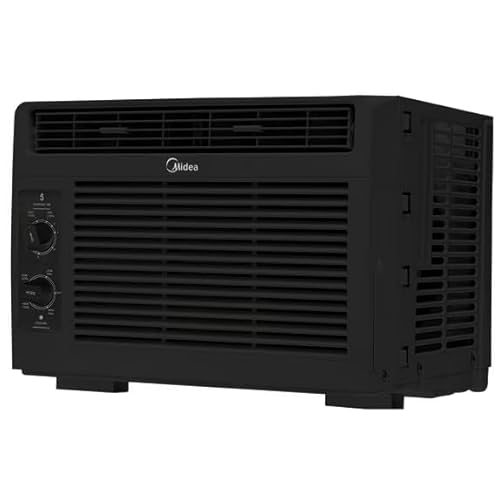
5000 BTU Window Mounted Room Air Conditioner
Everything you need to know about cooling a compact room with a 5000 BTU window unit — sizing, efficiency, installation, and smart buying decisions.
START LEARNINGWho this guide is for: If you have already decided you want a small window air conditioner and are now comparing options, this page gives you the complete picture. We explain what a 5000 BTU window mounted room air conditioner can realistically cool, how to match it to your space, and which features matter most — so you can move to the product section with confidence.
What Is a 5000 BTU Window Mounted Room Air Conditioner?
A 5000 BTU window mounted room air conditioner is the smallest common class of window cooling unit. It is a self-contained system that sits in a window frame, pulls indoor air across an evaporator coil, and releases heat outdoors through the back of the unit. Because the compressor, condenser, and evaporator are all housed in one compact chassis, installation is simpler than a split system and does not require ductwork or refrigerant line work.
The 5000 BTU rating describes cooling capacity, not power draw. In practical terms, this capacity is engineered for a single small room rather than an open floor plan. That makes it a natural fit for bedrooms, home offices, dorms, guest rooms, and studio apartments. If you are still mapping out your space, the 5000 BTU window air conditioner room size guide breaks down coverage in more detail.
Window units in this class are also popular because they are straightforward to remove at the end of the season, they do not take up floor space like a portable unit, and they typically run on standard household voltage. The trade-off is that window placement, frame strength, and sealing quality all matter more than they do with a larger central system.
Sizing: How Much Room Can 5000 BTU Cool?
As a general rule, a 5000 BTU window unit is matched to a room of roughly 100 to 150 square feet. That guidance assumes average ceiling height, reasonable insulation, and a moderate climate. Several real-world factors push the effective range up or down:
- Sun exposure: A west-facing room with large unshaded windows heats faster and may need more capacity than the square footage suggests.
- Insulation and air sealing: Older homes with drafty windows and thin walls lose cooling quickly.
- Occupancy and appliances: A home office with multiple monitors, a desktop tower, and two occupants generates more heat than an empty bedroom.
- Ceiling height: Vaulted or unusually high ceilings increase the air volume that must be cooled.
- Kitchen proximity: A unit installed near cooking appliances fights additional heat load.
Oversizing is a common mistake. A unit that is too large for the room cools the air quickly, shuts off, and then restarts, which leads to uneven temperatures and higher humidity. A properly sized 5000 BTU unit runs in longer, steadier cycles, which dehumidifies more effectively and feels more comfortable. If your room is consistently above 150 square feet or has heavy heat gain, consider stepping up to a 6000 BTU window air conditioner instead.
Efficiency Ratings: What to Look For
Efficiency is expressed through SEER (Seasonal Energy Efficiency Ratio) or, for room air conditioners, CEER (Combined Energy Efficiency Ratio). Higher numbers mean more cooling delivered per unit of electricity. For a 5000 BTU window unit, efficiency matters because the unit may run for many hours during the cooling season.
Look for models that carry ENERGY STAR certification when available. These units meet stricter efficiency thresholds than baseline models and are typically a worthwhile long-term investment for anyone who plans to use the unit daily. Units in the mid-range and high-end tiers often add variable-speed or inverter-style compressors that adjust output rather than cycling fully on and off. This design improves comfort and can reduce energy use over a season compared with single-speed entry-level models.
It is also worth checking the unit's EER at higher outdoor temperatures if you live in a hot climate, and reviewing the estimated annual energy use figure on the yellow EnergyGuide label. For a broader explanation of the rating system, see our guide to ENERGY STAR certified AC units.
Key Features That Matter
Not every 5000 BTU window unit is built the same. The features below separate an entry-level unit from a more refined mid-range or premium model:
- Cooling modes: Most units offer cool, fan-only, and dehumidify modes. A dedicated dry mode is useful in humid climates.
- Remote control: A remote makes it easy to adjust settings without reaching the window. See the 5000 BTU window air conditioner with remote overview for options.
- Programmable timer and sleep mode: These let the unit ramp down overnight and restart before you wake up.
- Washable filter with filter indicator: A reminder light is a small feature that prevents efficiency loss from a clogged filter.
- Adjustable louvers and oscillation: Better airflow distribution across the room.
- Window mounting kit: A proper kit with foam seals and support brackets improves installation quality and reduces vibration.
- Noise level: Compressor and fan noise vary widely. If the unit is in a bedroom, check the decibel rating in the specifications.
Some models also add heating functionality, which extends the unit's usefulness into the shoulder seasons. The 5000 BTU window air conditioner with heat page covers how heat-capable small units compare with cooling-only models.
Installation and Placement
Installing a 5000 BTU window unit is within reach for most homeowners, but doing it well is what separates a quiet, efficient installation from a rattling, leaking one. Before you start:
- Check the window frame: The frame must be solid and capable of supporting the unit's weight. Double-hung windows are the most common fit; casement and awning windows usually require a different approach.
- Confirm electrical capacity: Most units in this class run on 115V. Verify the circuit can handle the unit's amperage and avoid sharing it with other high-draw appliances. Our amps and breaker size guide explains how to check.
- Provide proper support: Use the manufacturer's bracket or a dedicated window AC support bracket. Do not rely on the window sill alone for heavier units.
- Seal the gaps: Foam insulation strips and side panels keep hot outdoor air out and stop cool air from escaping.
- Maintain a slight backward tilt: A small tilt toward the outside allows condensate to drain properly and prevents water from pooling inside the unit.
If you are installing a unit through a wall rather than a window, the process and clearances differ. The 6000 BTU through-the-wall air conditioner guide is a useful reference for wall-mounted installation considerations, since much of the structural advice overlaps.
Maintenance for Long-Term Performance
A 5000 BTU window unit is a long-term investment when it is maintained properly. The maintenance routine is simple and does not require special tools:
- Clean the filter every two to four weeks during the cooling season. A clogged filter reduces airflow, forces the compressor to work harder, and can cause the evaporator coil to freeze.
- Inspect the outdoor side of the unit for leaves, debris, and insect nests that block the condenser. Clear the area around the back of the unit so heat can escape.
- Wipe down the cabinet and front grille to prevent dust buildup from being pulled into the airflow path.
- Check the window seal each season and replace worn foam strips.
- Remove and store the unit during the off-season if you live in a cold climate, or fit a weather cover to protect it from ice and snow.
If the unit stops cooling, the first steps are always the same: check the filter, check the power, and check that the thermostat is set correctly. Our AC not cooling troubleshooting guide walks through the most common causes in order of likelihood.
How to Choose the Right 5000 BTU Unit for You
When you compare models, organize your decision around four questions rather than product names. This keeps the evaluation objective and helps you avoid over-specifying or under-specifying.
1. Does it fit your room and window? Measure the window opening and the room's square footage first. Confirm the unit's chassis dimensions fit the opening with room for the mounting kit. If your window is unusually narrow or wide, check the specifications carefully before buying.
2. Is the efficiency appropriate for your climate? In hot, humid regions, prioritize higher CEER and dehumidification performance. In milder climates with occasional heat waves, an entry-level unit may be sufficient. Use the ENERGY STAR directory and the yellow EnergyGuide label as reference points.
3. Which tier matches your usage pattern? Entry-level units cover the basics: cool, fan, and a mechanical or simple digital control. Mid-range units add timers, remotes, better airflow control, and improved noise profiles. Premium and high-end tiers add smart controls, inverter compressors, quieter operation, and more refined build quality. None of these tiers is inherently better — the right tier is the one that matches how you will actually use the unit.
4. How will it be installed and stored? If you plan to remove the unit each season, prioritize lighter weight and a simpler mounting kit. If it will stay in place year-round, prioritize a weather-resistant coating and a solid build.
For a broader look at the category, our 5000 BTU AC overview collects related guides in one place. If you are comparing small window units across capacity classes, the 6000 BTU window unit air conditioner page is a useful next step.
Feature Comparison by Product Tier
| Tier | Best For | Typical Features | Considerations |
|---|---|---|---|
| Entry-level | Occasional use, guest rooms, dorm rooms | Mechanical controls, basic fan speeds, washable filter | Simpler controls, fewer comfort refinements |
| Mid-range | Daily use in bedrooms and home offices | Digital controls, remote, timer, sleep mode, filter indicator | Better comfort control and airflow distribution |
| High-end | Primary bedroom or studio with heavy use | Inverter compressor, quieter operation, smart controls, improved sealing kit | Steadier temperature and lower seasonal energy use |
Frequently Asked Questions
What size room is a 5000 BTU window air conditioner suitable for?
Generally up to about 150 square feet, such as a small bedroom, home office, dorm room, or studio. Sun exposure, insulation, and occupancy can shift this range.
Is a 5000 BTU window AC energy efficient?
Yes, for its size. Look for strong SEER or CEER ratings and ENERGY STAR certification. Inverter models in the high-end tier often deliver the best seasonal efficiency.
Can I install a 5000 BTU window air conditioner myself?
In most cases yes. These units use standard 115V power and are designed for window installation with a mounting kit. Follow the manufacturer instructions and secure the unit properly.
Does a 5000 BTU window AC need a dedicated circuit?
Not usually. These units typically run on a standard household circuit, but avoid sharing that circuit with other high-draw appliances.
How often should I clean the filter?
Every two to four weeks during the cooling season. Regular filter cleaning preserves airflow and efficiency.
The Bottom Line
A 5000 BTU window mounted room air conditioner is a focused tool: it cools a compact room well when it is sized correctly, installed with a proper seal, and maintained on a simple schedule. The buying decision comes down to matching capacity to your room, choosing an efficiency level that fits your climate, and selecting a feature tier that matches how often you will use the unit. With those three variables settled, the product section below gives you a curated set of options to compare.