5000 BTU AC Guide: What It Cools and How to Choose
A 5000 BTU air conditioner is the smallest standard cooling capacity for residential use. Learn exactly which rooms it suits, how it compares to larger units, and how to pick the right one for a small space.
Explore the GuideQuick summary: A 5000 BTU AC is designed for rooms up to about 150 square feet. It is the entry-level tier of portable cooling and works best in bedrooms, home offices, dorms, and small studios with average ceiling heights and moderate sun exposure. Larger rooms, high ceilings, or heavy sun loads usually require 6000 BTU or more.
This guide covers room sizing, unit types, efficiency considerations, installation basics, and maintenance — everything a research-stage buyer needs before deciding.
What a 5000 BTU AC Is
BTU, or British Thermal Unit, measures how much heat an air conditioner can remove from a room in one hour. A 5000 BTU unit removes 5,000 BTUs of heat per hour, which translates to a cooling capacity suited for a single small room rather than an open floor plan.
In the US market, 5000 BTU is the smallest standard window AC capacity. Units at this capacity are typically entry-level tier in terms of build and feature set, though some models in this class include remote controls, programmable timers, and energy-saving modes. Because the capacity is small, the compressor works in short, efficient cycles in the right-sized room, which keeps energy use modest.
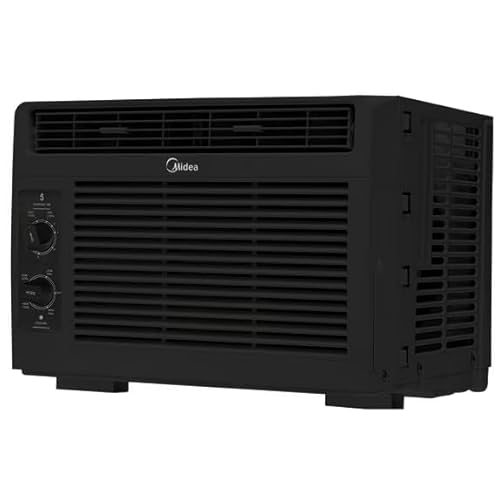
These units are most commonly window air conditioners, though portable units and through-the-wall models exist at this capacity. Window models are the most common because the small chassis fits standard double-hung windows and the unit is supported by the window frame.
Room Size Coverage for 5000 BTU
The general rule for residential cooling is roughly 20 BTU per square foot under average conditions. A 5000 BTU unit therefore covers about 150 square feet, but this is a starting point, not a fixed limit. Use the table below as a practical reference.
| Room Type | Typical Area | 5000 BTU Suitability | Notes |
|---|---|---|---|
| Small bedroom | 100–150 sq ft | Strong match | Standard ceiling height, moderate sun |
| Home office | 100–140 sq ft | Strong match | Watch for heat from computers and monitors |
| Dorm room | 80–130 sq ft | Strong match | Check window type and building rules |
| Studio nook or loft corner | up to 150 sq ft | Good match if the space is enclosed | Open-plan spaces dilute cooling |
| Living room | 200+ sq ft | Usually insufficient | Step up to 6000–8000 BTU |
| Kitchen | 100–150 sq ft | Marginal | Appliance heat adds load |
If your room sits at the upper edge of these ranges, consider moving to a 6000 BTU unit. The related guide on 6000 BTU window air conditioner room size explains where the next capacity step makes sense.
Factors That Change Sizing
Square footage alone is not a reliable predictor of cooling needs. Several room characteristics shift the effective load up or down. Treat the 150-square-foot benchmark as a baseline, then adjust.
Ceiling height
Rooms with ceilings above eight feet contain more air volume to condition. A 5000 BTU unit in a room with a vaulted or ten-foot ceiling may struggle even if the floor area is under 150 square feet.
Sun exposure and window orientation
A room with a west- or south-facing window collects significant afternoon heat. Dark curtains, exterior shading, or a step up in capacity may be necessary. North-facing rooms with shaded windows often cool comfortably with 5000 BTU.
Insulation and air sealing
Older homes with single-pane windows and drafty frames leak cooled air and pull in heat. Sealing gaps and using weatherstripping helps a smaller unit keep up. A room with poor insulation may need a higher capacity than its square footage suggests.
Occupancy and heat-generating equipment
Each person adds roughly 400 BTUs of heat per hour. Home offices with desktops, monitors, and printers add load. Two or more occupants in a small room can push a 5000 BTU unit toward its limit.
Climate
In hot, humid regions, the unit spends more time dehumidifying, which reduces effective sensible cooling. Dry climates place a different load profile on the same capacity. Sizing should always account for local summer conditions.
Window vs Portable 5000 BTU Units
Most 5000 BTU air conditioners are window units, but portable models exist at this capacity and serve different installation scenarios. Each format has trade-offs in cooling performance, installation, and room placement.
5000 BTU window air conditioner
Window units sit in the window frame with the condenser section outside. This design vents heat directly outdoors without a hose, which makes it more efficient than a portable unit of the same capacity. The compressor is outside the room, so noise levels are lower indoors. Window units are the most common choice at this capacity. If you are comparing formats, see the guide on 5000 BTU window mounted room air conditioner.
Window unit advantages
- Higher cooling efficiency because heat vents directly outside
- Lower indoor noise since the compressor sits outdoors
- No floor space consumed
- No exhaust hose to manage
Window unit limitations
- Requires a compatible window and secure mounting
- Blocks part of the window view
- Not allowed in some rental buildings or HOAs
- Window must be able to support the unit's weight
5000 BTU portable air conditioner
Portable units roll on casters and vent hot air through a hose to a window or wall vent. They are flexible for rooms where window installation is not possible, but they are less efficient than window units because the compressor sits inside the conditioned space and the exhaust hose radiates heat back into the room. Portable units at 5000 BTU are less common than window models.
Through-the-wall options
Through-the-wall units are installed in a sleeve cut into an exterior wall. At the 5000 BTU level these are less common, but they exist for rooms where window mounting is not viable. Installation requires wall modification and is best handled by a professional.
Which format fits your space
If you have a double-hung window and no building restrictions, a window unit is the more efficient choice. If your window opens outward, is a casement style, or your building prohibits exterior-mounted units, a portable model or a through-the-wall installation may be the only option. The guide on 6000 BTU portable air conditioner room size explains how portable capacity maps to room dimensions if you are considering that route.
Efficiency and Running Behavior
Efficiency at this capacity is expressed through the EER or CEER rating. Higher ratings indicate more cooling output per unit of electricity. Because 5000 BTU units run in small, well-defined spaces, the difference between a mid-range and high-efficiency model shows up over a full season of use.
Look for units with an ENERGY STAR designation if efficiency matters for your use case. These models typically include better insulation around the chassis, more efficient compressors, and improved fan designs. In the 5000 BTU class, the efficiency gap between entry-level and premium models is smaller than at higher capacities, but it still exists.
Operating behavior matters as much as the rating. A correctly sized unit cycles on and off at reasonable intervals. If the unit runs continuously, the room is likely too large or the load too high. If it cycles on and off every few minutes, the unit is oversized or the thermostat is set too close to room temperature.
EER and CEER ratings
Compare EER or CEER values across models in the same capacity class. A higher number means more cooling per unit of electricity consumed. Check the yellow EnergyGuide label for the estimated annual energy use.
Inverter vs single-stage
Most 5000 BTU window units use a single-stage compressor. Inverter models at this capacity are rare. Single-stage operation is acceptable in small rooms where the compressor cycles infrequently.
Fan-only and dry modes
Fan-only mode circulates air without cooling. Dry mode dehumidifies with minimal cooling. Both features add flexibility in shoulder seasons and humid but mild weather.
Thermostat accuracy
Mechanical dials hold temperature less precisely than digital thermostats. Digital controls with programmable timers are worth considering if you want consistent overnight comfort.
Installation Considerations
Installation requirements for a 5000 BTU window unit are modest compared with larger systems, but they still matter for safety and performance.
Electrical requirements
Most 5000 BTU window air conditioners run on a standard 115-volt household circuit. Confirm the unit's rated amps against the circuit rating. A dedicated circuit is ideal, but many small units can share a general-purpose circuit if no other high-draw appliances are on it. Extension cords should be avoided or limited to heavy-gauge, short runs.
Window compatibility
The window must open wide enough for the unit's chassis and close securely against the mounting kit. Double-hung windows are the standard fit. Casement and slider windows usually require a specialized bracket or a different unit format. Check the unit's minimum and maximum window width specifications before buying.
Support and safety
Window units must be supported so the weight does not rest entirely on the window frame. Most kits include an L-bracket or support bar. For upper-floor installations, local codes may require additional bracing. Never rely on the window sash alone to hold the unit.
Placement for airflow
Keep the front grille unobstructed and direct airflow toward the center of the room. Avoid placing the unit where curtains or furniture block the intake. The outdoor section needs clearance for heat rejection — do not enclose it in a tight alcove.
Maintenance Basics
A 5000 BTU unit is simple to maintain. Small, consistent habits keep cooling performance stable and extend the unit's service life.
Filter cleaning
The washable filter should be cleaned every two to four weeks during heavy use. A clogged filter restricts airflow, reduces cooling, and forces the compressor to work harder. Most units have a slide-out filter accessible from the front grille.
Coil and chassis cleaning
Dust collects on the evaporator and condenser coils over time. A soft brush or vacuum with a brush attachment removes surface dust. For deeper cleaning, follow the manufacturer's instructions and avoid bending the coil fins.
Seasonal preparation
Before the cooling season, inspect the unit for debris and check the seal around the window kit. At the end of the season, clean the filter, drain any standing water from the base pan, and cover the exterior if the unit stays installed through winter.
Signs service is needed
Reduced cooling, unusual noises, water pooling inside the room, or the unit cycling rapidly are signs to inspect. Many issues trace back to airflow restrictions or a dirty filter. If cleaning does not resolve the problem, consult a technician.
For a deeper walkthrough on troubleshooting, the site's maintenance section covers filter care, coil cleaning, and seasonal checklists in detail.
How 5000 BTU Compares to Other Capacities
The table below places 5000 BTU in context against the next common capacity steps. Use the "Best For" column to match capacity to room type rather than to compare prices, since pricing varies by market and model.
| Capacity | Typical Room Range | Best For | Tier Positioning |
|---|---|---|---|
| 5000 BTU | up to ~150 sq ft | Small bedrooms, dorms, home offices | Entry-level tier |
| 6000 BTU | 150–250 sq ft | Larger bedrooms, small living areas | Entry-level to mid-range |
| 8000 BTU | 250–350 sq ft | Living rooms, open studios | Mid-range tier |
| 10000 BTU | 350–450 sq ft | Large rooms, open-plan spaces | Mid-range to high-end tier |
If your room is near the upper end of the 5000 BTU range and has significant sun load, consider stepping up to a 6000 BTU model. The 6000 BTU window unit air conditioner overview covers that capacity in detail. For specific small-window installations, the 6000 BTU window air conditioner with remote guide may also be useful.
Ready to Compare 5000 BTU Models?
Browse curated air conditioner options with the capacity, features, and efficiency details that matter for small-room cooling.
View Recommended UnitsFrequently Asked Questions
What size room does a 5000 BTU AC cool?
A 5000 BTU air conditioner is generally suited for rooms up to roughly 150 square feet, such as a small bedroom, home office, dorm room, or studio nook. Actual coverage depends on ceiling height, sun exposure, insulation quality, and occupancy.
Is a 5000 BTU AC enough for a bedroom?
For a typical bedroom under 150 square feet with average ceiling height and moderate sun exposure, a 5000 BTU unit is usually sufficient. Larger bedrooms, west-facing windows, or rooms with poor insulation may need more capacity.
What voltage does a 5000 BTU AC use?
Most 5000 BTU window air conditioners run on a standard 115-volt household outlet. Always confirm the unit's electrical requirements and circuit rating before installation.
Can a 5000 BTU AC run on solar or battery power?
Small 5000 BTU units draw a modest but continuous electrical load, so running one on battery or solar requires careful system sizing. Consult the unit's rated amps and a qualified solar installer before attempting off-grid operation.
How many amps does a 5000 BTU AC draw?
A typical 5000 BTU window unit draws roughly 4 to 5 amps during normal operation, with a brief higher surge at compressor start-up. Check the nameplate rating on the specific model for exact figures.