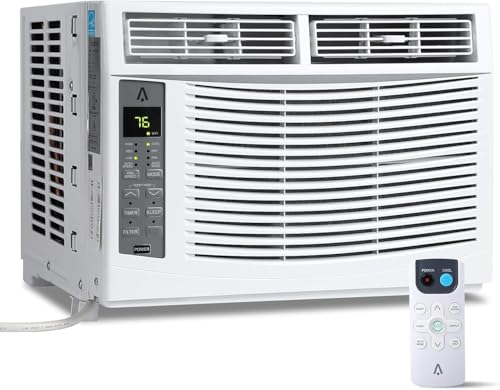
6000 BTU Window Unit Air Conditioner: The Complete Buyer's Guide
Everything you need to know before choosing a 6000 BTU window air conditioner — room sizing, efficiency ratings, installation requirements, and the features that matter for small-space cooling.
SEE TOP PICKSWhy 6000 BTU stands out: It is the sweet spot for small-room cooling. A 6000 BTU window unit delivers dependable comfort for bedrooms, home offices, and studio apartments without the oversized compressor that wastes energy and short-cycles. This guide explains exactly how to choose the right model for your space.
What Is a 6000 BTU Window Air Conditioner?
A 6000 BTU window air conditioner is a compact cooling appliance rated at 6,000 British Thermal Units of cooling capacity per hour. It mounts directly into a window frame, pulling in room air, cooling it through an evaporator coil, and circulating it back into the space — while expelling heat to the outside through the rear of the unit.
The 6000 BTU class is the entry point of full-room window cooling. It is larger than a 5,000 BTU personal unit but remains light enough for one-person installation in most cases. For a deeper room-sizing reference, see our guide to 6000 BTU window air conditioner room size.
Compact Footprint
Designed to fit standard single-hung and double-hung windows, with most models weighing between 35 and 50 pounds for manageable installation.
Standard 115V Power
Runs on a standard household circuit, drawing roughly 5 to 6 amps — no dedicated 240V line or electrician visit required in most homes.
Room-Targeted Cooling
Ideal for spaces of roughly 150 to 250 square feet, delivering fast cool-down without the energy waste of an oversized system.
Modern Feature Set
Many current models include remote control, programmable timers, eco modes, and in some cases Wi-Fi or smart-home integration.
How Much Room Does a 6000 BTU Window AC Cool?
The general sizing rule is that a 6000 BTU unit is appropriate for rooms of approximately 150 to 250 square feet. That range covers the majority of bedrooms, home offices, small living rooms, dorm rooms, and studio apartments.
However, square footage alone is not the full picture. Several factors can shift the effective cooling requirement:
- Ceiling height: Rooms with ceilings above 8 feet hold more air volume and may need a slightly larger capacity.
- Sun exposure: A west- or south-facing room with large windows absorbs more solar heat and may sit at the upper end of the range.
- Insulation quality: Poorly insulated rooms lose cool air faster; well-insulated rooms stay comfortable with less capacity.
- Occupancy: Each additional person adds roughly 400 BTU of sensible heat load.
- Appliances and electronics: Kitchens and rooms with computers or TVs carry extra internal heat gain.
If your room sits right at the edge of the range or has heavy heat gain, consider stepping up to a 7000 BTU AC unit for additional headroom.
Understanding Efficiency Ratings for 6000 BTU Units
Efficiency is where the 6000 BTU class really shines. Because the compressor is smaller, these units draw less power than larger window air conditioners — and modern improvements in compressor and fan design have pushed efficiency higher than ever.
CEER and EER
EER (Energy Efficiency Ratio) measures cooling output divided by power input at a single test condition. CEER (Combined Energy Efficiency Ratio) is the more realistic metric for window units because it factors in standby power and seasonal variation. Higher is better in both cases. For a 6000 BTU window unit, look for models with strong CEER values relative to their class.
Inverter vs. Single-Stage Compressors
Single-stage compressors run at full power or off. Inverter compressors vary their speed continuously, matching output to the cooling load. In the 6000 BTU class, inverter models typically deliver smoother temperature control, quieter operation, and better real-world efficiency — though single-stage models remain a solid choice for occasional-use rooms. For a full comparison, see our article on inverter AC technology.
ENERGY STAR Certification
ENERGY STAR certified 6000 BTU units meet strict efficiency thresholds set by the DOE. Certification is a reliable shorthand for lower operating energy use. Our guide to ENERGY STAR certified AC explains the qualification criteria in detail.
Installation Requirements and Considerations
A 6000 BTU window unit is one of the simplest cooling appliances to install, but doing it correctly matters for both safety and performance.
Electrical Requirements
Most 6000 BTU window units run on 115 volts and draw about 5 to 6 amps. They can operate on a standard 15-amp household circuit, but the outlet should ideally be dedicated or at least not shared with other high-draw appliances on the same circuit. Check your home's electrical panel before installation; our guide on checking your home electrical panel walks through the process.
Window Compatibility
Most 6000 BTU units fit single-hung and double-hung windows with a minimum opening width of around 23 to 26 inches. Measure the window opening, the interior sill depth, and the clearance outside the window before buying. A proper window seal — often a foam or accordion-style panel included with the unit — prevents cool air leakage and keeps insects out.
Installation Best Practices
- Install the unit with a slight downward tilt toward the outside so condensation drains properly.
- Use the included support bracket or add an outdoor support bracket for heavier models.
- Seal gaps around the unit with weatherstripping or foam insulation to prevent air leaks.
- Keep the rear of the unit clear of obstructions so heat can dissipate efficiently.
- Check that the window sash locks securely above the unit or use a window lock bracket.
For a detailed walkthrough of placement, line routing, and testing, see our installation guide.
Key Features to Look For
Remote Control
A remote lets you adjust temperature and fan speed without crossing the room. Many 6000 BTU models include one; see our guide to the 6000 BTU air conditioner with remote for specific considerations.
Heating Mode
Some models pair cooling with a heat pump or electric heating element for year-round use. Read our overview of the 6000 BTU window air conditioner with heat if dual functionality matters to you.
Programmable Timer and Sleep Mode
Schedules cooling around your routine and gradually raises the setpoint overnight to reduce energy use without sacrificing comfort.
Eco / Energy Saver Mode
The fan cycles off with the compressor, so the unit only runs when cooling is actually needed — a meaningful efficiency gain in mild weather.
Washable Filter with Indicator
Easy-access filters keep airflow strong and indoor air cleaner. A filter-change indicator removes the guesswork from maintenance.
Quiet Operation
Decibel ratings in the 50s at low fan speed are achievable in this class. Better fan and compressor mounts reduce vibration noise noticeably.
Advantages and Limitations of the 6000 BTU Class
Strengths
- Efficient for its cooling capacity — draws less power than larger window units
- Runs on standard 115V household wiring
- Fast, straightforward installation in most window types
- Light enough for one-person handling in most cases
- Quick cool-down for small rooms without short-cycling
- Wide range of features available in the class
Limitations
- Not suitable for open-plan spaces or rooms above roughly 250 square feet
- Window installation blocks natural light and partially obstructs the view
- Cooling is concentrated in one room; no ducted distribution
- Some models are noisier than ductless mini-splits
- Requires seasonal installation and removal in colder climates
Market Tiers: How 6000 BTU Units Compare
Within the 6000 BTU class, products generally fall into three tiers. Understanding the differences helps you match a model to your priorities — quietness, efficiency, smart features, or simple reliable cooling.
| Tier | Typical Strengths | Best For |
|---|---|---|
| Essential tier | Basic mechanical or electronic controls, washable filter, straightforward single-stage cooling. Solid build for the category. | Occasional-use rooms, spare bedrooms, and straightforward cooling needs. |
| Balanced tier | Remote control, programmable timer, eco mode, improved fan design for quieter operation, and strong CEER values. | Primary bedrooms and home offices where daily comfort and efficiency matter. |
| Top-tier | Inverter compressor, smart-home connectivity, heat pump mode or heating element, advanced air filtration, premium noise isolation. | Year-round use, smart-home households, and buyers who want the quietest, most feature-rich experience in the class. |
Maintenance Tips for Long-Term Performance
Regular maintenance keeps a 6000 BTU window unit running efficiently and extends its service life. A unit with a clean filter and coil cools better and draws less power.
- Clean or replace the air filter every two to four weeks during heavy-use months.
- Wash the filter with mild soap and warm water, then let it dry fully before reinstalling.
- Inspect and clean the evaporator and condenser coils at least once per season.
- Clear debris from the exterior grille and check that the drain path is unobstructed.
- Check the window seal and weatherstripping for gaps at the start of each cooling season.
- Remove the unit from the window before the first freeze if you live in a cold climate.
For step-by-step instructions, see our guides on cleaning the AC filter and cleaning condenser coils.
Common Issues and Quick Fixes
Most problems with 6000 BTU window units are straightforward to diagnose. Before calling a technician, check these common causes:
- Weak cooling: Usually a clogged filter or dirty coil. Clean both before assuming a refrigerant issue.
- Water dripping inside: Often caused by insufficient rearward tilt or a blocked drain. Adjust the tilt and clear the drain path.
- Unit not turning on: Check the outlet, circuit breaker, and the unit's own power cord. Avoid extension cords.
- Rattling or vibration: Confirm the unit is level and properly supported; loose window seals amplify noise.
- Ice forming on the coil: Typically low airflow or a dirty filter. Restore airflow and let the ice melt before restarting.
If the issue persists after basic checks, consult our guide on AC not cooling solutions or the broader common AC problems resource.
Related Guides on AC Units Guide
- 6000 BTU Window AC Room Size Guide
- 6000 BTU Window AC with Remote
- 6000 BTU Window AC with Heat
- 6000 BTU Air Conditioner Window Unit
- 6000 BTU AC with Remote
- 6000 BTU Through-the-Wall AC
- 5000 BTU Window AC Room Size
- 7000 BTU AC Unit Guide
- 8000 BTU Window AC Room Size
- How to Size an Air Conditioner
- BTU Calculator by Room Size
- ENERGY STAR Certified AC Guide
- Inverter AC Technology Explained
- How to Clean an AC Filter
- AC Not Cooling: Solutions
- Window Air Conditioner Guide
- AC Installation Guide
- Check Home Electrical Panel
Frequently Asked Questions
What size room does a 6000 BTU window air conditioner cool?
A 6000 BTU window air conditioner is designed to cool rooms of approximately 150 to 250 square feet, making it ideal for bedrooms, home offices, small apartments, and studio spaces. Factors such as ceiling height, sun exposure, and insulation can shift this range slightly. For detailed guidance, see our 6000 BTU window air conditioner room size article.
Is a 6000 BTU window AC energy efficient?
Yes. Modern 6000 BTU window units are among the most energy-efficient window air conditioners available because their smaller compressor draws less power. Models with a high CEER rating and inverter technology deliver the best efficiency, often running on a standard 115V household circuit.
Can a 6000 BTU window AC run on a standard outlet?
Most 6000 BTU window air conditioners run on 115 volts and draw roughly 5 to 6 amps, which means they can operate on a standard 15-amp household circuit as long as the outlet is dedicated or not shared with other high-draw appliances. Always confirm the electrical specifications in the owner's manual.
Do 6000 BTU window units work with a remote or heating mode?
Many 6000 BTU window units offer a remote control for convenience, and some models include a heat pump or electric heating element for year-round use. If you need dual functionality, look for a 6000 BTU window air conditioner with heat.
How much does it cost to install a 6000 BTU window AC?
Installation of a 6000 BTU window unit is typically a do-it-yourself project for someone with basic tools. Professional installation, if desired, is generally straightforward because no refrigerant lines, ductwork, or electrical modifications are required in most homes.
How long does a 6000 BTU window air conditioner last?
With regular filter cleaning and seasonal coil maintenance, a quality 6000 BTU window unit typically lasts between 8 and 12 years. Longevity depends heavily on maintenance habits, installation quality, and how frequently the unit runs at full capacity.