
8000 BTU 115V Quiet Eco Smart Window Air Conditioner: The Complete Buyer's Guide
Everything you need to know before choosing a mid-capacity window AC that balances cooling power, low-noise operation, eco-conscious energy management, and smart controls for modern homes.
Why this guide exists: If you have already narrowed your search to an 8000 BTU 115V window air conditioner with quiet operation, eco mode, and smart features, you are in the research phase that matters most. This page walks you through what the numbers mean, where this capacity fits, which features genuinely improve comfort, and how to avoid the most common sizing and installation mistakes. Read it end to end, and you will be equipped to make a confident decision.
What Does 8000 BTU Actually Mean for Your Room?
BTU, or British Thermal Unit, measures how much heat an air conditioner can remove from a space in one hour. An 8000 BTU window unit sits squarely in the middle of the residential window AC range, above the compact 5000 to 6000 BTU class and below the larger 12000 BTU and higher models. For most homes, this is the sweet spot for a primary bedroom, a medium living area, a home office, or a small open-plan apartment.
As a practical starting point, an 8000 BTU unit is commonly matched to rooms of roughly 250 to 350 square feet. That figure is not a rule written in stone. A sun-drenched south-facing room with older single-pane windows may need more capacity, while a well-insulated, shaded bedroom may cool comfortably with less. Ceiling height, occupant count, kitchen proximity, and electronics all shift the calculation. If you want a detailed walkthrough of the sizing formula, our 8000 to 10000 BTU AC guide explains how to refine the estimate room by room.
The most important sizing principle is this: do not oversize. A unit that is too powerful cools the air quickly, satisfies the thermostat, and shuts off before it has time to remove humidity. The result is a room that feels cold and clammy at the same time. An 8000 BTU unit sized correctly runs longer cycles, dehumidifies effectively, and delivers steadier comfort than a larger unit throttled back.
Quick Sizing Reference
- Up to 250 sq ft: 6000 to 8000 BTU is usually sufficient in average conditions.
- 250 to 350 sq ft: 8000 BTU is the standard recommendation for most bedrooms and offices.
- 350 to 450 sq ft: Consider stepping up to a 10000 to 12000 BTU model.
- Above 450 sq ft: Evaluate larger window units or a ductless system instead.
Adjust upward for heavy sun exposure, poor insulation, or multiple occupants. Adjust downward for shaded, well-sealed rooms.
Why 115V Matters: Electrical Compatibility and Safety
The 115V designation is one of the most practical details in window AC shopping, and it is frequently overlooked. A 115V window air conditioner is designed to plug into a standard North American household outlet, which makes installation far simpler than a 230V unit that requires a special circuit. For renters, apartment dwellers, and homeowners who want a straightforward upgrade, 115V is the convenient path.
Convenience does not mean you can ignore electrical planning. An 8000 BTU 115V unit typically draws around 7 to 8 amps during normal operation, with a brief higher draw at compressor startup. The recommended practice is to plug the unit into a dedicated 15-amp circuit. Sharing that circuit with a microwave, space heater, or hair dryer invites nuisance breaker trips at the worst possible moment. Before you buy, identify which outlet you plan to use, confirm it is on its own circuit, and check that the receptacle is in good condition.
If you are unsure whether your panel can support the load, or if the outlet you want to use is on a shared circuit, consult a licensed electrician. The expense of a dedicated circuit is modest compared to the inconvenience of repeated tripping, and it protects both the appliance and your home. For a broader look at how window units interact with home electrical systems, see our guide on through-the-wall AC units and their installation requirements, which share many of the same electrical considerations.
What "Quiet" Really Means in a Window Air Conditioner
Window air conditioners have a reputation for noise, and it is not entirely undeserved. Compressor hum, fan whoosh, and vibration transmitted through the window frame all contribute to the sound profile. The better models in the 8000 BTU class address each of these sources separately, and understanding how they do it helps you evaluate marketing claims.
On the compressor side, premium and mid-range quiet models use vibration-isolating mounts and sound blankets that reduce the low-frequency rumble that travels through walls. On the fan side, larger fan blades moving at lower RPM produce the same airflow with less turbulence and less high-frequency noise. On the cabinet side, reinforced construction and tighter tolerances reduce rattles that develop as units age. The combined effect is a unit that can operate in the low-to-mid 40s in decibels on its quietest setting, which is roughly the level of a quiet library or a soft conversation.
It is worth being realistic about what quiet mode delivers. The lowest fan speed is the quietest, but it also moves the least air. On a hot afternoon, the unit will need to run at higher speeds to maintain temperature, and the sound level will rise accordingly. The quietest units are those that pair a genuinely low minimum sound floor with enough capacity that they rarely need to run at maximum. If noise is your top priority, our guide to the quietest air conditioners compares sound ratings across categories so you can calibrate expectations before you commit.
Eco Mode: How Smart Energy Management Works
Eco mode has become a standard feature on mid-range and premium window units, but its behavior varies between manufacturers. In general, eco mode changes how the compressor and fan respond once the set temperature is reached. Instead of running the compressor continuously to hold an exact temperature, the unit allows the room to drift slightly warmer, then restarts the compressor when needed. The fan may cycle on and off with the compressor, or it may run intermittently to keep air moving without cooling.
The practical benefit is reduced energy consumption during mild weather and overnight hours, when the cooling load is lower and precise temperature control matters less. The trade-off is that eco mode can produce slightly wider temperature swings and, in humid climates, may allow humidity to creep back up during the off cycle. Many users run eco mode overnight and switch to normal cooling during the hottest part of the day. Learning to use the mode selectively, rather than leaving it on permanently, delivers the best balance of comfort and efficiency.
Eco mode is closely related to the unit's efficiency rating. A model with a strong SEER or EER rating will use less energy even when eco mode is off, so the two features compound. If efficiency is a priority for you, our overview of energy efficiency ratings for SEER, EER, and HSPF explains how to read the labels and what the numbers mean in real-world use.
Smart Controls: Wi-Fi, App Scheduling, and Voice Assistants
A smart window air conditioner connects to your home Wi-Fi network and lets you control it from a smartphone app, a voice assistant, or both. The feature set typically includes remote on and off, temperature adjustment, fan speed selection, scheduling, and in some cases energy usage monitoring. For anyone who works irregular hours, travels, or wants the room cooled before arriving home, smart controls are a genuine quality-of-life improvement rather than a gimmick.
When evaluating smart features, look for reliable app connectivity, local scheduling that works even if the cloud service has an outage, and compatibility with the voice assistant you actually use. Some units also support geofencing, which automatically adjusts cooling based on whether your phone is home. Others integrate with broader smart home platforms so the AC can participate in routines alongside lights and thermostats. Our guide to AC units with Wi-Fi and smart control covers the practical differences between these ecosystems.
One caveat: smart features add convenience, not cooling power. A well-built unit with basic controls will outperform a poorly built unit with an excellent app. Treat connectivity as a bonus on top of solid mechanical fundamentals, not as a substitute for them.
Air Filtration and Air Quality Features
Many 8000 BTU window units include washable mesh filters that capture dust, pollen, and larger particulates. Some mid-range and premium models add supplemental filtration, such as a carbon layer for odors or a fine-particle filter for smaller allergens. These features are helpful but should be understood in context: a window AC filter is not a substitute for a dedicated air purifier, and its effectiveness depends heavily on regular cleaning.
A clogged filter is the single most common cause of reduced cooling performance and increased energy use. It restricts airflow across the evaporator coil, which can lead to coil icing and compressor strain. Cleaning or replacing the filter every two to four weeks during heavy use is the simplest maintenance habit you can adopt. If air quality is a central concern, our overview of AC units with air purifier features explains what supplemental filtration can and cannot do.
Feature Comparison by Market Tier
The 8000 BTU 115V window AC market spans several tiers, from essential models with basic mechanical controls to premium units with inverter compressors, advanced filtration, and full smart home integration. The table below summarizes what you can typically expect at each tier. Use it to identify the feature set that matches your priorities rather than paying for capabilities you will never use.
| Tier | Typical Controls | Noise Profile | Efficiency Features | Best For |
|---|---|---|---|---|
| Entry-level | Mechanical dials or basic digital panel | Standard window AC noise | Standard compressor, basic eco timer | Occasional use, guest rooms, tight installation spaces |
| Mid-range | Digital remote, programmable timer | Improved fan and cabinet damping | Eco mode, sleep mode, energy saver | Bedrooms, home offices, daily seasonal use |
| Premium | Wi-Fi app, voice assistant, scheduling | Quiet-mode design with low sound floor | Inverter compressor, high SEER/EER, eco plus smart scheduling | Primary bedrooms, living areas, users who value automation |
| Top-tier | Full smart ecosystem, energy monitoring | Best-in-class quiet operation | Highest efficiency ratings, advanced filtration | Long-term primary cooling, allergy-conscious households |
The jump from entry-level to mid-range usually delivers the most noticeable improvement in day-to-day comfort, particularly in noise and temperature stability. The jump from mid-range to premium is driven more by convenience and efficiency than by raw cooling performance. If you are comparing specific models, our guide to 8000 BTU window air conditioners breaks down the categories in more detail.
Installation Considerations for 8000 BTU Window Units
Most 8000 BTU window units weigh between 45 and 65 pounds, which is manageable for two people but awkward for one. Proper installation matters for both safety and performance. The unit must sit level or tilt very slightly outward so that condensate drains away from the room rather than pooling inside the cabinet. Most units include a mounting bracket or support system, and using it is not optional for upper floors.
Window type matters as well. Double-hung windows are the standard match for window air conditioners, while casement and slider windows require specialized brackets or a different unit format entirely. Measure the window opening and the unit's dimensions before installation day, and confirm that the window sash can close securely above the unit. Sealing gaps around the unit with foam insulation or weather stripping prevents cooled air from escaping and hot outdoor air from seeping in, which improves both comfort and efficiency.
If your window configuration does not accommodate a standard window unit, a through-the-wall AC or a portable unit may be a better fit. For homes without suitable windows at all, ductless mini-split systems offer another path, and our overview of mini-splits with programmable thermostats explains how they compare on flexibility and efficiency.
Maintenance Habits That Extend Unit Life
A window air conditioner is a durable appliance, but it rewards consistent care. The filter is the first line of defense: clean or replace it every two to four weeks during heavy use, and more often in dusty environments or homes with pets. A clean filter maintains airflow, keeps the evaporator coil from icing, and reduces the load on the compressor.
Once per season, inspect the outdoor side of the unit. The condenser coil accumulates dust, pollen, and debris, and a gentle rinse with a garden hose (with the unit unplugged) restores heat transfer efficiency. Check that the drain path is clear so condensate does not back up into the room. Listen for new rattles or grinding sounds, which can indicate loose mounting hardware or a failing fan bearing. Addressing small issues early prevents larger repairs later.
At the end of the cooling season, either remove the unit and store it indoors or cover it securely to protect it from weather. Removing the unit also allows you to clean the window channel and reseal it for winter, which improves heating efficiency. If you notice persistent performance problems despite basic maintenance, our troubleshooting guide to AC blowing cold air but not cooling the house walks through the diagnostic steps in order.
Is an 8000 BTU 115V Quiet Eco Smart Window AC Right for You?
This configuration suits a specific profile of buyer, and it is worth confirming that you match it before you commit. The ideal candidate has a room in the 250 to 350 square foot range, access to a standard double-hung window, a dedicated 15-amp circuit available, and a preference for lower noise and smarter controls than a basic window unit offers. Renters, apartment dwellers, and homeowners cooling a single room without ductwork are the most common buyers in this category.
You may want to look elsewhere if your room is significantly larger than 350 square feet, in which case a higher-capacity unit such as a 12000 to 14000 BTU AC is a better match. If your windows are casement or slider style, a standard window unit will not fit and a portable or through-the-wall model makes more sense. If you need to cool multiple rooms, a single window unit will struggle, and a multi-zone or central solution deserves consideration instead. For multi-room planning, our guide to the 18000 to 24000 BTU range explains when stepping up in capacity across a larger floor plan becomes necessary.
For those who are still weighing window versus portable versus mini-split formats, the decision often comes down to installation flexibility, noise tolerance, and how permanently you want the unit mounted. A quiet eco smart window unit is the most direct path to efficient single-room cooling for most households, provided the installation logistics work.
Top Picks: 8000 BTU 115V Quiet Eco Smart Window Air Conditioners
⚠️ AFFILIATE DISCLOSURE: This website contains affiliate links. As an Amazon Associate, we earn from qualifying purchases. If you make a purchase through these links, we may receive a small commission at no additional cost to you. Read our full affiliate policy.

LG 8,000 Window Air Conditioner, 115V, 350 Sq.Ft. (14' x 25' Room Size), Quiet Operation, Electronic Control with Remote, 3 Cooling & Fan Speeds, Auto Restart, 8000 BTU, White
Check price on Amazon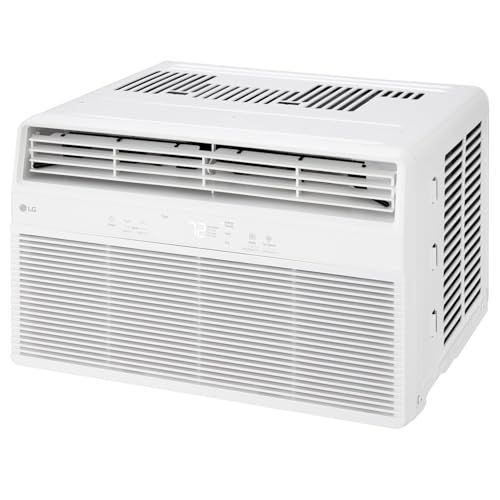
LG 8,000 BTU Window Air Conditioner with Dehumidifier, 115V | 115V, Dehumidifier, Remote Control, 24H Timer, Auto-Restart, for Rooms up to 350 Sq.Ft.
Check price on Amazon
8000 BTU Window Air Conditioner, Window AC Unit 115V Cools Up to 350 Sq.Ft, Energy Saving with Remote & App Control & Timer, Perfect for Small Bedroom or Living Room, Easy Install Kit
Check price on Amazon
GE Window Air Conditioner 8000 BTU, Wi-Fi Enabled, Energy-Efficient Cooling for Medium Rooms, 8K BTU Window AC Unit with Easy Install Kit, Control Using Remote or Smartphone App
Check price on Amazon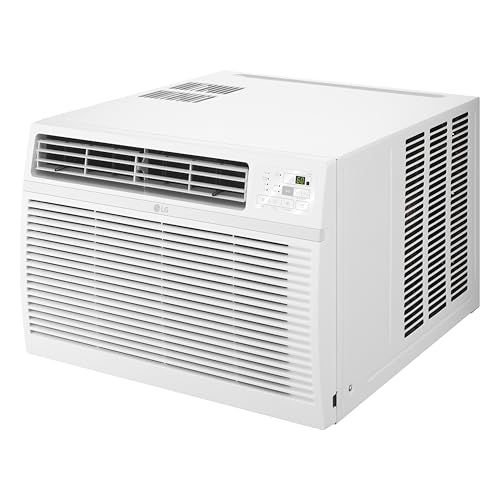
LG 8000 BTU Window Air Conditioners 2023 New Remote Control WiFi Enabled App Ultra-Quiet Washable Filter Cools 340 Sq. Ft for Small & Medium Room AC Unit air conditioner Easy Install White LW8017ERSM1
Check price on Amazon
ROVSUN 8000 BTU Inverter Window Air Conditioner, 115V AC Unit for Window | High Energy Saving, 42dB Quiet Operation, Easy Installation, Remote Control, Timer & ECO Mode, Cools up to 350 Sq Ft
Check price on Amazon
TCL 8000 BTU Q-Series Smart Inverter Window AC, Quiet Compact Energy Efficient Air Conditioner Unit with Remote Control & WiFi, Works with Smart Home Devices & TCL Home App, Cools up to 350 Sq. Ft.
Check price on AmazonFrequently Asked Questions
What size room does an 8000 BTU window air conditioner cool?
An 8000 BTU window air conditioner is typically sized for rooms between 250 and 350 square feet. The exact figure depends on ceiling height, insulation quality, sun exposure, and the number of occupants or heat-generating appliances in the space. A shaded, well-insulated bedroom at the upper end of that range may cool comfortably, while a sun-drenched room at the lower end may need more capacity.
Can an 8000 BTU 115V window AC run on a standard household outlet?
Yes. A 115V window air conditioner is designed to plug into a standard household outlet. However, it should be on a dedicated circuit. An 8000 BTU 115V unit typically draws around 7 to 8 amps during normal operation, so a dedicated 15-amp circuit is usually sufficient. Avoid sharing the outlet with high-draw appliances such as microwaves or space heaters.
What does eco mode do on a window air conditioner?
Eco mode cycles the compressor on and off based on room temperature rather than running it continuously. Once the set temperature is reached, the compressor pauses and the fan may run intermittently. This reduces energy use during mild conditions and overnight, though it can produce slightly wider temperature swings and may allow humidity to rise during off cycles in humid climates.
How quiet is a quiet-mode window air conditioner?
Quiet window air conditioners typically operate in the low-to-mid 40s in decibels on their lowest fan setting, which is comparable to a quiet library or a soft conversation. Higher fan speeds and compressor cycling will be louder. The quietest units pair a low minimum sound floor with enough capacity that they rarely need to run at maximum speed.
Do smart window ACs work without Wi-Fi?
Yes. Smart features such as app control and voice assistants require Wi-Fi, but the unit itself operates normally through its physical control panel or remote when the network is unavailable. Look for models with local scheduling on the device itself if you want automation to survive a network outage.
How often should I clean the filter on an 8000 BTU window AC?
Clean or replace the filter every two to four weeks during heavy use, and more often in dusty environments or homes with pets. A clogged filter restricts airflow, reduces cooling performance, and can cause the evaporator coil to ice over. It is the single most common cause of avoidable performance problems.
Ready to Choose Your Unit?
You now have the sizing framework, the electrical requirements, the noise and eco mode realities, and the feature expectations for the 8000 BTU 115V quiet eco smart window AC category. Use the comparison table above to identify the tier that matches your priorities, then review the recommended models to see which units deliver that feature set. Learn first, understand your needs, then choose with confidence.