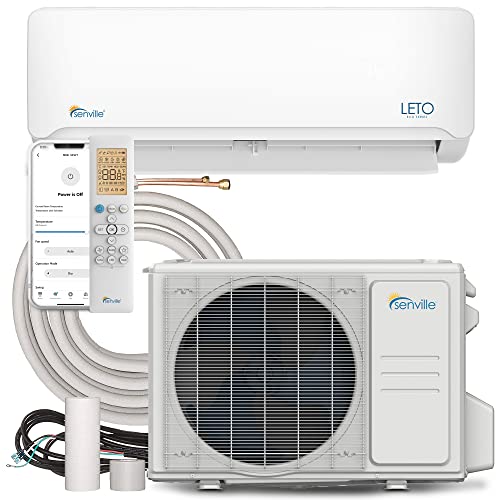
Mini Split with Thermostat: Smart, Zoned Comfort Explained
Discover how a ductless mini split with thermostat delivers room-by-room control, efficient heating and cooling, and smart scheduling for modern homes.
EXPLORE BUYING TIPSWhy a mini split with thermostat matters: A ductless mini split pairs an outdoor compressor with one or more indoor air handlers. The thermostat is the control center that lets you set precise temperatures per zone, schedule operation, and often manage everything from a smartphone. For anyone researching ductless comfort, understanding the thermostat side is key to getting the performance you expect.
How a Mini Split Thermostat Works
Unlike a central HVAC system with a single wall thermostat, a ductless mini split distributes control across indoor heads. Each indoor unit typically has its own thermostat — either a handheld remote with a built-in sensor, a wall-mounted controller, or integrated Wi-Fi logic. This design allows independent temperature settings in each zone, which is one of the biggest advantages of ductless systems.
When you set a target temperature, the thermostat signals the indoor unit's control board, which in turn communicates with the outdoor compressor. Inverter-driven models adjust compressor speed smoothly to maintain the set point, while non-inverter models cycle on and off. The thermostat's accuracy and placement directly affect comfort, energy use, and system longevity. Modern smart thermostats for mini splits can also learn schedules, respond to occupancy, and integrate with voice assistants — a significant step up from basic infrared remotes.
Room-by-Room Zoning
Each indoor head has its own thermostat, so bedrooms, living areas, and home offices can run at different set points without ductwork.
Inverter Precision
Inverter compressors modulate speed to hold the thermostat set point closely, reducing temperature swings and improving efficiency.
Smart Connectivity
Many mid-range and premium models offer Wi-Fi apps, scheduling, geofencing, and voice control through the thermostat interface.
Heating + Cooling
Heat pump mini splits reverse the refrigerant cycle, and the thermostat manages both modes for year-round comfort.
Types of Thermostats Used with Mini Splits
The thermostat experience varies widely across ductless systems. Understanding the options helps you match the product to your routine and home layout. For broader context on smart controls, see our guide to AC with Wi-Fi and smart control.
| Thermostat Type | Typical Tier | Best For | Key Consideration |
|---|---|---|---|
| Handheld Infrared Remote | Entry-level | Single-zone setups and simple daily use | Requires line of sight; limited scheduling |
| Wall-Mounted Wired Controller | Mid-range | Permanent installations and family homes | Fixed location; usually more durable buttons and display |
| Wi-Fi / Smart App Thermostat | Premium | Remote management and scheduling | Needs stable network; app quality varies by brand |
| Third-Party Smart Thermostat Adapter | High-end tier | Integration with broader smart home systems | Compatibility depends on brand and model |
Buying Guide: Choosing a Mini Split with Thermostat
When comparing ductless systems, the thermostat is not an afterthought — it shapes daily usability. Use the checklist below to evaluate models methodically. For sizing guidance, the 8,000–10,000 BTU AC guide and the 12,000–14,000 BTU AC guide help match capacity to room size.
- Confirm zoning needs: Single-zone systems suit one room; multi-zone systems with dual-head mini splits allow separate thermostat control in two spaces.
- Check thermostat features: Look for 7-day scheduling, adjustable fan speeds, sleep mode, and whether the thermostat displays room temperature accurately.
- Evaluate smart controls: Wi-Fi apps, geofencing, and voice assistant compatibility are common in mid-range and premium tiers.
- Consider heating performance: Heat pump models should specify low-ambient heating capability; the thermostat manages defrost cycles and mode switching.
- Verify installation requirements: Line-set length, drain routing, and electrical needs affect where the indoor head and thermostat can be placed.
- Review warranty and support: Thermostat and control-board coverage varies; confirm details before purchase.
For larger homes or multi-room coverage, compare 24,000 BTU mini split heat pump options and 36,000 BTU mini split systems, which often support multiple indoor heads with individual thermostats. If you are weighing ductless against other formats, the through-the-wall AC guide offers a useful contrast.
Installation and Thermostat Placement Tips
Thermostat placement influences comfort more than many homeowners expect. Indoor heads contain temperature sensors, and remote-based thermostats rely on the remote's location or the return-air sensor. Avoid placing the indoor unit where direct sunlight, lamp heat, or drafts from doors and windows can skew readings. Keep the unit away from obstructions that block airflow, and ensure the remote is not stored in a hot or cold spot between uses.
For wired controllers, mount them at a comfortable height on an interior wall, away from supply registers and direct sun. If you choose a smart thermostat adapter, confirm that your model supports the adapter and that the wiring is compatible. Professional installation is recommended for refrigerant line connections and electrical work; the HVAC system overview provides helpful background on how these components fit together.
Efficiency, SEER, and Thermostat Behavior
Efficiency ratings such as SEER and SEER2 describe performance under standardized conditions, but real-world results depend on thermostat strategy. Inverter mini splits maintain set points with gentle modulation, which pairs well with steady thermostat settings. Frequent large set-point changes force the compressor to work harder, so scheduling gradual transitions — rather than abrupt swings — is usually more efficient.
To compare efficiency metrics in depth, see our guides to air conditioner efficiency and SEER, EER, and HSPF ratings. If quiet operation is a priority, the quiet air conditioner guide explains how fan speeds and compressor modulation affect sound levels.
Common Questions About Mini Split Thermostats
Can I use a standard wall thermostat with a mini split?
Most ductless mini splits use proprietary communication between the indoor head and its controller, so standard 24-volt thermostats usually do not work directly. Some brands offer adapter kits or third-party interfaces that translate signals, but compatibility must be verified for your specific model.
Do mini splits with thermostats work well for heating?
Yes. Heat pump mini splits provide efficient heating by reversing the refrigerant cycle. The thermostat manages mode changes and defrost cycles. Cold-climate models are designed for lower outdoor temperatures, so check the rated heating range for your region.
How many zones can one system control?
Multi-zone systems typically support two to five indoor heads, each with its own thermostat. Capacity must be balanced across zones, so a professional load calculation is recommended before choosing a multi-zone configuration.
Is a smart thermostat worth it for a mini split?
For households with variable schedules, smart thermostats add convenience through scheduling, remote access, and occupancy-aware adjustments. Mid-range and premium mini splits increasingly include app control as standard, reducing the need for third-party add-ons.
Ready to Compare Ductless Options?
Review our recommended mini split systems with thermostat control below. Compare features, zoning capability, and efficiency tiers to find the right fit for your home.
VIEW RECOMMENDED SYSTEMSRelated reading: mini split with thermostat · thermostat that controls heat and cool · 5,000 BTU air conditioner with thermostat · AC with air purifier