
AC for Small Area: The Complete Cooling Guide
Everything you need to know about choosing, sizing, and running an air conditioner for compact rooms, studios, and small apartments.
START WITH SIZINGWhy small-area cooling deserves its own guide: A small room is not simply a scaled-down version of a large one. Compact spaces have unique heat loads, limited installation options, and stricter noise expectations. Choosing the wrong unit leads to short cycling, poor humidity control, and wasted energy. This guide walks you through every decision point so you can pick the right AC the first time.
What Counts as a "Small Area" for Air Conditioning?
In practical HVAC terms, a small area is any conditioned space under roughly 300 square feet. This includes studios, bedrooms, home offices, dorm rooms, tiny apartments, and converted attics or basements. The cooling challenge changes with the exact size:
- Up to 150 sq ft: Small bedroom, home office, or nursery — the entry point for compact cooling.
- 150 to 250 sq ft: Standard bedroom, studio apartment, or small living area.
- 250 to 300 sq ft: Large studio, open-plan small apartment, or converted garage space.
For spaces that are part of a larger home, you may also want to compare options in our single-room cooling guide, which covers shared-wall and doorway considerations that matter in compact layouts. If you are renting and cannot modify the property, the renter-friendly AC solutions page covers temporary options that work well in small spaces.
How to Size an AC for a Small Area
Sizing is the single most important decision for small-area cooling. An oversized unit cools the air quickly but shuts off before it removes humidity, leaving the room feeling clammy. An undersized unit runs continuously and never reaches the set point. Both waste energy.
The industry baseline is 20 BTU per square foot for a standard room with 8-foot ceilings and average insulation. Use the table below as a starting point, then adjust using the factors listed after it.
Adjustment Factors for Small Rooms
- Direct sunlight on windows: Add 10% to the BTU estimate.
- Kitchen or appliance heat: Add 4,000 BTU if the AC serves a kitchen or a room with a computer cluster.
- High ceilings (above 8 ft): Add 10% for each additional foot of ceiling height.
- More than two occupants: Add 600 BTU per additional regular occupant.
- Poor insulation or older windows: Add 10–15% to account for heat gain.
For a deeper walkthrough of the calculation, see our full guide on AC sizing for the home. If you are working room by room, the room-level AC planning page explains how to size multiple compact spaces without overloading your electrical panel.
Best AC Types for Small Areas
Four cooling formats dominate the small-area market. Each has a distinct profile in terms of installation effort, efficiency, noise, and flexibility. Below is an honest breakdown of how each performs in compact rooms.
1. Window Air Conditioner
The classic single-room solution. The compressor and condenser sit outside the window frame, which keeps the indoor noise low and makes window units the most energy-efficient format for a small room at any given tier. Installation requires a sturdy double-hung window and a properly supported frame.
Best for: Bedrooms and offices with a standard window and a nearby electrical outlet. Window units are the default recommendation for most small-area cooling needs. If you want a deeper comparison of brands and feature sets, the window AC guide covers efficiency ratings and mounting considerations in detail.
2. Portable Air Conditioner
Portable units roll on casters and vent hot air through a flexible hose to a window or sliding door. They are the most flexible option for renters and for rooms without a suitable window for a heavy unit. The trade-off is lower efficiency and more indoor noise, since the compressor sits inside the room.
Best for: Rental apartments, rooms with sliding glass doors, and situations where the unit must move between spaces. The portable AC guide explains hose venting and single-hose versus dual-hose designs. For sliding-door setups specifically, see AC for sliding doors.
3. Ductless Mini-Split
A mini-split separates the indoor air handler from the outdoor compressor, connected by a thin refrigerant line set. For a small area, a single-zone mini-split delivers quiet, precise cooling with the highest efficiency of any format. It requires professional installation and a wall or ceiling mounting point.
Best for: Homeowners who plan to stay in the property and want a long-term, high-efficiency solution. The ductless mini-split guide covers single-zone sizing and placement. If the small area is a bedroom, the bedroom AC page discusses noise and airflow direction for sleeping comfort.
4. Through-the-Wall AC
These units install permanently into a wall sleeve. They free up the window, which matters in small rooms where natural light is limited. Installation requires cutting into the wall and, in many jurisdictions, a permit.
Best for: Rooms without a usable window or where window space must be preserved. See the through-the-wall AC guide for sleeve sizing and code considerations.
Efficiency Ratings That Matter in Small Rooms
Small rooms are where efficiency ratings pay off fastest, because the unit runs frequently and the cooling load is modest. Three ratings appear on every AC label:
- SEER2: Seasonal efficiency for cooling. Higher is better. For small rooms, aim for at least the current DOE minimum and preferably one tier above it.
- EER2: Efficiency at peak outdoor temperature. This matters in hot climates where the afternoon load is the main challenge.
- ENERGY STAR: Certification that the unit meets or exceeds federal efficiency thresholds. In a small room, an ENERGY STAR unit typically consumes noticeably less electricity over a season than a baseline model.
Inverter-driven compressors are particularly valuable in small areas. Because the cooling load is small, a fixed-speed compressor tends to cycle on and off, which is inefficient and causes temperature swings. An inverter compressor modulates its speed and holds the set temperature steadily. The inverter AC guide explains the mechanism in plain language. If you are weighing the two technologies directly, the inverter versus non-inverter comparison lays out the trade-offs side by side.
Placement and Installation in Compact Spaces
In a small room, placement decisions have an outsized effect on comfort. Airflow that would be a minor issue in a large living room can create a cold draft across a bed or desk in a compact bedroom.
- Aim the airflow along the room, not directly at occupants. Use adjustable louvers to direct cool air toward the ceiling or along a wall.
- Keep the outdoor unit clear of obstructions. For mini-splits and window units, restricted airflow outside reduces efficiency significantly. Our indoor and outdoor placement guide covers clearance distances.
- Check the electrical circuit. Most small window and portable units run on a standard 115V circuit, but larger capacities may require a dedicated circuit. The AC electrical problems guide explains breaker sizing and outlet requirements.
- Seal the window opening. Window and portable installations leave gaps that let hot air in. Proper sealing is one of the highest-impact, lowest-effort improvements for small-room cooling. See AC leak sealing.
If you are hiring a professional for a mini-split installation, the AC installation guide walks through what a proper installation should include, and the AC installers page explains how to vet contractors.
Maintenance Routines for Small-Area AC Units
Small units collect dust quickly because they move a high volume of air through a compact filter. A simple maintenance rhythm keeps efficiency high and extends the life of the unit:
- Clean or replace the filter every 2–4 weeks during peak cooling season. In small rooms with pets or carpets, lean toward the shorter interval.
- Inspect the evaporator coil annually. A dirty coil reduces cooling capacity and can lead to freezing. The evaporator coil guide explains the symptoms.
- Clear the condensate drain. Portable and window units produce condensate that can back up and leak. See AC leaking water solutions.
- Schedule a professional checkup before each season. For mini-splits, annual service is strongly recommended. The AC maintenance guide provides a seasonal checklist.
Troubleshooting Common Small-Area Cooling Problems
Even a correctly sized unit can underperform. These are the issues small-area owners report most often, with links to the relevant diagnostic guides:
- AC runs but the room stays warm: Often a dirty filter, blocked outdoor airflow, or low refrigerant. Start with AC not cooling solutions.
- AC blows warm air: Check the thermostat mode and the compressor status. See AC blowing hot air.
- Unit freezes up: Restricted airflow or low refrigerant. See frozen coil solutions.
- Unit is noisy: Loose mounting, debris in the fan, or compressor wear. See AC making noise.
- Musty smell: Microbial growth on the evaporator or in the drain pan. See AC smells bad.
For a broader diagnostic workflow, the AC troubleshooting hub organizes problems by symptom.
Small-Area AC Buying Checklist
Before you commit to a unit, run through this checklist. It captures the decisions that most often cause regret after purchase:
- Measure the room in square feet, including ceiling height.
- Calculate the BTU target using the 20 BTU per square foot baseline, then apply adjustment factors.
- Identify your installation constraints: window type, wall construction, rental restrictions, and available electrical circuits.
- Choose a format (window, portable, mini-split, or through-the-wall) based on those constraints.
- Check the efficiency rating and confirm the unit is sized for your room, not larger.
- Plan the placement so airflow does not blow directly on a bed or desk.
- Confirm the warranty and service network for the brand you select.
For a broader view of the buying process, including how to time a purchase and how to compare retail channels, see the AC shopping guide.
Recommended Air Conditioners for Small Areas
⚠️ AFFILIATE DISCLOSURE: This website contains affiliate links. As an Amazon Associate, we earn from qualifying purchases. If you make a purchase through these links, we may receive a small commission at no additional cost to you. Read our full affiliate policy.

SereneLife 10,000 BTU Portable Air Conditioner with Dehumidifier & Fan | Portable AC Unit with WiFi for Wide Area Climate Control | Compact Standing Air Conditioner with Window Kit
Check price on Amazon
GE 12,000 BTU Smart Window Air Conditioner, Cools Large Rooms up to 550 Sq Ft, Energy Efficient, Wi‑Fi, Alexa/Google, Quick Install Kit, White
Check price on Amazon
14000 BTU Portable Air Conditioners, Cooling,Fan,Dehumidification,Sleep Mode for Large Rooms up to 700 Sq.Ft, AC Unit with Remote Control, 24H Timer, Installation Kits Included
Check price on Amazon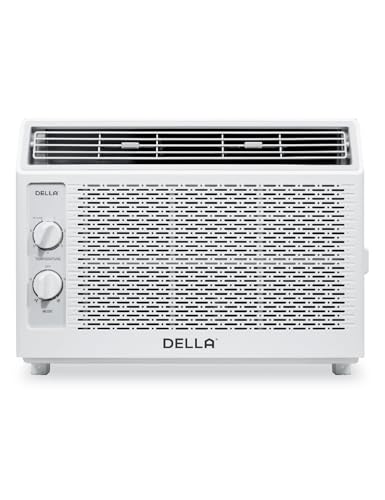
DELLA Window Air Conditioner, 5000 BTU, Cools Up to 150 Sq. Ft | Energy Saving AC Unit Reusable Filter, Easy to Use Mechanical Control, Easy Install Kit, Efficient Cooling For Smaller Areas
Check price on Amazon
SereneLife 8,000 BTU Portable Air Conditioner with Dehumidifier & Fan | Portable AC Unit with WiFi for Wide Area Climate Control | Compact Standing Air Conditioner with Window Kit
Check price on Amazon
SereneLife 14,000 BTU Portable Air Conditioner with Dehumidifier, Heat, & Fan | Wi-Fi Enabled Portable AC Unit for Wide Area Climate Control | Compact Standing Air Conditioner with Window Kit
Check price on AmazonFrequently Asked Questions
What size AC do I need for a small area?
For a small area up to 150 square feet, a 5,000 to 6,000 BTU air conditioner is typically sufficient. Rooms between 150 and 250 square feet usually need 8,000 to 10,000 BTU. Always account for sunlight, ceiling height, and occupancy when sizing.
Is a window AC or portable AC better for a small room?
Window AC units are generally more energy efficient and cool small rooms faster because the compressor sits outside. Portable AC units offer flexibility and can be moved between rooms, but they tend to be less efficient and require venting through a window or sliding door.
Can a mini-split AC work in a small area?
Yes. Ductless mini-split systems are excellent for small areas because they deliver precise cooling without ductwork. They are quieter and more efficient than window or portable units, though they require professional installation and a higher upfront investment.
How many BTU do I need per square foot for a small room?
A common rule of thumb is 20 BTU per square foot of living space. For a 100-square-foot room, that translates to roughly 2,000 BTU, but practical AC sizing starts at 5,000 BTU for standard small rooms due to minimum unit capacities.
Final note: The right AC for a small area is the one that matches your room's actual heat load, fits your installation constraints, and runs efficiently at part load. Size carefully, choose a format that suits your window and electrical setup, and keep the filter clean. Those three decisions account for most of the comfort difference in compact spaces.