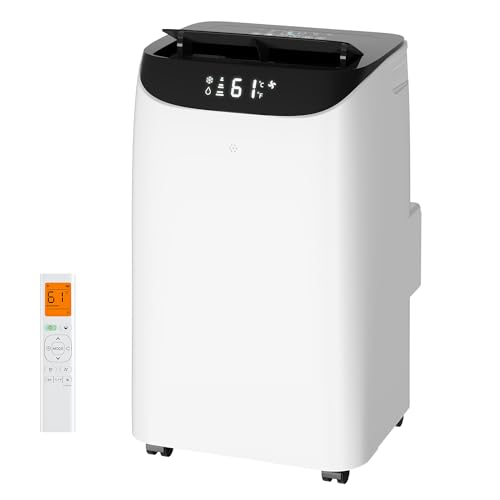
Portable Inverter AC: Flexible, Efficient Cooling for Any Room
Portable inverter air conditioners combine the flexibility of a rolling unit with the energy-saving intelligence of inverter compressor technology. This guide explains how they work, who benefits most, and how to choose the right model for your space.
Start ReadingWho this guide is for: Renters, apartment dwellers, home-office users, and anyone who needs targeted cooling without permanent installation. If you have been researching portable ACs and want to understand whether an inverter model is the smarter long-term choice, you are in the right place.
What Is a Portable Inverter AC?
A portable inverter air conditioner is a freestanding, wheel-mounted cooling unit that uses an inverter-driven compressor instead of a traditional fixed-speed compressor. Like other single-room cooling solutions, it is designed to cool one space at a time — but the inverter component changes how the compressor behaves.
In a conventional portable AC, the compressor cycles on at full power and off again repeatedly. An inverter compressor, by contrast, adjusts its speed continuously. It ramps up when the room is warm and slows down once the target temperature is reached, maintaining a steadier output rather than switching abruptly. This modulation is the core reason inverter models tend to run more smoothly and use energy more intelligently over long cooling sessions.
Portable inverter units are especially relevant for people who cannot install a window unit or a mini-split. If your situation involves restrictions on permanent modifications, the broader category of cooling options for renters and temporary setups is worth reviewing alongside this page.
How Inverter Technology Works in a Portable Unit
The inverter is an electronic control board that converts incoming AC power into a variable-frequency signal for the compressor motor. Instead of running at one fixed speed, the compressor can operate across a range of speeds. Three practical outcomes follow:
Continuous Modulation
The compressor adjusts speed in small increments rather than starting and stopping. This reduces the abrupt temperature swings common in fixed-speed units.
Reduced Cycling Losses
Each compressor restart draws a surge of power. By avoiding frequent restarts, inverter models reduce the energy lost to start-up cycles during long run times.
Steadier Room Temperature
Because output tapers rather than cuts off, the room holds closer to the setpoint. Many users notice fewer hot-and-cold fluctuations.
The underlying refrigeration cycle is the same as any air conditioner — a refrigerant absorbs heat indoors and releases it outdoors through the exhaust hose. If you want a deeper explanation of that process, the refrigerant cycle explained article covers it step by step. What differs in an inverter portable is the compressor control layer sitting on top of that cycle.
Portable Inverter vs. Other Cooling Options
Portable inverter units occupy a specific niche. They are more flexible than window units and mini-splits, but less efficient than a properly installed split system. The table below places them in context using neutral tier descriptors rather than numeric figures.
| Cooling Option | Installation Effort | Efficiency Profile | Best For |
|---|---|---|---|
| Portable Inverter AC | Minimal — window kit and exhaust hose | Good for its class; inverter modulation helps during long sessions | Renters, home offices, rooms without window-unit clearance |
| Standard Portable AC | Minimal | Entry-level; fixed-speed compressor cycles on and off | Short, occasional cooling needs |
| Window AC | Moderate — requires window mounting | Mid-range; generally more efficient than portable hose units | Bedrooms and living rooms with compatible windows |
| Ductless Mini-Split | Professional installation | High-end tier; strongest efficiency and quietest operation | Long-term whole-room or multi-room cooling |
| Central AC | Professional installation with ductwork | Top-tier for whole-home coverage | Houses with existing ducts and multiple rooms to cool |
If your space has a compatible window and you can mount a unit, a bedroom-focused cooling setup using a window AC often delivers stronger efficiency than a hose-based portable. The portable inverter wins on flexibility, not on raw efficiency. Understanding that trade-off upfront prevents disappointment.
Advantages and Limitations
Strengths
- No permanent installation or landlord approval needed in most cases
- Rolls between rooms, so one unit can serve multiple spaces on different days
- Inverter modulation supports steadier temperatures during extended use
- Quieter compressor behavior than fixed-speed portables in many designs
- Works in rooms where window units or mini-splits are not permitted
Limitations
- Exhaust hose setup introduces some efficiency loss compared with split systems
- Physically bulkier than window units; floor space is required
- Single-hose designs can create negative pressure that pulls in warm air
- Drainage management is needed in humid climates, especially in continuous mode
- Cooling capacity is limited to one room at a time
The negative-pressure point deserves emphasis. A single-hose portable draws indoor air, cools it, and exhausts some of it outside — which means replacement air must enter from somewhere, often through gaps around doors. Dual-hose designs address this by drawing intake air from outside. If you are cooling a room adjacent to a hot hallway or an exterior door, dual-hose configurations are worth prioritizing. Our guide to indoor and outdoor unit placement principles touches on airflow pressure concepts that apply here as well.
How to Choose the Right Portable Inverter AC
Sizing a portable unit follows the same logic as any room air conditioner: match cooling capacity to the room's heat load. Portable units typically cover smaller areas than window or split systems, so it is important to avoid overestimating what one unit can handle.
Match Capacity to Room Size
A small bedroom or home office usually needs a lower-capacity unit, while a larger living area or a room with significant sun exposure may require a higher-capacity model. Oversizing is a real problem: a unit that is too powerful will cool too quickly and cycle inefficiently, which partly defeats the purpose of inverter modulation. For a focused breakdown of capacity by square footage, see the guide on cooling small areas effectively.
Check the Inverter Specification Directly
Not every portable marketed as "efficient" uses an inverter compressor. Confirm the inverter designation in the product specifications rather than relying on marketing language. A genuine inverter model will list variable-speed or inverter-driven compressor operation explicitly.
Consider Hose Configuration
Dual-hose units generally outperform single-hose units in efficiency and pressure balance. The trade-off is a more involved window-kit setup. For rooms where the window opening is limited — sliding doors, for example — review cooling solutions for sliding-door spaces before committing to a hose design that may not fit.
Evaluate Drainage and Humidity Handling
In humid climates, a portable AC produces considerable condensate. Some units evaporate most of it automatically; others require manual draining or a hose connection. If you plan to run the unit overnight in a damp basement or coastal room, confirm the drainage method. Related reading on basement cooling considerations covers moisture issues in more depth.
Noise Level and Placement
Portable units place the compressor indoors, so they are inherently louder than split systems whose compressor sits outside. Check the published sound level and consider placement away from sleeping or working positions. The home office cooling guide offers practical placement tips for noise-sensitive spaces.
Setup Checklist for First-Time Owners
Before you switch it on
- Position the unit near the window where the exhaust hose will vent, keeping the hose as short and straight as possible.
- Seal the window kit edges with the supplied foam or weatherstripping to prevent hot outdoor air from seeping back in.
- Leave clearance around the intake and exhaust vents — do not push the unit flush against furniture or curtains.
- Confirm the electrical circuit can handle the unit's rated draw; avoid sharing the outlet with high-draw appliances.
- Check the drainage plug and, if needed, attach a drain hose before extended operation in humid conditions.
- Clean or inspect the filter before first use, and set a reminder to rinse it every two weeks during heavy cooling season.
If the unit is not cooling as expected after setup, the troubleshooting path usually starts with airflow and hose sealing. The AC not cooling troubleshooting guide walks through the common causes in order of likelihood. For general upkeep between seasons, the AC maintenance guide covers filter care, coil cleaning, and storage.
Who Benefits Most from a Portable Inverter AC
This category suits specific situations better than others. Consider a portable inverter unit if several of the following apply:
You rent and cannot modify the property. No wall cutting, no window brackets, no permanent changes. The apartment cooling guide expands on renter-friendly approaches.
You need cooling in a room without window-unit clearance. Ground-floor windows, crank-out windows, or windows blocked by furniture can rule out a window AC. A hose-based portable sidesteps that constraint.
Your cooling need moves between rooms. A wheeled unit can follow you from bedroom to office to living room across the week.
You want inverter behavior without a professional install. If a mini-split is out of reach because of installation requirements, a portable inverter is the closest compromise in compressor technology.
Conversely, if you own your home and can install a split system, a ductless mini-split will generally outperform any portable unit on efficiency and quietness. The choice is about constraints, not about which technology is universally superior.
Keeping a Portable Inverter AC Running Well
Portable units live indoors and collect dust quickly. The filter is the first line of defense — rinse or vacuum it every two weeks in peak season. A clogged filter forces the compressor to work harder and undermines the efficiency advantage that inverter modulation provides.
Drain the condensate tank regularly, or route a continuous drain hose if the unit supports it. Standing water invites odor and mold growth. If you notice a musty smell, the AC odor troubleshooting guide covers cleaning steps for the evaporator and drain pan.
Before seasonal storage, run the unit in fan-only mode for an hour to dry internal components, clean the filter, coil, and hose, and store the unit upright in a dry space. For units that develop unusual noises or vibration, the noise diagnosis guide helps distinguish normal compressor hum from a problem worth servicing.
Frequently Asked Questions
Is a portable inverter AC actually more efficient than a standard portable AC?
In extended cooling sessions, yes — the inverter compressor avoids the energy lost to repeated start-stop cycling and holds a steadier temperature. For very short on-off use, the difference is smaller. The advantage grows with run time.
Can a portable inverter AC cool a whole apartment?
Generally no. Portable units are designed for single-room cooling. For multi-room coverage, a ductless mini-split or central system is the appropriate category. See the large-home cooling guide for multi-room strategies.
Do portable inverter ACs need a special electrical outlet?
Most residential portable units run on standard household circuits, but larger-capacity models draw more current. Check the rated amperage and avoid sharing the circuit with high-draw appliances. If you are unsure, the AC electrical problems guide explains common circuit-related symptoms.
Why does my portable AC feel like it is not cooling enough?
Common causes include an unsealed window kit, a kinked or overly long exhaust hose, a clogged filter, or a unit undersized for the room. Work through the AC not cooling properly checklist before assuming the unit is faulty.
Can I use a portable inverter AC in a basement or attic?
Yes, provided there is a venting path for the exhaust hose and adequate drainage. Basements and attics have specific humidity and insulation considerations — see the attic cooling guide and basement cooling guide for details.
How long do portable inverter AC units typically last?
With regular filter cleaning, proper drainage, and seasonal storage care, a well-maintained unit can serve for many cooling seasons. Longevity depends heavily on maintenance habits and how hard the compressor is worked.
Ready to Compare Portable Inverter Models?
You now understand how inverter technology works in a portable form factor, what it does well, and where its limits lie. The next step is matching a model to your room size, hose configuration needs, and noise tolerance. Browse the curated selection below to compare options side by side.
Compare Portable Inverter AC Options