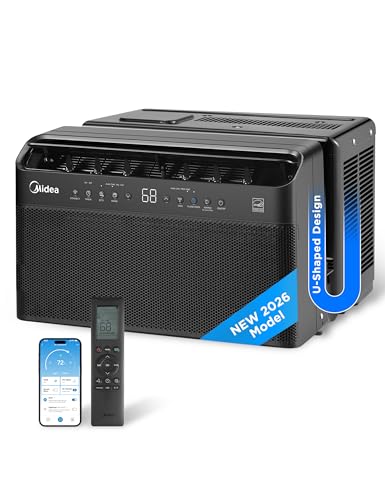
Air Conditioner for Window That Opens Sideways
Your complete guide to cooling a room with casement or crank windows. Discover which AC types actually work, how to install them safely, and which options deliver the best results for your space.
If your home features casement or crank windows, you have likely discovered that a conventional window air conditioner simply does not fit. These sideways-opening windows are common in many homes, apartments, and older buildings, yet the vast majority of window AC units are engineered exclusively for double-hung windows that slide up and down. This mismatch creates real frustration for anyone trying to cool a room during the warmer months.
The good news is that you are not out of options. Several cooling solutions are specifically suited to sideways-opening windows, ranging from specialty casement AC units to ductless systems and portable units with purpose-built vent kits. This guide walks you through each option in detail so you can make a confident, informed decision. For those who need additional context on alternative configurations, our resource on an air conditioner for a room without a window may also be helpful.
Understanding Sideways-Opening Windows
A casement window is hinged on one side and swings outward or inward when you turn a crank. Unlike a double-hung window, there is no upper and lower sash that can be raised to create a secure opening for a window AC unit. The entire window panel moves as a single piece, which means you cannot rest the weight of an air conditioner on the frame in the same way.
This structural difference matters because a standard window AC relies on the lower sash pressing down on top of the unit to hold it firmly in place. Without that sash, the unit has nothing to anchor against, creating a serious safety risk. That is why manufacturers design separate product lines for casement windows, and why attempting to force a standard unit into a sideways-opening window is never advisable.
If your window configuration is different, you may also want to review our guide on an air conditioner for crank casement window for more specific installation considerations.
Why Standard Window AC Units Fail in Sideways Windows
The core issue is support and sealing. A standard window air conditioner is built with a chassis that sits in the window opening, supported by the lower sash on the inside and a mounting bracket or sill support on the outside. When the window opens sideways, there is no sash to lower onto the unit, so the AC cannot be secured properly.
Beyond physical support, the sealing challenge is significant. Casement windows open along a vertical hinge, so the opening is tall and narrow rather than wide and short. The accordion side panels that come with most window AC units are designed for horizontal window tracks and will not create an effective seal in a casement frame. Gaps around the unit allow warm air to enter and cool air to escape, undermining efficiency and driving up energy use.
Safety reminder: Never attempt to prop a standard window AC in a casement window using blocks or improvised supports. The unit can shift, fall, or create a severe electrical hazard. Always choose a solution designed for your window type.
Best AC Options for Casement and Sideways-Opening Windows
There are four primary approaches that work well with sideways-opening windows. Each has distinct strengths, and the right choice depends on your room size, installation preferences, and long-term goals. Below is a detailed breakdown of each option, organized by market tier rather than any numerical figure.
1. Specialty Casement Window Air Conditioners
Purpose-Built Casement AC Units
These units are engineered specifically for vertical and casement window openings. They feature a tall, narrow profile that fits the opening, along with mounting brackets that secure to the window frame or wall. They offer the most direct replacement for a traditional window AC and are available from several established manufacturers.
Compact Casement Models
Smaller casement units suit bedrooms, home offices, and studio apartments. They typically deliver enough cooling for a single room and are simpler to install than larger systems. They remain a solid choice for renters who want a reversible solution.
Specialty casement units are the closest thing to a plug-and-play solution for sideways windows. They come with the necessary mounting hardware and are designed to seal the opening effectively. The trade-off is that they are less common than standard window ACs, so product selection may be narrower. For rooms with very narrow openings, our guide on an air conditioner for narrow sliding window covers related sizing considerations.
2. Through-the-Wall Air Conditioners
Wall-Mounted Through-the-Wall Units
These units are installed through an exterior wall rather than a window. They completely sidestep the casement window problem and often deliver stronger cooling capacity than window units. Installation requires cutting into the wall and may require professional assistance, but the result is a permanent, secure solution.
PTAC-Style Wall Units
Packaged terminal air conditioners are common in hotels and commercial spaces but are increasingly used in residential settings. They offer robust performance and a clean wall installation. These are a long-term investment and suit homeowners planning to stay in place for years.
A through-the-wall unit is an excellent permanent answer for a casement window room. It eliminates the window conflict entirely and typically provides better insulation and security than a window-mounted unit. If you are considering this route, our overview of air conditioner mounted on the wall provides useful context on wall-mounted configurations.
3. Ductless Mini-Split Systems
Single-Zone Mini-Split
A mini-split uses a small indoor air handler mounted on a wall or ceiling, connected to an outdoor compressor by a thin refrigerant line. Only a small hole is needed for the line set, so the casement window remains fully functional and unobstructed. These systems are highly efficient and very quiet.
Multi-Zone Mini-Split
For homes with multiple casement-window rooms, a multi-zone system cools several spaces from a single outdoor unit. This is the most flexible and aesthetically clean option, though it requires professional installation and a higher upfront commitment.
Mini-splits are widely regarded as the premium solution for rooms where window space is limited or window types are non-standard. They preserve the view, keep the window usable, and deliver strong energy performance. The main consideration is installation complexity, which typically requires a licensed technician.
4. Portable Air Conditioners with Casement Vent Kits
Portable AC with Fabric Window Seal
Portable units roll from room to room and exhaust hot air through a hose. A fabric or rigid seal kit designed for casement windows secures the hose in the opening while allowing the window to remain partially open. This is the most flexible option for renters and people who move frequently.
Portable AC with Rigid Casement Adapter
Rigid adapter panels provide a more durable and better-sealed connection than fabric kits. They are available for vertical and casement windows and are a worthwhile upgrade for anyone using a portable unit as a long-term solution.
Portable ACs are the most accessible entry point for casement window cooling. They do not require permanent installation and can be moved between rooms. The key is pairing the unit with the right vent kit for your window type. For rooms without any usable window, our article on an air conditioner portable without window vent explores alternative venting strategies.
Side-by-Side Comparison of Cooling Options
| Option | Tier | Best For | Installation Effort | Window Usability |
|---|---|---|---|---|
| Specialty Casement AC | Mid-range to premium | Single rooms, direct replacement | Moderate | Window blocked while installed |
| Through-the-Wall AC | Mid-range to professional-grade | Permanent whole-room cooling | High (wall modification) | Window fully usable |
| Ductless Mini-Split | High-end to luxury | Whole-home or multi-room | Professional required | Window fully usable |
| Portable AC with Vent Kit | Entry-level to mid-tier | Renters, temporary cooling | Low | Window partially open |
Installation Tips and Safety Considerations
Regardless of which option you choose, proper installation is critical for performance and safety. A poorly installed unit wastes energy, creates noise, and can pose a physical hazard. Use the checklist below to guide your setup.
- Measure the window opening carefully, including height and width, before purchasing any unit.
- Confirm that the unit is rated for vertical or casement window installation, not just standard double-hung windows.
- Use the manufacturer-provided mounting bracket or support system; never improvise with wood blocks or straps.
- Seal all gaps with weatherstripping, foam, or a purpose-made window seal kit to prevent air leakage.
- Ensure the electrical circuit can handle the unit's amperage; consult a qualified electrician if unsure.
- Check that the unit is level so condensate drains properly and does not leak into the room.
- For through-the-wall or mini-split installations, hire a licensed HVAC professional.
- Test the unit thoroughly after installation and monitor for unusual noises or water intrusion.
If your unit is running but failing to cool, our troubleshooting resource on air conditioner running but not cooling enough can help you diagnose common causes before calling a technician.
How to Vent a Portable AC Through a Sideways-Opening Window
Portable air conditioners exhaust hot air through a hose, and that hose must vent outdoors. With a casement window, the challenge is sealing the opening around the hose while keeping the window partially open. Several vent kit styles address this.
Fabric seal kits wrap around the exhaust hose and attach to the window frame with adhesive strips or zippers. They are flexible enough to fit irregular openings and are well-suited to casement windows. Rigid adapter panels are more durable and provide a tighter seal, but they must match the window's dimensions. Some manufacturers offer casement-specific adapters that clip directly into the window track.
When installing a vent kit, make sure the hose runs as straight and short as possible to maximize airflow. Avoid sharp bends, which reduce exhaust efficiency and can cause the unit to overheat. Also check that the window can be secured in the partially open position so it does not swing in the wind. For more ideas on windowless or limited-window spaces, see our guide on an air conditioner for apartment with no windows.
Ready to Choose the Right Unit?
Browse our curated selection of air conditioners suited to casement and sideways-opening windows. Compare features, read specifications, and find the option that fits your room.
View Recommended UnitsFrequently Asked Questions
Can I install a standard window AC in a sideways-opening window?
No. Standard window AC units require a double-hung window with a lower sash that can be lowered onto the unit for support. A casement or crank window opens sideways and cannot provide that support, so the unit would be unstable and unsafe. Always use a unit designed for vertical or casement windows.
What is the best air conditioner for a casement window?
The best choice depends on your priorities. A specialty casement window AC is the most direct replacement. A through-the-wall unit offers a permanent solution with better security. A ductless mini-split provides the highest efficiency and quietest operation. A portable AC with a casement vent kit is the most flexible for renters.
How do I vent a portable AC through a sideways-opening window?
Use a fabric or rigid window seal kit designed for casement windows. These kits secure the exhaust hose in the opening and seal the remaining gap. Keep the hose short and straight for best performance, and secure the window so it does not move.
Do casement window AC units cool as well as standard window units?
Yes, when properly sized and installed. Casement AC units use the same cooling technology as standard window units. The key is matching the BTU capacity to your room size and ensuring a tight seal around the installation.
Can I use a mini-split with a casement window?
Absolutely. A mini-split requires only a small hole for the refrigerant lines, so the casement window remains fully functional. This is one of the cleanest solutions for rooms with non-standard windows, though professional installation is required.
What if my AC is running but not cooling?
If your unit runs but does not cool, check the air filter, thermostat settings, and outdoor unit first. Our detailed guide on air conditioner is on but no cold air walks through the most common causes and fixes.