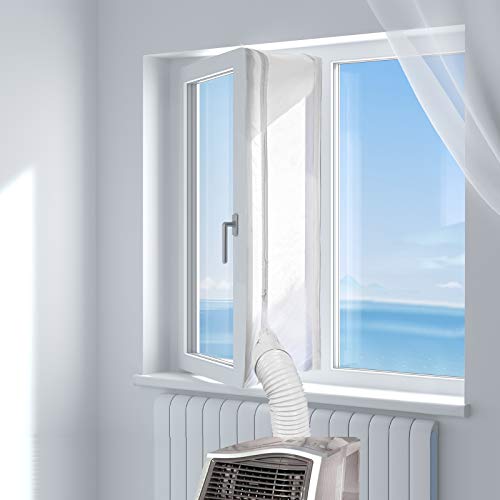
Air Conditioner for Crank Casement Window: Complete Cooling Guide
Discover the best cooling solutions for crank casement windows. Learn about casement-specific AC units, installation methods, and how to choose the right system for your space.
EXPLORE SOLUTIONSUnderstanding Crank Casement Windows
Crank casement windows are a popular architectural feature in many homes, particularly in older buildings and modern designs that favor outward-opening windows. Unlike double-hung windows that slide vertically, casement windows operate with a crank mechanism that pushes the sash outward, typically hinging on one side.
These windows offer excellent ventilation and a clear view, but they present unique challenges when it comes to cooling. The outward-opening design and the crank hardware create obstacles that standard window air conditioners simply cannot accommodate.
Key point: Casement windows are identified by their vertical orientation and outward-opening mechanism. The crank handle, hinge arms, and window sash all interfere with the mounting requirements of conventional window AC units.
If you're dealing with a room that lacks traditional window options, you may also benefit from understanding alternatives like an air conditioner for a room without a window or solutions designed for rooms without windows. These guides explore creative cooling approaches when standard installations aren't possible.
Why Standard Window AC Units Don't Fit Casement Windows
A standard window air conditioner is designed to sit horizontally in a double-hung or sliding window frame. The unit rests on the window sill and is secured by closing the window sash down onto the top of the unit. Casement windows break this model in several ways:
- Vertical opening: Casement windows open vertically (like a door), not horizontally, so there's no horizontal sill for a standard unit to rest on.
- Crank mechanism: The crank hardware and hinge arms protrude into the window opening, blocking the space where an AC unit would sit.
- Outward swing: The sash swings outward, meaning there's no way to close the window against the AC unit for a secure seal.
- Structural support: Casement window frames are not designed to bear the weight of a heavy AC unit cantilevered outward.
Attempting to force a standard window AC into a casement window can lead to improper sealing, energy loss, security risks, and potential damage to the window frame. This is why specialized solutions are necessary.
Similar challenges arise with other window types. If you have a window that opens sideways, you'll face comparable installation obstacles that require alternative approaches.
Best Air Conditioner Solutions for Crank Casement Windows
Fortunately, several cooling solutions are specifically designed or well-suited for crank casement windows. Each has distinct advantages depending on your room size, budget tier, and installation preferences.
Casement Window AC Units
Purpose-built for vertical window openings, these units mount in the casement frame and are secured with brackets.
- Designed for vertical installation
- Fits narrow casement openings
- Available in 5,000–12,000 BTU
- Requires custom mounting frame
Portable Air Conditioners
These units sit on the floor and vent hot air through a hose kit that can be adapted to casement windows.
- No permanent installation required
- Easy to move between rooms
- Venting kits fit casement openings
- Ideal for renters
Ductless Mini-Split Systems
Wall-mounted indoor units connect to an outdoor compressor, requiring only a small hole in the wall.
- No window obstruction
- Quiet operation
- High energy efficiency
- Professional installation required
Casement Window AC Units in Detail
Casement window air conditioners are the most direct solution. They are engineered to fit the vertical dimensions of casement windows and often come with mounting brackets that secure the unit to the window frame rather than relying on the sash. These units typically feature a narrower profile than standard window ACs.
When selecting a casement AC, pay attention to the window opening dimensions. The unit must fit within the frame, and the mounting hardware must be compatible with your window's construction. Some models include removable frames that allow the unit to be installed without permanently modifying the window.
Portable Air Conditioners for Casement Windows
Portable AC units offer a no-modification solution. They roll on casters and vent through a flexible hose that can be routed through a partially open casement window. A window sealing kit (often included) creates a barrier around the hose to prevent hot air from re-entering the room.
For casement windows, look for portable units with venting kits that include adjustable panels or fabric seals designed for vertical openings. This approach works well for apartment cooling where permanent modifications may not be permitted.
Ductless Mini-Split Systems
If you want a permanent, high-efficiency solution, a ductless mini-split is an excellent choice. The indoor unit mounts on a wall or ceiling, and only a small refrigerant line set and drain hose need to pass through the wall to the outdoor unit. This means the casement window remains completely unobstructed.
Mini-splits are a long-term investment that delivers quiet operation, superior energy efficiency, and zoned comfort. They are particularly well-suited for spaces where window AC installation is impractical. You can learn more about how these systems compare to other options in our guide on heating and cooling units.
For rooms with very specific window configurations, you might also explore solutions designed for small vertical windows or a narrow sliding window, as the installation principles often overlap with casement window challenges.
Comparing Cooling Solutions for Casement Windows
The following table compares the main options across key criteria to help you decide which approach best fits your situation.
| Solution | Installation Effort | Window Modification | Energy Efficiency | Best For |
|---|---|---|---|---|
| Casement Window AC | Moderate | Minimal (bracket mount) | Good | Single rooms with standard casement frames |
| Portable AC | Low | None (vent kit only) | Moderate | Renters and temporary cooling |
| Ductless Mini-Split | High (professional) | Small wall penetration | Excellent | Long-term whole-room comfort |
| Central AC | Very High | Ductwork required | Excellent | Whole-home cooling when ducts exist |
For those considering whole-home options, understanding home heating and cooling units can provide broader context on how individual room solutions fit into a larger HVAC strategy. If your home already has ductwork, central air may be worth exploring, though it's a major investment compared to room-specific solutions.
Choosing the Right BTU Capacity
Selecting the correct cooling capacity is essential for comfort and efficiency. An undersized unit will struggle to cool the space, while an oversized unit will short-cycle, failing to remove humidity properly and wasting energy.
| Room Size | Recommended BTU | Typical Application |
|---|---|---|
| Up to 150 sq ft | 5,000 – 6,000 BTU | Bedroom, small office, studio nook |
| 150 – 250 sq ft | 8,000 – 10,000 BTU | Medium bedroom, living area, home office |
| 250 – 400 sq ft | 12,000 – 14,000 BTU | Large bedroom, small living room, open plan |
| 400 – 600 sq ft | 18,000 – 24,000 BTU | Large living room, open kitchen-dining |
Several factors can shift the BTU requirement upward: high ceilings, poor insulation, large windows with direct sun exposure, and occupancy levels. For a more precise calculation, consult a BTU sizing guide or use a professional load calculation. If you're cooling a larger space like a one-bedroom apartment, consider the total square footage and the layout's airflow characteristics.
Tip: For casement window AC units, which are often limited to 12,000 BTU or less, ensure the room is well-insulated and consider using fans to distribute cool air evenly. If the space exceeds 400 sq ft, a mini-split or portable unit with higher capacity may be necessary.
Installation Guide for Casement Window AC Units
Installing a casement window air conditioner requires care and attention to ensure safety and proper operation. Here's a general step-by-step overview:
- Measure the window opening: Record the height and width of the casement frame where the unit will sit. Compare these to the AC unit's specifications.
- Remove the window screen: Most casement AC installations require removing the screen to access the frame.
- Prepare the mounting bracket: Many casement ACs come with a frame or bracket system. Assemble it according to the manufacturer's instructions.
- Position the unit: With assistance, lift the AC unit into the window opening. The unit should sit securely in the bracket, with the back extending outdoors.
- Secure the frame: Attach the mounting frame to the window frame using screws or clamps as specified. Ensure the unit is level.
- Seal gaps: Use weatherstripping, foam insulation, or the manufacturer's sealing kit to close gaps around the unit. This prevents hot air infiltration and improves efficiency.
- Handle the crank mechanism: Depending on the design, you may need to disengage the crank arm or remove the sash entirely to accommodate the unit. Follow the manufacturer's guidance.
- Test operation: Turn on the unit and check for proper cooling, unusual noises, and secure mounting.
If you're not comfortable with the installation process, hiring a professional is recommended. Improper installation can lead to injury, property damage, or reduced performance. For related reading, our guide on AC installers can help you find qualified help.
Portable AC installation is much simpler: position the unit near the casement window, connect the vent hose, and seal the window opening with the included kit. No tools or permanent modifications are required.
Maintenance Tips for Casement Window AC Units
Regular maintenance keeps your AC running efficiently and extends its lifespan. Follow these practices:
- Clean or replace the filter: Check the filter every two weeks during heavy use. A clogged filter reduces airflow and strains the compressor.
- Inspect the seal: Check weatherstripping and foam seals around the unit seasonally. Replace worn material to prevent energy loss.
- Clean the coils: Dust and debris on the evaporator and condenser coils reduce efficiency. Gently clean them with a soft brush or coil cleaner.
- Check the drain: Ensure condensate drains properly and doesn't pool around the unit or leak into the wall.
- Remove the unit in winter: If possible, remove and store the AC during cold months to protect it from weather damage and drafts.
- Listen for unusual sounds: Rattling, grinding, or squealing can indicate loose parts or motor issues. Address these promptly.
If you notice the unit running but not cooling, the issue may be related to refrigerant levels, a dirty filter, or a faulty compressor. Our guide on compressor running but not cooling covers common causes and fixes. Similarly, if the condenser unit is making noise or not functioning, a professional inspection may be needed.
For general troubleshooting, understanding the role of the evaporator coil and cooling fan can help you diagnose problems early. Regular duct cleaning isn't applicable to window units, but keeping the unit itself clean is equally important.
Frequently Asked Questions
Can you put a regular window air conditioner in a crank casement window?
No, a standard window air conditioner is not designed for crank casement windows. Casement windows open outward with a crank mechanism, and the vertical orientation, hinge hardware, and lack of a horizontal sill make it impossible to mount a standard unit safely and securely. You need a casement-specific AC or an alternative like a portable or mini-split system.
What is the best air conditioner for a crank casement window?
The best solution depends on your needs. Casement window AC units are purpose-built for this window type and offer direct cooling. Portable air conditioners provide flexibility and require no permanent installation. Ductless mini-split systems are the premium choice for long-term comfort and efficiency. Each has trade-offs in installation effort, upfront investment, and performance.
How do you install a casement window air conditioner?
Installation typically involves removing the screen, assembling the mounting bracket or frame, positioning the unit vertically in the window opening, securing it to the frame, and sealing gaps with weatherstripping. The crank mechanism may need to be disengaged. Always follow the manufacturer's instructions and consider professional installation if you're unsure.
What BTU size do I need for a casement window air conditioner?
BTU requirements are based on room size and other factors. As a guide: 5,000–6,000 BTU for up to 150 sq ft, 8,000–10,000 BTU for 150–250 sq ft, and 12,000–14,000 BTU for 250–400 sq ft. Casement AC units are most commonly found in the 5,000–12,000 BTU range, so larger rooms may require a mini-split or multiple units.
Can I use a portable AC with a casement window?
Yes, portable air conditioners work well with casement windows when paired with an appropriate window venting kit. The kit typically includes a fabric or plastic seal that fits around the vent hose and secures to the window frame, allowing you to keep the window partially open while exhausting hot air. This is a popular solution for renters and temporary cooling needs.
Do casement window AC units require special electrical outlets?
Most casement window AC units in the 5,000–12,000 BTU range operate on standard 115V household current and plug into a regular grounded outlet. However, always check the unit's electrical requirements. Larger units may require a dedicated circuit. If you're unsure about your home's electrical capacity, consult a licensed electrician. Our guide on finding local AC installers can help you locate qualified professionals.
Ready to Cool Your Casement Window Room?
Explore our recommended casement window air conditioners below. Each option is selected for performance, reliability, and suitability for vertical window installations.
View Recommended Units