
Air Conditioners That Cool the Whole House
Whole-home cooling is not about buying the largest unit. It is about matching the right system type, capacity, and distribution method to your home’s layout, insulation, and climate. This guide explains every option in plain language so you can make a confident, informed decision.
Explore Whole-House OptionsWhy this page exists: Most shoppers already know they want whole-house cooling — they are unsure which system type actually delivers it. If a single room unit has failed to keep up, or you are moving into a home with no working cooling system, the decision between central air, multi-zone ductless, and hybrid approaches is the key choice. Everything below is organized to help you make that choice.
What “Whole-House Cooling” Actually Means
A true whole-house air conditioner maintains a consistent, comfortable temperature across every conditioned room — not just the room where the unit sits. That requires three things working together: sufficient cooling capacity, a distribution method that reaches each room, and controls that balance temperature between zones.
Single-room products cannot achieve this by design. A window unit or portable air conditioner cools one enclosed space and loses effectiveness once interior doors close. If you are currently dealing with a unit that runs constantly without results, it is worth reading about why an air conditioner runs constantly but does not cool before concluding that whole-house equipment is the only answer.
There are two established system architectures that genuinely cool an entire home: central air conditioning with ductwork, and multi-zone ductless mini-split systems. A third, less common path is a combination of both. The sections below break down each one.
System 1: Central Air Conditioning
Central AC uses a single outdoor condenser paired with an indoor air handler. The air handler pushes cooled air through a network of supply ducts and returns warm air through return ducts. Every room connected to the duct system receives conditioned air from one centralized source.
This is the traditional choice for homes that already have ductwork, and it is the most common answer to the question of which air conditioners cool the whole house in North American construction. If your home has existing ducts in reasonable condition, central AC is usually the most straightforward path to uniform cooling.
Strengths of Central AC
- Uniform temperature: one thermostat governs the entire connected floor plan.
- Invisible indoors: only supply and return registers are visible; no wall-mounted indoor units.
- Filtration integration: high-quality filters and even whole-home air purification can be added at the air handler.
- Established service network: most HVAC contractors are fully equipped to service central systems.
Limitations to Understand
- Duct losses: poorly sealed or uninsulated ducts can waste a meaningful share of cooling energy. Sealing and insulating ducts is often the highest-return improvement for an existing central system.
- Single-zone control by default: one thermostat means one setpoint for the whole house unless you add zoning dampers.
- Installation disruption: homes without ducts require extensive retrofit work.
If your central system is running but not delivering cold air, the problem is usually refrigerant, airflow, or a failing component rather than the system type. Start with the troubleshooting guide on why an air conditioning unit is not cooling the house before assuming replacement is necessary.
System 2: Multi-Zone Ductless Mini-Split
A multi-zone ductless system connects several slim indoor air handlers — typically wall-mounted, though ceiling cassettes and floor-mounted styles exist — to a single outdoor unit. Each indoor handler serves one room or zone and has its own remote or thermostat.
This is the answer for homes without ductwork, for additions and converted spaces, and for households that want room-by-room temperature control without paying to cool unused rooms. For a broader treatment of this category, see the guide to ductless mini-split air conditioners.
Strengths of Multi-Zone Ductless
- No duct losses: cooling is delivered directly into each room.
- Independent zoning: each room can be set differently, which suits households with varied schedules.
- Retrofit-friendly: installation requires only a small wall penetration per indoor unit.
- Heat pump capability: most modern ductless systems also provide efficient heating, making them a year-round investment.
Limitations to Understand
- Visible indoor units: each room gets a wall or ceiling-mounted unit.
- Room-by-room coverage required: a zone must be installed in every space you want cooled, so large open floor plans may need two indoor units.
- Higher upfront complexity: multi-zone systems involve more line sets and more installation labor than a single-zone unit.
Ductless is often the best fit for homes that previously relied on window or portable units. If you are moving away from a single-room solution, the comparison of air conditioning options for homes without ductwork will help you weigh the alternatives.
Side-by-Side Comparison
| Factor | Central Air Conditioning | Multi-Zone Ductless Mini-Split |
|---|---|---|
| Best for | Homes with existing ductwork and a single thermostat strategy | Homes without ducts, additions, and room-by-room control |
| Distribution | Duct network with supply and return registers | Direct delivery per room from wall or ceiling units |
| Zoning | Single zone by default; add dampers for multi-zone | Native multi-zone; each indoor unit is independent |
| Duct losses | Present if ducts are leaky or uninsulated | None — no ductwork involved |
| Indoor visibility | Registers only | One indoor unit per room or zone |
| Heating capability | Requires separate furnace or heat pump pairing | Heat pump models heat and cool |
| Installation scope | Extensive if ducts must be added | Moderate; small penetrations per indoor unit |
| Typical tier | Mid-tier to premium, depending on efficiency and zoning | Mid-range to high-end tier for multi-zone configurations |
Sizing: The Most Common Whole-House Mistake
An oversized system cools quickly, shuts off, and leaves rooms feeling clammy because it never runs long enough to remove humidity. An undersized system runs continuously and still fails on the hottest days. Both outcomes are avoidable with proper sizing.
The widely cited starting point is roughly 20 BTU per square foot of conditioned space, adjusted upward for high ceilings, large window area, poor insulation, and hot climates, and downward for shaded, well-insulated, or partially occupied spaces. Use the BTU calculator by room size as a planning estimate, then confirm with a professional load calculation.
For a single-family home, a proper air conditioner sizing method — ideally a Manual J load calculation — accounts for envelope tightness, window orientation, internal heat gain, and local design temperatures. Skipping this step is the single most common reason a new whole-house system underperforms.
Efficiency Ratings That Matter for Whole-House Systems
Because a whole-house system runs for long hours, efficiency differences compound over years of use. The primary metric is SEER2, the current Department of Energy efficiency standard for cooling. Higher SEER2 generally means lower electricity consumption for the same cooling output, though the return on higher-efficiency tiers depends on your climate and usage hours.
Heat pump variants also carry HSPF2 ratings for heating performance. If you are comparing a central AC paired with a furnace against a ductless heat pump system, read the explanation of heat pump versus air conditioner before committing. For an efficiency baseline, the SEER rating explained article covers how the number is calculated and what practical difference it makes.
Efficiency also depends on installation quality. A premium-tier system installed with undersized line sets or a poorly balanced duct network will underperform an entry-level system installed correctly. This is why contractor selection matters as much as the equipment tier.
Installation Considerations
- Electrical capacity: whole-house systems typically require dedicated 240V circuits. Confirm panel capacity before ordering equipment.
- Outdoor unit placement: clearance, shade, noise isolation, and drainage all affect performance and longevity.
- Duct condition (central systems): inspect and seal ducts before installing new equipment, otherwise you are paying to cool the attic.
- Refrigerant line routing (ductless): plan indoor unit locations so line sets run cleanly and condensate drains correctly.
- Permits: most jurisdictions require a permit for new whole-house cooling installations.
For step-by-step context on the installation process itself, see the installation guide section of this site.
Maintenance That Protects a Whole-House Investment
A whole-house system is a long-term investment, and routine maintenance is what preserves its performance and lifespan. At minimum, plan on filter changes every one to three months, an annual professional inspection before cooling season, and periodic coil cleaning.
If your existing system is underperforming, maintenance and repair are often the right first move before replacement. The resources on air conditioner service and maintenance and what to check when a unit is not cooling properly cover the common culprits in detail.
Whole-House System Buying Checklist
- Confirm whether existing ductwork is present and in serviceable condition
- Obtain a Manual J load calculation, not just a square-footage estimate
- Decide between single-zone and multi-zone control based on household schedule
- Verify electrical panel capacity and available circuit space
- Compare SEER2 ratings within the same system tier
- Get at least three itemized installation quotes
- Confirm warranty terms and whether registration is required
- Ask for the commissioning report at system handover
Which Option Fits Your Home?
If your home has sound ductwork and you prefer a single thermostat, central air conditioning is the conventional and well-supported choice. If your home lacks ducts, has uneven temperatures between floors, or you want independent room control, a multi-zone ductless mini-split is usually the better fit.
For homes with partial ductwork or mixed layouts, a hybrid approach — central AC for the main living area plus one or two ductless zones for problem rooms — is a legitimate third path that many contractors recommend.
If your current system is struggling rather than absent, diagnose before you replace. Guides such as an air conditioner running but not cooling and why an air conditioner takes a long time to cool often reveal a repair-level fix rather than a replacement-level one.
Frequently Asked Questions
What type of air conditioner cools an entire house?
Central air conditioning and multi-zone ductless mini-split systems are the two primary options. Central AC distributes cooled air through ductwork from one air handler, while multi-zone mini-splits use several indoor air handlers connected to a single outdoor unit, each controlled independently.
How many BTUs do I need to cool a whole house?
A starting estimate is around 20 BTU per square foot of conditioned space, adjusted for ceiling height, insulation, window area, climate, and occupancy. A professional Manual J calculation is the accurate method and should always precede a purchase decision.
Can a ductless mini-split cool a whole house?
Yes. A multi-zone ductless system supports several indoor units on one outdoor condenser, which allows whole-house coverage without ductwork. The practical limit is the number of zones the outdoor unit supports, typically up to eight.
Is central AC or ductless better for whole-house cooling?
Ductless avoids duct energy losses and provides native room-by-room control. Central AC is usually more straightforward when ductwork already exists and a single setpoint suits the household. The better choice depends on your home’s existing infrastructure and how you want to control temperature.
How long does a whole-house air conditioner last?
With proper installation and routine maintenance, central systems commonly last 15 to 20 years, while ductless systems often last 15 years or more. Lifespan depends heavily on usage hours, maintenance consistency, and installation quality.
Do whole-house air conditioners also provide heating?
Central AC alone does not heat; it is paired with a furnace or an air-source heat pump. Most modern ductless systems are heat pumps and provide both cooling and heating, which makes them a year-round solution in moderate climates.
Recommended Whole-House Air Conditioners
⚠️ AFFILIATE DISCLOSURE: This website contains affiliate links. As an Amazon Associate, we earn from qualifying purchases. If you make a purchase through these links, we may receive a small commission at no additional cost to you. Read our full affiliate policy.

Portable Air Conditioners, Swamp Cooler Portable AC Unit for Room, Windowless Cooling Fan That Blow Cold Air w/Remote 5L Tank 12 Speeds 9H Timer, Evaporative Air Cooler for Bedroom Garage (White)
Check price on Amazon
DREO TurboCool Misting Fan 765S, Fans that Blow Cold Air, 10°F Cooling Fan | 34ft/s Fast Evaporative Air Cooler, 6L Tank, 20 dB Quiet DC Motor, 90° Tower Fan with 12 Speeds, 4 Modes for Home, Grey
Check price on Amazon
DREO Evaporative Air Swamp Cooler, 40" Cooling Fans that Blow Cold Air | Remote Control, 80° Oscillating Standing Fan for Bedroom with Ice Packs, 4 Speeds, Removable Water Tank, White
Check price on Amazon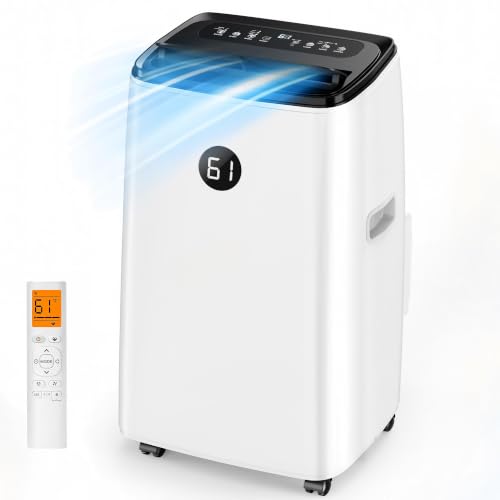
14000 BTU Portable Air Conditioners, 3-in-1 Floor Stand Up Portable AC Unit | Cools Up to 700 Sq.Ft, with Dehumidifier, Fan, Self-Evaporating, Quiet Sleep Mode, Auto Swing, for Large Rooms Bedrooms
Check price on Amazon
Midea 6,000 BTU Window Air Conditioner, Electronic Control, 250 Sq Ft, New | 3-In-1 Cool/Fan/Dehumidifier Modes, Easy-To-Use Controls, Remote Control, And Cooling For Bedrooms, Studies and Home Offices
Check price on Amazon
Arctic Air Pure Chill 2.0 Evaporative Air Cooler by Ontel - Powerful, Quiet, Lightweight and Portable Space Cooler with Hydro-Chill Technology For Bedroom, Office, Living Room & More,Blue
Check price on Amazon
Portable Air Conditioner Fan, 4-in-1 Mini Air Cooler with 450ML Water Tank, 3 Speeds Portable Fan 7 Colors LED Ambient Light, Mini Evaporative Cooler Desktop Humidifier Fan for Bedroom Office Travel
Check price on Amazon