
Air Conditioning and Heating Units: Prices, Types & Buying Guide
Understanding how HVAC systems are positioned in the market, what drives their pricing tiers, and how to match the right comfort solution to your home — before you commit.
Start LearningWhat This Guide Covers
- System Types: Split, Packaged, Heat Pump & More
- The Market Tier Framework: Entry-Level to Luxury
- What Drives Air Conditioning and Heating Unit Prices
- Efficiency Ratings and Long-Term Operating Costs
- System Comparison: Choosing the Right Configuration
- Sizing and Load Calculation: A Step You Cannot Skip
- Installation Considerations and Contractor Selection
- Frequently Asked Questions
Understanding Air Conditioning and Heating System Types
Before discussing how systems are positioned across the market, it helps to understand what you are actually comparing. An air conditioning and heating unit is rarely a single box — it is a system of components working together. The three most common residential configurations are split systems, packaged units, and ductless mini-splits, with heat pumps serving as a dual-purpose alternative to the traditional air conditioner plus furnace pairing.
Split Systems: The Standard Whole-Home Configuration
A split system separates the outdoor condenser from the indoor air handler or furnace. This separation allows for quieter indoor operation and higher efficiency, because the noisiest components — the compressor and condenser fan — sit outside the conditioned space. Split systems are the most common whole-home configuration in the United States and are available across every market tier, from entry-level single-stage equipment to premium variable-speed inverter systems.
If your home already has ductwork, a split system is usually the most straightforward replacement path. However, if you are adding central air to a home that has only a furnace, the process is more involved — you may be interested in our guide on adding air conditioning to ducted heating, which explains how the indoor coil and line set integrate with an existing furnace.
Packaged Units: Heating and Cooling in One Cabinet
Packaged systems combine the condenser, evaporator coil, and heating components in a single outdoor cabinet. They are commonly installed on rooftops or concrete pads beside the home and suit properties where indoor space is limited or where ductwork runs through the attic or crawlspace. For homeowners weighing the two approaches, our comparison of packaged air conditioners versus split systems covers the trade-offs in efficiency, serviceability, and installation complexity.
Packaged units are also a frequent choice for manufactured homes and light commercial spaces. Our overview of a central heat and air unit for a mobile home explains how packaged configurations are adapted to manufactured housing.
Ductless Mini-Splits: Zoned Comfort Without Ductwork
Ductless mini-splits connect an outdoor compressor to one or more indoor wall, ceiling, or floor-mounted air handlers via a small refrigerant line set — typically three inches in diameter. Because they avoid duct losses entirely, mini-splits can deliver high efficiency in homes where ductwork is impractical. They are especially popular for room additions, converted attics, and older homes. Our guide on air conditioning systems without ductwork explores mini-split options in detail, and our ductless mini-split AC overview covers single-zone and multi-zone configurations.
Heat Pumps: One System for Heating and Cooling
A heat pump reverses the refrigerant cycle to provide both cooling in summer and heating in winter. Modern cold-climate heat pumps operate effectively in temperatures well below freezing, making them a viable year-round solution in most U.S. climates. For homeowners weighing the options, our comparison of heat pumps versus air conditioners explains when each makes more sense.
The Market Tier Framework: Entry-Level to Luxury
Because pricing varies by region, contractor, and installation scope, the most reliable way to compare air conditioning and heating systems is by their market tier — a classification based on technology, efficiency, build quality, and warranty rather than a specific figure. Throughout this guide, we use four consistent tiers.
Entry-Level
Single-stage compressors, basic SEER2 ratings, standard warranties, and essential controls. A solid choice for budget-conscious replacements where comfort demands are straightforward and energy efficiency is a secondary concern.
Mid-Range
Two-stage or mid-efficiency single-stage equipment, improved SEER2 ratings, better sound insulation, and compatibility with smart thermostats. Balanced comfort and efficiency for most single-family homes.
Premium
Variable-speed inverter compressors, high SEER2 and HSPF2 ratings, advanced humidity control, quieter operation, and extended warranties. Feature-rich for its class and efficient in the long run.
Luxury
Flagship variable-speed systems with zoning integration, hospital-grade filtration options, near-silent operation, and premium materials. A long-term investment for homeowners prioritizing maximum comfort and efficiency.
Why tiers instead of numbers? Air conditioning and heating unit prices shift with refrigerant regulations, seasonal demand, and regional labor rates. Tier descriptors remain stable and let you compare the relative position of systems without anchoring to a figure that may be outdated by the time you read it.
What Drives Air Conditioning and Heating Unit Prices
When homeowners research air conditioning and heating unit prices, they often expect a single number. In reality, the figure quoted by a contractor reflects several independent variables. Understanding them lets you compare quotes intelligently and avoid both overpaying and under-buying.
Equipment Tier and Technology
The single largest variable is the equipment itself. A single-stage entry-level condenser is priced far below a variable-speed premium inverter system because of the compressor technology, electronic expansion valves, and control boards involved. Two-stage and variable-speed compressors are more complex to manufacture, which is reflected in their market positioning. For a deeper look at compressor technology, see our explanation of inverter AC systems and how they differ from single-stage air conditioners.
System Size and Capacity
Capacity is measured in BTUs or tons, and larger systems use larger coils, bigger compressors, and heavier cabinets. A 2-ton system for a 1,200-square-foot home is positioned differently from a 5-ton system for a large property. Our guides on a central air unit for a 1,400-square-foot house and a central air conditioner for a 2,500-square-foot home explain how capacity scales with home size.
Efficiency Ratings
Higher SEER2 and HSPF2 ratings require more advanced components — larger coils, more efficient compressors, and smarter controls. The premium tier of the market is built around efficiency, and that is reflected in how those systems are positioned. Our guides on SEER ratings and HSPF ratings explain what the numbers mean and how to weigh them against your climate.
Installation Scope and Labor
Installation can account for a substantial share of any HVAC project. Replacing a like-for-like split system with existing ductwork is a relatively simple job. Adding central air to a home without ducts, running new line sets, upgrading the electrical panel, or modifying ductwork all increase the scope. Our guides on central air installation with existing ductwork and adding central air to a forced-air system break down what changes when ductwork is already in place.
Refrigerant Transition
The HVAC industry is transitioning from R-410A to lower-GWP refrigerants such as R-32 and R-454B. New equipment designed for these refrigerants may carry a different market position than legacy R-410A stock. Our explainer on the R410A phase-out covers the timeline and what it means for buyers.
Efficiency Ratings and Long-Term Operating Considerations
Two systems with identical capacity can have dramatically different operating profiles. Efficiency ratings are the best available shorthand for how much energy a system consumes relative to the comfort it delivers. The two most important ratings for air conditioning and heating units are SEER2 for cooling and HSPF2 for heating.
SEER2: Seasonal Cooling Efficiency
SEER2 (Seasonal Energy Efficiency Ratio 2) measures cooling efficiency under the Department of Energy's updated test procedures. Higher ratings indicate less energy consumed per unit of cooling delivered. The DOE sets minimum SEER2 standards that vary by region — the Southeast and Southwest have stricter requirements than northern states. Our guide on SEER vs SEER2 and DOE standards explains the regional differences in detail.
HSPF2: Seasonal Heating Efficiency
For heat pumps and heating-capable systems, HSPF2 (Heating Seasonal Performance Factor 2) measures heating efficiency. It matters most for homeowners in climates with meaningful heating seasons. Our explainer on HSPF ratings covers how to interpret the figure.
How Efficiency Maps to Market Tiers
| Tier | Typical Compressor | Efficiency Positioning | Best For |
|---|---|---|---|
| Entry-Level | Single-stage | Meets minimum standards | Straightforward replacements, mild climates, shorter-term ownership |
| Mid-Range | Two-stage or high-efficiency single-stage | Above-minimum efficiency | Most single-family homes, balanced comfort and efficiency |
| Premium | Variable-speed inverter | High SEER2 and HSPF2 | Homeowners prioritizing long-term efficiency and humidity control |
| Luxury | Variable-speed inverter, flagship controls | Top-tier efficiency and zoning integration | Large homes, multi-zone comfort, maximum energy performance |
This table is a general framework. Within each tier, brands differentiate on build quality, warranty length, and control features. To understand how ENERGY STAR certification fits into the picture, see our overview of ENERGY STAR certified air conditioners.
System Comparison: Choosing the Right Configuration
Different configurations suit different homes. The table below compares the major HVAC system types on the dimensions that matter most during the research stage.
| System Type | Heating & Cooling | Ductwork Required | Tier Availability | Best For |
|---|---|---|---|---|
| Central Split System (AC + Furnace) | Both (separate components) | Yes | Entry to luxury | Homes with existing ductwork; cold climates |
| Packaged Unit | Both (single cabinet) | Yes | Entry to premium | Limited indoor space; manufactured homes; light commercial |
| Ductless Mini-Split | Both (heat pump) | No | Entry to luxury | No ductwork; room additions; zoned comfort |
| Heat Pump (Ducted) | Both (single system) | Yes | Mid to luxury | Moderate climates; efficiency-focused households |
| Window / Portable AC | Cooling only | No | Entry to mid-range | Renters; single rooms; temporary cooling |
Split System Pros
- Quiet indoor operation
- High efficiency across all tiers
- Can pair with gas or electric furnace
- Wide service network
Packaged Unit Pros
- Single installation point
- Saves indoor floor space
- Simplified duct connections
- Good fit for manufactured housing
Mini-Split Pros
- No duct losses
- Zone-by-zone control
- Minimal structural modification
- High efficiency per zone
Heat Pump Pros
- One system for year-round comfort
- No combustion, no flue
- Efficient heating in moderate climates
- Eligible for federal incentives
If you are comparing a furnace-plus-AC setup against a heat pump, our heat pump vs air conditioner guide is the natural next step. For homes that already have ductwork and a furnace, the decision often comes down to the condition of the existing equipment — our explainer on replace vs repair helps clarify when replacement is the more rational path.
Sizing and Load Calculation: A Step You Cannot Skip
No matter which tier you choose, correct sizing determines whether the system delivers comfort or disappointment. An oversized air conditioner cools the air too quickly, cycling on and off before it can remove humidity. An undersized system runs continuously, wears out prematurely, and leaves rooms uncomfortable on the hottest days. Neither is an efficient use of your investment.
Why Rule-of-Thumb Sizing Fails
Older rules of thumb — such as one ton of cooling per 400–600 square feet — ignore insulation levels, window area, ceiling height, local climate, and duct condition. A well-insulated 1,800-square-foot home in a moderate climate may need less capacity than a poorly insulated 1,400-square-foot home in a hot, humid region. A proper Manual J load calculation accounts for these variables. Our guide on Manual J load calculation explains the process, and our how to size an air conditioner walkthrough covers the practical steps.
Capacity Guides by Home Size
To get a general sense of how capacity scales, our capacity-specific guides are useful starting points:
- Central AC unit for a 1,700-square-foot house
- AC unit capacity for a 1,800-square-foot house
- AC unit capacity for a 2,000-square-foot house
- AC unit capacity for a 2,400-square-foot house
These guides explain how home size interacts with insulation, window count, and local climate to determine the appropriate capacity. For a broader overview of our sizing resources, see the BTU calculator by room size.
Installation Considerations and Contractor Selection
Even the best equipment underperforms if installed incorrectly. Installation quality affects efficiency, lifespan, and warranty validity. When comparing air conditioning and heating unit prices, always compare the full scope of work — not just the equipment tier.
What a Proper Installation Includes
- Load calculation: A Manual J calculation confirms the correct capacity for your home.
- Duct assessment: Existing ductwork should be inspected for leaks, sizing, and insulation. Our guide on ductwork design covers the essentials.
- Line set and electrical: Correct line set length and gauge, proper brazing, vacuum to 500 microns, and dedicated electrical circuit with correct breaker size. Our explainer on amps and breaker size for AC covers the electrical side.
- Commissioning: Refrigerant charge verification, airflow measurement, and thermostat configuration.
Choosing a Contractor
The contractor matters as much as the equipment tier. Look for licensed and insured HVAC professionals with verifiable references and a track record of proper load calculations. Our guide on how to choose an HVAC contractor covers the questions to ask, and our overview of HVAC license and insurance explains what to verify before signing a contract.
If you are replacing an existing system, a reputable contractor will perform a load calculation rather than simply matching the old capacity. Our guide on replace vs repair helps frame the decision, and our overview of common installation mistakes explains what to watch for.
Permits and Regulations
Most HVAC replacements require a permit and inspection. The requirements vary by jurisdiction. Our guide on how to get an AC permit explains the process, and our overview of EPA refrigerant handling rules covers the federal regulations that apply to refrigerant handling during installation and service.
Recommended Air Conditioning and Heating Units
⚠️ AFFILIATE DISCLOSURE: This website contains affiliate links. As an Amazon Associate, we earn from qualifying purchases. If you make a purchase through these links, we may receive a small commission at no additional cost to you. Read our full affiliate policy.

Midea 8,000 BTU Smart Inverter Air Conditioner Window Unit with Heat and Dehumidifier – Cools up to 350 Sq. Ft., Energy Star Rated, Quiet Operation, Electronic Controls, Remote Control, White
Check price on Amazon
ROVSUN 12000 BTU Air Conditioner Window Unit with Heat, 4-in-1 Window AC Unit Cooler, Heater, Dehumidifier & Fan with Timer, Remote Control & Installation Kit for Rooms up to 550 Sq. Ft, 208/230V
Check price on Amazon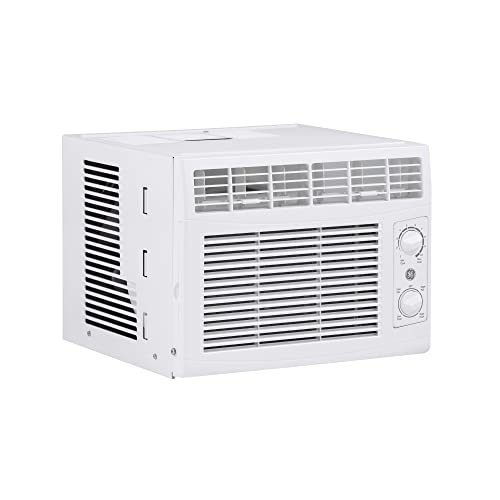
GE Window Air Conditioner Unit, 5,000 BTU for Small Rooms up to 150 sq ft. with Manual Adjustable Fan and Cooling Settings, Perfect for Small Bedroom or Living Room, Easy Install Kit Included, White
Check price on Amazon
AIRPLUS Smart Portable Air Conditioner, 12,000 BTU Cooling/Heating Air Conditioner for Bedroom with Drainage-free Cooling, Dehumidifier, Fan, 24h Timer for 700 Sq Ft Rooms, Blue
Check price on Amazon
DELLA Vita 12000 BTU Mini Split Air Conditioner, 20 SEER2, 230V | Cools up to 550 Sq. Ft, 1 Ton Heat Pump, Works with Alexa & Wifi, Ductless Inverter System, Pre-Charged, 16ft Kit
Check price on Amazon
YITAHOME 12000 BTU Mini Split Air Conditioner Heat Pump System, 20 SEER2 | 115V Ductless Inverter System fits for Alexa & Wi-Fi Compatibility, Cover Up to 750 Sq. Ft, Installation Kit Included
Check price on Amazon
MrCool SEER2 VERSAPRO Central Ducted Split System | 4 Ton 16 SEER2 Heat Pump Multiposition R454B 35ft Line Set
Check price on AmazonFrequently Asked Questions
What factors determine the tier of an air conditioning and heating unit?
The tier of an HVAC system depends on its SEER2 and HSPF2 ratings, compressor technology (single-stage, two-stage, or variable-speed inverter), brand reputation, warranty coverage, smart thermostat compatibility, and build quality. Entry-level systems typically use single-stage compressors and basic controls, while premium and luxury tiers offer variable-speed technology, advanced zoning, and superior noise reduction.
How do I choose between a packaged unit and a split system?
Packaged units combine heating and cooling in one outdoor cabinet and suit homes with limited indoor space or no basement. Split systems separate the outdoor condenser from the indoor air handler or furnace, offering higher efficiency and quieter operation. Split systems are generally preferred for new installations where ductwork exists or can be added.
What is the difference between a heat pump and a traditional AC plus furnace setup?
A heat pump provides both heating and cooling by reversing the refrigerant cycle, making it highly efficient in moderate climates. A traditional setup pairs an air conditioner with a gas or electric furnace, which may perform better in extreme cold. Heat pumps are generally more energy-efficient year-round, while furnace combos offer faster heating in freezing conditions.
How long does an HVAC system typically last?
A well-maintained central air conditioner lasts 15 to 20 years, while a furnace lasts 15 to 25 years. Heat pumps typically last 10 to 15 years. Regular professional maintenance, filter changes, and proper sizing extend the lifespan of any system.
Why is proper sizing important for an HVAC unit?
An oversized unit cools or heats too quickly, causing frequent cycling that wears out components and leaves humidity uncontrolled. An undersized unit runs continuously, driving up energy use and failing to maintain comfort. A Manual J load calculation ensures the system matches your home's heat gain and loss.