
Air Conditioning Replacement Companies: How to Choose the Right Contractor
A complete research guide for homeowners preparing to replace an air conditioning system — from verifying licenses and comparing proposals to understanding warranty terms and avoiding common contractor pitfalls
START WITH THE FRAMEWORKWhy this page exists: Replacing an air conditioner is one of the largest mechanical investments a homeowner makes, and the company you hire matters as much as the equipment itself. A premium-tier system installed by an inexperienced crew can underperform a mid-tier system installed correctly. This guide walks you through the contractor selection process step by step, so you can evaluate replacement companies with confidence and compare proposals on equal terms.
Everything below is written for the research stage: you already know you need a replacement, and you want a clear, repeatable method for separating professional-grade contractors from underqualified ones.
What Air Conditioning Replacement Companies Actually Do
A replacement company is not simply a crew that swaps one box for another. A professional-grade contractor manages a multi-stage process that begins with load verification and ends with commissioning and documentation. Understanding this scope helps you evaluate whether a company is offering a complete service or a stripped-down installation.
The typical scope of a full replacement project includes:
- Load and sizing verification. Rather than copying the old unit's tonnage, a competent contractor performs a room-by-room load calculation to confirm the correct capacity. This is the foundation for efficiency and comfort, and it is covered in detail in our guide to how to size an air conditioner.
- Equipment selection and matching. The outdoor condenser, indoor coil or air handler, and refrigerant line set must be matched as a system. Mismatched components void efficiency ratings and manufacturer warranties.
- Permitting and code compliance. Most jurisdictions require a mechanical permit for a system replacement. The contractor should pull the permit, schedule inspections, and close it out after commissioning.
- Removal and disposal. Old equipment, refrigerant recovery, and disposal are part of the job. Refrigerant recovery must follow EPA regulations.
- Installation and commissioning. This includes line set routing, brazing, evacuation, refrigerant charge verification, airflow measurement, and thermostat configuration.
- Documentation and registration. A professional-grade company registers the manufacturer warranty on your behalf and provides a startup checklist and manual.
When comparing companies, ask each one to describe these stages explicitly. A contractor who can walk you through the entire sequence — not just the equipment model — is demonstrating the operational discipline you want.
The 7-Point Selection Framework
Use the following framework to evaluate every replacement company you interview. Score each company on all seven points before making a decision. A company that excels in five areas but fails on licensing or warranty support is not a safe choice.
- Licensing and registration Verify the company holds an active HVAC contractor license in your state, and that the license covers the type of work being performed. Check the state licensing board database directly rather than relying on a logo on a truck.
- Insurance coverage Confirm general liability insurance and workers' compensation coverage. Ask for a certificate of insurance and verify it with the insurer. This protects you if a worker is injured on your property or if your home is damaged.
- Load calculation methodology Ask whether the company performs a full room-by-room load calculation or uses a simplified rule of thumb. A professional-grade contractor should be able to explain the method and provide the results in the proposal.
- Proposal transparency The written proposal should list model numbers, capacity, efficiency rating, line set scope, ductwork scope, permit responsibility, and warranty terms. Vague proposals invite change orders.
- Installation crew qualifications Ask whether installers are employees or subcontractors, what certifications they hold (such as EPA Section 608), and how long the lead installer has been with the company.
- Warranty structure Distinguish between manufacturer equipment warranty and contractor labor warranty. Understand what voids each one, how claims are handled, and whether the contractor offers a written labor warranty.
- Post-installation support Confirm what happens after commissioning: who handles the first warranty call, what the response time is, and whether the company offers a maintenance plan. Our guide to annual maintenance contracts explains what a good plan should include.
Licensing and Insurance Verification
Licensing is the single most important filter. An unlicensed contractor may offer a lower-tier proposal, but the risk is carried entirely by you: failed inspections, voided manufacturer warranties, and no recourse if the work is defective.
How to verify a license
- Ask for the license number in writing, on company letterhead or in the proposal document.
- Search your state contractor licensing board's online database for the number.
- Confirm the license status is active and that the classification covers HVAC replacement work.
- Check whether the license is held by the company or by an individual — both matter.
How to verify insurance
- Request a certificate of insurance showing general liability and workers' compensation coverage.
- Call the insurer listed on the certificate to confirm the policy is current and the coverage limits are adequate.
- Confirm that the certificate names the company you are contracting with, not a related entity.
These checks take less than an hour and eliminate the majority of high-risk contractors from your shortlist. If a company hesitates to provide documentation, treat that hesitation as a disqualifying signal.
Reading and Comparing Proposals
Proposals from different companies are rarely formatted the same way, which makes direct comparison difficult. Normalize them by extracting the same set of data points from each proposal into a comparison table.
| Data Point | Why It Matters |
|---|---|
| Outdoor unit model number | Allows you to verify capacity, efficiency rating, and refrigerant type independently. |
| Indoor coil or air handler model | Confirms the system is matched; mismatched components reduce efficiency and may void warranty. |
| Capacity (tons or BTU) | Should be justified by a load calculation, not copied from the old unit. |
| Efficiency rating (SEER2) | Determines long-term energy performance; compare within the same tier, not across tiers. |
| Line set scope | New versus reused line set affects reliability and refrigerant compatibility. |
| Ductwork scope | Sealing, repair, or replacement should be stated explicitly, not left as an open item. |
| Permit responsibility | The contractor should pull the permit; homeowner-pulled permits shift liability to you. |
| Labor warranty duration | Written labor warranty terms vary widely between companies. |
| Payment schedule | Avoid large upfront deposits; milestone-based schedules are standard for professional-grade firms. |
| Start and completion dates | Written dates create accountability and help you plan around the installation. |
If a proposal omits several of these data points, request a revised version before comparing it to the others. A company that cannot produce a detailed written proposal is unlikely to manage a detailed installation.
For broader context on how replacement projects fit into overall system decisions, see our guide on replacing an air conditioner and the related overview of system replacement planning.
Judging Installation Quality
Installation quality is difficult to assess from a proposal alone, but you can ask questions that reveal a company's standards. The following practices distinguish professional-grade installers from crews that rush the job.
- Evacuation to below 500 microns Proper vacuuming removes moisture and non-condensable gases from the line set. Ask whether the crew uses a micron gauge and what target they hold.
- Weigh-in or subcooling charge method Refrigerant charge should be verified by weight or by subcooling measurement, not estimated by gauge pressure alone.
- Airflow verification Static pressure and temperature split measurements confirm the system is moving the designed airflow through the coil and ducts.
- Line set protection Lines should be supported, insulated, and protected at wall penetrations to prevent vibration damage and refrigerant leaks.
- Electrical disconnect and breaker sizing The disconnect, wiring, and breaker must match the equipment nameplate. This is a common inspection failure point.
- Condensate management Primary and secondary drain lines, a float switch, and proper slope prevent water damage. Ask how condensate is handled.
- Commissioning checklist A professional-grade company provides a completed startup checklist with measured values, not just a verbal confirmation that it works.
- Clean site handover Debris removal, old equipment disposal, and site cleanup are part of the job, not an afterthought.
Ask each contractor to describe their commissioning procedure. The specificity of the answer is a reliable indicator of installation discipline. Companies that cannot describe evacuation targets or charge verification methods are likely to cut corners on the parts of the job you cannot see.
Warranty Terms That Matter
Warranty language is where many homeowners get surprised after installation. Separate the warranty into two distinct components and evaluate each one independently.
Manufacturer equipment warranty
Most manufacturers offer a parts warranty on the condenser and a separate warranty on the compressor. These warranties are typically conditional: they require professional installation, registration within a specified window, and adherence to maintenance requirements. Ask the contractor to confirm registration is included and to provide the registration confirmation.
Contractor labor warranty
The labor warranty covers the contractor's workmanship — the installation itself. This is the warranty most likely to matter in the first few years, because installation defects surface early. Ask for the labor warranty in writing and clarify:
- How long the labor warranty runs and what it covers.
- Whether diagnostic fees are waived during the warranty period.
- Whether the warranty is transferable if you sell the home.
- What maintenance obligations you must meet to keep it valid.
Red Flags and Warning Signs
Most problematic contractor experiences share recognizable warning signs. Treat any single red flag as a reason to slow down, and treat multiple red flags as a reason to disqualify the company.
- Pressure to decide immediately. Legitimate companies provide written proposals and allow time for review.
- No written proposal. Verbal estimates cannot be compared or enforced.
- Reluctance to provide license or insurance documents. This is a disqualifying signal.
- Proposal based on a rule of thumb rather than a load calculation. Oversized or undersized systems cause comfort and humidity problems.
- Large upfront deposit requests. Milestone-based payment schedules are standard for professional-grade firms.
- No permit mentioned. Unpermitted work can complicate inspections, insurance claims, and future home sales.
- Unwillingness to put warranty terms in writing. Verbal warranty promises are unenforceable.
- Subcontracted installation with no accountability. Ask who will actually be on site and who stands behind the work.
If you encounter a red flag after signing, document it in writing and request clarification before work proceeds. For related guidance on evaluating service relationships, see our overview of air conditioning and heating services.
Questions to Ask Every Contractor
Bring this list to every interview. The quality of the answers matters more than the speed of the response.
- What is your license number, and what classification does it cover?
- Can you provide a certificate of insurance for general liability and workers' compensation?
- Will you perform a room-by-room load calculation, and will you include the results in the proposal?
- Who will be on the installation crew, and are they employees or subcontractors?
- What EPA certifications do your technicians hold?
- Will you pull the permit and schedule the inspection?
- What evacuation target and charge verification method do you use?
- What is your written labor warranty, and what are its maintenance conditions?
- Will you register the manufacturer warranty on my behalf?
- What is the payment schedule, and what triggers each milestone?
- What is the expected start and completion date?
- What happens if a warranty issue arises in the first year?
Compare answers side by side using the same framework you used for the scorecards. Consistency in your evaluation process is the best defense against persuasive but incomplete proposals.
Realistic Replacement Timeline
Understanding the timeline helps you plan around the installation and set expectations for each phase.
| Phase | Typical Duration | What Happens |
|---|---|---|
| Research and shortlisting | 1 to 2 weeks | Interview companies, verify licenses and insurance, collect written proposals. |
| Proposal review and selection | 3 to 7 days | Normalize proposals, compare on the 7-point framework, request revisions. |
| Permit application | 3 to 10 business days | Contractor submits permit application; timeline varies by jurisdiction. |
| Equipment procurement | 2 to 10 days | Equipment ordered and staged; lead times vary by model and season. |
| Installation day | 1 to 3 days | Removal, installation, commissioning; longer for duct or electrical modifications. |
| Inspection | 1 to 5 business days after completion | Municipal inspection confirms code compliance. |
| Warranty registration and handover | 1 to 3 days | Manufacturer registration confirmed; documentation provided to homeowner. |
A straightforward like-for-like replacement often completes within two weeks from selection to inspection. Projects that involve new line sets, duct modifications, or electrical upgrades take longer. Ask each contractor for their estimated timeline in writing and hold them to it.
Frequently Asked Questions
How do I verify an AC replacement company's license?
Ask for the license number in writing and search your state contractor licensing board's online database. Confirm the license is active and the classification covers HVAC replacement work. Also request a certificate of insurance for general liability and workers' compensation, and verify coverage directly with the insurer.
What should an AC replacement contract include?
A complete contract should specify equipment model numbers for both outdoor and indoor units, capacity and efficiency rating, refrigerant type, line set and ductwork scope, permit responsibility, disposal of old equipment, warranty terms for labor and parts, payment schedule, and start and completion dates.
How long does an AC replacement take?
A straightforward like-for-like replacement typically takes one day for a crew of two technicians. Projects involving new line sets, duct modifications, electrical panel upgrades, or permit inspections may extend to two or three days.
Is a load calculation really necessary?
Yes. Copying the old unit's capacity assumes the original installation was correctly sized, which is often not the case. A room-by-room load calculation confirms the right capacity for your home's envelope, windows, insulation, and climate, and it is the foundation for comfort and efficiency.
Should I choose the company with the lowest-tier proposal?
Not necessarily. Compare proposals on scope, equipment matching, installation practices, and warranty terms. A lower-tier proposal that omits a load calculation, permit, or labor warranty is not comparable to a complete proposal. Evaluate value within each tier rather than across tiers.
Related Guides
⚠️ AFFILIATE DISCLOSURE: This website contains affiliate links. As an Amazon Associate, we earn from qualifying purchases. If you make a purchase through these links, we may receive a small commission at no additional cost to you. Read our full affiliate policy.
Recommended Air Conditioners for Replacement Projects
⚠️ AFFILIATE DISCLOSURE: This website contains affiliate links. As an Amazon Associate, we earn from qualifying purchases. If you make a purchase through these links, we may receive a small commission at no additional cost to you. Read our full affiliate policy.

AprilAire 410 Replacement Filter for AprilAire Whole House Air Purifiers - MERV 11, Clean Air & Dust, 16x25x4 Air Filter (Pack of 1)
Check price on Amazon
AprilAire 310 Replacement Filter for AprilAire Whole House Air Purifiers - MERV 11, Clean Air & Dust, 20x20x4 Air Filter (Pack of 1)
Check price on Amazon
AprilAire 410 Replacement Filter for AprilAire Whole House Air Purifiers - MERV 11, Clean Air & Dust, 16x25x4 Air Filter (Pack of 2)
Check price on Amazon
Denso Condenser A/C - 477-0749 | Replaces AL1Z 19712-B AL1Z-19712-A 40264 3618 10529 7-3618 1040577 7013618. Direct-fit OE replacement.
Check price on Amazon
AISIN AFTERMARKET ACCFD-00039 Air Conditioning AC Compressor with Clutch | Compatible with Ford Expedition 2007-2014, F-150 2007-2014, F-250 F-350 Super Duty 2007-2010 - 4.6L 5.4L 6.2L 6.4L 6.8L
Check price on Amazon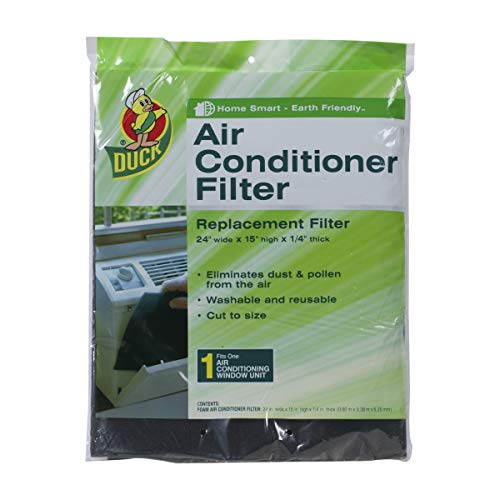
Duck Brand Replacement Air Conditioner Foam Filter, 24-Inch x 15-Inch x 1/4-Inch, 1285234
Check price on Amazon
AprilAire 410 Replacement Filter for AprilAire Whole House Air Purifiers - MERV 11, Clean Air & Dust, 16x25x4 Air Filter (Pack of 4)
Check price on Amazon