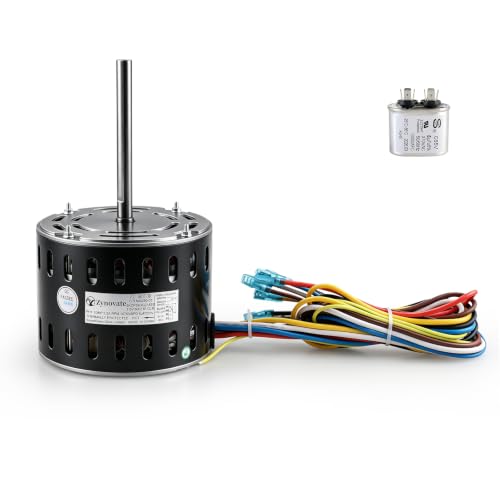
Air Handler Blower Motor Replacement
Your complete guide to understanding, diagnosing, and replacing a failing blower motor in your air handler — restoring proper airflow and indoor comfort.
Start DiagnosingWhy this guide matters: The blower motor is the heart of your air handler. When it fails, your entire HVAC system stops moving air — even if the compressor and condenser are working perfectly. This guide walks you through symptoms, motor types, replacement steps, and decision factors so you can move forward with confidence.
What Is an Air Handler Blower Motor?
An air handler unit is the indoor component of a split HVAC system. It houses the evaporator coil, the air filter, and — most importantly — the blower motor. The blower motor spins a fan wheel (often called a squirrel-cage blower) that pushes conditioned air through the ductwork and into your living spaces.
Without a functioning blower motor, the system cannot distribute cool or warm air regardless of how well the rest of the equipment performs. This is why blower motor issues are among the most common reasons homeowners call for air handler repair.
Blower motors in residential air handlers typically fall into two categories: PSC (Permanent Split Capacitor) motors and ECM (Electronically Commutated Motor) motors. Each has distinct characteristics, failure patterns, and replacement considerations.
Signs You Need Blower Motor Replacement
Recognizing the warning signs early can prevent secondary damage to your system. Watch for these indicators:
Weak or No Airflow
Vents feel barely open, or no air moves at all. This is the most direct symptom of a failing blower motor.
Loud Humming or Grinding
A motor that hums but doesn't spin, or produces grinding noises, often indicates seized bearings or a failed capacitor.
Burning Smell
An overheating motor or burnt wiring can produce a distinct electrical burning odor. Turn off the system immediately if detected.
Frequent Tripping Breaker
A motor drawing excessive current may trip the circuit breaker repeatedly. This signals internal electrical failure.
System Runs but No Cooling
The outdoor unit runs, but the indoor fan doesn't move air. This can mimic a system not cooling issue.
Motor Won't Start
A capacitor failure or motor winding failure may prevent the motor from starting altogether, leaving the fan stationary.
PSC vs ECM Blower Motors: What's the Difference?
Before ordering a replacement, you need to know which motor type your air handler uses. The two main types behave differently and have different replacement implications.
| Feature | PSC Motor | ECM Motor |
|---|---|---|
| Tier | Entry-level / conventional | Mid-range to high-end tier |
| Efficiency | Lower efficiency | High efficiency |
| Speed Control | Fixed speeds (via taps) | Variable / programmable |
| Complexity | Simple, fewer electronics | Complex, integrated controls |
| Replacement Approach | Direct replacement of same specs | Often requires matching module or OEM part |
| Best For | Older systems, straightforward swaps | Modern systems, efficiency-focused homes |
ECM motors are increasingly common in newer air handlers because they deliver better efficiency and quieter operation. However, ECM replacement often means matching the exact motor module — generic aftermarket units may not integrate properly with the system's control board.
Blower Motor Replacement: Step-by-Step
Replacing a blower motor is a job many homeowners can handle with basic tools and careful attention to safety. Here's the general process used by professionals:
- Turn off all power. Shut off the HVAC system at the thermostat, then switch off the dedicated breaker at your electrical panel. Confirm power is off with a non-contact voltage tester.
- Remove the access panel. Take off the air handler's blower compartment panel. In many units, this is a screw-on panel; in others, it may be a slide-out assembly.
- Disconnect the wiring. Take a photo of the wiring connections before disconnecting. Label the wires if needed — the replacement motor must be wired identically.
- Remove the blower assembly. Depending on the unit, the blower motor and fan wheel may come out as a single assembly or require separating the motor from the wheel housing.
- Extract the old motor. Loosen the mounting screws or bolts. Note the orientation and mounting position so the new motor fits the same way.
- Install the new motor. Mount the replacement motor in the same position. If replacing only the motor (not the wheel), ensure the fan wheel is properly aligned and secured to the shaft.
- Reconnect wiring. Match the connections exactly as recorded. For PSC motors, confirm the speed tap selection matches the original. For ECM motors, plug in the module connector carefully.
- Reassemble and test. Reinstall the blower assembly and access panel. Restore power and run the system through a full cycle — cooling and heating — to confirm proper airflow and operation.
Should You Repair or Replace the Blower Motor?
Not every blower motor issue requires a full replacement. Some problems — like a failed capacitor, loose wiring, or a stuck fan wheel — can be fixed for far less than a new motor. However, certain conditions strongly favor replacement:
- Motor age: PSC motors typically last 10–15 years; ECM motors can last 12–20 years. If the motor is near the end of its expected life, replacement is the smarter move.
- Seized bearings: If the shaft won't spin freely by hand, internal bearing failure has occurred — replacement is necessary.
- Burned windings: A burning smell or visible scorching indicates internal motor failure.
- Repeated capacitor failures: If capacitors keep failing, the motor itself may be drawing excessive current and should be replaced.
- ECM module failure: If the ECM control module has failed, it's often more practical to replace the complete motor-module assembly.
If you're unsure whether a repair is viable, a technician can test the motor's windings, capacitor, and amp draw to give you a definitive answer. Many homeowners in this research phase find it helpful to compare repair and replacement options before committing. For those considering a broader system evaluation, exploring air conditioning service and repair options can clarify the path forward.
How to Choose the Right Replacement Motor
Selecting the correct motor is critical. The wrong motor can cause poor airflow, premature failure, or control board damage. Use these criteria when sourcing a replacement:
- Horsepower and speed: Match the original motor's horsepower rating and number of speeds. For PSC motors, the speed tap wiring must match the original configuration.
- Voltage and phase: Residential air handlers typically use 120V or 240V single-phase motors. Verify before ordering.
- Frame and mounting: The motor's frame size, shaft diameter, and mounting hole pattern must match the blower housing.
- Rotation direction: Blower motors are either clockwise or counterclockwise rotation (viewed from the shaft end). The wrong rotation will push air the wrong way.
- OEM vs aftermarket: OEM motors guarantee compatibility. Aftermarket cross-references can work, but verify the specifications carefully.
For ECM motors, the motor and control module are often sold as a matched pair. Replacing only the motor without the module may not work — always confirm whether your replacement is a complete assembly or motor-only.
Need Professional Help?
If you're not confident performing the replacement yourself, connect with a qualified HVAC technician in your area.
Explore Repair OptionsExtending the Life of Your Blower Motor
A well-maintained blower motor can last significantly longer. Follow these practices to protect your investment:
- Replace air filters regularly. A clogged filter forces the motor to work harder, increasing heat and wear. Check filters monthly during peak seasons.
- Keep the blower wheel clean. Dust buildup on the fan wheel unbalances it and stresses the motor bearings. Clean the wheel during annual maintenance.
- Schedule annual HVAC tune-ups. A professional air conditioning unit tune-up includes checking motor amp draw, lubrication (where applicable), and capacitor health.
- Listen for changes. Early detection of unusual noises or reduced airflow allows you to address issues before they become failures.
- Ensure proper duct design. Excessive static pressure from undersized or restrictive ductwork forces the blower motor to work harder than designed. If you suspect duct issues, a professional air duct inspection can identify restrictions.
Frequently Asked Questions
How long does a blower motor replacement take?
For a straightforward PSC motor replacement, a technician can typically complete the job in 1–2 hours. ECM motor replacements or units with difficult access may take 2–4 hours. DIY replacement by an experienced homeowner usually takes 2–3 hours.
Can I replace a blower motor myself?
Yes, many homeowners with basic mechanical and electrical skills successfully replace PSC blower motors. However, ECM motors and variable-speed systems involve more complex electronics. If you're not comfortable working with wiring and electrical safety, hiring a professional is the safer choice.
What causes a blower motor to fail?
Common causes include worn bearings, capacitor failure, electrical winding burnout, dirty blower wheels causing imbalance, and restricted airflow from clogged filters. Age-related wear is the most common factor overall.
Will a new blower motor improve airflow?
If the old motor was failing or operating below spec, a new motor will restore the airflow the system was designed to deliver. However, if airflow problems stem from duct restrictions or an undersized return, a new motor alone may not solve the issue.
How do I know if my blower motor is ECM or PSC?
Check the motor's label — ECM motors typically have an integrated control module and more wires (including low-voltage communication wires). PSC motors usually have three or four speed taps. Your air handler's model number can also confirm the original motor type.
Is it normal for a blower motor to get hot?
Motors do generate heat during operation, but excessive heat — hot enough to be uncomfortable to touch or producing a burning smell — indicates a problem. Overheating is a common precursor to motor failure and should be investigated promptly.
Blower motor replacement is one of the most impactful repairs you can make to restore comfort in your home. By understanding the symptoms, motor types, and replacement process, you can make an informed decision — whether you choose to tackle the job yourself or bring in a professional. For broader system concerns, learning about air conditioning solutions can help you evaluate whether a targeted repair or a more comprehensive approach is right for your situation.