Air Handler Filters: The Complete Guide
Everything you need to know about choosing, replacing, and maintaining air handler filters for cleaner air and a more efficient HVAC system.
Start ReadingWhy Air Handler Filters Matter: Your air handler filter is the first line of defense for your HVAC system and your indoor air quality. A well-chosen filter traps dust, pollen, pet dander, and other particles before they reach your blower motor and evaporator coil. The right filter protects your equipment, reduces energy consumption, and creates a healthier living space. This guide walks you through filter types, MERV ratings, sizing, and maintenance so you can make a confident, informed decision.
What Is an Air Handler Filter?
An air handler filter is a removable filtration component installed in the return-air side of an air handler or furnace. As air is drawn back from your living space, it passes through the filter before entering the blower and heat exchanger or evaporator coil. This capture process keeps the internal components clean and ensures the air delivered back into your rooms is free of larger particulates.
Air handler filters come in many shapes and sizes, but they fall into two broad categories: disposable and reusable. Disposable filters are replaced every one to three months, while reusable filters can be washed and reinstalled. The filter you choose affects airflow, system efficiency, and indoor air quality — which is why understanding filter specifications is essential before you buy.
How to Choose the Right Air Handler Filter
Choosing a filter is not simply a matter of matching dimensions. You need to balance filtration performance, airflow resistance, and your system's design. Below are the key factors to evaluate.
1. MERV Rating
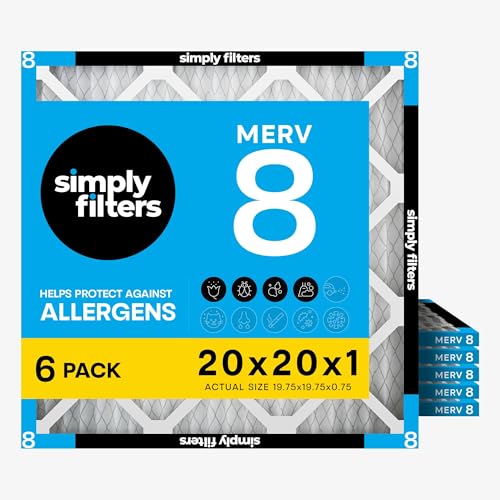
The Minimum Efficiency Reporting Value (MERV) scale rates how effectively a filter captures particles from 0.3 to 10 microns. Higher MERV means better capture but also higher airflow resistance. Most residential systems are designed for MERV 8 to MERV 13 filters.
| MERV Rating | Particle Capture | Best For | Tier |
|---|---|---|---|
| MERV 1–4 | Large dust, lint, pollen | Basic equipment protection | Essential |
| MERV 5–8 | Mold spores, pet dander, dust mites | Standard residential use | Essential |
| MERV 9–12 | Fine dust, auto emissions, smoke | Improved indoor air quality | Balanced |
| MERV 13–16 | Bacteria, virus carriers, ultra-fine particles | Allergy and respiratory sensitivity | Premium |
| MERV 17–20 | HEPA-level capture | Cleanrooms, hospitals | Top-Tier |
Practical tip: Do not install a higher-MERV filter than your system is designed to handle. Excessive airflow resistance can cause your blower motor to work harder, reduce cooling capacity, and even freeze the evaporator coil. If you want premium filtration, consult an HVAC technician about a filter upgrade or a media cabinet retrofit.
2. Filter Thickness
Residential air handler filters typically come in 1-inch, 2-inch, 4-inch, and 5-inch thicknesses. Thicker filters have more surface area, which means they can capture more particles while maintaining lower airflow resistance. A 4-inch or 5-inch media filter is a sound long-term investment for households that want high filtration without stressing the blower.
3. Filter Type
| Filter Type | Description | Best For | Tier |
|---|---|---|---|
| Fiberglass | Spun glass fibers, minimal filtration | Basic equipment protection | Essential |
| Pleated synthetic | Polyester or cotton blend, pleated for surface area | Most residential systems | Essential |
| Washable reusable | Metal or synthetic mesh, rinse and reinstall | Budget-conscious households | Essential |
| Media cabinet filter | Deep-pleat, 4–5 inch thick, high dust holding | Long-term filtration upgrades | Balanced |
| Electrostatic | Self-charging fibers attract particles | Allergy-sensitive homes | Premium |
| HEPA | True HEPA capture at 99.97% of 0.3-micron particles | Specialty air handler systems | Top-Tier |
4. Correct Sizing
Filter dimensions must match your filter slot exactly. Measure the length, width, and thickness of the existing filter or the filter rack opening. A filter that is too small will allow unfiltered air to bypass the filter, while an oversized filter may not seat properly and can bend or collapse. Always verify nominal size versus actual size — a "20x25x1" nominal filter may measure slightly smaller to fit standard racks.
5. Airflow and System Compatibility
Every HVAC system has a maximum allowable static pressure. High-MERV, dense filters can push static pressure beyond the blower's design limit. If you are upgrading from a fiberglass filter to a MERV 13 pleated filter, monitor for reduced airflow, longer run times, or unusual noise. A qualified technician can measure static pressure and confirm whether your system can accommodate a higher-efficiency filter.
Air Handler Filter Maintenance
Regular filter maintenance is one of the simplest ways to extend the life of your HVAC system and keep energy use in check. Follow these best practices:
- Check monthly: Inspect the filter every 30 days during peak heating and cooling seasons. Hold it up to the light — if you cannot see light through it, replace it.
- Replace every 1–3 months: Standard 1-inch filters typically need replacement every one to three months. Thicker media filters may last six to twelve months.
- Set a reminder: Use a calendar reminder or a smart thermostat filter-change alert to stay on schedule.
- Write the install date: Mark the replacement date on the filter frame edge with a marker so you always know when it was last changed.
- Clean reusable filters every 1–3 months: Rinse with lukewarm water, let them dry completely before reinstalling, and never use harsh chemicals.
- Inspect during seasonal tune-ups: Have your HVAC technician check the filter rack for gaps, bypass, and proper seating during annual service visits.
Signs You Need a New Air Handler Filter
Do not wait for a complete breakdown. Watch for these warning signs that your filter is overdue for replacement:
| Sign | What It Means |
|---|---|
| Visible dust buildup on the filter surface | The filter is saturated and no longer capturing particles effectively. |
| Reduced airflow from supply registers | A clogged filter is restricting airflow through the system. |
| Longer heating or cooling cycles | The system is working harder to move air, raising energy use. |
| Higher indoor dust levels | Particles are bypassing or passing through a saturated filter. |
| Musty or unpleasant odors | Trapped moisture and debris may be encouraging microbial growth. |
| Frozen evaporator coil | Restricted airflow from a dirty filter can cause coil icing. |
Common Air Handler Filter Mistakes to Avoid
- Using the wrong size: Always double-check dimensions before installing a replacement filter.
- Installing the filter backward: Pleated filters have an airflow arrow — make sure it points toward the blower.
- Choosing too high a MERV: Match the filter to your system's airflow capacity, not just to the highest rating available.
- Skipping replacements: A dirty filter is the most common cause of preventable HVAC failures.
- Reusing disposable filters: Disposable filters are not designed to be washed or reused.
- Ignoring filter rack gaps: Air bypass around the filter defeats the purpose of filtration entirely.
Ready to Upgrade Your Air Handler Filter?
Browse our curated selection of air handler filters below. Compare MERV ratings, sizes, and filter types to find the right fit for your HVAC system.
View Recommended FiltersFrequently Asked Questions
How often should I replace my air handler filter?
Most standard 1-inch filters should be replaced every one to three months. If you have pets, allergies, or a dusty environment, check the filter monthly and replace as needed. Thicker 4-inch or 5-inch media filters can last six to twelve months depending on the MERV rating and household conditions.
What MERV rating is best for a home air handler?
MERV 8 to MERV 13 is the sweet spot for most residential systems. MERV 8 provides solid equipment protection and basic air quality improvement. MERV 11–13 offers better capture of fine particles and allergens while remaining compatible with most modern blowers. Always confirm your system's maximum static pressure rating before upgrading.
Can I use a higher-MERV filter to improve indoor air quality?
Yes, but with caution. A higher-MERV filter captures more particles but also increases airflow resistance. If your system is not designed for high-MERV filtration, you may experience reduced airflow, longer run times, or coil freezing. Consider a media cabinet retrofit or consult an HVAC technician before making a significant MERV jump.
What is the difference between nominal and actual filter size?
Nominal size is the rounded dimension printed on the filter label (e.g., 20x25x1), while actual size is the true measured dimension (e.g., 19.5 x 24.5 x 0.75). Always measure the filter slot and check the actual size on the filter packaging to ensure a proper fit.
Are washable air handler filters a good choice?
Washable reusable filters are a practical option for households that want to reduce waste and maintenance frequency. They typically provide MERV 4–8 filtration and require rinsing every one to three months. They are a solid choice for basic equipment protection, but they generally do not match the filtration performance of high-MERV pleated filters.
Which way does the airflow arrow point on a filter?
The airflow arrow on a pleated filter should point in the direction of airflow — toward the blower motor and away from the return duct. If you install the filter backward, the pleats can collapse and filtration efficiency drops significantly.
Related HVAC Guides
Explore more of our in-depth resources to keep your system running efficiently: learn about air duct cleaning companies, understand air conditioning cleaning service options, or read our guide on air conditioning tune-up service. If you are considering a system upgrade, our air handler filter guide pairs well with our central AC troubleshooting guide and our blower motor replacement resource.