
Air Unit Filter Guide: The Key to Clean Air and Efficient Cooling
Understand filter types, MERV ratings, replacement schedules, and how the right air unit filter protects your HVAC system and improves indoor air quality
EXPLORE FILTER TYPESWhy the air unit filter matters most: It is the single component that protects your entire HVAC system from dust, debris, and biological buildup. A well-chosen filter improves indoor air quality, extends equipment lifespan, and maintains efficient airflow. This guide walks you through everything you need to make an informed selection.
What Is an Air Unit Filter?
An air unit filter is a component installed in your HVAC system — typically at the return air grille or inside the air handler — that captures airborne particles before air passes over the evaporator coil and blower assembly. It serves two critical functions: protecting the equipment from contamination and improving the quality of air circulating through your home.
Filters are rated using the MERV (Minimum Efficiency Reporting Value) scale, which ranges from 1 to 20. Higher MERV ratings capture smaller particles but also create more airflow resistance. The ideal filter balances particulate capture with adequate airflow to your system. Understanding this trade-off is the foundation of smart filter selection.
Air Unit Filter Types: Which One Fits Your System?
Fiberglass Filter
Entry-level disposable
Pleated Filter
Mid-range disposable
Washable Filter
Reusable essential tier
HEPA Filter
Premium high-capture
Electrostatic Filter
Mid-tier charged media
Carbon Filter
Odor & VOC control
Media Filter
High-end tier cabinet
UV & PCO Filter
Professional-grade
Filter Type Breakdown
Fiberglass filters are the entry-level option found in many builder-grade installations. They capture large debris and protect equipment but offer minimal fine particle capture — typically MERV 1 to MERV 4. They are a solid choice for basic equipment protection where air quality is not a concern.
Pleated filters are the most popular mid-range disposable option. Their folded media increases surface area, allowing higher MERV ratings — commonly MERV 8 to MERV 13 — with reasonable airflow. This is the balanced tier most households should consider first.
Washable filters use a reusable frame and synthetic mesh, typically rated MERV 1 to MERV 6. They are a practical essential-tier solution for basic debris protection and reduce waste, but they require regular cleaning and offer limited allergen capture.
HEPA filters capture 99.97% of particles at 0.3 microns, making them a premium high-capture choice. However, true HEPA media is rarely used in standard residential HVAC systems due to high airflow resistance. Bypass HEPA systems or stand-alone air purification systems are better approaches for whole-home high-efficiency filtration.
Electrostatic filters use charged fibers to attract particles. They are a mid-tier option available in both washable and disposable formats, offering better fine-particle capture than basic fiberglass without the airflow penalty of high-MERV pleated media.
Carbon filters are a balanced-tier addition for odor and volatile organic compound (VOC) control. They are often combined with pleated media in a single filter frame and are useful in homes with cooking odors, pets, or chemical sensitivities.
Media filter cabinets represent a high-end tier upgrade with a 4 to 5 inch thick pleated media. The greater depth provides more surface area, allowing MERV 11 to MERV 16 filtration with lower pressure drop and longer replacement intervals — often 6 to 12 months.
UV and photocatalytic oxidation (PCO) systems are professional-grade add-ons that target biological contaminants and VOCs. They are installed in conjunction with a media filter and are not a replacement for particulate filtration.
Understanding MERV Ratings
The MERV scale is the industry standard for comparing filter performance. Each rating corresponds to the percentage of particles captured in specific size ranges. Here is how the tiers map to real-world use:
| MERV Range | Tier | Best For |
|---|---|---|
| MERV 1 – 4 | Entry-level | Basic equipment protection, dust and lint capture |
| MERV 5 – 8 | Essential tier | Standard residential use, pollen and mold spore capture |
| MERV 9 – 12 | Mid-range | Allergy-sensitive households, fine dust and pet dander |
| MERV 13 – 16 | Premium | Superior fine particle capture, media cabinets, high-efficiency systems |
| MERV 17 – 20 | Professional-grade | Cleanrooms, hospitals, specialized air purification systems |
For most homes, a MERV 8 to MERV 11 pleated filter delivers the best balance of air quality and system compatibility. Homes with allergy sufferers may benefit from MERV 13, provided the blower motor and ductwork can handle the additional resistance. Always confirm the maximum MERV rating recommended by your HVAC manufacturer before upgrading.
How to Choose the Right Air Unit Filter
Selecting a filter is not simply a matter of buying the highest MERV rating available. The right choice depends on your system, your household, and your air quality goals. Use this framework:
- Check your system specifications. The air handler or furnace manual lists the maximum recommended MERV rating. Exceeding it can cause airflow problems, frozen coils, and blower strain. If you notice reduced airflow after upgrading, step back down.
- Measure the filter slot accurately. Filters are sold by nominal size (e.g., 20x25x1) but actual dimensions vary by manufacturer. Measure the opening and note depth — most slots accept 1-inch filters, but media cabinets use 4-inch or 5-inch media.
- Match filtration to household needs. A single occupant with no allergies may be well served by MERV 8. A household with pets, allergy sufferers, or young children benefits from MERV 11 to MERV 13. Homes near busy roads or with smokers should prioritize higher fine-particle capture.
- Consider replacement frequency. Thicker media filters last longer and are a worthwhile investment for homeowners who prefer less frequent maintenance. Standard 1-inch filters require more frequent changes.
- Verify compatibility with your air handler. If you have a variable-speed blower, a high-MERV filter may be fine, but constant-torque and PSC motors are more sensitive to pressure drop. Consult the system documentation before making a significant jump in MERV rating.
For households dealing with persistent indoor air quality concerns, combining a quality HVAC filter with a dedicated air purifier or a whole-home air purification system often delivers better results than relying on the HVAC filter alone.
Air Filter Replacement Schedule
Filter replacement is the most important maintenance task for any HVAC system. A clogged filter restricts airflow, reduces cooling efficiency, and places stress on the blower motor and compressor. The following schedule serves as a general guideline:
| Household Condition | Replacement Interval |
|---|---|
| No pets, low occupancy, low dust | Every 90 days |
| Average home with 1–2 pets | Every 60 days |
| Multiple pets, allergy sufferers, or high dust | Every 30–45 days |
| 4-inch or 5-inch media cabinet filter | Every 6–12 months |
| Washable filter | Clean every 30 days |
During peak cooling or heating season, filters load faster due to increased runtime. Check the filter monthly during summer and winter, and replace or clean as needed. If you notice reduced airflow, uneven cooling, or a musty odor, inspect the filter immediately — these are common warning signs that the filter is overdue. For a broader overview of cooling performance issues, see our guide on air blowing but not cold in the house.
Filter Maintenance Tips for Long-Term Performance
- Date your filters. Write the installation date on the filter frame with a marker. This removes guesswork from replacement scheduling.
- Keep spares on hand. Ordering filters in multi-packs ensures you always have a replacement ready and avoids running a clogged filter while waiting for delivery.
- Seal the filter slot. Gaps around the filter allow unfiltered air to bypass the media. Check that the slot is properly sized and consider weatherstripping if air leaks are present.
- Vacuum return grilles. Dust buildup on the grille and surrounding frame can enter the airstream. Wipe down or vacuum return grilles when changing the filter.
- Schedule annual HVAC service. A technician will inspect the filter slot, blower wheel, and evaporator coil for contamination that a filter change alone cannot address. See our guide on annual central air conditioner maintenance for a full checklist.
- Watch for filter bypass. If the filter appears clean after months of use, unfiltered air may be bypassing it through gaps. Have the filter housing inspected.
Signs Your Air Unit Filter Needs Attention
Recognizing the warning signs of a clogged or failing filter helps you avoid system damage and energy waste:
- Visible dust on the filter face. A grey or brown coating indicates the filter has loaded to capacity.
- Reduced airflow from vents. Weak airflow is often the first symptom of a restricted filter. Compare against our guide on air not blowing through vents in house.
- Increased energy consumption. A clogged filter forces the blower to run harder, raising electricity usage. If your energy bills climb unexpectedly, check the filter first.
- Frozen evaporator coils. Restricted airflow drops coil temperature below freezing, causing ice formation. This can lead to compressor damage if left unresolved.
- Musty or dusty odors. A saturated filter can harbor mold and bacteria, releasing odors into the airstream. Persistent odors may warrant professional duct inspection.
- Excess dust on surfaces. If dust settles quickly after cleaning, the filter is no longer capturing particles effectively.
Common Air Filter Mistakes to Avoid
- Installing the filter backward. Most pleated filters have an airflow arrow that must point toward the blower. Reversing it reduces capture efficiency and can damage the media.
- Using the wrong size. A filter that does not fit snugly allows air bypass. Always match the exact dimensions of the slot.
- Over-upgrading MERV. A filter rated above what the blower can handle restricts airflow and can damage the system. Check manufacturer guidance first.
- Running without a filter. Operating an HVAC system without a filter allows dust to coat the evaporator coil and blower wheel, leading to costly repairs.
- Neglecting the outdoor unit. While the indoor filter protects the air handler, the outdoor condenser coil also needs periodic cleaning. Both components work together for efficient cooling.
Air Filters and Indoor Air Quality
The air unit filter is the frontline defense for indoor air quality in most homes. While it is not a substitute for a dedicated air purification system, a properly selected and maintained filter can meaningfully reduce airborne dust, pollen, mold spores, and pet dander. For households with allergy or asthma sufferers, upgrading to a MERV 11 to MERV 13 filter is a sound mid-range improvement that captures fine particulates without overburdening standard equipment.
For comprehensive whole-home air treatment, a whole-home air purification system combined with a high-quality filter provides layered protection. Stand-alone air purifiers are a practical complement for individual rooms, particularly bedrooms. Homeowners concerned about duct contamination should also consider professional duct cleaning — see our guide on finding air vent cleaners in my area.
Recommended Air Unit Filters & Filtration Solutions
⚠️ AFFILIATE DISCLOSURE: This website contains affiliate links. As an Amazon Associate, we earn from qualifying purchases. If you make a purchase through these links, we may receive a small commission at no additional cost to you. Read our full affiliate policy.

Filtrete 20x30x1 Air Filter, MERV 5, MPR 300, 6 HVAC Filters | Basic Dust & Lint, 3-Month AC/Furnace Filters, Cleaner Air, Reliable Airflow, (Act. Size 19.81x29.81x0.81 in)
Check price on Amazon
VOOPNU Air Purifiers for Home, High Efficiency Filter Up to 1076 Ft², White | for Pet Hair, Odors, Pollen, Smoke, Compact Air Cleaner with 3 Speeds, Timer, Aroma 22 dB Quiet 360°Intake, DH-JH12
Check price on Amazon
Amazon Basics 16x20x1 Air Filter 6-Pack, MERV 8 AC Furnace Filters, Allergen Control , Removes Dust, Lint and Pollen, Electrostatic (Actual Size: 15.75" x 19.75" x 0.75")
Check price on Amazon
Aerostar Air Filter 20x20x1 MERV 8 AC Filter, HVAC, Furnace Filter, 6 Pack | ACTUAL SIZE (19.75 x 19.75 x 0.75) AC Filter, HVAC, Furnace Filter Captures Dust, Lint & Pollen MERV 8 (MPR 600)
Check price on Amazon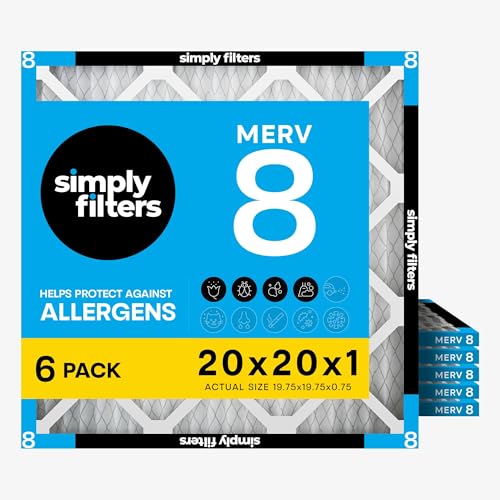
Simply 20x20x1 Air Filter, Merv 8, MPR 600, 6 Pack, Furnace Air Filter for HVAC (Actual Size: 19.75"x19.75"x0.75") DUST, Pet, & Allergy Control
Check price on Amazon
Simply 16x25x1 Air Filter, MERV 8, 6 Pack, For Home AC Furnace & HVAC (Actual Size: 15.75"x24.75"x0.75") DUST, Pet, & Allergy Control
Check price on Amazon
Filtrete 20x25x1 Air Filter, MERV 5, MPR 300, 6 HVAC Filters | Basic Dust & Lint, 3-Month AC/Furnace Filters, Cleaner Air, Reliable Airflow, (Act. Size 19.69x24.69x0.81 in)
Check price on Amazon
MOOKA Air Purifier for Home Large Room up to 2200 Ft², H13 True HEPA, PR1 | Pet Mode Air purifier with 26db Quiet HEPA Sleep Mode, AQI Display, Air Cleaner for Pets Hair Dander, Smoke, Odors, Pollen
Check price on AmazonFrequently Asked Questions About Air Unit Filters
How often should I replace my air unit filter?
Most filters need replacement every 30 to 90 days depending on filter type and household conditions. Basic fiberglass filters should be changed monthly. Pleated filters typically last 60 to 90 days. Homes with pets, allergy sufferers, or high dust levels require more frequent changes — every 30 to 45 days. Thick media cabinet filters can last 6 to 12 months.
What MERV rating is best for a home air unit filter?
MERV 8 to MERV 13 is ideal for most residential systems. MERV 8 provides solid particle capture with low airflow resistance. MERV 11 to MERV 13 offers better filtration for allergy sufferers without overloading standard blower motors. Avoid MERV 16 and above in typical residential systems, as the airflow restriction can cause coil freezing and compressor strain.
Can a dirty air filter damage my AC unit?
Yes. A clogged filter restricts airflow, forcing the blower motor to work harder. This can lead to frozen evaporator coils, compressor strain, reduced cooling capacity, higher energy consumption, and premature system failure. Regular replacement is the simplest and most important preventive maintenance task for any HVAC system.
Are washable air unit filters as effective as disposable ones?
Washable filters are generally entry-level in filtration performance, typically equivalent to MERV 1 to MERV 6. They capture larger particles but allow smaller allergens to pass through. Disposable pleated filters offer better particulate capture and are preferred for allergy-sensitive households, though washable types are a solid choice for basic debris protection and reduced waste.
Which direction should the filter arrow face?
The arrow on the filter frame indicates the direction of airflow and should point toward the blower motor or air handler. In most installations, this means the arrow points away from the return duct and toward the equipment. Installing the filter backward reduces capture efficiency and can damage the media.
Can I use a high-MERV filter with any HVAC system?
Not always. High-MERV filters create more airflow resistance, which can strain blower motors not designed for the restriction. Always check the manufacturer's maximum recommended MERV rating. Variable-speed blowers handle higher MERV ratings better than constant-torque or PSC motors. If you notice reduced airflow after upgrading, step back to a lower MERV rating.
Ready to choose the right air unit filter? Review your system's MERV limit, measure your filter slot, and match filtration to your household needs. A well-chosen filter is a long-term investment in equipment reliability and indoor air quality. Explore our recommended filtration options above to find the right fit for your home.