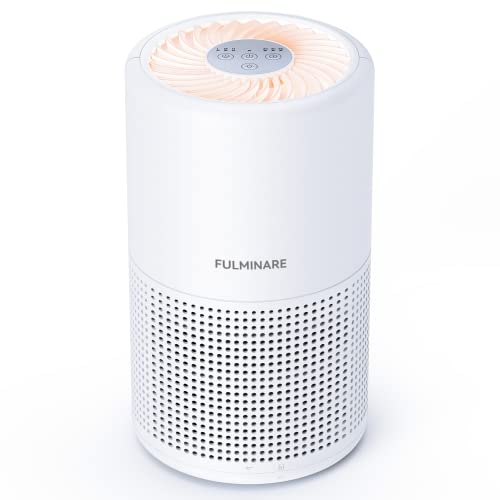
Air Purifier Buying Guide
Understand how air purifiers work, which filter technologies matter, how to size a unit by CADR and room volume, and how to match a purifier to allergens, pets, smoke, or everyday dust.
START WITH THE BASICSWho this guide is for: Shoppers in research mode who already know they want an air purifier but need clarity on filter types, sizing, noise, and long-term filter upkeep. Read through, compare trade-offs, then move to the recommended models below with realistic expectations.
What Is an Air Purifier?
An air purifier is a standalone appliance that pulls room air through one or more filters and returns cleaner air to the room. It does not cool or heat the space, and it does not replace ventilation. Its job is to reduce airborne particles and, in many models, odors and volatile organic compounds. The best units combine a pre-filter, a true HEPA filter, and an activated carbon layer, each targeting a different class of contaminant.
Air purifiers are most valuable in rooms where occupants spend a lot of time — bedrooms, home offices, living rooms, and nurseries. They work best when paired with source control: regular vacuuming, cleaning bedding, and limiting smoke or chemical sources. If your real concern is humidity or temperature, a purifier will not solve it; review what humidity level is good for a house and what humidity is supposed to be in your house before choosing an appliance.
Particle Removal
True HEPA filters capture dust, pollen, pet dander, mold spores, and many smoke particles.
Odor and VOCs
Activated carbon adsorbs cooking smells, pet odors, and some volatile organic compounds.
Air Changes per Hour
CADR and room volume together determine how many times per hour the air is filtered.
Continuous Operation
Purifiers work best when running continuously on a moderate speed, not at max only when needed.
Quiet Sleep Mode
Low-speed noise matters most in bedrooms, where the unit runs overnight.
Filter Replacement
HEPA filters are consumables; plan for regular replacement to maintain performance.
How an Air Purifier Works
Air is drawn in by a fan, passes through a pre-filter that catches hair and larger debris, then through a HEPA filter that traps fine particles, and finally through an activated carbon layer that adsorbs gases and odors. Some models add optional technologies such as ionizers, UV lamps, or photocatalytic oxidation. These are secondary features; the HEPA and carbon stages do the heavy lifting, and any add-on should never replace a true HEPA filter.
The effectiveness of the whole system depends on airflow and filtration together. A dense HEPA filter with a weak fan delivers clean air slowly; a strong fan without a real HEPA filter simply moves dirty air around. This is why CADR matters more than a marketing "coverage" number. It also parallels the logic behind proper HVAC airflow, which we cover in the ductwork design guide.
Filter Types and What They Actually Do
Every purifier is only as good as its filter stack. Compare the filter construction before anything else.
| Filter Stage | Targets | Notes |
|---|---|---|
| Pre-filter | Hair, lint, large dust | Extends HEPA life; should be washable or easy to vacuum |
| True HEPA | Dust, pollen, dander, mold spores, smoke particles | Look for "True HEPA" not "HEPA-type"; captures 99.97% at 0.3 microns |
| Activated carbon | Odors, cooking smells, some VOCs | Carbon weight matters; thin carbon layers are short-lived |
| Optional ionizer | Charged particles | Some models allow it to be turned off; avoid ozone generators |
| UV lamp | Microbes on the filter surface | Secondary feature; not a substitute for HEPA filtration |
Sizing an Air Purifier: CADR and Room Volume
CADR (Clean Air Delivery Rate) is the industry metric for how much clean air the unit delivers per minute, separately for smoke, dust, and pollen. Larger rooms need higher CADR. A useful rule of thumb: for a room of a given square footage, choose a purifier whose CADR for smoke is at least two-thirds of the room's square footage, and higher if you want multiple air changes per hour.
Room layout matters too. The purifier needs unobstructed airflow and should not be boxed into a corner behind furniture. For bedrooms and home offices, run the purifier continuously on low to medium speed. For living rooms where you may only run it during specific activities, choose a higher-CADR unit so it can clean the space more quickly. Our guide on air conditioning units for small spaces covers related sizing logic for compact rooms.
| Room Size | Recommended CADR Range (Smoke) | Typical Use |
|---|---|---|
| Small bedroom, nursery | Moderate CADR | Overnight continuous operation |
| Standard bedroom, home office | Mid CADR | All-day allergy relief |
| Living room, open plan | High CADR | Targeted use during cooking or smoke events |
| Whole-floor placement | Very high CADR | Airflow positioning between rooms |
Matching the Purifier to Your Actual Concern
Different concerns call for different priorities. Think about what you are actually trying to reduce, then let that guide the filter stack and CADR.
Allergies and Pollen
Prioritize true HEPA and higher CADR for pollen; run continuously during peak season.
Pet Dander
True HEPA plus a washable pre-filter; combine with vacuuming and grooming to reduce source load.
Smoke and Wildfire
High CADR for smoke and a substantial carbon layer; run on high during smoke events.
Cooking Odors
Carbon weight matters most; a thin carbon sheet will not keep up with continuous cooking.
Dust and Daily Maintenance
Mid-tier HEPA plus a solid pre-filter; consistency in runtime matters more than peak power.
Sleep Environment
Low-speed noise and a dimmable or off display are the deciding factors for bedroom use.
Noise, Energy, and Daily Operation
Air purifiers are designed to run continuously, so noise and energy use matter more than they might seem at the store. On low speed, most quality units are quiet enough for a bedroom. On high speed, noise can be intrusive; use that setting only when you need rapid cleanup, such as during cooking or a smoke event. Electrical draw is low compared with a compressor-based air conditioner, but a purifier running all day still adds up on the meter, so a unit with a proven low-speed efficiency is a worthwhile investment.
Placement affects perceived noise. Keep the unit off hard flooring where vibration can amplify, and avoid aiming the outlet directly at the bed or desk. If you are comparing the purifier to a cooling appliance in the same room, review the airflow guidance in bedroom air conditioner and home office AC so both devices work together.
Maintenance and Filter Replacement
An air purifier's performance is only as good as its filter condition. Most manufacturers recommend replacing the HEPA filter every six to twelve months, sooner in homes with pets, smokers, or heavy dust. The pre-filter should be vacuumed or rinsed monthly. If you notice a drop in airflow, a persistent odor, or a filter indicator light, change the filter rather than running the unit harder.
- Vacuum or rinse the pre-filter monthly
- Replace true HEPA filters per manufacturer interval
- Check carbon layer for saturation if odors persist
- Wipe the exterior and sensor window with a dry cloth
- Store replacement filters sealed until needed
Seasonal routines help keep the unit on schedule. The same discipline appears in the seasonal AC checklist and the broader AC maintenance guide; both appliances reward consistent upkeep.
What an Air Purifier Will Not Do
It is worth being clear about the limits. An air purifier does not ventilate a room, does not lower temperature, and does not replace humidity management. It also does not remove settled dust from surfaces; vacuuming and cleaning still matter. In humid homes, the purifier may run fine but the room can still feel clammy, which points back to humidity control. Review humidity level guidance before assuming the purifier is the missing piece.
For spaces where cooling is the priority, compare dedicated cooling options such as 8,000 BTU air conditioning unit and portable AC that does not require venting. Some modern AC units include a purifying filter stage, but a dedicated purifier generally delivers higher CADR for particles than a combination unit.
A Practical Buying Checklist
- Define the target. Allergens, pets, smoke, odor, or general dust — each points to a different priority.
- Confirm true HEPA. Verify the filter is certified HEPA, not "HEPA-type."
- Check the carbon layer. For odor concerns, carbon weight matters more than marketing language.
- Match CADR to room size. Use smoke CADR as the reference and aim for at least two-thirds of room square footage.
- Confirm low-speed noise. Especially for bedrooms and shared spaces.
- Plan filter replacement. Confirm filters are available and the replacement interval is reasonable.
- Place for airflow. Keep the intake and outlet unobstructed and avoid corner placement.
Frequently Asked Questions
What does an air purifier actually remove from the air?
A quality air purifier with a true HEPA filter captures at least 99.97 percent of airborne particles down to 0.3 microns, including dust, pollen, pet dander, mold spores, and many smoke particles. An activated carbon layer additionally adsorbs odors and volatile organic compounds.
What is CADR and why does it matter?
CADR stands for Clean Air Delivery Rate. It measures how much filtered air the unit delivers per minute, separately for smoke, dust, and pollen. A higher CADR for your room size means more air exchanges and faster particle removal.
How do I size an air purifier for my room?
Match the purifier's advertised room size to your actual room, then aim for a CADR that allows at least four air changes per hour in that space. For bedrooms and living rooms, a CADR roughly two-thirds of the room's square footage is a common starting point for smoke.
Do air purifiers help with pet allergies?
Yes. A true HEPA filter captures pet dander and many allergen-carrying particles. For pet households, run the purifier continuously on a medium speed and combine it with regular vacuuming and grooming to reduce the source load.
How often should I replace the filter?
Most manufacturers recommend replacing the HEPA filter every six to twelve months depending on runtime, room conditions, and household activity. Washable pre-filters should be cleaned monthly. A clogged filter reduces airflow and CADR even if the fan still runs.
Ready to Compare Air Purifier Options?
Browse the recommended air purifiers below, filtered for HEPA filtration and room coverage, and check availability on the retailer page.
VIEW RECOMMENDED MODELS