Apartment AC Solutions: Smart Cooling for Renters and Small Spaces
Discover practical air conditioning options designed for apartments, rentals, and compact living spaces. Learn how to cool your apartment efficiently without major renovations or permanent installations.
EXPLORE SOLUTIONSWhy Apartment Cooling Is Different: Apartment living comes with unique cooling challenges — limited window access, landlord restrictions, shared walls, and smaller square footage. This guide focuses on solutions that work within those constraints, helping renters and owners find the right balance of comfort, efficiency, and practicality.
Cooling an apartment isn't simply a matter of picking the largest unit available. In fact, choosing an oversized air conditioner can lead to short cycling, poor humidity control, and higher energy consumption. The right approach starts with understanding your space, your lease terms, and the installation options available to you. Whether you're dealing with a studio apartment, a one-bedroom rental, or a multi-room unit, there is a solution tailored to your situation.
This guide walks you through the most effective apartment AC solutions, compares their strengths and limitations, and helps you match the right system to your specific living situation. We'll cover window units, portable air conditioners, ductless mini-splits, and a few creative approaches for spaces with unusual configurations.
Understanding Your Apartment's Cooling Needs
Before shopping for any air conditioning system, take stock of your apartment's characteristics. The cooling capacity you need depends on several factors, and getting this right is the foundation of an effective solution.
Square footage is the starting point, but it's not the whole story. A 500-square-foot apartment with large south-facing windows will require more cooling capacity than an identical unit with shaded windows. Similarly, a top-floor apartment absorbs more heat from the roof, while a basement unit stays naturally cooler. Ceiling height, insulation quality, and the number of occupants also influence the cooling load.
For a precise estimate, use a BTU calculator by room size to match cooling capacity to your apartment's dimensions. As a general guideline, apartments under 300 square feet typically need 5,000 to 6,000 BTU, units between 300 and 550 square feet require 8,000 to 10,000 BTU, and larger apartments in the 550 to 800 square foot range benefit from 12,000 to 14,000 BTU systems.
Also consider your lease agreement. Many rental agreements restrict permanent modifications, which rules out central air installation or major ductwork. This makes portable and window-based solutions particularly valuable for renters. If you're unsure about what's permitted, check with your landlord before committing to any installation.
Top AC Solutions for Apartments
The following solutions represent the most practical and widely used approaches for apartment cooling. Each has distinct advantages depending on your space, budget tier, and installation flexibility.
Window Air Conditioners
The most common apartment cooling solution. Window units install directly into a window frame and cool a single room effectively. They're available across all market tiers, from essential entry-level models to high-end tier units with inverter compressors and smart controls.
- Straightforward installation in most double-hung windows
- No permanent modifications required in many cases
- Available in capacities from 5,000 to 24,000 BTU
- Some buildings restrict window unit placement — check first
Portable Air Conditioners
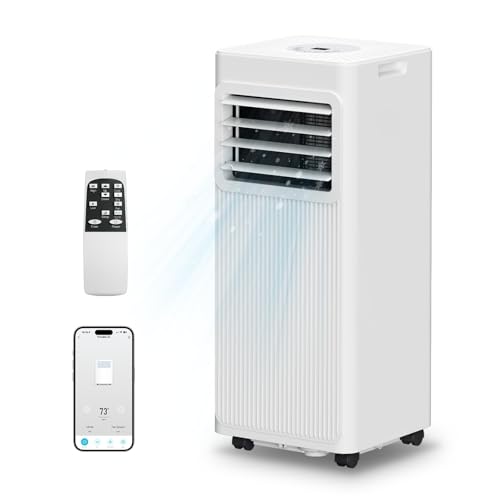
Portable units offer the greatest flexibility for renters. They roll from room to room and require only a window or sliding door for exhaust venting. This makes them ideal for apartments where window units aren't permitted or where you want to cool different spaces throughout the day.
- No permanent installation — move between rooms freely
- Work with casement windows and sliding doors using vent kits
- Single-hose and dual-hose configurations available
- Slightly less efficient than window units of similar capacity
Ductless Mini-Split Systems
For apartment owners or renters with landlord approval, ductless mini-splits deliver the best combination of efficiency, quiet operation, and zone control. A small indoor air handler mounts on a wall or ceiling, connected to an outdoor compressor via a narrow conduit.
- Highest energy efficiency among apartment solutions
- Whisper-quiet indoor operation
- Individual zone control for each room
- Requires professional installation and landlord approval
Through-the-Wall AC Units
Some apartment buildings come pre-equipped with wall sleeves for through-the-wall air conditioners. If your unit has an existing sleeve, this is often the cleanest and most secure installation option — the unit sits flush with the wall and doesn't obstruct your window.
- Uses existing wall sleeve when available
- Doesn't block window access or views
- More secure than window-mounted units
- Limited to apartments with pre-existing sleeves
Smart Cooling & Ventilation Strategies
Sometimes the best apartment AC solution combines a smaller cooling unit with smart airflow management. Strategically placed fans, optimized vent usage, and programmable schedules can dramatically improve comfort without increasing cooling capacity.
- Use ceiling or floor fans to distribute cooled air
- Close doors to concentrate cooling in occupied rooms
- Programmable thermostats optimize run times
- Consider an air purifier to improve indoor air quality alongside cooling
Multi-Room & Multi-Zone Options
Larger apartments with multiple rooms may benefit from a multi-zone mini-split system or a combination of window and portable units. Zoning lets you cool only the rooms you're using, which improves efficiency and reduces unnecessary energy use.
- Multi-zone mini-splits connect up to four indoor units to one outdoor compressor
- Combination approach works well for odd layouts
- Individual room control reduces waste
- Best suited for apartments over 700 square feet
Apartment AC Solutions Compared
The table below summarizes how each solution compares across the factors that matter most for apartment living. Use this as a quick reference when narrowing down your options.
| Solution | Best For | Installation | Market Tier | Renter-Friendly |
|---|---|---|---|---|
| Window AC | Single rooms, bedrooms, studios | DIY in most double-hung windows | Entry to mid-range | Yes, with building approval |
| Portable AC | Rentals, odd windows, flexible cooling | Minimal — vent kit only | Entry to mid-range | Yes, no permanent changes |
| Ductless Mini-Split | Whole apartment, multi-room, efficiency | Professional installation required | Premium to luxury | Requires landlord approval |
| Through-the-Wall | Apartments with existing wall sleeves | Fits into pre-existing sleeve | Mid-range to premium | Building-dependent |
| Smart Cooling Combo | Any apartment, supplemental cooling | No installation for fans/thermostats | Essential tier | Yes, fully portable |
How to Choose the Right Solution for Your Apartment
With several viable options on the table, the decision usually comes down to three practical questions: What does your lease allow, what does your window configuration support, and how many rooms do you need to cool?
If your lease prohibits window-mounted units, portable air conditioners become the default choice. They require no permanent installation and can be moved out when you relocate. For apartments with standard double-hung windows and no restrictions, window units typically deliver better cooling performance per BTU than portable units of similar capacity.
If you own your apartment or have a long-term lease with landlord approval, a ductless mini-split is the worthwhile investment. These systems are significantly more efficient in the long run, operate quietly, and add resale value to the property. They also avoid the window obstruction that comes with window and portable units.
For apartments with unusual window configurations — casement windows, sliding glass doors, or floor-to-ceiling glass — portable units with specialized vent kits are often the only practical solution. Some models work with sliding doors using vertical vent panels, making them suitable for modern apartment layouts.
Consider your climate as well. In humid regions, prioritize units with strong dehumidification capabilities. In dry climates, evaporative coolers or units with adjustable fan speeds may be more comfortable. And regardless of which solution you choose, verify the electrical requirements — most apartment circuits handle standard 110V window and portable units, but larger systems may require a dedicated circuit.
Ready to Cool Your Apartment?
Browse our curated selection of apartment-friendly air conditioners, from compact window units to flexible portable systems.
VIEW RECOMMENDED UNITSInstallation Considerations for Apartment Renters
Installation is often the biggest hurdle for apartment cooling. Here's what to keep in mind before you commit to any system.
Window units typically require a double-hung window that opens vertically. If you have casement windows (which crank open) or sliding windows, a standard window unit won't fit without modification. Some buildings also prohibit window units on upper floors for safety reasons, or require professional mounting brackets. Always check your building's policy before purchasing.
Portable units need access to a window or door for exhaust. Single-hose units exhaust hot air through a window kit, while dual-hose units pull in outside air for cooling the condenser and exhaust it separately. Dual-hose models are more efficient but slightly bulkier. For casement windows, look for portable units with vertical window kits specifically designed for that configuration.
Mini-splits require a professional installer to mount the indoor unit, run refrigerant lines through a small wall penetration, and connect the outdoor compressor. In rental apartments, this needs explicit landlord approval. Some buildings have restrictions on outdoor unit placement, particularly on balconies or facades visible from the street.
Regardless of the system, verify the electrical requirements. Most apartment circuits can handle standard 110V window and portable air conditioners up to around 12,000 BTU. Larger units or mini-splits may require a 220V circuit, which typically needs an electrician and landlord coordination. Checking your electrical panel before purchasing avoids unpleasant surprises during installation.
Energy Efficiency Tips for Apartment Cooling
Once your system is installed, smart usage habits can significantly reduce energy consumption without sacrificing comfort. These strategies are especially valuable in apartments where cooling costs are often shared or individually metered.
Set your thermostat to the highest comfortable temperature — typically around 78°F when you're home and higher when you're away. Each degree of adjustment can meaningfully reduce run time. Use programmable or smart thermostats to automate these settings based on your schedule.
Keep blinds and curtains closed during peak sun hours, especially on south- and west-facing windows. This simple habit reduces solar heat gain and lessens the load on your air conditioner. If your apartment has ceiling fans, use them alongside the AC to circulate cooled air — you can often raise the thermostat a few degrees while maintaining the same comfort level.
Regular maintenance matters too. Clean or replace your air filter monthly during peak cooling season. A clogged filter restricts airflow and forces the system to work harder. For window and portable units, clean the condenser coils periodically and check that the exhaust vent isn't blocked. If you notice your air is blowing but not cold, check the filter and thermostat settings first before assuming a mechanical problem.
Seal gaps around windows and doors where cool air escapes. Weatherstripping and door sweeps are inexpensive improvements that make a noticeable difference in small spaces. If your apartment has an air ventilation system or shared ductwork, make sure vents are open and unobstructed in the rooms you're cooling.
Frequently Asked Questions
Can I install a window air conditioner in a rental apartment?
In most cases, yes, but it depends on your lease terms and building policies. Many landlords allow window units as long as they're properly secured with brackets and removed at the end of the season. Some buildings prohibit them entirely, particularly on upper floors or where they affect the building's exterior appearance. Always get permission in writing before installing.
What's the best AC solution for an apartment with casement windows?
Portable air conditioners with vertical window kits are the most practical solution for casement windows. These kits fit into the window opening and allow the exhaust hose to vent outside while the window remains partially open. Window units generally don't work with casement windows without special modifications.
How many BTU do I need for my apartment?
As a starting point, apartments up to 300 square feet typically need 5,000 to 6,000 BTU, 300 to 550 square feet need 8,000 to 10,000 BTU, and 550 to 800 square feet need 12,000 to 14,000 BTU. Adjust upward for sunny windows, top-floor units, or poor insulation. Use a BTU calculator for a more precise estimate.
Is a portable AC or window AC better for an apartment?
Window units generally cool more efficiently and take up less floor space, but they require a compatible window and building approval. Portable units offer more flexibility, work with more window types, and require no permanent installation, but they're typically less efficient and occupy floor space. The better choice depends on your window configuration and lease terms.
Can I use a mini-split in a rental apartment?
Only with landlord approval. Mini-splits require drilling a small hole through an exterior wall for refrigerant lines and mounting an outdoor compressor, which constitutes a permanent modification. Some landlords allow it if you agree to restore the wall upon moving out, but this varies widely. Always discuss it with your landlord before purchasing.
Why does my apartment AC struggle to cool the space?
Common causes include an undersized unit for the square footage, poor insulation, air leaks around windows and doors, dirty filters, or blocked airflow. If your air is not blowing through vents, check for obstructions or a malfunctioning fan. In apartments, shared walls and ductwork can also affect cooling performance — sometimes the solution is a supplemental fan or a second unit for a separate zone.
What's the quietest AC option for an apartment?
Ductless mini-splits are by far the quietest option, with indoor units often operating below 30 decibels. Modern inverter-driven window and portable units have also become significantly quieter than older models. If noise is a primary concern, look for units with a low decibel rating and features like "sleep mode" or "quiet mode."
How can I improve cooling without buying a bigger AC?
Improve airflow with fans, seal air leaks around windows and doors, use blackout curtains during sunny hours, and keep doors to unused rooms closed. A register booster fan can help push cooled air into rooms that tend to stay warm. Simple behavioral changes — like using the AC only in occupied rooms and raising the thermostat when away — often deliver better results than upgrading the unit.
Final Thoughts
Apartment cooling doesn't have to be complicated. By matching the right system to your space, lease terms, and window configuration, you can achieve reliable comfort without breaking building rules or overspending on energy. Portable and window units cover most renter scenarios, while ductless mini-splits offer a premium long-term solution for apartment owners.
Start by measuring your space and calculating the required BTU, then verify your installation options against your lease. With that groundwork done, choosing the right unit becomes a straightforward decision. Explore our recommended apartment-friendly air conditioners below to find a system that fits your needs.