
Air Ventilation: The Complete Guide to Healthier Indoor Air
Understand how ventilation works, compare system types, and learn how to choose the right solution for moisture control, pollutant removal, and year-round comfort in your home.
Explore Ventilation TypesWhy ventilation matters: Modern homes are built tighter than ever, which is excellent for energy efficiency but traps moisture, cooking odors, volatile organic compounds, and carbon dioxide indoors. A properly designed ventilation strategy works alongside your air conditioning to keep indoor air fresh, healthy, and comfortable.
What Is Air Ventilation and Why It Matters
Air ventilation is the intentional exchange of stale indoor air with fresh outdoor air. It removes moisture, odors, combustion byproducts, and airborne pollutants while replenishing oxygen and diluting carbon dioxide. Unlike air conditioning, which primarily cools and dehumidifies recirculated air, ventilation focuses on air exchange and indoor air quality.
Homes need ventilation for several reasons. Cooking produces grease and moisture. Bathrooms generate steam that can feed mold growth. Occupants exhale carbon dioxide and moisture. Furniture, paint, and cleaning products release volatile organic compounds. Without adequate air exchange, these contaminants accumulate and can affect comfort, health, and even the durability of the building envelope.
Building science professionals commonly express ventilation targets in air changes per hour (ACH). A typical home benefits from roughly 0.35 to 1 ACH of whole-home ventilation, with higher local exhaust rates in kitchens and bathrooms. Tight, well-sealed homes often require mechanical ventilation because natural infiltration through gaps and cracks is insufficient and unpredictable.
Understanding air ventilation fundamentals helps you make smarter decisions about fans, ductwork, and whole-home systems. It also clarifies why ventilation and cooling are complementary strategies rather than competing ones.
Types of Home Ventilation Systems
Ventilation systems fall into four broad categories: exhaust-only, supply-only, balanced, and energy recovery ventilation. Each has distinct strengths and is suited to different climates, budgets, and building configurations.
Exhaust-Only Ventilation
Exhaust fans pull stale air out of the home, and replacement air enters through intentional openings or natural infiltration. This is the simplest and most common approach, often implemented with bathroom and kitchen fans.
Best for: Mild climates, smaller homes, and targeted moisture control in kitchens and bathrooms.
Supply-Only Ventilation
A fan brings outdoor air into the home and distributes it through ductwork. Supply systems can filter incoming air and are useful in homes where outdoor air quality is a concern.
Best for: Homes needing filtered fresh air and mild-to-moderate climates.
Balanced Ventilation
Separate supply and exhaust fans operate simultaneously to maintain neutral pressure. Balanced systems provide predictable airflow and are easier to commission and control than exhaust-only designs.
Best for: Tight homes, multi-zone layouts, and homeowners who want consistent performance.
Energy Recovery Ventilation (ERV/HRV)
A heat recovery ventilator (HRV) transfers heat between exhaust and supply air streams. An energy recovery ventilator (ERV) also transfers moisture. These systems deliver fresh air with minimal energy penalty.
Best for: Cold or humid climates, high-performance homes, and homeowners seeking year-round efficiency.
For specialized spaces, ventilation solutions are adapted to local needs. Basements benefit from dedicated basement ventilation systems that manage humidity and stale air. Sheds and outbuildings use air vents for sheds to prevent condensation and heat buildup. Whole-house approaches often combine a balanced system with localized air ventilation fans in kitchens and bathrooms.
System Comparison: Exhaust, Supply, Balanced, and Energy Recovery
The table below summarizes how each ventilation approach performs across key criteria. Use it as a starting point, then consult a qualified HVAC professional for a design tailored to your home's size, climate, and airtightness.
| System Type | Airflow Control | Energy Efficiency | Moisture Management | Best For |
|---|---|---|---|---|
| Exhaust-Only | Simple, localized | Essential tier | Good for spot exhaust | Mild climates, small homes |
| Supply-Only | Moderate, filterable | Mid-tier | Moderate | Filtered fresh air needs |
| Balanced | Precise, neutral pressure | High-end tier | Good | Tight homes, multi-zone layouts |
| ERV / HRV | Precise with heat recovery | Top-tier | Excellent (ERV transfers moisture) | Cold or humid climates, high-performance homes |
Advantages of Dedicated Ventilation
- Removes moisture that can lead to mold and structural damage
- Reduces indoor pollutants, odors, and carbon dioxide buildup
- Improves sleep quality and cognitive comfort
- Supports a healthier indoor environment year-round
- Energy recovery options reduce heating and cooling losses
Considerations Before Installing
- Ducted systems require planning and adequate space
- Improper balancing can cause pressure imbalances
- Filters and cores need periodic cleaning or replacement
- Extreme climates may require specific ERV or HRV selection
- Professional commissioning improves long-term performance
Ventilation Fans: Choosing the Right Fan for Each Room
Local exhaust fans are the workhorses of residential ventilation. They remove moisture and odors at the source before those contaminants spread through the home. The right fan depends on the room, the required airflow, and noise tolerance.
Bathroom fans should be sized to the room volume and run long enough to clear moisture. Look for models with low sone ratings for quiet operation and features such as humidity sensors or timed run-on. Kitchen exhaust hoods must match the cooking appliance; gas ranges require higher exhaust rates than electric cooktops, and ducted hoods outperform recirculating models for moisture and odor removal.
Whole-house fans and ceiling ventilation fans can provide bulk air exchange in milder weather, reducing reliance on mechanical cooling. However, they are climate-dependent and should be integrated with your overall ventilation strategy rather than used as a standalone solution.
For specialized applications, products such as an air ventilation fan can be combined with air vents for sheds or a basement ventilation system to address moisture-prone spaces. Homeowners who also prioritize filtration often pair ventilation with an air purifier or a broader air purification system to capture fine particles that ventilation alone cannot remove.
How to Size a Ventilation System
Sizing starts with the volume of the space and the desired air change rate. For a single room, multiply length by width by ceiling height to get cubic feet, then apply a suitable ACH target. Bathrooms commonly target 8 ACH, kitchens benefit from higher intermittent exhaust, and whole-home ventilation typically targets 0.35 to 1 ACH depending on occupancy and airtightness.
Fan airflow is often rated in cubic feet per minute (CFM). To convert a target ACH into CFM, multiply the room volume by the ACH and divide by 60. For example, a 1,000 cubic foot bathroom targeting 8 ACH needs roughly 133 CFM. Manufacturers publish CFM ratings at specific static pressures, so always compare fans at the pressure your duct design will create.
Duct design matters as much as fan rating. Long runs, sharp turns, and undersized ducts reduce delivered airflow. A professional ventilation assessment can confirm that the fan you select will actually move the intended volume of air once installed. For homes with existing ductwork, verify that ventilation ducting is separate from heating and cooling ducts to avoid cross-contamination.
How Ventilation Works With Your Air Conditioner
Air conditioners recirculate indoor air. They cool it, dehumidify it, and filter some particles, but they do not introduce fresh air. Ventilation fills that gap by exchanging indoor air with outdoor air. Together, the two systems support comfort and health: the AC manages temperature and humidity, while ventilation manages freshness and pollutant dilution.
In humid climates, uncontrolled ventilation can increase latent load and make the AC work harder. An ERV addresses this by transferring moisture between air streams, reducing the dehumidification burden. In dry climates, an HRV captures heat without adding moisture, which keeps the AC's job focused on temperature control. Homeowners planning a comprehensive comfort upgrade often evaluate air handlers and ventilation together to ensure the systems are compatible.
If your home feels stuffy even when the AC is running, insufficient ventilation is a likely cause. Persistent odors, condensation on windows, and high indoor humidity are additional signals. Addressing ventilation can improve comfort without overworking the cooling system, and it supports better indoor air quality for everyone in the home.
For homes pursuing a whole-home strategy, pairing ventilation with air source heat pump installation or an air to air heat pump system allows one professional design to coordinate heating, cooling, and fresh air delivery.
Maintenance and Air Quality Tips
Ventilation systems deliver their benefits only when maintained. Dust and grease reduce airflow, motors wear out, and neglected filters become sources of contamination. A simple maintenance routine keeps performance consistent and extends equipment life.
- Clean fan blades and grilles every three to six months with a damp cloth and mild detergent.
- Clean kitchen hood filters monthly in homes with frequent cooking to maintain exhaust performance and reduce fire risk.
- Inspect ERV and HRV cores annually; clean or replace them according to manufacturer guidance.
- Check exterior hoods and dampers for debris, nests, and proper operation each season.
- Verify duct connections for leaks that reduce delivered airflow and waste energy.
- Test controls and sensors such as humidity and occupancy sensors to confirm they trigger fans correctly.
Combining ventilation with source control and filtration produces the best indoor air quality results. Address moisture at its source, use an air purifier where fine particle removal is a priority, and consider a comprehensive air purification system for whole-home coverage. In homes with existing ductwork, periodic air vent cleaning can remove accumulated debris and support airflow.
Related Ventilation and Air Quality Guides
Frequently Asked Questions
What is the difference between ventilation and air conditioning?
Ventilation exchanges indoor air with outdoor air to remove pollutants and moisture, while air conditioning cools and dehumidifies air. Ventilation does not cool the air, but it improves indoor air quality and can reduce reliance on mechanical cooling when outdoor conditions are favorable.
How many air changes per hour does a home need?
Most homes need between 0.35 and 1 air change per hour for basic ventilation, while kitchens and bathrooms benefit from higher local exhaust rates. Tight, modern homes generally require mechanical ventilation to meet these targets because natural infiltration is limited.
Do I need a ventilation fan if I have air conditioning?
Yes. Air conditioning recirculates indoor air and does not remove pollutants, moisture, or odors. A dedicated ventilation fan or system exhausts stale air and brings in fresh air, which complements your AC and supports healthier indoor air quality.
What is the best ventilation system for a home without ductwork?
Ductless options such as wall-mounted exhaust fans, ceiling ventilation fans, and decentralized heat recovery ventilators are well suited to homes without ductwork. For whole-home coverage, a ducted ERV or HRV installed during a renovation is the most thorough solution.
How often should ventilation fans be cleaned?
Clean fan blades and grilles every three to six months, and inspect the motor and ductwork annually. In kitchens with heavy cooking, clean the exhaust hood filter monthly to maintain airflow and reduce fire risk.
Recommended Air Ventilation Products
⚠️ AFFILIATE DISCLOSURE: This website contains affiliate links. As an Amazon Associate, we earn from qualifying purchases. If you make a purchase through these links, we may receive a small commission at no additional cost to you. Read our full affiliate policy.

VEVOR Air Mover Blower Fan 12 Inch | Heavy Duty Cylinder Fan with 33ft Flexible Duct, Industrial Exhaust Utility Blower, for Sucking Dust, Smoke, Home/Workplace
Check price on Amazon
VEVOR Air Mover Blower Fan 12 in, 3198CFM 585W, Portable Ventilator, Orange | Heavy Duty Cylinder Fan with 16.4ft Flexible Duct, Industrial Exhaust Utility Blower, for Sucking Dust, Smoke, Home/Workplace
Check price on Amazon
VEVOR Air Mover Blower Fan 10 Inch, 1893CFM 380W with 16.4ft Flexible Duct, Industrial Portable Ventilator Blower/Exhaust
Check price on Amazon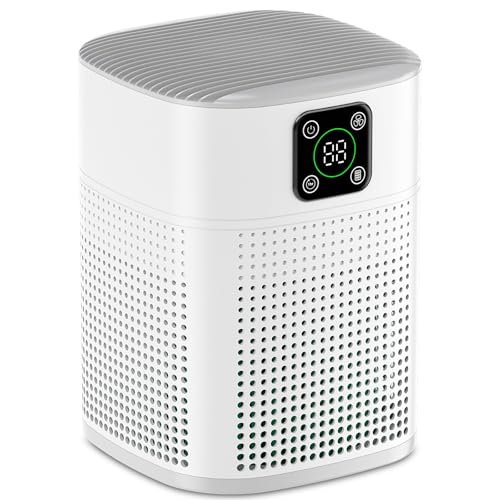
Honeyuan Air Purifiers for Bedroom, H13 HEPA Filter Up to 1095 Ft², White | with Smart LCD Touch Display, 360°Air Intake, 3 Fan Speeds, Timer, 24 dB Quiet, for Pets Hair, Smoke, Odors etc, HY1800PRO
Check price on Amazon
12 in Utility Blower Exhaust Fan with 32.8 ft Duct, 3500 r/min & 3500 CFM Heavy Duty Blower Fan, High Velocity Low Noise Extraction and Ventilation Fan for Ventilating Workshops, Confined Space
Check price on Amazon
Weiworld Through Wall HEPA Ventilation Fan with WiFi & Remote Control, Ultra Quiet EC Motor Wall Vent, Fresh Air Intake & Air Exchange System for Bedroom, Home Office, Attic
Check price on Amazon
8-Inch High-Velocity Portable Utility Blower Fan, Industrial Exhaust Fan with 16.4ft Flexible Duct Hose, 3150 RPM Ventilator for Basements, Workshops, Warehouses, and Confined Spaces
Check price on AmazonDisclaimer
Some of the content on this site uses AI assistance. Information is provided for educational purposes only. We are not responsible for any losses resulting from the use of this information. By using this site, you waive any right to bring legal claims against us arising from your use of the information provided. If you do not agree, please do not use this site. Read the full disclaimer.