
Basement Ventilation System: Complete Guide for a Healthy Home
Discover how proper basement ventilation eliminates moisture, prevents mold, and transforms your below-grade space into a dry, breathable, and usable area. Learn the system types, sizing basics, and maintenance routines that keep your home healthy year-round.
EXPLORE VENTILATION OPTIONSWhy basement ventilation matters: Basements are naturally prone to humidity, stale air, and moisture accumulation. Without adequate air exchange, dampness can lead to mold, structural damage, and poor indoor air quality that affects the entire home. This guide walks you through every decision you need to make before choosing a system.
What Is a Basement Ventilation System?
A basement ventilation system is a mechanical or passive arrangement designed to move air between the basement and the outdoors. Its core purpose is to exchange stale, humid indoor air with fresh outdoor air while keeping humidity in check. Unlike a simple open window, a properly engineered system controls the direction, rate, and sometimes the temperature and humidity of the incoming air.
Basements sit below grade, where soil temperatures stay cool and moisture constantly migrates through foundation walls and slabs. Without ventilation, that moisture condenses on cool surfaces, creating the perfect environment for mold, mildew, and musty odors. A dedicated ventilation strategy works alongside your basement AC and dehumidification equipment to keep the space dry and comfortable.
Ventilation is distinct from air conditioning or heating. It does not primarily cool or warm the space; it refreshes the air. In practice, the best basement climate control combines ventilation, moisture management, and temperature control — a trio that protects both the building and the people inside it.
Why Your Basement Needs Proper Ventilation
Many homeowners underestimate how much a damp basement affects the rest of the house. Because of the stack effect, air from the lowest level often rises into living spaces above, carrying moisture, odors, and pollutants with it. Here are the primary reasons ventilation is essential:
- Moisture and humidity control: Proper air exchange reduces relative humidity, discouraging condensation on pipes, walls, and floors.
- Mold and mildew prevention: Mold thrives in stagnant, humid air. Continuous ventilation removes the conditions it needs to grow.
- Improved indoor air quality: Ventilation dilutes VOCs, radon, dust, and musty odors, contributing to healthier air throughout the home.
- Protection of stored items: Wood, paper, electronics, and textiles deteriorate quickly in damp basements.
- Comfort for finished spaces: If your basement is a living area, office, or gym, fresh air is essential for comfort and productivity.
- Structural protection: Reducing moisture slows the deterioration of joists, drywall, and insulation.
- Odor elimination: Stale, musty smells disappear when air is regularly exchanged.
If you notice condensation on basement windows, a persistent musty smell, or visible mold on walls or joists, those are strong signals that your current ventilation is inadequate. For broader basement comfort, a dedicated basement air conditioning strategy often works hand-in-hand with ventilation.
Types of Basement Ventilation Systems
There is no single solution that fits every basement. The right choice depends on your climate, the level of humidity, whether the space is finished, and how the basement is used. Below are the main categories available today.
1. Exhaust Ventilation
Exhaust systems use a fan to push stale basement air outdoors. Fresh air enters through passive vents, gaps, or a dedicated intake. This is the most common and usually the most straightforward approach for basements. It is effective at removing odors and reducing humidity, provided the outdoor air is not itself excessively humid.
2. Supply Ventilation
Supply systems bring filtered outdoor air into the basement and rely on exfiltration through the building envelope. These are useful when you want to control the quality of incoming air with filtration, and they can slightly pressurize the basement to keep soil gases out.
3. Balanced Ventilation
Balanced systems use both supply and exhaust fans working together. They provide the most predictable air exchange and are the preferred choice for finished basements or homes with tight construction where natural infiltration is minimal.
4. Energy Recovery Ventilator (ERV)
An ERV is a balanced system with a heat and moisture exchange core. It transfers heat and humidity between the outgoing and incoming air streams, which keeps the basement comfortable in both summer and winter. This is the top-tier option for homeowners who want efficiency and year-round climate control.
5. Passive Ventilation
Passive systems rely on natural airflow through vents, windows, or foundation openings. They are the simplest and lowest-complexity option but are highly dependent on weather, wind, and temperature differences. They are rarely sufficient on their own in humid climates.
6. Crawl Space Ventilation
If your basement is actually a crawl space, ventilation needs differ. Crawl space ventilation can be passive or mechanical, but in humid regions it is often better to encapsulate the crawl space and condition it rather than ventilate it with humid outdoor air. A basement HVAC installation specialist can advise which approach fits your structure.
Comparison: Exhaust, Supply, Balanced, and ERV
The table below summarizes how the main system types compare on the factors that matter most to homeowners. Use it as a quick reference before diving into sizing and installation.
| System Type | Best For | Humidity Control | Air Quality Filtration | Energy Efficiency | Tier |
|---|---|---|---|---|---|
| Passive Ventilation | Dry climates, unfinished basements | Low | None | N/A (no fan) | Essential tier |
| Exhaust Ventilation | Odor removal, basic humidity reduction | Moderate | Limited | Good | Starter tier |
| Supply Ventilation | Filtered fresh air, tight homes | Moderate | Good (with filters) | Good | Mid-tier |
| Balanced Ventilation | Finished basements, predictable exchange | High | Good | Good | High-end tier |
| ERV (Energy Recovery) | Year-round comfort, efficiency-focused homes | Very high | Excellent | Excellent | Top-tier |
For most finished basements, a balanced system or an ERV delivers the most reliable results. For unfinished storage basements in moderate climates, a well-sized exhaust fan combined with a dehumidifier often performs well. Whichever route you take, the system should be coordinated with the rest of your basement HVAC installation so that ventilation, heating, and cooling work as one strategy.
How to Size Your Basement Ventilation System
Sizing is the most common point of failure in basement ventilation. An undersized fan will not exchange enough air, while an oversized one can waste energy, create noise, and pull in excessive humidity. The industry standard is to target a specific number of air changes per hour (ACH) based on the basement's use.
To estimate the required airflow, follow these steps:
- Calculate the basement volume: Multiply length × width × ceiling height in feet.
- Choose a target air change rate: A common recommendation for basements is 0.35 to 1.0 air changes per hour, depending on moisture load and occupancy. Finished living spaces generally need the higher end.
- Compute the airflow: Volume × ACH ÷ 60 gives the required cubic feet per minute (CFM).
- Account for duct losses: Add 10–20% to compensate for duct resistance and fittings.
- Match the fan rating: Select a fan rated for at least the calculated CFM at the actual static pressure of your duct system.
As an example, a 30 ft × 20 ft basement with an 8 ft ceiling has a volume of 4,800 cubic feet. At 0.5 ACH, the required airflow is 4,800 × 0.5 ÷ 60 = 40 CFM. Adding 15% for duct losses brings the target to roughly 46 CFM. That is a modest fan, but the calculation must be paired with a humidity assessment — in damp climates, a higher rate is often justified.
Do not size on room area alone. Humidity load, occupant activity, laundry equipment, and the presence of open soil or crawl spaces all influence the correct rate. A basement ventilation system that is correctly sized will maintain stable humidity rather than oscillating between damp and dry.
Installation Considerations
Installation quality determines whether a ventilation system delivers its rated performance. Before any work begins, consider the following:
- Intake and exhaust placement: Keep them far apart to avoid short-circuiting. Exhaust should terminate away from windows, doors, and HVAC intakes.
- Duct design: Use smooth, properly sized ducts with minimal bends. Insulate ducts that pass through unconditioned spaces to prevent condensation.
- Electrical requirements: Confirm the circuit and breaker capacity. Many ventilation fans run on standard household voltage, but larger ERVs may require dedicated circuits.
- Condensation management: ERVs and some balanced systems produce condensate; plan a drain route.
- Controls and sensors: Humidity sensors and timers improve efficiency by running the system only when needed.
- Code compliance: Check local building codes for ventilation rates and electrical requirements before installation.
For basements that will also be cooled or heated, coordinate the ventilation design with the basement HVAC installation plan so that ductwork and equipment do not conflict. If the basement is being converted into living space, a professional assessment is strongly recommended.
Maintenance Routine
Basement ventilation systems are relatively low-maintenance, but neglecting them quickly leads to reduced airflow and poor air quality. A simple seasonal routine keeps the system efficient:
- Monthly: Check the exterior intake and exhaust for blockages such as leaves, snow, or debris.
- Quarterly: Clean or replace filters in supply and ERV systems. Vacuum fan blades and housings.
- Seasonally: Inspect ductwork for disconnected joints, condensation, or pest intrusion. Verify that dampers move freely.
- Annually: Test the system's airflow and humidity response. Clean the ERV core according to the manufacturer's instructions.
- As needed: Address musty odors immediately — they usually indicate a filter, duct, or humidity problem rather than a fan failure.
Pairing maintenance with a whole-home humidity check is smart. If your basement humidity stays above 55% despite proper ventilation, the issue may be a moisture source rather than airflow, and a basement air conditioning or dehumidification review is warranted.
Frequently Asked Questions
What is a basement ventilation system?
A basement ventilation system is a mechanical or passive setup that circulates fresh outdoor air into the basement and expels stale, humid air. It controls humidity, reduces musty odors, and improves indoor air quality in below-grade spaces.
Do I need a basement ventilation system?
You likely need one if your basement feels damp, smells musty, shows condensation on pipes or walls, or is used as living space. Proper ventilation prevents mold growth, protects stored items, and improves comfort.
What is the difference between exhaust and supply ventilation?
Exhaust ventilation pushes stale air out and relies on natural infiltration for fresh air, while supply ventilation brings fresh air in and relies on exfiltration. Balanced systems use both fans and are the most effective for humidity control.
Can a dehumidifier replace basement ventilation?
No. A dehumidifier removes moisture but does not exchange stale air or remove odors, VOCs, or radon. The best approach combines ventilation with targeted dehumidification for a complete moisture and air-quality strategy.
How many air changes per hour does a basement need?
Common guidance is 0.35 to 1.0 air changes per hour, with finished living spaces at the higher end. The exact rate depends on moisture load, occupancy, and climate, so a professional assessment is recommended.
Choosing the Right System for Your Home
When you are ready to choose a basement ventilation system, start with a clear picture of your basement's humidity and usage. A simple humidity meter and a few days of observation will tell you whether you need basic exhaust ventilation or a more capable balanced or energy-recovery system.
Match the tier to the space. An entry-level exhaust fan is suitable for a dry, unfinished storage basement. A mid-range supply or balanced system fits a semi-finished space with occasional use. A high-end or top-tier ERV is the right choice for a finished basement that is used daily and where year-round comfort and efficiency matter.
Finally, consider the broader home. Basement ventilation is most effective when it works alongside your basement cooling and HVAC installation plan. If you are also exploring cooling options for the space, our guide to basement air conditioning explains how to integrate both systems efficiently.
Recommended Basement Ventilation Systems
⚠️ AFFILIATE DISCLOSURE: This website contains affiliate links. As an Amazon Associate, we earn from qualifying purchases. If you make a purchase through these links, we may receive a small commission at no additional cost to you. Read our full affiliate policy.
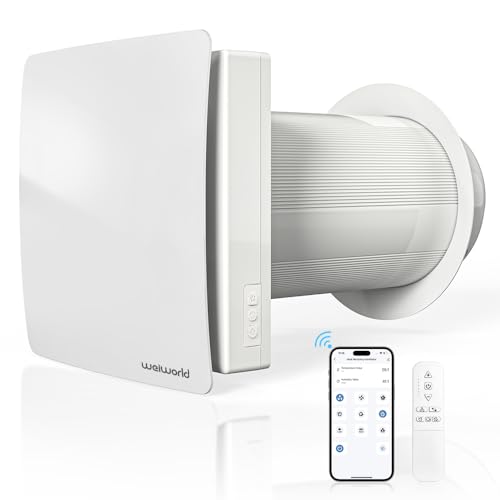
Weiworld Through Wall HEPA Ventilation Fan with WiFi & Remote Control, Ultra Quiet EC Motor Wall Vent, Fresh Air Intake & Air Exchange System for Bedroom, Home Office, Attic
Check price on Amazon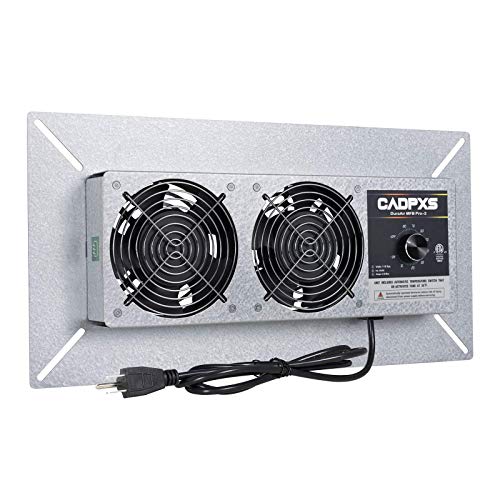
CADPXS Crawlspace Ventilation Fan, Crawlspace Fan Vent with Humidistat | Dehumidistat & Freeze Protection Thermostat, for Crawl Spaces/Basement/Garage/Attic/Hydroponics Grow Tents (220 CFM Air Out)
Check price on Amazon
AC Infinity AIRTITAN T8, Crawlspace Basement Ventilator Exhaust Fan | Temperature Humidity Controller, WiFi App, 10-Speed EC Motor, IP-55 Rated, Crawl Space, Basement, Garage, Attic, Grow Rooms
Check price on Amazon
240 CFM Crawlspace Vent Fan,Crawl Space Fan Vent(Air Out)3-Year Guarantee | With Thermostat,Humidistat, For Moisture Reduction, Radon Mitigation, Freeze Protection , Ideal for Basement, Attic
Check price on Amazon
Aprilaire V22BEC Energy Recovery Ventilator (ERV), 120 CFM Air Exchanger for Homes up to 6,000 Sq. Ft. – Whole-House Fresh Air Ventilation System (HRV/ERV) with Wall, Ceiling, or Floor Mount Bracket
Check price on Amazon
Broan B210E75RS AI 206 CFM Wall or Ceiling Mounted Energy Recovery Ventilator with Side Ports and Superior ERV Core Performance - N/A
Check price on Amazon