Basement AC Guide: Cooling Below-Grade Spaces
Understand the unique challenges of basement cooling, compare system options, and learn how to control both temperature and humidity for a genuinely comfortable space.
START LEARNINGKey insight: Basements are naturally cool but often very humid. Many homeowners buy an AC hoping to fix a comfort problem that is actually a moisture problem. This guide helps you choose the right combination of cooling and dehumidification for your specific space.
Why Basements Are Different
Cooling a basement is not the same as cooling a bedroom or living room. Several factors make below-grade spaces unique, and ignoring them leads to oversized equipment, poor humidity control, and disappointing results.
- Low sensible heat load: Because the ground surrounds the basement, ambient temperatures stay lower than above-grade rooms. You need less cooling capacity than the square footage might suggest.
- High latent load: Moisture moves through foundation walls and slabs, and humid outdoor air enters through leaks. This makes humidity control as important as cooling.
- Limited window access: Many basements have small or no windows, which restricts options for portable and window AC units.
- Ductwork may not reach: If your central system does not serve the basement, running new ductwork is often impractical or inefficient.
- Drainage and condensation: Air handlers and portable units produce condensate. In a basement, that water must be routed to a floor drain, condensate pump, or sump pit. Our AC plumbing guide explains the components involved.
Understanding your humidity level is the starting point. Our guides on what humidity level is good for a house and what the humidity is supposed to be in your house explain the ranges that keep a space comfortable and mold-free.
Cooling System Options Compared
The right choice depends on how the basement is used, whether windows are available, and how severe the humidity problem is. Here is how the main options compare.
| System Type | Best For | Humidity Handling |
|---|---|---|
| Ductless mini-split | Finished basements used daily | Excellent; removes heat and moisture continuously |
| Portable AC | Single rooms with vent access | Moderate; requires drain or manual emptying |
| Window AC | Basements with full-size windows | Good; condensate drains outdoors |
| Dehumidifier only | Storage and utility areas | Strong moisture control; no active cooling |
| Central system extension | Homes with accessible ductwork | Varies; often insufficient for chronic dampness |
Ductless Mini-Split
The most capable solution for finished basements. Independent control, quiet operation, and year-round humidity management with heat pump models. Requires professional installation.
Portable AC + Dehumidifier
A practical combination for finished rooms without ductwork. The portable unit handles cooling while the dehumidifier keeps moisture in check.
Window AC or Dehumidifier
Simplest approach when the space is not used for living. A window unit cools a single room if a suitable window exists; otherwise, a dehumidifier addresses comfort directly.
Ductless Mini-Split for Basements
A ductless mini-split is often the best long-term answer for a basement that will be used as living space. It handles both cooling and dehumidification more effectively than portable units and avoids the need for windows.
Why It Works Well Below Grade
- Small footprint: Only a three-inch hole through the rim joist or foundation wall is needed for the refrigerant lines, condensate line, and wiring.
- Independent control: The basement can be cooled without affecting the rest of the house, and each zone can be set to its own temperature.
- Humidity management: Mini-splits run longer cycles at lower capacity, which removes more moisture than an oversized on-off system. This connects directly to the concepts in the AC refrigerant cycle.
- Heat pump option: Many models also provide heating, which is valuable in a basement that feels cold during shoulder seasons.
- Quiet operation: Indoor units are much quieter than portable AC units, which matters in a bedroom or office.
Installation is best handled by a licensed technician. For context on what installation involves, see ductless mini split air conditioner installation cost. If you want to compare product categories, our guide on ductless mini split air conditioning systems covers the major configurations. For a whole-home approach, multi-zone ductless AC explains how one outdoor unit can serve several indoor heads, including a basement unit.
Practical tip: Choose a mini-split that is inverter-driven and rated for low ambient operation if the basement will be used year-round. Oversizing is the most common installation mistake and causes poor dehumidification.
Portable and Window Units
Not every basement justifies a mini-split installation. If the space is a single finished room or a home office, a portable or window unit can work well, provided you solve the venting and drainage challenges.
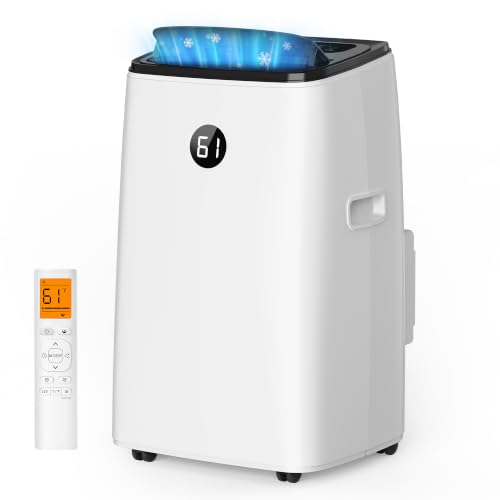
Portable AC Considerations
- Exhaust routing: The hot air exhaust must reach outside. Common solutions include a nearby dryer vent, a purpose-built wall vent, or a window. Our guide on portable AC unit that does not need a window covers alternative routing strategies.
- Condensate handling: Many portable units drain into a small tank that must be emptied. Some can be fitted with a continuous drain hose to a floor drain or condensate pump.
- Venting accessories: For basements with windows, accessories like window panel for portable air conditioner and window vents for portable air conditioners make the setup cleaner. For a deeper look at the venting side, see window exhaust for portable air conditioner.
- Efficiency: Look for units with a higher energy efficiency rating. Our guide on most efficient portable air conditioner compares performance considerations.
Window AC Considerations
- Window requirement: Window units need a suitable window. Basements with small or horizontal sliding windows may need special configurations. Our guides on window air conditioner for sliding windows and window air conditioner for sideways windows cover these cases.
- Security and sealing: A well-sealed installation prevents pests and air leaks. A mounted unit is covered in our window mounted air conditioning unit guide.
- Heating option: For year-round use, consider a model with a heat strip. Our guide on window unit with heater explains the trade-offs.
- Efficiency ratings: Efficiency matters more in a basement because units run for long periods. See window air conditioner energy efficiency rating for guidance.
Managing Humidity Effectively
Humidity is the dominant comfort issue in most basements. Even a well-sized AC will struggle if the underlying moisture sources are not addressed. A layered approach works best:
- Fix exterior water issues first: Extend downspouts, grade soil away from the foundation, and repair visible cracks. Reducing water intrusion lowers the burden on any indoor equipment.
- Seal air leaks: Rim joists, sill plates, and penetrations for pipes and wires are common leak points. Sealing them reduces both heat gain and moisture ingress.
- Use a dedicated dehumidifier: For storage areas or as backup in finished rooms, a dehumidifier with a continuous drain is essential. Set it to 50-55% relative humidity for mold prevention.
- Run the AC consistently: Intermittent cooling does not remove enough moisture. Longer run times at moderate settings dehumidify more effectively than short bursts at low settings.
- Consider ventilation: In some climates, a small energy recovery ventilator (ERV) improves air quality and controls humidity without adding a large heat load.
If you notice persistent dampness or musty odors alongside cooling problems, our guide on AC frozen coils solution explains how restricted airflow and low refrigerant can interact with humidity issues. When moisture is accompanied by water pooling around equipment, see air conditioning unit leaking water.
Sizing and Installation
Correct sizing is more critical in a basement than in most rooms. Because the sensible heat load is low, an oversized unit cools the space quickly and then shuts off, leaving humidity unaddressed. Common sizing considerations:
- Use a room load calculation: A proper Manual J or equivalent load calculation accounts for below-grade walls, slab losses, window area, and occupancy. Our guide on how to size air conditioner explains the process in general terms.
- Lean smaller, not larger: When in doubt, choose the next size down for a basement. A slightly undersized system that runs longer dehumidifies better.
- Account for latent load: Add capacity margin for moisture removal, particularly if the basement has a history of dampness.
- Plan the drain path: Every cooling option produces condensate. Identify a drain, sump pit, or condensate pump location before installation begins.
- Consider zoning: If the basement connects to a stairwell that opens into the main house, an independent mini-split zone is often the cleanest solution.
For related sizing context, our guide on air conditioning units for small spaces covers the trade-offs that apply to a compact basement room. If you plan to extend an existing system rather than add an independent unit, central air conditioner not blowing any air inside the house explains the diagnostic path for central ducting issues.
Practical Comfort Tips
- Insulate basement walls and rim joists: Insulation stabilizes temperature and reduces condensation on cool surfaces.
- Use a hygrometer: An inexpensive humidity monitor helps you confirm whether the space is actually dry enough after cooling is running.
- Keep the filter clean: A clogged filter on a basement unit reduces airflow and can freeze the coil, making humidity worse. See our AC maintenance guide for filter schedules.
- Avoid oversized equipment: As noted above, bigger is not better in a basement.
- Maintain the system seasonally: Schedule a tune-up before summer. Our guide on air conditioning unit tune-up covers what a service visit includes.
- Watch for warning signs: Weak cooling, water leaks, or musty smells indicate that something needs attention. Our guide on things to check when AC is not cooling provides a useful diagnostic checklist.
When you need professional help, our guides on air conditioning repair places and heating and air conditioning service companies explain how to evaluate providers and what credentials to verify.
Frequently Asked Questions
What is the best way to cool a basement?
The best approach depends on the basement layout and how often it is used. A ductless mini-split provides the most reliable year-round cooling and dehumidification. A portable AC works for finished rooms with window access. A high-capacity dehumidifier alone may be sufficient for storage areas where temperature is less critical.
Do basements need AC or just a dehumidifier?
Basements are naturally cooler than the rest of the home, so temperature is often less of an issue than humidity. For storage or utility areas, a dehumidifier may be enough. For finished living spaces, occupied bedrooms, or home offices, active cooling combined with humidity control delivers better comfort.
Can I use a portable AC in a basement without windows?
Portable AC units need a way to exhaust hot air. If the basement has no operable window, options include routing the exhaust hose through a dryer vent opening, a purpose-built wall vent, or a drop ceiling cavity leading to an exterior wall. A ductless mini-split avoids this issue entirely because it uses a small wall penetration for the refrigerant lines.
Why is my basement so humid even with AC running?
Basement humidity comes from ground moisture, poor exterior drainage, and air leakage. Standard AC removes some moisture but not enough to offset a chronically damp foundation. A dedicated dehumidifier, improved drainage, and sealing air leaks are usually required alongside cooling.
How do I size an AC for a basement?
Basements have low sensible heat loads because they are partially underground, so units are sized smaller than comparable above-grade rooms. A typical finished basement of 700 to 1,000 square feet often needs a 9,000 to 12,000 BTU unit. Oversizing causes short cycling and poor dehumidification, so accurate sizing matters.
Will a mini-split handle basement humidity on its own?
In many cases, a properly sized mini-split handles both temperature and humidity well because it runs longer cycles at lower capacity. However, if the basement has chronic moisture intrusion from the foundation or a high water table, a dedicated dehumidifier is still advisable as a supplement.
Where should I place the indoor unit in a basement?
Mount the indoor head high on a wall near the center of the space, away from direct obstructions and out of the immediate path of return air. Avoid placing it directly above electronics or items that could be damaged by condensate if the drain ever clogs. Ensure the condensate can be routed to a floor drain, sump pit, or condensate pump.
Can a basement mini-split also provide heat?
Yes. Most modern ductless mini-splits are heat pumps and provide efficient heating as well as cooling. This is valuable for a basement that feels cold during spring and fall. Verify the model's low-temperature heating performance if the basement will be used in colder months.
With the right combination of cooling, humidity control, and air sealing, a basement can become one of the most comfortable rooms in the house. For further reading, our guide on portable AC unit that does not require venting is useful when a ducted solution is impractical, and ductless mini split with ceiling cassette is worth exploring if ceiling space is available.