Battery Operated Air Conditioner for Home: The Complete Guide
Everything you need to know about battery powered cooling solutions for your home — how they work, what they can realistically achieve, and how to choose the right one for your situation.
Quick summary: A true battery operated air conditioner for home use is a niche product. Most consumer "battery AC" options are portable evaporative coolers or small compressor units paired with external power stations. This guide explains what actually exists, what to expect from each category, and how to make a well-informed decision before you buy.
What Is a Battery Operated Air Conditioner for Home?
The term "battery operated air conditioner" covers several different products. Understanding the distinction is the single most important step before you buy, because the performance of each category differs dramatically.
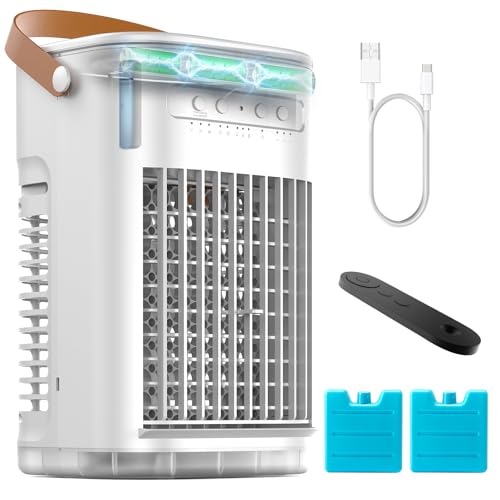
- Battery-powered evaporative coolers (swamp coolers): These use a fan and water-soaked pad to cool air. They run on rechargeable batteries and are genuinely portable. They work well in dry climates but add humidity and lose effectiveness in humid conditions.
- Compressor AC units paired with a portable power station: A small window or portable air conditioner connected to a high-capacity lithium power station. This is the closest thing to a true battery operated AC for home use, but it requires a large power station and careful wattage planning.
- DC-powered mini split or portable units: Some units accept direct DC input from solar panels or battery banks. These are typically professional-grade or off-grid specialty products.
- Personal cooling devices: Neck fans, cooling pads, and small spot coolers marketed as "battery air conditioners." These cool a person, not a room.
How Battery Powered AC Units Actually Work
Traditional air conditioners move heat from indoors to outdoors using a compressor, refrigerant, and two coils. That process requires significant wattage — typically 500W to 1,500W for a small room unit. A battery must supply that wattage continuously, which is why battery runtime is the central challenge.
Evaporative coolers avoid the compressor entirely. They draw only 10W to 60W, which is why they can run for hours on a modest battery. The trade-off is that they cool by evaporation, not refrigeration, and they are climate-dependent.
For a deeper technical explanation of how compressor-based cooling works, see our guide on battery air conditioner technology, and for the broader category overview, read about battery operated portable units for vehicles, which share much of the same power architecture.
Realistic Expectations: What a Battery AC Can and Cannot Do
Before investing, set realistic expectations. This is where most buyers go wrong.
- It cannot replace central air conditioning. A battery system powering a full-home compressor is a major off-grid engineering project, not a plug-and-play purchase.
- It can cool a single small room or a personal space. A 5,000 BTU unit paired with a large power station can cool a bedroom for a limited number of hours.
- Runtime depends on battery capacity and load. Doubling the battery capacity roughly doubles runtime; doubling the cooling output roughly halves it.
- Evaporative coolers are climate-limited. They excel in dry, low-humidity regions and underperform in humid climates.
Types of Battery Operated Cooling for Home Use
1. Battery Evaporative Coolers
These are the most common products marketed as battery air conditioners. They are lightweight, run on internal rechargeable batteries or USB power, and require water. They are an excellent fit for garages, patios, workshops, and dry-climate bedrooms. They are not refrigerated air conditioning. If you are exploring general options for rooms without ductwork, our guide to using portable AC without a window covers related setup considerations.
2. Portable AC + Power Station
This is the most practical route to genuine refrigerated battery cooling for a home. You pair a compact portable air conditioner with a high-capacity lithium power station. Key considerations include continuous wattage rating, surge wattage at compressor startup, and whether the unit can exhaust hot air outdoors. Our article on battery operated portable AC for vehicles explains exhaust and ventilation principles that apply equally at home.
3. DC and Solar-Ready Units
Specialty DC air conditioners accept power directly from solar arrays or battery banks without an inverter. These are typically professional-grade or commercial-grade products used in off-grid cabins and telecom shelters. They are efficient in the long run but require professional installation and a substantial solar or battery infrastructure.
4. Personal and Spot Cooling Devices
Small battery-powered spot coolers and cooling fans are best understood as comfort accessories, not room air conditioners. They are useful for desks, bedsides, and outdoor seating.
Comparison by Product Tier
The table below compares the main categories using market-position descriptors rather than numeric figures. Use it to match your expectations to the right tier.
| Tier | Category | Best For | Key Limitation |
|---|---|---|---|
| Entry-level | Battery evaporative cooler | Dry climates, patios, garages, personal spaces | Adds humidity; not refrigerated cooling |
| Mid-tier | Small portable AC + mid-capacity power station | Single bedroom or home office, short sessions | Limited runtime; requires exhaust venting |
| High-end tier | Portable AC + high-capacity power station | Extended bedroom cooling, outage backup | Substantial battery footprint and weight |
| Professional-grade | DC solar-ready air conditioner | Off-grid cabins, remote structures | Requires professional design and installation |
Key Features to Evaluate Before Buying
- Continuous wattage vs. surge wattage: Compressor startup can briefly draw two to three times the running wattage. Your power station must handle the surge.
- Battery chemistry and cycle life: Lithium iron phosphate (LiFePO4) offers durable construction and long cycle life compared with older chemistries.
- Cooling output (BTU): Match capacity to room size. A 5,000–6,000 BTU unit suits roughly 150 square feet. Larger rooms need more capacity, which increases power draw.
- Noise level: Compressor units and evaporative coolers differ significantly. Check decibel ratings if the unit will run at night.
- Venting requirements: Compressor-based units must exhaust hot air outdoors. Plan window or wall access in advance.
- Recharge options: Solar input, wall charging, and car charging flexibility matter for off-grid or outage scenarios.
For general purchasing fundamentals that apply to every AC category, our AC buying guide is a useful companion to this article.
Where Battery Cooling Makes Sense at Home
- Power outage backup: Keep one room comfortable during grid failures without running a generator.
- Off-grid and cabin living: DC solar-ready systems shine in remote structures.
- Garages and workshops: Evaporative coolers provide comfortable working conditions in dry climates.
- Bedrooms and home offices: A small compressor unit paired with a power station can cool a single room for part of the day.
- Renters and temporary setups: No permanent installation is required.
If your home already has ductwork and you are weighing whole-home options, compare this niche category with conventional systems in our bedroom air conditioner guide and the broader battery air conditioner overview.
Limitations You Should Know
- Runtime is finite. Even large power stations provide hours, not days, when running a compressor.
- Charging takes time. Recharging a large battery from a wall outlet can take several hours; solar charging is slower and weather-dependent.
- Weight and portability trade-offs. High-capacity batteries are heavy. "Portable" is relative once you pair a unit with a large power station.
- Efficiency losses. Converting battery DC to AC through an inverter introduces losses; DC-native systems avoid this but are specialty products.
- Not a substitute for central air. Whole-home battery cooling remains a professional engineering project.
Installation and Safety Considerations
Battery systems introduce electrical safety considerations that conventional plug-in units do not. Use power stations with certified safety protections, keep batteries away from heat and moisture, and follow the manufacturer's venting instructions precisely. Compressor units must exhaust hot air outdoors; recirculating exhaust indoors both defeats cooling and creates a hazard. If you are planning a solar or DC installation, consult a qualified professional — the same principle applies to any basement HVAC installation where ventilation and electrical work intersect.
Maintenance Tips for Battery Cooling Systems
- Clean evaporative cooler pads regularly to prevent mold and maintain airflow.
- Store lithium power stations at moderate temperatures and recharge them periodically during off-seasons.
- Clean air filters on compressor units monthly during heavy use.
- Inspect charging cables and connectors for wear.
- Test your full setup — battery plus unit — before an outage season begins.
For cleaning procedures that apply across AC types, see our guides on cleaning air conditioner filters and cleaning air conditioner coils.
Frequently Asked Questions
Can a battery operated air conditioner cool an entire house?
No. Whole-home compressor cooling requires far more power than consumer battery systems can supply for meaningful durations. Battery cooling is best suited to a single room or personal space.
How long can a battery AC run on a full charge?
Runtime depends on the unit's wattage and the battery's capacity. Evaporative coolers can run for many hours on a modest battery. Compressor units paired with large power stations typically run for a few hours per charge.
Do battery air conditioners need to be vented?
Compressor-based units must exhaust hot air outdoors. Evaporative coolers do not require venting but work best with airflow. Always follow the manufacturer's instructions.
Are battery evaporative coolers real air conditioners?
They cool air through evaporation rather than refrigeration. They are effective in dry climates but add humidity and are not equivalent to compressor-based air conditioning.
Can I charge a battery AC with solar panels?
Many power stations accept solar input, and some DC air conditioners are solar-ready. Solar charging is slower than wall charging and depends on weather and panel capacity.
Is a battery operated AC a good choice for power outages?
Yes, for keeping one room comfortable. Size your battery above your calculated load and test the setup before an outage occurs.
Final Checklist Before You Decide
- Define the space: one room, a garage, or personal cooling?
- Confirm your climate: dry climates favor evaporative coolers; humid climates require compressor-based cooling.
- Calculate load: match continuous and surge wattage to your power station.
- Plan venting: confirm window or wall access for compressor units.
- Decide on charging: wall, solar, or car charging options.
- Choose your tier: entry-level evaporative, mid-tier portable plus power station, or professional-grade DC system.
Ready to Explore Battery Cooling Options?
Review the recommended battery operated air conditioners for home use below, compare features, and check availability for your space.
View Recommended Products