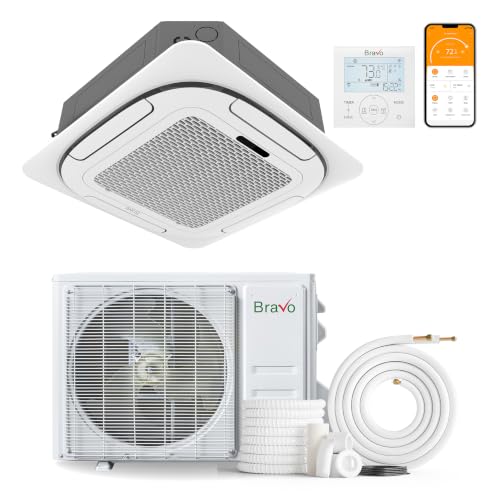
Ceiling Mini Split AC: The Complete Buyer's Guide
Discover how ceiling-mounted mini split systems deliver discreet, efficient cooling for rooms where wall space is limited. Learn about cassette and recessed ceiling options, installation considerations, and how to choose the right system for your space.
Explore the GuideWhat Is a Ceiling Mini Split AC?
A ceiling mini split is a ductless air conditioning system where the indoor air handler is mounted flush into or suspended from the ceiling rather than on a wall. These systems are part of the broader ductless mini-split AC family and are designed to distribute conditioned air evenly across a room from an overhead position.
Unlike traditional wall-mounted mini splits, ceiling units free up wall space and can provide better air circulation in large or oddly shaped rooms. They are particularly popular in living rooms, open-plan kitchens, and commercial spaces where aesthetics and unobstructed wall surfaces matter.
Why ceiling mini splits matter: They combine the energy efficiency of ductless systems with a discreet installation that blends into the ceiling. For homeowners who want whole-room comfort without visible wall units or bulky window ACs, a ceiling-mounted mini split is a top-tier option.
Types of Ceiling Mini Split Systems
Ceiling mini splits come in several form factors, each suited to different room layouts and installation constraints. Understanding these variations is essential before you commit to a system.
Ceiling Cassette Mini Split
A ceiling cassette unit is recessed into the ceiling with a visible grille panel that distributes air in multiple directions. These are the most common ceiling-mounted option and are available as ceiling cassette mini split systems with heat pump capabilities. They offer even air distribution and a clean, modern look.
Ceiling Recessed Mini Split
A ceiling recessed mini split is installed almost entirely above the ceiling line, leaving only a slim grille visible. These are ideal for spaces where a minimalist appearance is a priority. Installation requires adequate ceiling clearance and careful planning.
Ceiling Mounted Mini Split (Suspended)
A ceiling mounted mini split air conditioner is suspended below the ceiling rather than recessed. This is common in commercial settings or rooms with high ceilings where recessing is impractical. These units are robust and often commercial-grade.
Ceiling Cassette Mini Split Heat Pump
A ceiling cassette mini split heat pump system provides both cooling and heating from a single ceiling-mounted unit. These are excellent for year-round comfort in climates with moderate heating needs.
How Ceiling Mini Split Systems Work
Ceiling mini splits operate on the same refrigeration cycle as all ductless systems. Refrigerant travels between an outdoor compressor/condenser unit and an indoor ceiling-mounted air handler. The indoor unit draws in warm air, cools it via the evaporator coil, and distributes it back into the room through directional louvers or a ceiling grille.
Because there are no ducts, these systems avoid the energy losses associated with ducted central air conditioning. This makes them highly efficient, especially in homes where ductwork is impractical or nonexistent. The ceiling mounted split system air conditioner design also allows for better air circulation from above, which can reduce stratification and hot spots.
Efficiency note: Many ceiling mini splits are available in inverter configurations. An inverter AC modulates compressor speed to maintain consistent temperatures, which can significantly reduce energy consumption compared to single-stage systems.
Ceiling Mini Split vs Other AC Types
Before choosing a ceiling mini split, it helps to compare it against alternative cooling solutions. The table below outlines key differences across common system types.
| System Type | Best For | Tier Positioning | Installation Complexity |
|---|---|---|---|
| Ceiling Mini Split (Cassette) | Large rooms, open-plan spaces, wall-space-limited rooms | Mid-range to premium | Professional-grade (ceiling access required) |
| Wall-Mounted Mini Split | Bedrooms, offices, single-room cooling | Entry-level to premium | Standard professional installation |
| Window AC | Small rooms, temporary cooling | Entry-level | DIY-friendly |
| Portable AC | Renters, spaces without permanent installation | Entry-level to mid-range | Minimal (vent kit required) |
| Central AC | Whole-home cooling with existing ductwork | Mid-range to luxury | Professional-grade (extensive) |
Key Benefits of Ceiling-Mounted Mini Splits
Discreet Installation
Ceiling units are out of sight and out of the way. Unlike wall-mounted units that protrude into the room, ceiling cassettes and recessed models blend into the ceiling for a clean, modern appearance.
Even Air Distribution
Ceiling-mounted units distribute air from above, which can provide more uniform cooling across the room. Multi-directional louvers in cassette models help avoid direct drafts and hot spots.
No Ductwork Required
Like all mini splits, ceiling units avoid the need for ductwork. This makes them ideal for older homes, additions, and spaces where installing ducts would be impractical or disruptive.
Zone Control
Each ceiling mini split can be controlled independently, allowing you to cool only the rooms you use. This zoning capability is a major advantage over central systems that cool the entire home at once.
High Efficiency Options
Many ceiling mini splits are available with high SEER ratings and inverter compressors. A ceiling mini split with an inverter-driven compressor can deliver excellent seasonal efficiency.
Year-Round Comfort
Ceiling cassette heat pump models provide both cooling and heating, making them a versatile choice for climates with moderate heating demands. They are a solid alternative to separate heating and cooling systems.
Installation Considerations
Installing a ceiling mini split is more involved than mounting a wall unit. It typically requires professional installation and careful planning. Here are the key factors to consider:
- Ceiling Clearance: Recessed and cassette models require sufficient space above the ceiling for the unit body and drainage. Suspended models need adequate ceiling height for mounting.
- Drainage: Condensate must be routed away from the unit. In ceiling installations, a condensate pump is often required to move water to a suitable drain point.
- Structural Support: The ceiling must be able to support the weight of the indoor unit. Professional installers will assess this during the site survey.
- Refrigerant Line Routing: Lines must be routed from the outdoor unit to the ceiling location. This may involve running lines through walls, ceilings, or soffits.
- Electrical Supply: Ceiling mini splits require a dedicated power circuit. Verify your electrical panel capacity before installation.
- Permits: Many jurisdictions require permits for HVAC installations. Check local regulations before proceeding.
For a deeper look at installation planning, see the installation guide section. If you are considering a cassette-style unit specifically, the ceiling cassette AC page provides additional detail on that form factor.
Sizing a Ceiling Mini Split
Proper sizing is critical for comfort and efficiency. An undersized unit will struggle to cool the room on hot days, while an oversized unit may short-cycle, leading to uneven temperatures and higher humidity. The general rule of thumb is 20 BTU per square foot of living space, but this varies based on ceiling height, insulation, window area, and climate.
For a more precise estimate, use a BTU calculator or consult a professional who can perform a load calculation. The BTU calculator by room size provides a useful starting point. Keep in mind that ceiling-mounted units in rooms with high ceilings may need additional capacity to account for greater air volume.
Sizing tip: If your room has cathedral ceilings or is open to other spaces, consider a professional load calculation rather than relying solely on square footage. The how to size an air conditioner guide explains the factors involved in more detail.
Features to Prioritize
When comparing ceiling mini split models, focus on features that align with your comfort, efficiency, and convenience priorities. The following are worth evaluating:
| Feature | Why It Matters | Typical Tier |
|---|---|---|
| Inverter Compressor | Provides variable-speed operation for consistent temperatures and better efficiency | Mid-range and above |
| Heat Pump Function | Enables year-round heating and cooling from one system | Mid-range to premium |
| High SEER Rating | Indicates greater cooling efficiency over the season | Premium and top-tier |
| Multi-Directional Louvers | Improves air distribution and helps avoid direct drafts | Standard on most cassette models |
| Wi-Fi / Smart Control | Allows remote control and scheduling via smartphone | Mid-range and above |
| Condensate Pump | Required for many ceiling installations to manage drainage | Often included or available as accessory |
| Quiet Operation | Ceiling units are close to occupants; low noise is important | Varies; check decibel ratings |
Maintenance Essentials
Ceiling mini splits require regular maintenance to maintain efficiency and longevity. Because the indoor unit is overhead, some tasks are less accessible than with wall-mounted units, but the core maintenance routine is similar.
- Filter Cleaning: Clean or replace the air filter every 4–6 weeks during peak cooling season. A clogged filter reduces airflow and efficiency. See the clean AC filter guide for step-by-step instructions.
- Coil Cleaning: The evaporator coil should be inspected and cleaned annually by a professional. The clean evaporator coils page explains why this matters.
- Drainage Check: Ensure the condensate drain and pump are functioning properly. Clogs can lead to water damage in the ceiling.
- Outdoor Unit Care: Keep the outdoor condenser clear of debris and vegetation. Clean the condenser coils annually.
- Professional Service: Schedule an annual HVAC checkup to verify refrigerant levels, electrical connections, and overall system performance.
For a full seasonal checklist, refer to the seasonal AC checklist.
Common Issues and Troubleshooting
Ceiling mini splits are generally reliable, but issues can arise. Here are some common problems and their likely causes:
AC Not Cooling
Could be due to a dirty filter, low refrigerant, or a malfunctioning compressor. Start with filter cleaning and schedule a professional diagnostic if the problem persists.
Water Leaking from Ceiling Unit
Often caused by a clogged condensate drain or a failed condensate pump. This should be addressed promptly to prevent ceiling damage.
Ice on Coils
Frozen coils can indicate restricted airflow, low refrigerant, or a dirty coil. Turn off the unit and call a technician.
Unusual Noises
Rattling or buzzing may indicate loose components, debris, or a failing fan motor. Professional inspection is recommended.
For more detailed troubleshooting, see the AC not cooling solution guide.
Ready to Choose a Ceiling Mini Split?
Now that you understand how ceiling mini splits work, the types available, and what to look for, you are equipped to compare models with confidence. Explore our curated selection of ceiling mini split systems below.
View Recommended Systems