
Combination Air Conditioner Heater Wall Units: Complete Guide
Everything you need to know about wall-mounted AC and heater combo units — how they work, which type fits your room, how to size them correctly, and what to check before you buy.
START THE GUIDEWhy this guide exists: Combination air conditioner heater wall units let you cool and warm a room from a single wall-mounted system — no ductwork, no separate space heater, no seasonal equipment swap. This guide walks you through the technology, sizing, efficiency, and installation realities so you can make a confident, informed purchase decision.
What Is a Combination Air Conditioner Heater Wall Unit?
A combination air conditioner heater wall unit is a single, compact climate-control system that mounts directly into or onto a wall and delivers both cooling and heating from one chassis. Instead of relying on a window unit in summer and a separate space heater in winter, these systems handle both seasons with one piece of equipment — a major advantage for apartments, hotel rooms, additions, converted garages, and older homes without ductwork.
The category covers several closely related products. The most common is the PTAC (packaged terminal air conditioner), a self-contained unit that slides into a wall sleeve and is widely used in hospitality and multifamily buildings. Alongside PTACs, wall-mounted heat pump mini-splits and through-the-wall combination units also qualify as AC-heater wall units, each with different efficiency and installation profiles.
If you are comparing this category against broader product families, the sister guides on combination air conditioner and heater systems and combination heating and air conditioning wall units cover the trade-offs in more depth. This page focuses specifically on the wall-mounted format — the form factor that most buyers searching for a room-level solution actually want.
Types of Wall-Mounted AC Heater Combinations
Not all combination wall units are built the same way. The three main formats differ in efficiency, noise, installation complexity, and how well they fit different building types.
1. PTAC — Packaged Terminal Air Conditioner
A PTAC is a self-contained unit installed through an exterior wall, usually inside a metal sleeve. All components — compressor, evaporator, condenser coil, and heating element or heat pump — live in one chassis. PTACs are the standard in hotels, motels, dorms, and many apartment buildings because they are simple to service and swap out.
- Best for: Hotel rooms, rentals, multifamily units, and retrofits where a wall sleeve already exists.
- Heating method: Electric resistance heat, heat pump, or a hybrid of both depending on the model.
- Strengths: Straightforward installation, easy replacement, no refrigerant lines running through walls.
- Watch-outs: Typically louder than mini-splits; electric resistance heating is less efficient than heat pump heating.
2. Wall-Mounted Heat Pump Mini-Split
A wall-mounted mini-split pairs an indoor wall head with an outdoor condenser connected by refrigerant lines. The indoor head can both cool and heat when the system includes a reversing valve — which most modern cold-climate and standard mini-splits do. This is the highest-efficiency wall-mounted option and the quietest in normal operation.
- Best for: Primary living spaces, bedrooms, home offices, and homes where quiet operation matters.
- Heating method: Heat pump (refrigerant cycle reversed in heating mode).
- Strengths: High SEER2 and HSPF2 ratings, low noise, precise zoning, strong efficiency in the long run.
- Watch-outs: Requires a qualified installer, outdoor space for the condenser, and line-set routing through the wall.
3. Through-the-Wall Combination Unit
These units resemble a window air conditioner but are permanently installed through the wall. Many include a heating function via electric resistance or heat pump. They sit between a PTAC and a portable unit in terms of installation effort, and they are a common upgrade for rooms that already have a wall opening.
- Best for: Rooms with an existing wall sleeve or opening, rentals where window mounting is restricted.
- Heating method: Electric resistance or heat pump, depending on the model.
- Strengths: More secure than window units, does not block a window, straightforward service access.
- Watch-outs: Efficiency varies widely by tier; check both cooling and heating ratings.
For a deeper comparison of the packaged alternatives, the combination heating and air conditioning units overview covers central and packaged configurations, while the combination air conditioner and heater guide focuses on system-level selection. If your building is a condo, the condo-specific combination unit guide addresses HOA and sleeve constraints that are common in multifamily buildings.
How These Units Work
Understanding the mechanics helps you evaluate claims and choose the right heating method. A combination wall unit performs two distinct jobs, and the heating side is where most of the differences between models live.
Cooling Mode
In cooling mode, the unit works exactly like a standard air conditioner. Refrigerant absorbs heat from indoor air at the evaporator coil, the compressor raises the refrigerant pressure and temperature, and the condenser coil releases that heat outdoors. The indoor fan circulates cooled, dehumidified air back into the room.
Heating Mode — Two Main Approaches
Heat pump heating reverses the refrigerant cycle using a reversing valve. Instead of dumping heat outdoors, the system extracts heat from the outside air and moves it indoors. Because it moves heat rather than generating it, a heat pump can deliver well over one unit of heat per unit of electricity consumed — which is why heat pump models are more efficient in the long run.
Electric resistance heating uses a heating element or coil to generate heat directly. It is simple, reliable, and effective in very cold conditions, but it consumes more electricity for the same heat output. Many PTACs combine both: a heat pump for mild weather and resistance heat as a backup for deep cold.
Sizing: BTU for Cooling and Heating
Sizing a combination wall unit requires two calculations, not one. You need a cooling BTU rating that matches your summer load and a heating BTU rating that matches your winter load. Under-sizing causes the unit to run constantly and struggle; over-sizing causes short cycling, poor humidity control in summer, and uneven temperatures.
Cooling Load Baseline
A common starting point is roughly 20 BTU per square foot of floor area for a standard 8-foot ceiling with average insulation. Adjust upward for large windows, southern or western sun exposure, poor insulation, kitchen heat gain, or high occupancy. Adjust slightly downward for shaded rooms with good insulation.
Heating Load Baseline
Heating load depends heavily on climate zone. A wall unit's heating BTU rating should be sufficient for the coldest expected outdoor temperatures in your area. In mild climates, a heat pump unit rated for cooling may comfortably cover heating too. In colder climates, verify the unit's rated heating capacity at low outdoor temperatures and consider a hybrid or resistance-backup model.
Quick Reference by Room Size
| Room Size | Typical Cooling BTU | Typical Wall Unit Fit | Notes |
|---|---|---|---|
| Up to 150 sq ft | 5,000 – 6,000 BTU | Compact PTAC or small through-the-wall unit | Bedrooms, small offices, studio nooks |
| 150 – 250 sq ft | 7,000 – 9,000 BTU | Standard PTAC or wall mini-split | Primary bedrooms, home offices |
| 250 – 400 sq ft | 10,000 – 12,000 BTU | Mid-range PTAC or mini-split head | Living rooms, studio apartments |
| 400 – 600 sq ft | 12,000 – 15,000 BTU | High-capacity PTAC or large mini-split | Open-plan living areas, small condos |
For a more precise calculation, use the methodology in the combination AC and heater guide, and cross-check your assumptions against the combination heating and air conditioning units sizing overview. If your room has unusual heat gain — a sunroom, a kitchen, a home gym — err on the higher end of the range and confirm the unit's sensible and latent capacity ratings.
Efficiency Ratings Explained
Efficiency is the single biggest driver of long-term operating performance and is the clearest way to separate tiers of combination wall units. Four ratings matter:
- SEER2 (Seasonal Energy Efficiency Ratio): Measures cooling efficiency across a typical season. Higher is better. Modern minimums have risen under DOE standards, so an entry-level unit today is more efficient than an entry-level unit from a decade ago.
- EER2 (Energy Efficiency Ratio): Measures cooling efficiency at a specific peak-condition test point. Useful for comparing performance in hot climates where the unit runs near peak load.
- HSPF2 (Heating Seasonal Performance Factor): Measures heat pump heating efficiency across a season. Critical if you plan to rely on the unit for winter heating. Electric resistance heating does not have an HSPF2 rating because it is not a heat pump.
- COP (Coefficient of Performance): A direct ratio of heat moved to energy consumed. Heat pump units typically exceed 1.0; resistance heating is capped at 1.0.
ENERGY STAR certification is a useful shorthand for units that meet or exceed efficiency thresholds. A premium heat pump mini-split will generally post the highest SEER2 and HSPF2 numbers in this category, while a mid-range PTAC with a heat pump will be competitive within its class. Resistance-heat-only models sit at the essential tier for heating efficiency but can still be a solid choice in mild climates or as a secondary heat source.
Buying Framework & Tier Comparison
Combination wall units cluster into three broad market positions. Use this framework to align your needs with the right tier rather than chasing a single spec in isolation.
| Tier | Best For | Typical Heating Method | Efficiency Profile | Installation Complexity |
|---|---|---|---|---|
| Entry-Level | Rentals, guest rooms, occasional-use spaces | Electric resistance or basic heat pump | Meets modern minimums; good value for its tier | Low — sleeve or existing wall opening |
| Mid-Range | Primary bedrooms, home offices, small apartments | Heat pump with resistance backup | Above minimum; competitive within its class | Moderate — sleeve install or mini-split line set |
| Premium | Primary living spaces, cold climates, quiet-focused rooms | High-efficiency cold-climate heat pump | Top-tier SEER2 and HSPF2; efficient in the long run | Higher — professional mini-split installation |
Decision Checklist Before You Buy
- Room size and load: Confirm both cooling and heating BTU requirements.
- Climate: Match the heating method to your winter conditions — heat pump for mild-to-moderate, hybrid for colder zones.
- Wall availability: Confirm an exterior wall location and check for studs, wiring, and clearance.
- Electrical capacity: Verify the circuit and breaker can support the unit's requirements.
- Noise tolerance: Mini-split heads are typically quieter than PTACs.
- Maintenance access: Ensure filters and coils are reachable for routine cleaning.
- Warranty and service: Check compressor and parts coverage, and confirm local service availability.
If you are weighing a wall unit against a whole-home approach, the combination heating and air conditioning units guide compares system-level options, and the combination AC and heater page focuses on packaged and split configurations. For condo-specific constraints, see the condo combination unit guide.
Installation & Electrical Considerations
Installation effort varies sharply by format. A PTAC or through-the-wall unit usually drops into an existing sleeve with minimal structural work. A wall-mounted mini-split requires a qualified HVAC technician to mount the indoor head, route the line set, set the outdoor condenser, and commission the system.
What to Verify Before Installation
- Circuit capacity: Combination units often require a dedicated circuit. Check the nameplate amperage and confirm the breaker and wire gauge are adequate. The home electrical panel checklist is a useful starting point.
- Wall structure: Confirm the wall can support the unit and that the sleeve or opening is correctly sized and sealed.
- Drainage: PTACs and through-the-wall units produce condensate. Confirm a drain path or pan is in place and sloped correctly.
- Outdoor clearance: Mini-split condensers need airflow clearance and a stable mounting surface.
- Permits and codes: Check local requirements for exterior penetrations and electrical work before scheduling installation.
Poor installation is one of the most common reasons combination units underperform. Ensure the installer seals the wall penetration, verifies refrigerant charge on mini-splits, and tests both cooling and heating modes before signing off. For a broader contractor checklist, see the combination AC and heater guide.
Maintenance That Protects Your Investment
A combination wall unit is a long-term investment, and routine maintenance is the difference between a decade of reliable service and premature failure. The core tasks are simple and do not require special tools.
- Clean or replace filters every 4–8 weeks during heavy use. A clogged filter reduces airflow, strains the blower, and hurts both cooling and heating performance.
- Clean the evaporator and condenser coils annually. Dust and debris on coils reduce heat transfer and efficiency. The evaporator coil cleaning guide covers safe cleaning steps.
- Keep the outdoor condenser clear. Remove leaves, debris, and obstructions within the clearance zone.
- Check and clear the condensate drain. A clogged drain can cause water damage and shutdowns. The drain line cleaning guide walks through the process.
- Schedule a professional service check annually. A technician can verify refrigerant charge, electrical connections, and heating operation before the season that matters most.
In coastal or dusty environments, shorten maintenance intervals. If the unit runs in heating mode through winter, inspect the heating components at the start of the cold season. Consistent maintenance keeps efficiency ratings meaningful and extends the unit's service life.
Common Problems and Fixes
Most combination wall unit issues fall into a handful of categories. Understanding them helps you decide whether to troubleshoot or call a technician.
- Weak cooling: Usually a dirty filter, dirty coils, or low refrigerant. Start with filter and coil cleaning; if performance does not recover, have the refrigerant charge checked.
- No heat in heating mode: On heat pump models, this can indicate a reversing valve issue, defrost cycle problem, or low refrigerant. On resistance models, check the heating element and thermostat.
- Water leaking: Often a clogged condensate drain or a misaligned pan. Clear the drain and verify the unit is level.
- Noise or vibration: Loose panels, fan imbalance, or a failing blower bearing. Tighten panels first, then have the fan assembly inspected.
- Short cycling: An oversized unit, a thermostat placement issue, or a refrigerant problem. Confirm sizing and thermostat location before assuming a mechanical fault.
For a systematic diagnostic walkthrough, the combination AC and heater troubleshooting overview covers the most common failure patterns across wall-mounted formats.
Recommended Combination Air Conditioner Heater Wall Units
⚠️ AFFILIATE DISCLOSURE: This website contains affiliate links. As an Amazon Associate, we earn from qualifying purchases. If you make a purchase through these links, we may receive a small commission at no additional cost to you. Read our full affiliate policy.

Midea 8,000 BTU Smart Inverter Air Conditioner Window Unit with Heat and Dehumidifier – Cools up to 350 Sq. Ft., Energy Star Rated, Quiet Operation, Electronic Controls, Remote Control, White
Check price on Amazon
BPTCUE Dual Use Compact Portable Wall Mounted Air Conditioner Hot Cold for Bedroom, 2 in 1 Air Conditioner Heater
Check price on Amazon
ROVSUN Smart 10000 BTU Through the Wall Air Conditioner with Heat, Wall AC Unit & Heater Combo with Remote, APP & Voice Control & Timer Function, Compatible with Alexa/Google Assistant, 230V/60Hz
Check price on Amazon
ROVSUN Smart 12000 BTU Through the Wall Air Conditioner with Heat, Wall AC Unit & Heater Combo with Remote, APP & Voice Control & Timer Function, Compatible with Alexa/Google Assistant, 230V/60Hz
Check price on Amazon
2 in 1 Cooler and Heater Wall Mounted AC Unit 2000W White,55cm | Ductless Air Conditioner & Space Heater, Portable Tabletop & Wall Fan with Touch Screen, Remote, 2-8H Timer for Bedroom
Check price on Amazon
ROVSUN 8000 BTU Air Conditioner Window Unit with Heat, 4-in-1 Window AC Unit Cooler, Heater, Dehumidifier & Fan with Timer, Remote Control & Installation Kit for Rooms up to 350 Sq. Ft, 115V/60Hz
Check price on Amazon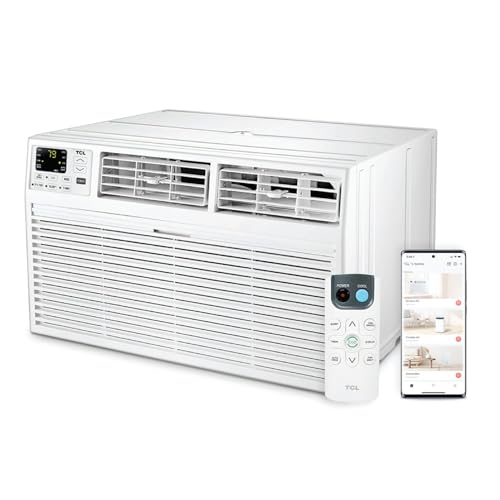
TCL 12,000 BTU Smart Through-the-Wall Air Conditioner with Heater,230V WiFi | 230V, Wall Mounted, Heater, Dehumidifier, Remote Control, Works with Alexa and Google Assistant, Rooms up to 550 Sq.Ft.
Check price on Amazon
OLMO 14,000 BTU 230V Through-the-Wall AC & Heater, Built-In Smart Kit | Cooling & Heating, R-32 Eco-Friendly Refrigerant, Remote Included, 1.17 Ton
Check price on AmazonFrequently Asked Questions
What is a combination air conditioner heater wall unit?
A combination air conditioner heater wall unit is a single wall-mounted system that provides both cooling and heating from one compact chassis. The most common formats are PTAC (packaged terminal air conditioner) units, wall-mounted heat pump mini-splits, and through-the-wall combination units. They are designed for rooms that need year-round climate control without ductwork.
How do I size a combination AC heater wall unit?
Calculate the room's cooling load using roughly 20 BTU per square foot as a baseline, then adjust for windows, sun exposure, insulation, and occupancy. Separately, confirm the unit's heating capacity for your coldest expected outdoor temperatures. Choose a model with both a cooling BTU rating and a heating BTU rating that match your room and climate.
Can a combination wall unit replace a central HVAC system?
For single rooms and small apartments, yes. Combination wall units deliver zone-specific comfort without ductwork and are a practical alternative in older homes, additions, and conversions. For whole-home coverage across multiple rooms, a central system or a multi-zone mini-split arrangement is usually more efficient and consistent.
What is the difference between a PTAC and a wall-mounted mini-split?
A PTAC is a self-contained packaged unit that sits in a wall sleeve and houses both cooling and heating components in one chassis. A wall-mounted mini-split separates the indoor head from the outdoor condenser and uses refrigerant lines. Mini-splits typically deliver higher efficiency, quieter operation, and more flexible zoning, while PTACs are simpler to install and replace.
Is heat pump heating better than electric resistance heating in a wall unit?
Heat pump heating is more efficient in the long run because it moves heat rather than generating it, and it typically delivers more heat output per unit of electricity. Electric resistance heating is simpler and remains effective in extreme cold. Many PTACs use a hybrid approach — a heat pump for mild weather and resistance heat as backup.
How often should a combination wall unit be serviced?
Clean or replace the filter every 4–8 weeks during heavy use, clean the coils annually, and schedule a professional service check once a year. In dusty or coastal environments, shorten the intervals. Regular maintenance preserves efficiency and extends the unit's service life.
Ready to Choose Your Combination Wall Unit?
You now have the framework to match a wall-mounted AC heater unit to your room size, climate, and efficiency priorities. Compare the recommended models above, verify the tier that fits your needs, and check availability before you commit.
Compare Available Models