Central Air Conditioning System: The Complete Homeowner Guide
Understand how a whole-home central air conditioning system works, how to size it correctly, which efficiency ratings matter, and how to keep it running reliably through every cooling season.
Explore the SystemWhy this guide matters: A central air conditioning system is one of the largest mechanical investments in a home. Choosing the right capacity, efficiency tier, and installation partner determines comfort, indoor air quality, and long-term energy use. This guide walks you through every decision point so you can buy with confidence.
What Is a Central Air Conditioning System?
A central air conditioning system is a whole-home cooling setup that conditions air at a single indoor unit and distributes it through a network of ducts to every room. Unlike a window unit or a ductless mini-split, a central system relies on ductwork to move cooled air from the air handler to the living spaces and to return warm air back for re-cooling.
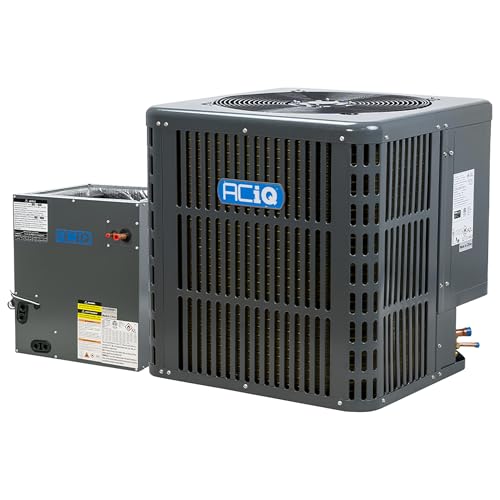
Most residential central systems are split systems: an outdoor condenser unit rejects heat to the outside, while an indoor evaporator coil and blower (often part of a furnace or air handler) cool and circulate air. In packaged systems, both sections sit in a single outdoor cabinet, which is common in smaller homes and some commercial settings.
Because the entire home is served by one system, central air is the standard choice for houses with existing ductwork and for new construction where ducts can be designed from the start. If your home lacks ducts, a ductless approach may be more practical, and you can compare the two strategies in our guide on ductless vs ducted AC.
How a Central Air Conditioning System Works
The cooling cycle in a central system follows the same refrigeration principles used in every air conditioner, simply scaled up for a whole house:
- Warm indoor air returns through return ducts and passes over the evaporator coil.
- The evaporator coil absorbs heat from the air as refrigerant evaporates inside the coil.
- The blower pushes cooled air through supply ducts into each conditioned room.
- The outdoor condenser releases heat absorbed indoors, while the compressor circulates refrigerant between the two coils.
- Condensate drains away the moisture removed from the air, which is why a central system also dehumidifies.
A thermostat coordinates the cycle, calling for cooling when room temperature rises above the setpoint. Modern thermostats add scheduling, zoning, and remote control, and our overview of the central air conditioner thermostat explains how to choose and configure one.
Key Components of a Central Air Conditioning System
Understanding each component helps you spot problems early and communicate clearly with technicians. The main parts are:
Outdoor Condenser Unit
Houses the compressor, condenser coil, and outdoor fan. It releases heat absorbed from your home and is the loudest part of the system.
Indoor Evaporator Coil
Mounted on the air handler or furnace. Absorbs heat and moisture from return air before it is distributed through the ducts.
Air Handler / Blower
Moves conditioned air through the ductwork. In many homes the blower is integrated into a gas furnace, forming a combined heating and cooling unit.
Ductwork
Supply and return ducts distribute air throughout the home. Leaky or undersized ducts waste energy and cause uneven temperatures.
Thermostat
The control interface. Programmable and smart thermostats improve efficiency by matching runtime to occupancy patterns.
Refrigerant Lines & Drain
Insulated copper lines connect indoor and outdoor coils. The condensate drain removes water collected during cooling.
If you are also replacing the heating side, a combined central air with furnace setup is common and often simplifies installation because both systems share the same blower and ductwork.
Types of Central Air Conditioning Systems
Central systems differ mainly in how the components are arranged and how the compressor modulates output. The main categories are:
- Split systems: The most common residential layout, with an outdoor condenser and indoor air handler connected by refrigerant lines.
- Packaged systems: All components in one outdoor cabinet, often used where indoor space is limited. See our packaged AC unit overview.
- Single-stage systems: The compressor runs at full capacity or off. Simple and durable, but less precise in part-load conditions.
- Two-stage systems: The compressor has a low and high setting, improving comfort and humidity control on mild days.
- Variable-speed / inverter systems: The compressor modulates continuously, delivering the most precise temperature and humidity control and the highest part-load efficiency.
Compressor technology has a large impact on comfort and energy use. Our comparison of inverter AC and non-inverter AC explains the trade-offs in plain language.
How to Size a Central Air Conditioning System
Correct sizing is the single most important decision in a central system. An oversized unit cools quickly but short-cycles, leaving humidity high and wearing out components. An undersized unit runs continuously and never fully satisfies the thermostat.
Professional sizing uses a load calculation such as Manual J, which accounts for square footage, ceiling height, insulation, window area and orientation, air infiltration, and local climate. As a rough planning estimate, many homes fall in the range of about 20 BTU per square foot of conditioned space, but this should never replace a proper load calculation.
For reference sizing by home size, see our guides on a central AC unit for a 1,000 sq ft house, a central air conditioning system for a 1,200 square foot house, and a central air conditioner for a 2,400 square foot house. For a deeper explanation of the method, read how to size an air conditioner.
| Home Size (conditioned) | Typical Capacity Range | Best For |
|---|---|---|
| Up to 1,000 sq ft | 1.5 – 2 tons | Starter-tier homes, apartments with ducts, small single-story houses |
| 1,000 – 1,500 sq ft | 2 – 2.5 tons | Mid-tier single-family homes with average insulation |
| 1,500 – 2,500 sq ft | 2.5 – 3.5 tons | Mid-range to high-end tier homes, two-story layouts |
| 2,500 – 3,500 sq ft | 3.5 – 5 tons | Premium and luxury tier homes, zoned systems recommended |
Efficiency Ratings: SEER, SEER2, and EER
Central air conditioners are rated by SEER (Seasonal Energy Efficiency Ratio) and, under current DOE standards, SEER2. Higher ratings mean more cooling delivered per unit of electricity across a typical season. The minimum allowed rating depends on region, and premium-tier systems often reach the high teens or low twenties on the SEER2 scale.
EER measures efficiency at a single high-temperature test point, which is useful in hot climates where the system runs at peak load for long periods. ENERGY STAR certification signals a system that meets or exceeds federal efficiency thresholds. Our explainers on the SEER rating, SEER vs SEER2 DOE standards, and ENERGY STAR certified AC cover the details.
Efficiency tier also affects long-term operating expense. A high-end tier variable-speed system generally uses noticeably less electricity over a season than an entry-level single-stage unit of the same capacity, especially in homes where the system runs at part load for most of the day.
Advantages and Limitations of Central Air
Advantages
- Even, whole-home cooling from a single thermostat
- Integrated filtration improves indoor air quality
- Dehumidifies the entire house, not just one room
- Outdoor equipment is centralized and out of living spaces
- Combines cleanly with a furnace for year-round comfort
Limitations
- Requires ductwork, which limits retrofit options
- Duct losses can reduce delivered efficiency
- Installation is more involved than room units
- One system serves all rooms, so zoning is needed for room-by-room control
If ductwork is not feasible, ductless mini-splits are a strong alternative. Homeowners weighing the two approaches often start with our ductless vs ducted AC comparison and then review ductless mini-split AC options.
Installation: What Homeowners Should Expect
A central air installation involves evaluating the electrical panel, confirming duct capacity, setting the outdoor pad or bracket, running refrigerant and condensate lines, and commissioning the system with a proper charge and airflow measurement. Quality installation matters as much as the equipment itself.
Before signing a contract, review the electrical requirements in our guide on 110V vs 240V air conditioner wiring and confirm whether a permit is required with how to get an AC permit. If you are comparing contractors, our article on how to choose an HVAC contractor covers licensing, insurance, and quote comparison.
When replacing an existing system with usable ducts, the project is usually simpler. Our overview of central air installation with existing ductwork explains what changes and what stays. For a broader look at the replacement decision, see central air conditioner replacement.
Maintenance for Long-Term Reliability
Routine maintenance keeps efficiency high and prevents the most common failures. A practical schedule looks like this:
- Every 1–3 months: Clean or replace the air filter. Our guide on how to clean an AC filter and when to replace an AC filter covers the details.
- Before each cooling season: Schedule a professional tune-up, clear debris around the outdoor unit, and check the condensate drain.
- Annually: Inspect ductwork for leaks and insulation damage, and confirm refrigerant charge and airflow.
- As needed: Clean the outdoor condenser coil following our clean condenser coils instructions.
Homeowners who prefer a checklist approach can follow our seasonal AC checklist. If the system is not cooling as expected, the troubleshooting steps in central air conditioner not blowing cold air and AC not cooling help isolate the cause before calling a technician.
Common Central Air Problems and What They Mean
Most central system issues fall into a few recognizable patterns. Water around the indoor unit usually points to a clogged condensate drain, covered in central air conditioner leaking water inside the house. Weak airflow with the fan running often indicates a duct or blower problem, explained in central air fan running but no air blowing.
A system that runs but never reaches the setpoint may have a refrigerant issue, a failing compressor, or a thermostat problem. Our guides on central air turns on but doesn't cool and central air conditioner stopped cooling walk through the likely causes in order of probability.
How to Choose the Right Central System
Start with a load calculation, then choose an efficiency tier that matches how long you plan to stay in the home and how much the system will run each season. A long-term investment in a high-end tier variable-speed system often makes sense in hot climates and in homes with rooms that are hard to keep comfortable.
Match the indoor and outdoor components as a matched system, confirm the warranty terms, and ask the installer for commissioning measurements including static pressure and refrigerant charge. For a broader buying framework, read buying an AC and central AC unit for a 1,000 sq ft house if you are sizing a smaller property.
If you are considering a ductless alternative for an addition or a room that ducts cannot reach, compare ceiling-mounted mini-split air conditioner options with a traditional central layout before committing.
Frequently Asked Questions
How long does a central air conditioning system last?
A well-maintained central system typically lasts 15 to 20 years. Regular filter changes, annual professional tune-ups, and correct refrigerant charge are the biggest factors in reaching the upper end of that range.
What size central air conditioner do I need for my house?
Sizing depends on square footage, ceiling height, insulation, window area, and climate. A Manual J load calculation is the accurate method. As a rough planning estimate, many homes fall near 20 BTU per square foot of conditioned space, but professional verification is always recommended.
How often should a central air conditioning system be serviced?
Schedule a professional tune-up once a year before the cooling season. Homeowners should clean or replace the filter every one to three months and keep the outdoor unit clear of leaves and debris.
Can I add central air to a home without existing ducts?
Yes, but it requires designing and installing a duct system, which adds complexity. Many homeowners in this situation compare central air with ductless mini-splits, which avoid ductwork entirely and can be installed room by room.