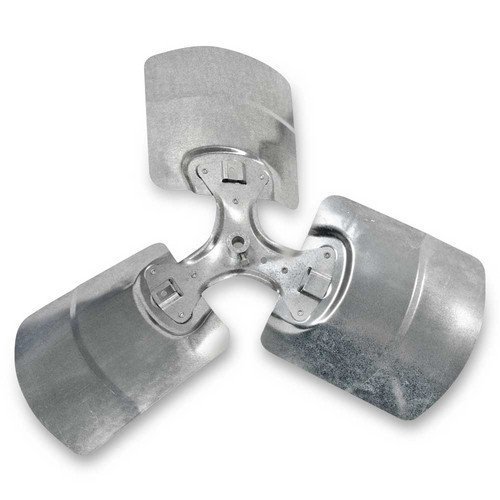
The condenser fan is one of the hardest-working components in your outdoor unit. It spins for hours in heat, rain, and debris, moving thousands of cubic feet of air every minute. When it falters, the entire cooling cycle is compromised. Whether you are researching symptoms before calling a technician or planning a replacement, this guide explains what is involved, how components differ by tier, and what to look for in a service provider.
Signs Your Condenser Fan Needs Replacement
Recognizing the symptoms early can prevent secondary damage to the compressor — the most critical and expensive part of the system. Watch for these common indicators:
If you notice the fan is not running, a useful diagnostic step is to check whether the outdoor unit is receiving power and whether the capacitor is bulging. For a deeper walkthrough of the component itself, see our guide on the condenser fan on an air conditioner.
What a Condenser Fan Replacement Involves
A proper replacement is more than swapping a motor. A competent technician follows a sequence that protects the rest of the system:
- Power disconnect and safety check. The unit is de-energized at the breaker, and the capacitor is discharged safely.
- Diagnosis. The technician confirms whether the motor, capacitor, or fan blade is the failing part — sometimes a capacitor replacement alone restores operation.
- Removal of the fan grille and blade. The top grille is lifted, and the blade is removed with care to avoid bending.
- Motor extraction. Mounting bolts are removed, and the motor is lifted out of its bracket.
- Installation of the new motor. The replacement is matched for horsepower, speed, rotation, and voltage. Wiring is connected per the diagram.
- Blade and capacitor check. The blade is re-seated at the correct depth, and the capacitor is tested or replaced.
- Test run. The technician verifies amp draw, airflow, and that the compressor runs without overheating.
Parts Overview by Tier
Replacement motors and blades are available across a spectrum of quality tiers. The table below summarizes how each tier typically performs, so you can align the part with your system's age and your long-term plans.
| Tier | Best For | Typical Characteristics |
|---|---|---|
| Entry-level | Older systems nearing end of life, temporary fixes | Basic bearings and windings; adequate for mild climates and light runtime; shorter service interval |
| Mid-range | Most residential systems in regular use | Sealed bearings, balanced rotor, quieter operation; solid choice for the tier and a good balance of durability and smoothness |
| Premium | High-runtime homes, hot climates, newer systems | Heavy-duty windings, weather-resistant housing, low-vibration design; efficient in the long run and well-specified for the category |
| Professional-grade | Commercial and light-industrial condenser units | Reinforced mounts, high-grade steel shaft, extended duty cycles; built for continuous operation and harsher environments |
Beyond the motor, the fan blade itself matters. A cracked or unbalanced blade accelerates bearing wear. Blades are generally grouped into stamped aluminum (entry-level), balanced multi-blade designs (mid-range), and reinforced composite or heavy-duty metal (premium and professional-grade). Capacitors are usually a small additional component and are frequently replaced alongside the motor as a precaution.
Factors That Influence the Overall Outlay
Because every installation is different, the final outlay depends on several variables rather than a single figure. Understanding them helps you evaluate quotes fairly:
- Motor tier and specifications. A premium or professional-grade motor sits higher in the market than an entry-level unit, but typically delivers longer service life.
- Additional parts. Fan blade, capacitor, and mounting hardware may add to the parts total if they are also worn.
- Labor rates by region. Urban areas and peak cooling season tend to have higher labor rates.
- Access and unit condition. Rooftop, cramped, or corroded units take more time to service.
- Diagnostic visit. Some contractors bundle diagnosis into the repair; others list it separately.
Repair or Replace the Outdoor Unit?
If your system is older and the fan failure is one of several issues, replacement may be the wiser path. Consider replacing the full unit when:
- The system is well past its typical service life and uses an older refrigerant.
- The compressor is also failing or the coil is corroded.
- Repeated repairs are accumulating within a short period.
- Efficiency is far below current standards and energy use is a concern.
If the rest of the system is healthy, a targeted fan replacement is usually the sensible choice. For a broader perspective on the outdoor component, see our explainer on the condensing unit in HVAC and the condenser in an air conditioner.
How to Choose a Qualified Contractor
Because condenser fan replacement involves electrical work and refrigerant-adjacent components, credentials matter. Look for:
- Licensing and insurance. Confirm the contractor holds a valid HVAC license and carries liability coverage.
- Experience with your system type. Ask whether they routinely service your brand and model.
- Written estimates. A clear scope with part numbers and labor terms signals professionalism.
- Warranty on parts and labor. A reasonable warranty protects your investment.
- Diagnostic transparency. A good technician explains why the fan failed and how to prevent recurrence.
You can also learn what to ask before hiring in our guide on how to choose an HVAC contractor. If you prefer to compare local providers, our overview of companies that install air conditioners offers useful context on vetting service teams.
Preventing Repeat Fan Failures
Once the new fan is running, a few habits extend its life:
- Keep the area around the outdoor unit clear of leaves, grass clippings, and debris.
- Rinse the coil gently during seasonal maintenance to maintain airflow.
- Schedule annual tune-ups that include motor amp draw and capacitor testing.
- Listen for new noises and address wobbling blades early.
Seasonal checks are covered in more depth in our HVAC tune-up overview, and if you notice water near the unit, our guide on condensation inside the AC unit explains what is normal versus a fault.
Frequently Asked Questions
What are the signs that a condenser fan needs replacement?
How long does a condenser fan replacement take?
Can I replace a condenser fan motor myself?
What affects the overall expense of condenser fan replacement?
How do I know if it is the fan motor or the capacitor?
Ready to Move Forward?
Compare replacement options and view detailed product listings for condenser fan motors and related components.
VIEW RECOMMENDED PRODUCTS