
AC Unit for a 2000 Sq Ft House: Complete Selection Guide
Everything you need to know about choosing, sizing, and evaluating a new air conditioning system for a 2,000 square foot home
START WITH SIZINGWhy this guide matters: A 2,000 square foot house sits in a middle zone where the wrong AC choice becomes immediately noticeable — either through uneven cooling, excessive humidity, or premature wear. This guide walks you through sizing math, system types, efficiency tiers, and installation considerations so you can evaluate quotes and products with confidence before committing to a purchase.
Understanding Air Conditioner Sizing for 2,000 Sq Ft
Sizing is the single most important decision when selecting an AC unit for a 2,000 square foot house. An undersized system runs continuously and never reaches the set temperature on hot days. An oversized system cools the air too quickly, cycles on and off frequently, and leaves indoor humidity uncomfortably high. Both scenarios increase wear and reduce comfort.
The standard industry rule of thumb suggests approximately 20 BTU per square foot of living space for a typical home with standard 8-foot ceilings and average insulation. For 2,000 square feet, that translates to roughly 40,000 BTU, or about 3.3 tons of cooling capacity. In practice, most 2,000 sq ft homes are served by a 3-ton (36,000 BTU) to 4-ton (48,000 BTU) central system, with the final number adjusted for climate, ceiling height, window area, and insulation quality.
Quick BTU Reference for 2,000 Sq Ft Homes
| Home Characteristics | Recommended Capacity | Typical System Type |
|---|---|---|
| Well-insulated, moderate climate, standard ceilings | 2.5 – 3 tons (30,000 – 36,000 BTU) | Central AC or ducted mini-split |
| Average insulation, mixed climate, standard ceilings | 3 – 3.5 tons (36,000 – 42,000 BTU) | Central AC |
| Hot climate, large windows, or poor insulation | 3.5 – 4 tons (42,000 – 48,000 BTU) | Central AC or high-capacity mini-split |
| Vaulted ceilings or significant sun exposure | 4+ tons (48,000+ BTU) | Central AC with zone control |
Pro tip: The rule of thumb is a starting point, not a final answer. A proper Manual J load calculation accounts for wall orientation, window U-values, duct leakage, and local climate data. Ask any contractor you evaluate to provide a load calculation rather than relying solely on square footage.
AC System Types Suitable for a 2,000 Sq Ft House
At the 2,000 square foot scale, you have several viable system configurations. Each has trade-offs in ductwork requirements, zoning flexibility, and installation complexity.
Central Air Conditioning
A central air conditioning system remains the most common choice for a home this size. A single outdoor condenser paired with an indoor air handler distributes cooled air through ductwork to every room. Central systems integrate cleanly with forced-air heating, making them a natural fit for homes that already have ducts. If your home has existing ductwork, a central air installation using existing ductwork is typically the most straightforward path.
Ductless Mini-Split Systems
For homes without ducts — or for additions and converted spaces — a ductless mini-split system offers room-by-room control. A 2,000 sq ft house may require three to five indoor heads depending on layout and zoning goals. Mini-splits excel at targeting individual rooms, but the visual footprint of multiple indoor units is a consideration for some homeowners. If you are comparing whole-home options, a ductless versus ducted comparison can help clarify which fits your priorities.
Hybrid and Heat Pump Systems
Many new installations for this home size use a heat pump rather than a standalone AC, since a heat pump provides both cooling and heating from a single system. In mild-to-moderate climates, this can simplify equipment selection and reduce the number of separate systems on the property.
| System Type | Best For | Key Consideration |
|---|---|---|
| Central AC | Homes with existing ducts, whole-home cooling | Requires ductwork in good condition |
| Ductless mini-split | No-duct homes, room-by-room zoning | Multiple indoor heads may be needed |
| Heat pump (air-source) | Year-round comfort, moderate climates | Heating performance varies by climate |
| Ducted mini-split | Whole-home cooling with compact duct runs | Less invasive than full duct retrofit |
Efficiency Tiers and What They Mean for a 2,000 Sq Ft Home
Efficiency ratings translate directly into long-term operating behavior. For a 2,000 square foot house, the difference between a base-efficiency system and a high-efficiency system compounds over years of seasonal use. Rather than focusing on a single number, think in terms of market tiers.
The SEER rating is the primary efficiency metric for cooling. Modern minimum standards have shifted toward SEER2 under updated DOE standards, so when comparing systems, confirm that both quotes use the same rating convention.
| Efficiency Tier | Market Position | Best For |
|---|---|---|
| Entry-level | Meets current minimum standards; simple single-stage operation | Homeowners prioritizing straightforward replacement with minimal upfront complexity |
| Mid-range | Two-stage or variable-speed options; balanced feature set | Households wanting better humidity control and quieter operation |
| Premium | High-efficiency variable-speed compressors; advanced controls | Long-term occupants focused on comfort consistency and efficiency |
| High-end tier | Top-tier efficiency, smart diagnostics, premium materials | Whole-home comfort systems with zone control and integrated air quality features |
For a 2,000 sq ft house, a mid-range or premium variable-speed system often strikes a sensible balance: it modulates output to match load rather than cycling between full power and off. That modulation is what delivers steadier temperatures and better dehumidification in humid climates.
Consider inverter technology: An inverter-driven compressor adjusts speed continuously instead of running at a fixed output. For a home this size, inverter systems can reduce temperature swings and operate more quietly than single-stage equipment.
Factors That Shape the Total Investment
When evaluating quotes for a new AC unit in a 2,000 sq ft house, the equipment itself is only one component. Several site-specific factors influence the overall scope of work.
Ductwork Condition and Modifications
If existing ducts are leaky, undersized, or poorly laid out, they may need sealing or partial replacement. A properly designed duct system is essential for delivering the rated capacity to each room. Homes with no ducts at all will require a full duct installation or a ductless approach.
Electrical Panel Capacity
A new central AC or heat pump draws significant amperage. Before installation, an electrician should verify that your panel can support the new circuit. If an upgrade is needed, that becomes part of the project scope. Our guide on 110V versus 240V air conditioners explains why most whole-home systems require dedicated 240V circuits.
Line Set and Placement
The distance between the indoor air handler and outdoor condenser affects refrigerant line length and routing complexity. Proper indoor and outdoor unit placement also affects efficiency and service access.
Permits and Inspection
Most jurisdictions require a permit for AC replacement or new installation. Our guide on how to get an AC permit outlines what to expect and why skipping this step creates risk.
Watch for oversized quotes: A contractor who recommends a 5-ton system for a standard 2,000 sq ft house without performing a load calculation may be oversizing. Oversized systems short-cycle, which hurts dehumidification and accelerates wear. Ask for the calculation behind the recommendation.
Step-by-Step Selection Process
Use this sequence to move from research to a confident decision.
- Measure and document your home. Note square footage, ceiling height, window count and orientation, insulation level, and any recent air sealing improvements. This data feeds the load calculation.
- Request a Manual J load calculation. A reputable contractor will perform this rather than guessing from square footage alone. The result tells you the required capacity in BTU and tons.
- Decide on system type. If you have ducts in good condition, central AC or a heat pump is the natural path. If not, compare ductless options against the cost of adding ductwork.
- Choose an efficiency tier. Match the tier to how long you plan to stay in the home and how much you value humidity control and quiet operation. Entry-level meets code; mid-range and premium improve comfort consistency.
- Evaluate the contractor, not just the equipment. Proper installation matters as much as the equipment brand. Our guide on how to choose an HVAC contractor covers licensing, insurance, and quote comparison.
- Confirm warranty and registration. Manufacturer warranties often depend on timely registration. See our AC warranty registration guide for details.
- Plan for post-installation verification. After installation, confirm airflow at each register and check that the system reaches setpoint without running continuously. Our guide on testing a new AC installation walks through what to check.
How 2,000 Sq Ft Compares to Nearby Home Sizes
If your home is close to but not exactly 2,000 square feet, these related guides provide sizing context for neighboring home sizes:
- AC selection for an 1,800 sq ft house — slightly smaller load, often a 2.5 to 3-ton system
- AC selection for a 2,400 sq ft house — larger load, often 3.5 to 4 tons or zoned systems
- AC selection for a 1,700 sq ft house — useful for comparing smaller configurations
- Central air considerations for a 2,500 sq ft home — for homes at the upper end of the mid-size range
These comparisons help you calibrate expectations if your home's actual cooled area differs from the nominal square footage due to unconditioned spaces, additions, or open floor plans.
Frequently Asked Questions
What size AC unit do I need for a 2,000 sq ft house?
Most 2,000 sq ft homes fall in the 3-ton to 4-ton range (36,000 to 48,000 BTU), with 3.5 tons being a common middle estimate. The exact figure depends on climate, insulation, window area, and ceiling height. A Manual J load calculation provides the definitive number.
Is a 2-ton AC enough for 2,000 square feet?
A 2-ton system (24,000 BTU) is generally undersized for 2,000 square feet in most climates. It may struggle to maintain setpoint during peak heat and would run continuously, reducing lifespan and comfort. Only in exceptionally well-insulated homes in mild climates might a smaller system be considered, and only after a load calculation.
Should I choose central AC or ductless mini-splits for a 2,000 sq ft house?
If the home has existing ductwork in good condition, central AC is usually the simpler and more integrated choice. If there are no ducts, or if room-by-room zoning is a priority, ductless mini-splits are a strong alternative. The decision often comes down to duct condition and how much control you want over individual rooms.
What SEER rating should I look for?
Entry-level systems meet current minimum standards, while mid-range and premium systems offer higher SEER2 ratings. For a home you plan to occupy long-term, a mid-range or premium variable-speed system often provides better humidity control and steadier temperatures. Compare quotes using the same rating convention (SEER or SEER2) to make a fair evaluation.
How long does installation take for a 2,000 sq ft house?
A straightforward central AC replacement with existing ductwork typically takes one to two days. New installations that require ductwork, electrical upgrades, or permit inspections can extend to several days. Ductless multi-zone installations may also take multiple days depending on the number of indoor heads.
Do I need a permit to replace an AC unit?
Most jurisdictions require a permit for AC replacement or new installation, primarily to verify electrical and refrigerant handling compliance. Permit requirements vary by location. Skipping the permit can create issues during home sale inspections and may void certain warranties.
Recommended Air Conditioners for a 2,000 Sq Ft House
⚠️ AFFILIATE DISCLOSURE: This website contains affiliate links. As an Amazon Associate, we earn from qualifying purchases. If you make a purchase through these links, we may receive a small commission at no additional cost to you. Read our full affiliate policy.
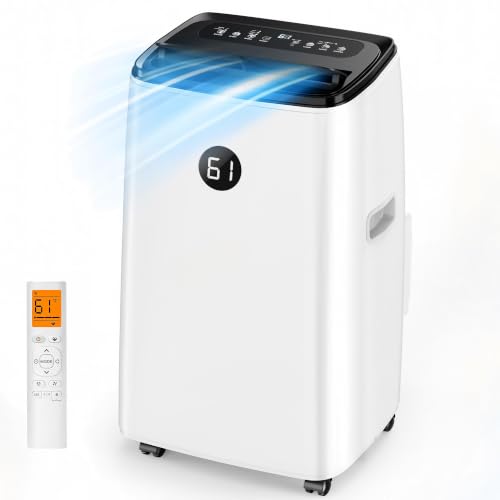
14000 BTU Portable Air Conditioners, 3-in-1 Floor Stand Up Portable AC Unit | Cools Up to 700 Sq.Ft, with Dehumidifier, Fan, Self-Evaporating, Quiet Sleep Mode, Auto Swing, for Large Rooms Bedrooms
Check price on Amazon
Frigidaire 12,000 BTU Smart Window Air Conditioner with Wi-Fi, Cools Up to 550 Sq. Ft., Remote Control, Quiet Operation, Eco Mode, 3 Fan Speeds, White
Check price on Amazon
16000 BTU Portable Air Conditioners for Large Room up to 730 sq.ft 5-in-1 Smart AC Unit with WiFi APP/Remote Control, Fast Cooling, Dehumidifier, Quiet Sleep Mode, Window Kit Included
Check price on Amazon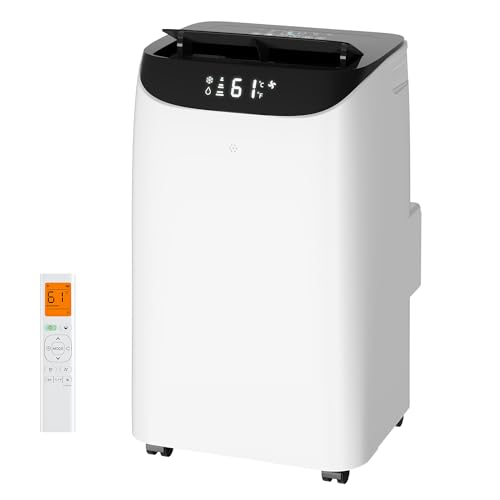
Inverter 16000 BTU Portable Air Conditioner, 3 in 1 Portable Ac Unit Cools Up for Rooms 850 Sq. Ft, Dual Hose Standing AC for Bedrooms with Dehumidifier, Fan, Quiet Sleep Mode, Remote Control
Check price on Amazon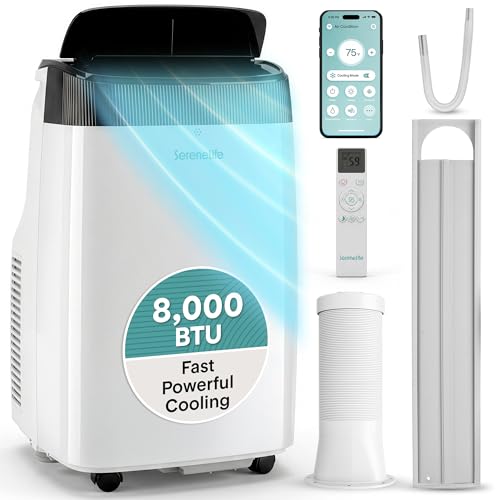
SereneLife Portable Air Conditioner 8000 BTU With WIFI | 3-in-1 Cooling, Fan and Dehumidifier | 24-H Timer up to 350 sq ft Coverage | AC Unit for Bedroom, Home & Office | Window Kit & Remote
Check price on Amazon
VEVOR Portable Air Conditioner 14000 BTU 5-in-1 Standing Cooling Ac Unit | for Bedrooms, Home Offices, and Apartments, 550 Sq. Ft. Coverage, LED Touch Panel, Remote Control, 24h Timer and Exhaust Hose
Check price on Amazon