Dampers in HVAC: The Complete Guide to Airflow Control
Learn how HVAC dampers work, compare manual versus motorized and zone dampers, understand sizing and actuator selection, and discover installation and maintenance practices that keep every room comfortable.
Start LearningWhat Is an HVAC Damper?
An HVAC damper is a mechanical plate or blade mounted inside a duct that regulates the volume of air passing through it. By opening, closing, or partially restricting the duct opening, a damper allows a heating, ventilation, and air conditioning system to distribute conditioned air where it is needed most. Dampers are one of the simplest yet most impactful components in a balanced air distribution network.
In residential and light commercial systems, dampers appear in several locations: inside the supply trunk, at branch takeoffs feeding individual rooms, at the return-air plenum, and within fresh-air intakes. Each position serves a distinct purpose, from balancing static pressure to isolating sections of ductwork for service. For a broader look at how dampers fit into the full air-handling assembly, review the fundamentals of a fan coil unit in HVAC, where dampers often regulate coil bypass and zone delivery.
How Dampers Work Inside Ductwork
Air always follows the path of least resistance. When one branch of a duct system is oversized or open while another is restricted, the blower pushes more air through the easier path. A damper introduces a controlled restriction, raising resistance in that branch so the available air divides more evenly across the system.
In a typical zoned installation, a thermostat calls for heating or cooling in one room. The zoning panel energizes the damper actuator for that zone, rotating the blade open while dampers serving other zones remain closed. The blower then delivers air primarily to the active zone. Proper coordination between damper position and blower speed is essential, which is why modern zoning panels include bypass or dump-zone logic to protect the equipment from excess static pressure.
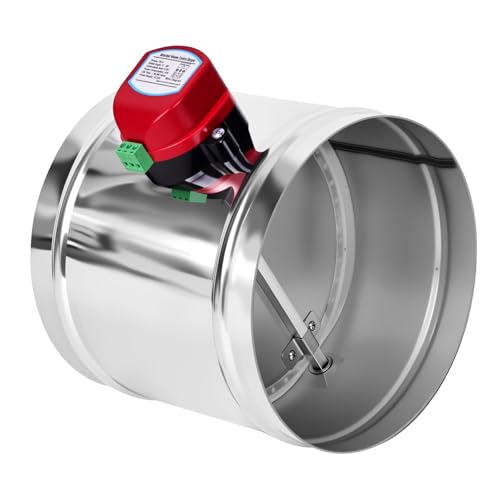
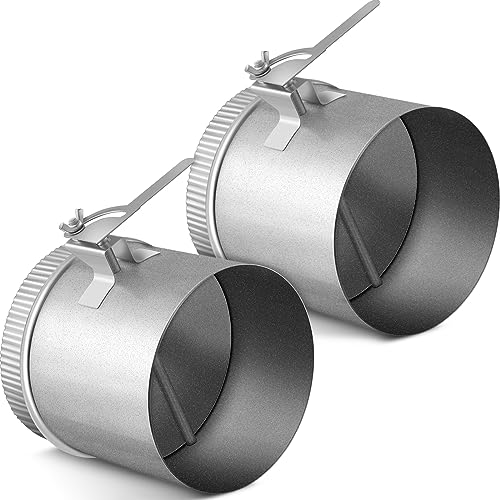
Manual dampers follow the same principle but require a technician or homeowner to adjust the blade by hand at a lever or wing nut. They are commonly used for seasonal balancing—opening basement branches in winter and closing them in summer. For a deeper understanding of how duct layout affects this behavior, see the ductwork design guide.
Types of HVAC Dampers
Dampers are classified by how they are actuated, where they are installed, and what function they perform. The table below summarizes the most common categories found in residential and light commercial systems.
| Damper Type | Actuation | Best For | Tier |
|---|---|---|---|
| Manual balancing damper | Hand-adjusted lever or quadrant | Seasonal balancing, branch takeoffs | Entry-level |
| Motorized zone damper | Electric actuator, 24V control | Room-by-room zoning with thermostats | Mid-range |
| Pressure relief / bypass damper | Spring-loaded or weighted | Protecting blower in zoned systems | Mid-range |
| Fire and smoke damper | Fusible link or motorized | Code-required life safety in commercial ducts | Premium |
| Backdraft damper | Gravity or spring | Preventing reverse airflow at exhaust or intake | Mid-range |
| Volume control damper | Manual or motorized | Precise airflow measurement and balancing | Premium |
| Outside air damper | Motorized, interlocked with fan | Fresh-air intakes and economizers | Top-tier |
Manual Dampers
Manual dampers are the workhorse of residential balancing. They are set during commissioning and adjusted a few times per year. Their simple construction makes them durable and easy to service, though they cannot respond to changing room conditions automatically.
Motorized Dampers
Motorized dampers pair a blade assembly with an electric actuator. The actuator receives a signal from a thermostat or zoning controller and rotates the blade to a set position. Two-position actuators snap fully open or closed, while modulating actuators can hold intermediate positions for precise flow control. Motorized units are the foundation of automatic zoning.
Fire, Smoke, and Combination Dampers
Life-safety dampers are required by building codes in many commercial occupancies. A fire damper closes when a fusible link melts, containing flames within a fire-rated assembly. Smoke dampers, often combined with fire ratings, restrict smoke migration. These components must be inspected and tested on a scheduled basis and should always be installed by qualified technicians.
Backdraft and Barometric Dampers
Backdraft dampers allow airflow in one direction only, protecting exhaust systems and fresh-air intakes from reverse flow. Barometric bypass dampers open automatically when static pressure rises in a zoned system, dumping excess air into a return or common area to protect the blower.
Dampers and HVAC Zoning Systems
Zoning divides a home or building into independently controlled areas, each with its own thermostat and damper. When a zone calls for conditioning, its damper opens while others close, and the zoning panel signals the equipment to run. This arrangement is especially valuable in multi-story homes, finished basements, and rooms with large glass areas that gain or lose heat differently from the rest of the house.
A well-designed zoning system includes three essential elements: correctly sized zone dampers, a bypass or dump strategy to protect the blower, and a control panel that coordinates damper position with equipment staging. For homes where ductwork is limited, a ductless mini-split may be a simpler alternative, but for existing ducted systems, zoning with dampers is often the most practical path to room-by-room comfort.
For larger homes, multi-zone layouts can be combined with five-zone mini-split designs or hybrid approaches that blend ducted zoning with ductless heads. The right choice depends on construction, budget position, and how granular the comfort requirements are.
Sizing and Selection Guidelines
Damper sizing is based on the duct size it serves and the velocity of air at that point. A damper that is too small for the duct creates excessive pressure drop and noise; one that is too large may not seal properly. Most manufacturers publish a pressure drop chart for each damper size at various air velocities. Choose a damper whose duct dimension matches the branch or trunk, and verify that the pressure drop at design airflow is acceptable for the available static pressure.
Selection also depends on the application:
- Balancing dampers should be installed in accessible locations with a locking quadrant or lever.
- Zone dampers should be sized for the airflow of the zone they serve and paired with an actuator rated for the blade area and torque requirement.
- Bypass dampers should be sized to relieve the minimum airflow that the equipment requires, typically based on the smallest zone's demand.
- Fire and smoke dampers must be listed for the rating of the assembly and installed per the manufacturer's instructions and local code.
When retrofitting dampers into an existing system, confirm that the duct has enough straight run before and after the damper for stable airflow. Turbulent air at the damper face reduces accuracy and increases noise. If the existing layout is tight, consult the ductwork design guide for guidance on transition lengths and fitting selection.
Damper Actuators and Controls
The actuator is the component that converts an electrical signal into blade movement. Two-position actuators are the most common in residential zoning: they drive the damper fully open or fully closed on a 24VAC signal. Modulating actuators accept a proportional signal and can hold intermediate positions, which is useful for precise pressure control and economizer sequences.
Key selection factors include torque, power supply, control signal, and fail-safe behavior. Spring-return actuators are often specified for outside-air and fire-safety applications so the damper fails to a safe position on power loss. For zoning, power-open/power-close actuators are typical because the zone state is maintained by the panel. The broader family of HVAC actuators includes valve and damper variants, and understanding the differences helps avoid mismatched replacements.
Controls integration matters as much as the actuator itself. A zoning panel must be compatible with the actuator voltage and signal type, and the thermostat must be wired to the correct zone terminals. When in doubt, follow the panel manufacturer's wiring diagram and verify transformer capacity before adding actuators—each actuator draws a small but cumulative current.
Installation Best Practices
Correct installation determines whether a damper performs as intended. The following practices apply to most residential and light commercial projects:
- Plan accessibility. Manual dampers need room for a technician to reach the lever. Motorized dampers need clearance for the actuator and wiring.
- Match orientation. Install the damper so the blade rotates in the intended direction and the actuator sits in a serviceable position. Some dampers are directional; check the airflow arrow.
- Seal the frame. Apply mastic or approved tape around the damper frame to prevent air bypass. Leakage around the frame undermines balancing accuracy.
- Support the duct. Dampers add weight and should not hang unsupported. Use hangers or strapping per the duct design.
- Wire safely. Low-voltage actuator wiring should be routed away from line-voltage conductors. Use wire nuts or terminal blocks appropriate for the application.
- Commission the system. After installation, measure airflow at each branch and adjust manual dampers or verify zone damper positions. Record settings for future reference.
For projects that involve new equipment alongside duct modifications, coordinate damper installation with the broader HVAC contracting scope so that balancing, controls, and equipment startup happen in the correct sequence.
Maintenance and Troubleshooting
Dampers are low-maintenance components, but they are not maintenance-free. Dust accumulation on blades and shafts can cause binding, and actuator motors can fail over time. A simple annual inspection during routine system service catches most issues early.
Routine Maintenance Checklist
- Exercise manual dampers through their full range and lubricate the shaft if the manufacturer allows.
- Verify that motorized dampers open and close fully when their zone is called.
- Check actuator mounting screws and linkage for looseness.
- Inspect for air leakage around the frame and re-seal as needed.
- Test fire and smoke dampers per the code-required schedule and document results.
Common Problems
Damper stuck open or closed: Usually a failed actuator, a broken linkage, or a control signal issue. Confirm voltage at the actuator before replacing it. If the actuator is functional, check the zone panel output.
Noisy duct: A partially closed damper can create turbulence and whistling. Verify that the damper is not being used to compensate for an undersized duct.
Uneven temperatures: Revisit the balancing report. Dampers may have been moved accidentally, or a zone may be calling when it should be satisfied. For persistent comfort issues, a technician can measure static pressure and airflow to identify the cause. Related diagnostic guidance appears in fixing an air conditioner.
Energy and Comfort Benefits
Dampers contribute to efficiency in two ways: they reduce the conditioning of unoccupied spaces, and they help the system operate closer to its design airflow. In a zoned home, closing dampers to unused rooms reduces the load on the equipment, which can shorten runtimes and improve part-load performance. In a manually balanced system, correcting airflow to over-supplied rooms allows the thermostat to satisfy the house without overcooling a single area.
These benefits compound with other efficiency measures. Sealing duct leaks, upgrading to an ENERGY STAR HVAC system, and using a programmable thermostat all work synergistically with well-balanced dampers. Homeowners evaluating a larger upgrade can compare equipment options through resources on high-efficiency heating and air conditioning to understand how airflow control fits into a whole-system strategy.
Frequently Asked Questions
What is an HVAC damper and what does it do?
An HVAC damper is a movable plate inside ductwork that regulates airflow. It opens, closes, or partially restricts air to balance room temperatures and support zoning systems.
What is the difference between manual and motorized dampers?
Manual dampers are adjusted by hand at the duct and are set once for seasonal balancing. Motorized dampers use an actuator controlled by a thermostat or zoning panel, allowing automatic room-by-room airflow control.
Can dampers improve energy efficiency?
Yes. Properly balanced dampers and zoning prevent conditioned air from over-cooling or over-heating unused rooms, reducing wasted runtime and improving overall system efficiency.
Where are dampers typically installed?
Common locations include supply trunk branches, zone takeoffs, return-air plenums, fresh-air intakes, and exhaust connections. Life-safety dampers are installed at fire-rated penetrations.
How often should dampers be inspected?
Manual dampers should be exercised at least annually during system maintenance. Motorized and life-safety dampers should be tested according to the manufacturer's recommendations and local code requirements.
Ready to Balance Your System?
Explore the recommended damper and airflow control products below, and compare features before you commit to an upgrade.
View Recommended Products